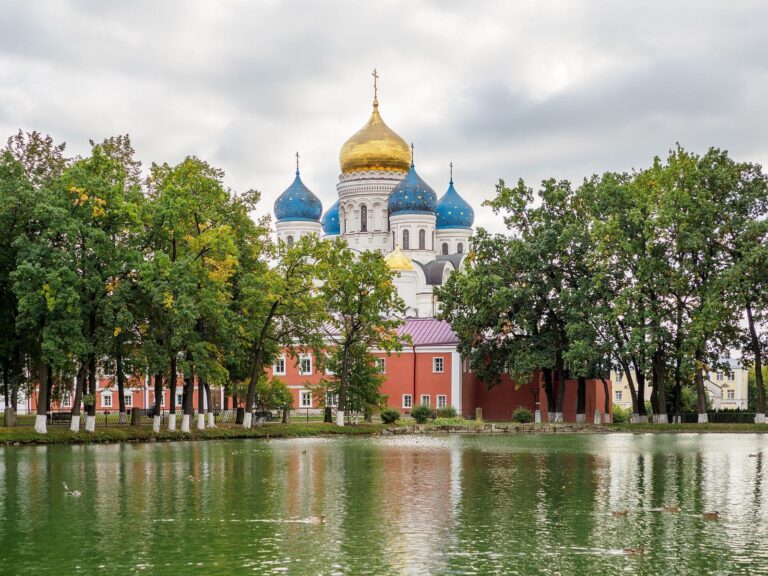
Church of the Renewal of the Temple of the Resurrection, Kolychyovo: An Orthodox Parish Church
Site at a Glance
- Popularity
- Low
- Country
- Russia
- Primary era
- Early Modern
- Eras represented
- Early Modern, Modern
- Civilizations
- Russian
- Site type
- Religious
- Remains
- Church
On this page13 sections
History
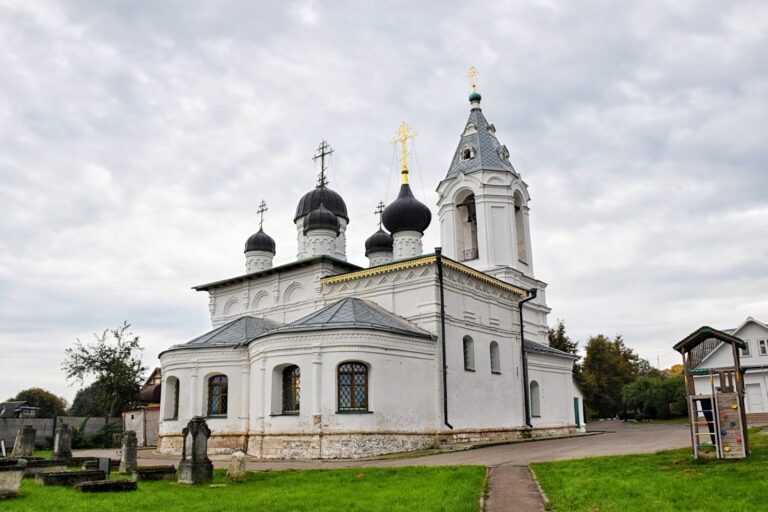
The Church of the Renewal of the Temple of the Resurrection is a Russian Orthodox parish church in Kolychyovo, Russia. Its white-stone building was erected in 1697 and served surrounding settlements along the Pakhra River as a center for worship, baptisms, marriages, and funerals.
Village and parish beginnings
Kolychyovo is named as a village in 1406. During the reign of Ivan IV, known as Ivan the Terrible, it belonged to Nikita Borisovich Kolychev, a boyar, or member of the high Russian nobility. Kolychev was killed near Kazan on October 20, 1552.
A wooden Church of the Resurrection of Christ was in use by 1680, when services were led by the priest Mikhail Vasilyev. The stone church followed in 1697. Its parish served villages along the Pakhra River, and parishioners came to the church for worship and major rites of family life, with burials taking place in the Kolychyovo cemetery.
A parish listing from 1687 counted 19 peasant households in Kolychyovo, 16 in Shestovo, 10 in Semivragovo, 11 in Churilkovo, 15 in Novlyanskaya, 14 in Vyalkovo, and 12 in Voevodina. Kamkino and Kiselikha each had 14; Kipriyanova had 10, Elgozina 11, an unnamed village eight, Shishkino and Zherebyatyeva five each, Krasino 13, Nemchinovo five, and Lukino three. The listing also noted landowners’ households in Kotlyakovo, Shishkino, Nemchinovo, Vitovtovo, and Lukino. Kipriyanova belonged to Nikolaevsky Ugreshsky Monastery, Elgozina to Kirillov Monastery at Belozero, and Zherebyatyeva to Trinity-Sergius Monastery.
Around 1711, the village belonged to Alexander Danilovich Menshikov, a Russian statesman, until his exile to Berezovo. In 1781, Empress Catherine II granted Kolychyovo town rights and privileges and named it Nikitsk, in honor of Nikita Kolychev. A separate district was established for the town. Nikitsk ceased to appear on the list of Russian towns in 1802, and Kolychyovo again became a village.
Nineteenth-century changes
French troops plundered the church during the Patriotic War of 1812, Russia’s war against Napoleon’s invasion. After their departure, the church was reconsecrated on November 16. From 1833 to 1863, its priest was Vasily Ivanovich Kudryavtsev, who was then transferred to the church of the provincial prison castle in Moscow’s Butyrki district.
A heated refectory church with two side chapels was added in 1834; an inscription on its south wall gives the construction date as 1833. The church grounds received a stone fence with wooden grilles in 1856, and iron grilles replaced the wooden ones in 1868. That year, the refectory’s vaulted ceilings were painted and its walls colored blue. The old bell tower was then found to be cracked and dilapidated.
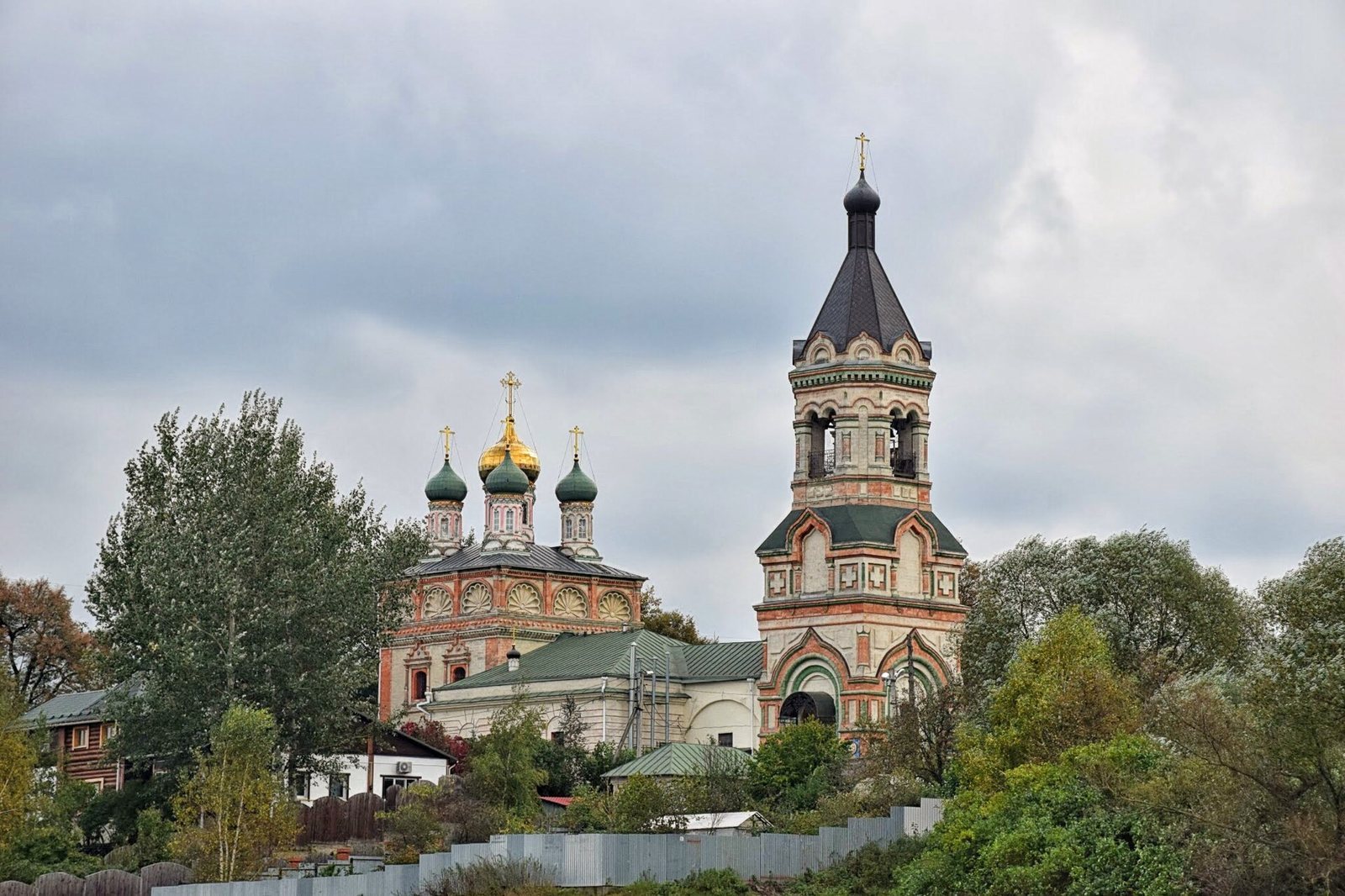
Construction of a replacement stone bell tower began in 1871. It was completed and consecrated on August 26, 1873, in honor of the Kazan Icon of the Mother of God. S. T. Sorokin and Dmitry Baklyshov, a former peasant from Kiselikha, provided funds for the work. In 1895, landowner M. Ya. Meshcherina funded a brick school building attached to the church house.
Closure and renewed worship
In 1922, the authorities confiscated 17 ornamental coverings for icons, four valuable crowns for icons, and 15 silver lamps. Together, the items weighed 16 kilograms. A local religious society formed in 1925 under the church council’s leadership, but had to rent the church and its furnishings from the state.
The authorities banned bell-ringing in 1934, and the church closed several months later. A chapel was dismantled, furnishings and icons were taken into parishioners’ homes, and the building became a warehouse and shop. The bell tower was adapted as a water tower, while the old cemetery fell into disrepair.
The church was returned to the Russian Orthodox Church in 1992. Restoration and regular services began in 1996, followed by a more active revival in 1997, when priest Alexander Golev became rector by appointment of Metropolitan Juvenaly, a senior bishop. That autumn, the church marked its 300th anniversary. In later years, a vestibule was added, the domes were gilded, and the interior and exterior decoration was renewed. The side chapels were restored and icon screens designed. The church underwent the Great Consecration, the formal Orthodox rite dedicating a church for worship, in July 2010. It belongs to the Russian Orthodox Church’s Domodedovo Deanery, an administrative district, and is designated a cultural heritage site of federal significance in Russia.
Remains
The historic complex centered on the stone church within cemetery grounds, with a heated worship wing and a separate bell tower. The site also included parish buildings and burial ground. The main church was built of white stone, while the bell tower combined brickwork with courses of white stone.
Church complex
Main church
The white-stone church is the central building of the complex. Its wooden predecessor stood about ten sazhen to the northeast; a sazhen is an old Russian unit of length. A stone chapel was later built on the site of that earlier church, and dates to the late eighteenth century.
Heated refectory and side chapels
The heated refectory wing contains two side chapels. On the right is the chapel dedicated to the Savior Not Made by Hands, an Orthodox image of Christ traditionally believed to have been made miraculously without human hands. Its observance falls on August 29. The left chapel honors the assembly of Archangel Michael and the other angels, with observances on September 19 and November 21.
Bell tower
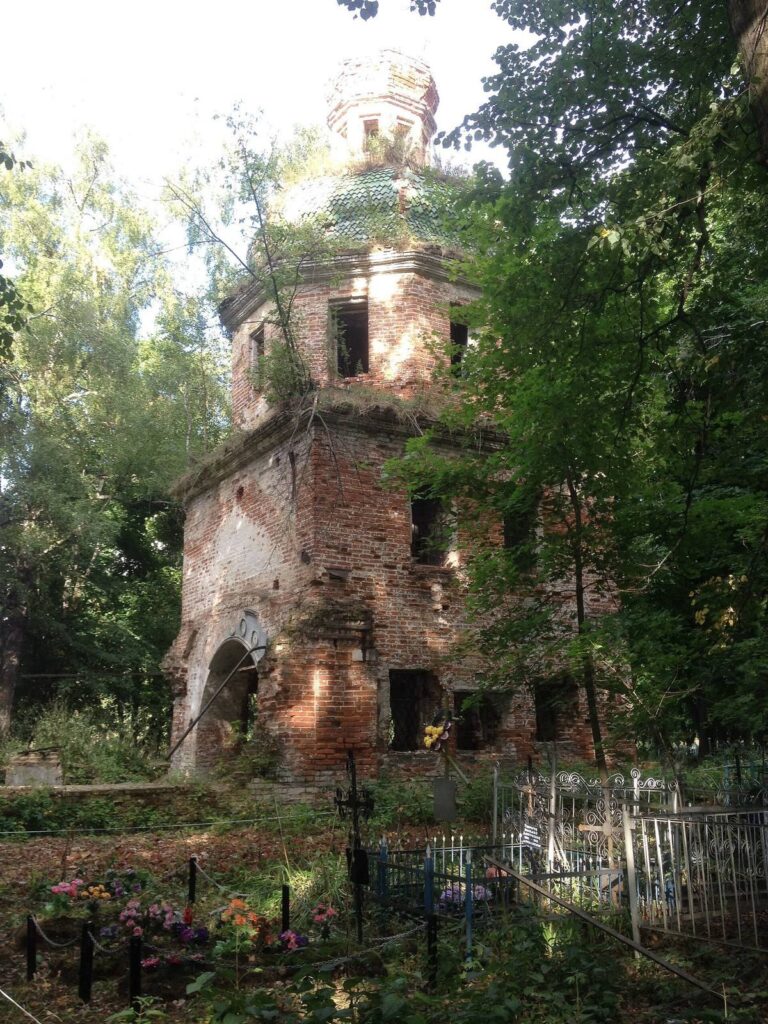
The bell tower has a pyramidal shape. Its two lower tiers are square in plan, made of brick, and reinforced with layers of white stone; the upper tier is a regular octagon. It held eight bells. The largest weighed 258 poods, an old Russian unit of weight; the second weighed 90 poods, while the bell used daily weighed more than 50.
Parish grounds and associated features
Parish houses and school
In 1687, the priest’s house stood within the cemetery grounds, the deacon’s house was nearby, and the home of the woman who prepared bread for the Eucharist was closer to the river. The school building had room for 66 pupils and included an apartment for its teacher.
Cemetery
Among the cemetery’s many monuments and gravestones, only three marble monuments remained.
Associated objects
Objects associated with the church include a carved image of the Savior seated in a prison cell and an icon of Saint Anisia, a Christian killed for her faith, long connected with the church.