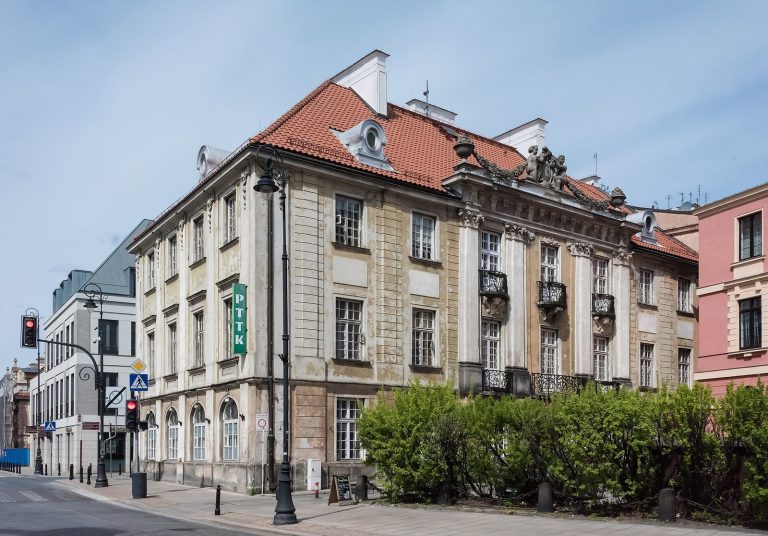
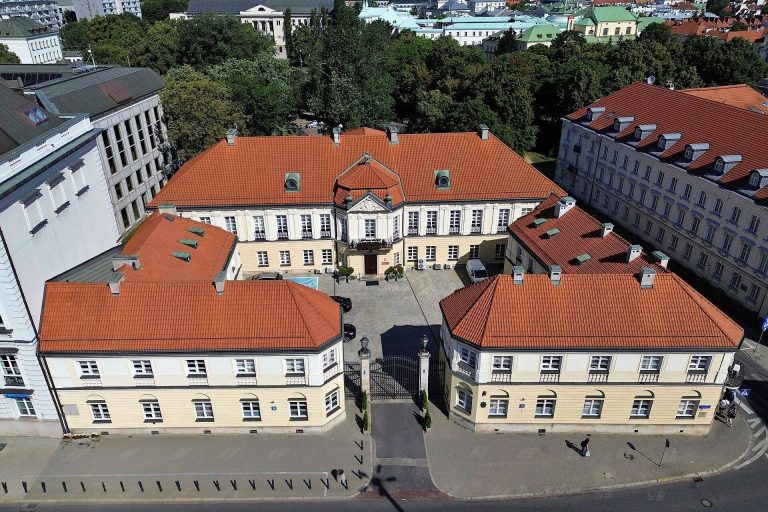
Church of the Transfiguration in Warsaw: A Baroque Capuchin Church
Site at a Glance
- Popularity
- High
- Country
- Poland
- Primary era
- Early Modern
- Eras represented
- Early Modern
- Civilizations
- Polish–Lithuanian Commonwealth
- Site type
- Religious
- Remains
- Church
On this page14 sections
History
Foundation and construction
The Church of the Transfiguration in Warsaw is a Roman Catholic Baroque church in Poland, founded for the Capuchins, a Franciscan branch associated with a strict rule of poverty. Its foundation stone was laid in 1683, and it was consecrated in 1692, although construction continued until 1694. The foundation appears to have fulfilled a vow of thanksgiving for King Jan III Sobieski’s victories at Chocim and Vienna.
Earlier efforts to establish the Capuchins in Poland had failed to secure permission from Rome during the reign of Sigismund III and that of his two sons. In 1679, the friar Jakób of Ravenna came to inspect possible locations. After meeting Sobieski, he returned to Italy, where the Polish envoy and the king’s brother-in-law, Michał Radziwiłł, helped advance the plan. Warsaw and Kraków were chosen for the first foundations. Jakób returned in August 1681 with papal documents and three other friars.
Bishop Stefan Wierzbowski of Poznań authorized the monastery on 27 December 1681. Sobieski bought a house and plot on Miodowa Street, where the friars built a temporary chapel in 1682 and began holding services. Support from Warsaw residents followed, and on 11 July 1683 the king ordered the monastery’s foundation charter. The church’s foundation stone was laid on 23 July, shortly before Sobieski set out on his campaign toward Vienna. The king, Queen Maria Kazimiera, their sons, church and state officials, military commanders, and a large crowd attended. At Sobieski’s direction, the dedication was changed from Christ the Redeemer to Christ the Triumpher.
Work on the monastery began in spring 1686. An initial design was judged too grand for the Capuchins’ rule and the king’s preference for modesty, so a replacement design was prepared and construction supervision reassigned. In May 1688, Sobieski purchased more land for a courtyard and gardens stretching from the church toward Bishop Zbąski’s palace. The church was consecrated on 11 October 1692, with building work continuing into the summer of 1694. Its richly mosaicked decoration troubled Father Francis Arrezzi when he arrived with fourteen friars, and the Capuchins needed a papal dispensation before beginning worship in the church.
A brief issued by Pope Innocent XII on 1 December 1694 placed the Warsaw and Kraków foundations within the Tuscan Capuchin province. It also required friars to seek permission from the Holy See before leaving their convents, removed them from the diocesan bishop’s jurisdiction, and authorized a novitiate for twelve Polish candidates. Francis Arrezzi became the order’s general commissioner in Poland.
The Capuchins in Poland
During the wars and troop movements that began around 1700, armies neither occupied nor damaged the Warsaw Capuchin house. Augustus II the Strong, Peter the Great, and Charles XII visited the royal remains while staying in the capital. By 1738, about fifty Polish-born friars lived in four Capuchin monasteries in Poland, then under the care of the Czech province. Pope Benedict XIV raised the Polish custody, an administrative unit within a religious order, to provincial rank in 1754; Pope Clement XIII made it independent in 1761.
Papal nuncio Camillo Paolucci, the pope’s diplomatic representative, publicly crowned a half-length image of the Virgin Mary given to the friars by a Warsaw resident named Fiszer. In 1781, the Capuchins marked a century since their arrival in Poland.
Royal memorials and later change
The chapel later known as the Chapel of Jan III was first called the Royal Chapel. Jan III’s heart was placed there on 26 June 1830. After the January Uprising, the 1863 Polish revolt against Russian rule, the Capuchin monastery was closed and demolished.
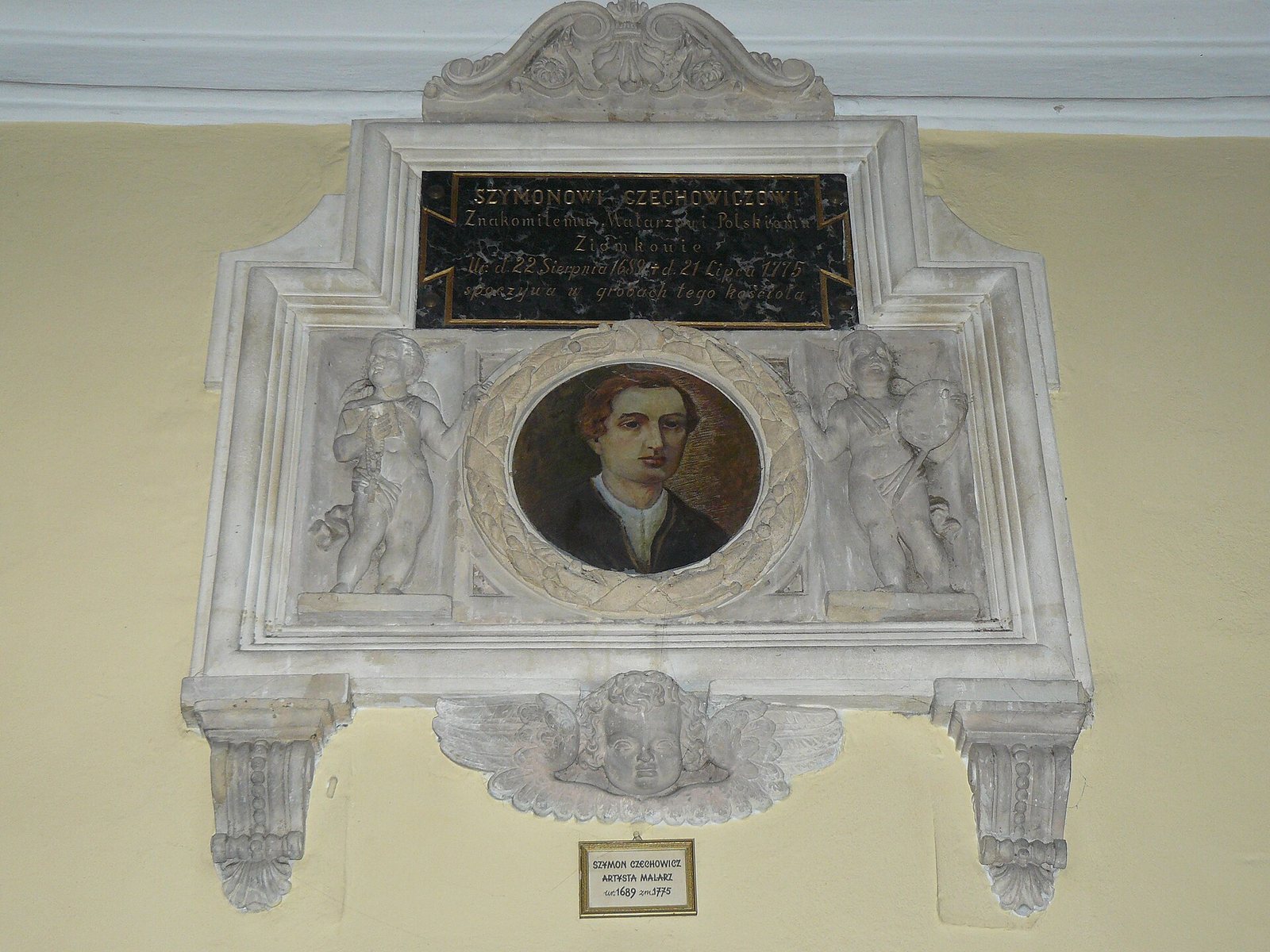
During the Warsaw Uprising of 1944, the church was damaged, and a fire destroyed paintings in its altars, including works by Szymon Czechowicz. Repairs followed in 1946. On 17 June 1983, Pope John Paul II prayed in the church before the Blessed Sacrament and at the urn containing Jan III’s heart.
Remains
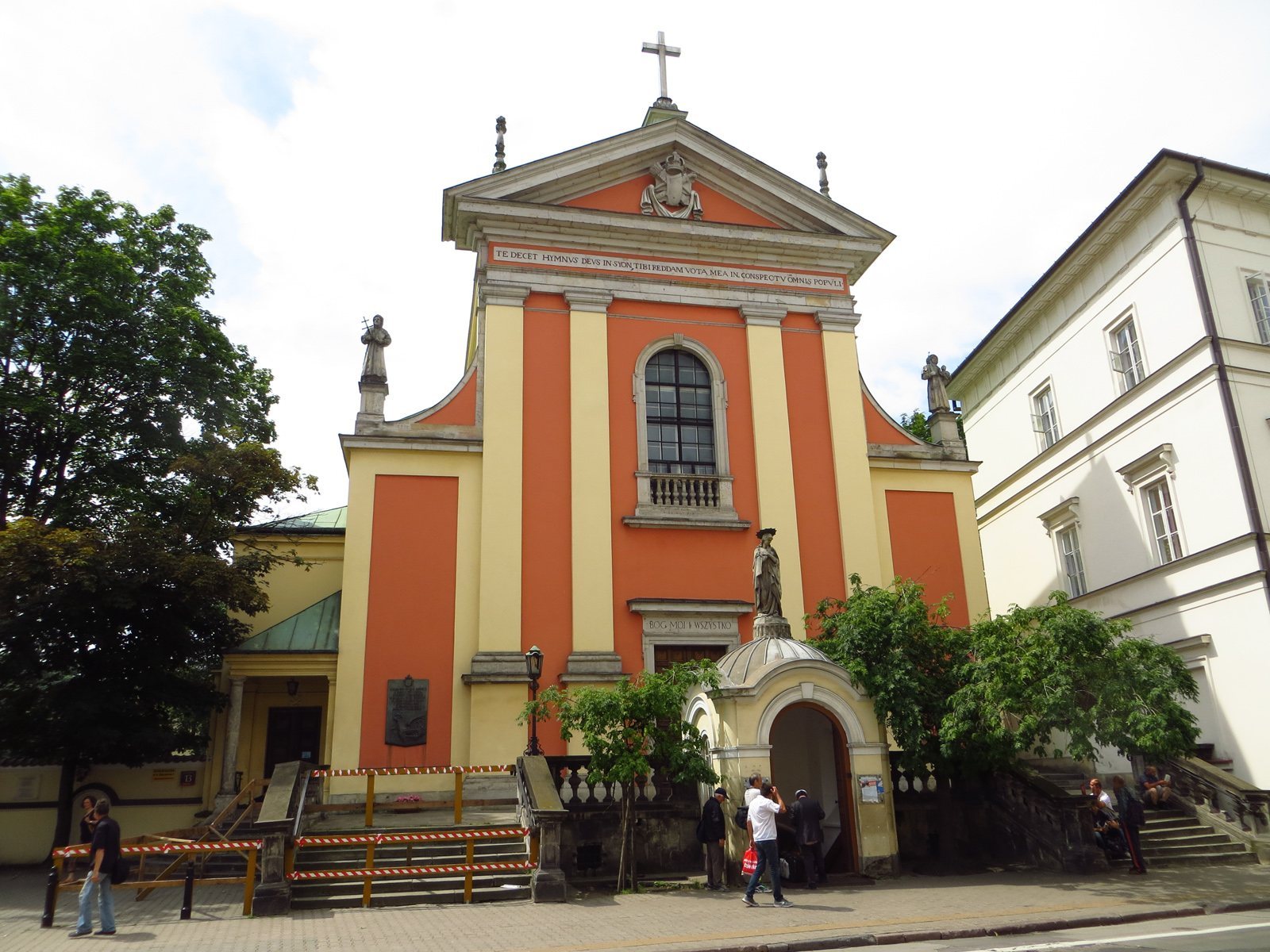
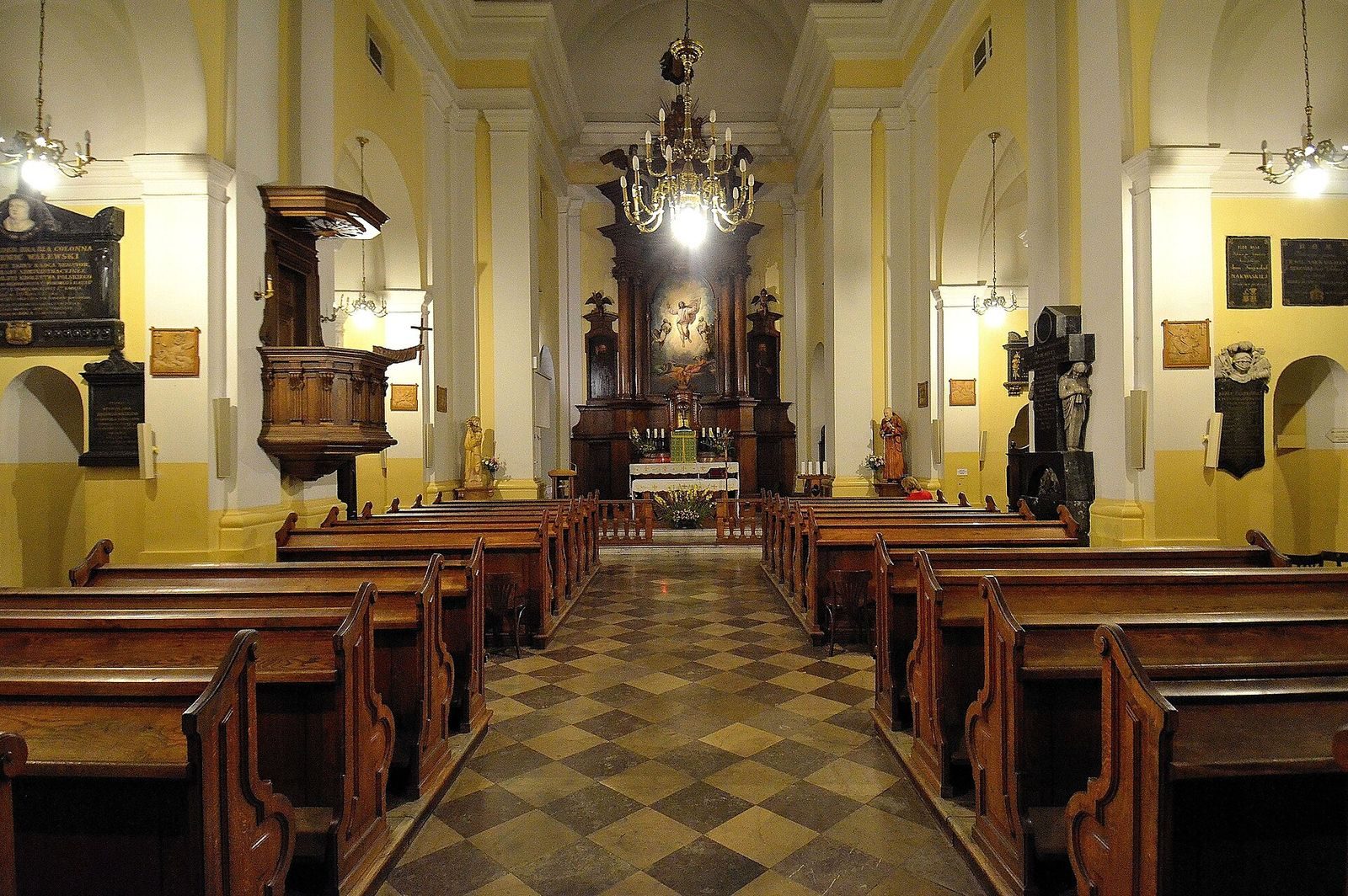
The brick Baroque church is arranged around a high central nave with deep chapels opening from both sides and a narrow altar area at its far end. Its restrained but imposing façade contrasts with a richly decorated interior. A courtyard and gardens, laid out on land bought in 1688, extend toward Bishop Zbąski’s palace.
Exterior and plan
Façade
The façade rises from a high base and is divided by shallow Tuscan-style columns, a plain form of classical wall decoration. A triangular pediment crowns the front. The Sobieski family’s Janina coat of arms appears above statues of Saint Francis of Assisi and Saint Anthony of Padua. A memorial plaque commemorates Juraj Križanić, a Croatian religious thinker and writer. An inscription from Psalm 65 (64) runs across the upper band: “Praise is due to you, O God, in Zion; to you vows shall be fulfilled, for you hear prayer.”
Interior plan and decoration
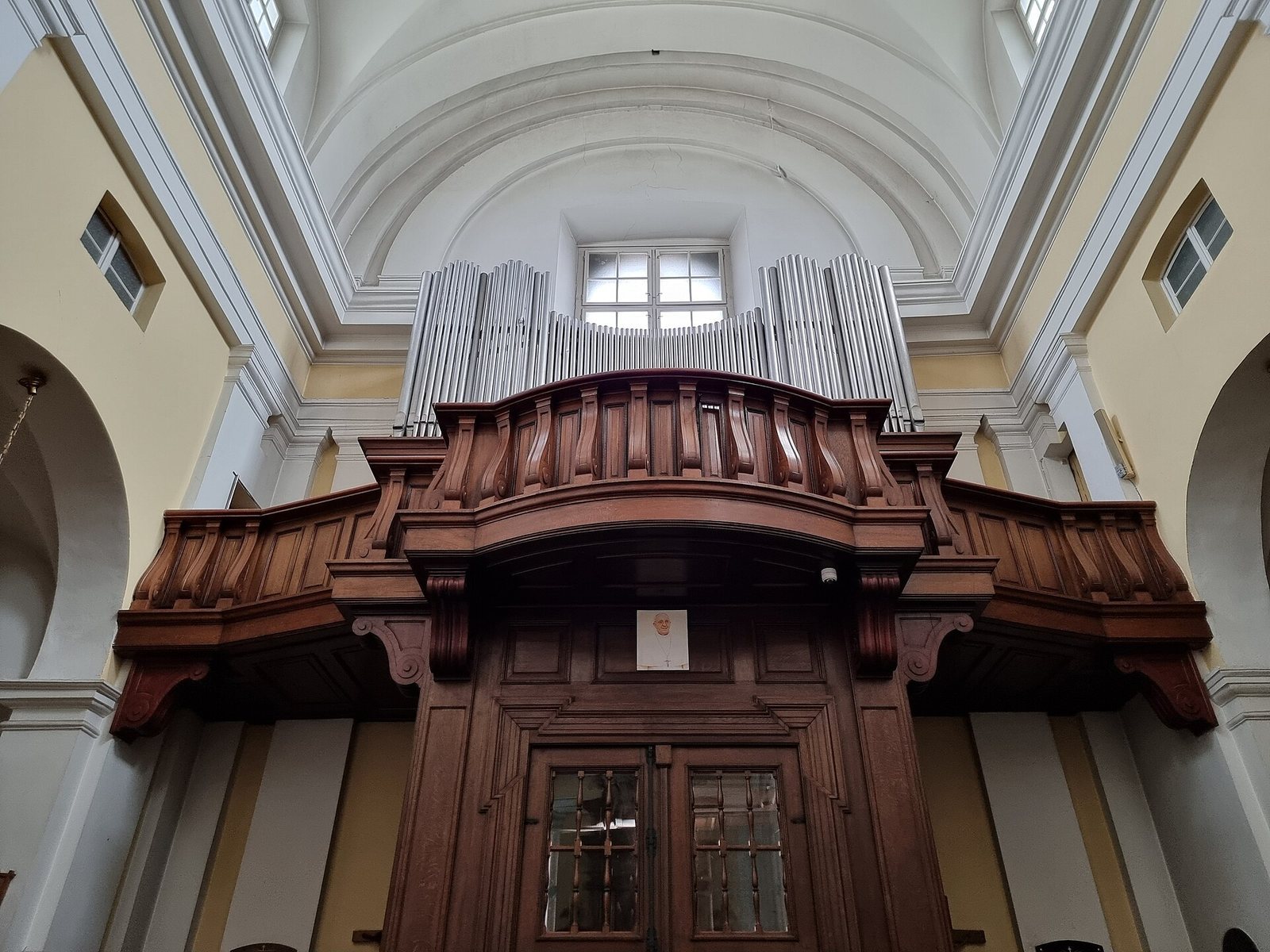
The high nave has three structural divisions, or bays, rather than the two usual in Capuchin churches. Galleries run around the interior, and deep chapels open along both sides. At the eastern end, a narrow presbytery, the area around the altar, has two adjoining rooms, with the choir behind them. Paired shallow columns divide the wall surfaces, which are topped by a broad double molding. Royal orders called for mosaics on the walls, and special papal permission was obtained for their use.
Altars and chapels
Main altar
By the mid-nineteenth century, the main altar held Szymon Czechowicz’s paintings of the Transfiguration and Saint Adalbert. An oil painting of Christ crowned with thorns stood on the tabernacle, the container for the consecrated Eucharistic hosts. Above the altar, angels supported a shield displaying the crowned Janina arms.
Side altars
On the piers beside the main altar were paintings of Saint John of Nepomuk and Saint Fidelis. The latter was identified as Mark Roy and venerated as the first Capuchin martyr. Three further altars stood along the church’s right side: one dedicated to the Immaculate Conception of the Virgin Mary, one to Saint Anthony of Padua, and one to Jesus. The Marian altar held an image crowned with silver-gilt crowns and had earlier featured a mosaic of the Annunciation. The altar to Jesus displayed a finely carved bone crucifix behind glass.
Two altars occupied the left side. A painting of Saint Francis of Assisi, given by Duchess Czartoryska, sister of Stanisław August, came from the Vatican Gallery. The altar to Saint Felix of Cantalice featured a wax statue behind glass that was famed for miracles.
Chapel of Jan III
The oval chapel has two windows and glazed doors separating it from the church. Its altar held a painting of Blessed Angel of Acri by the Warsaw painter Gładysz, transferred from the Bernardine church of Saint Anne. A sarcophagus sealed by Henryk Marconi contained a lead box with preserved internal remains. Jan III’s heart was kept in a silver, heart-shaped vessel within a monument erected by Bishop Adam Prosper Burzyński; a white-marble bust of the king by Ludwik Kaufmann also stood in the chapel. A separate sarcophagus associated with Augustus II the Strong contained a gray-marble urn holding his preserved internal organs.
Chapel of Saint Cajetan
The second chapel was dedicated to Saint Cajetan and was formerly called the Brühl Chapel. Its altar held a painting of the saint by an unknown Italian painter. Duchess Czartoryska had bought the work from a former Theatine convent on Długa Street.
Crypts
Underground crypts serve as burial spaces beneath the church. They include the graves of Aleksandra Zajączkowa, wife of General Józef Zajączek, and Maurycy Hauke, a general who served in the Napoleonic army and the army of the Kingdom of Poland.