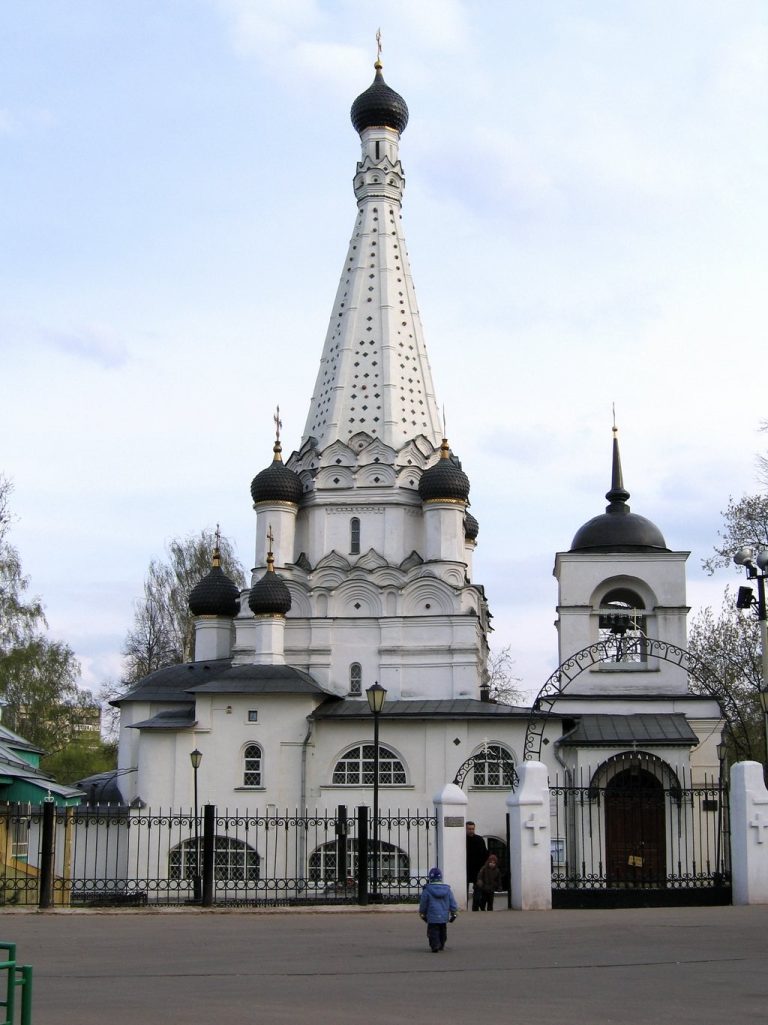
Church of the Theotokos of the Sign in Khovrino: A Russian Orthodox Church in Moscow
Site at a Glance
- Popularity
- Medium
- Country
- Russia
- Primary era
- Modern
- Eras represented
- Modern
- Civilizations
- Russian
- Site type
- Religious
- Remains
- Church
On this page12 sections
History
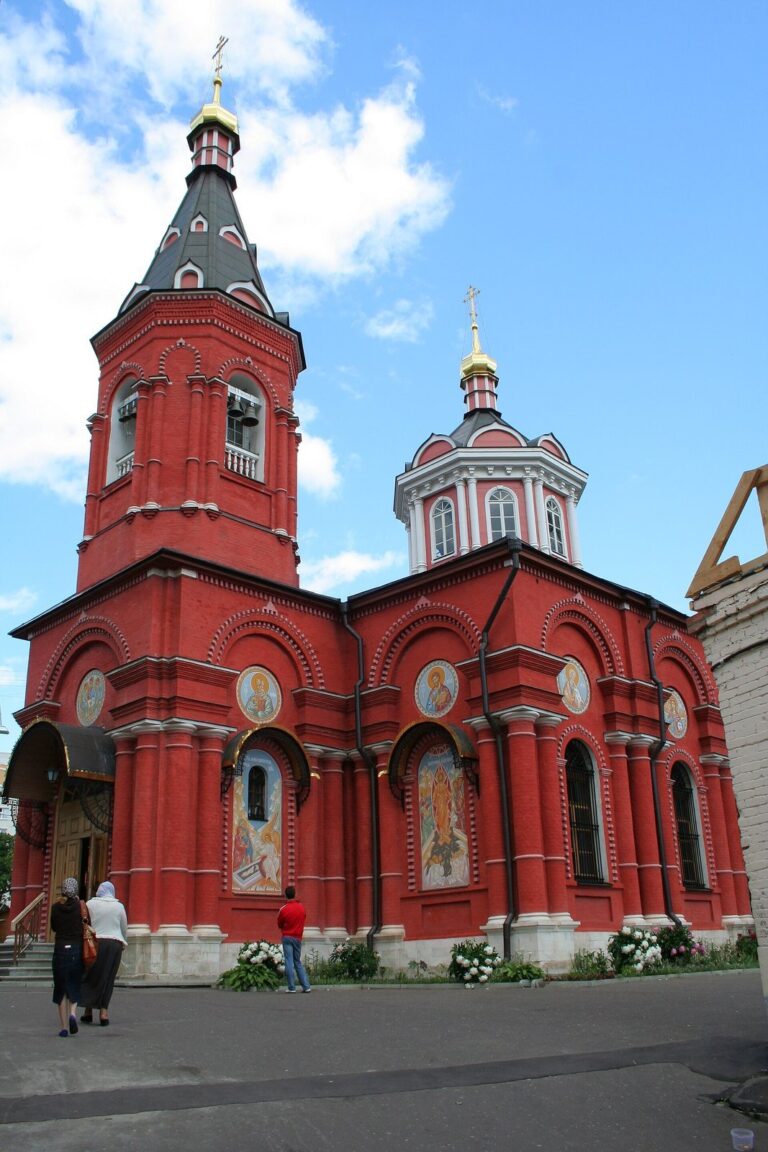
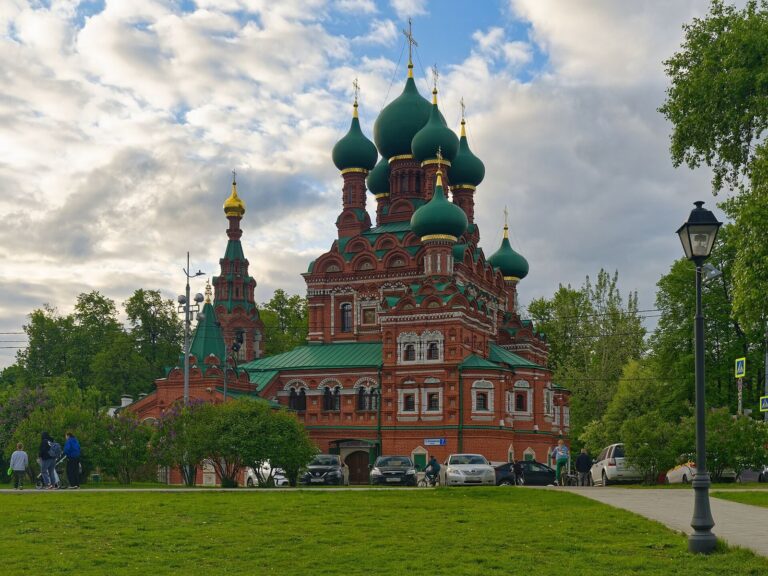
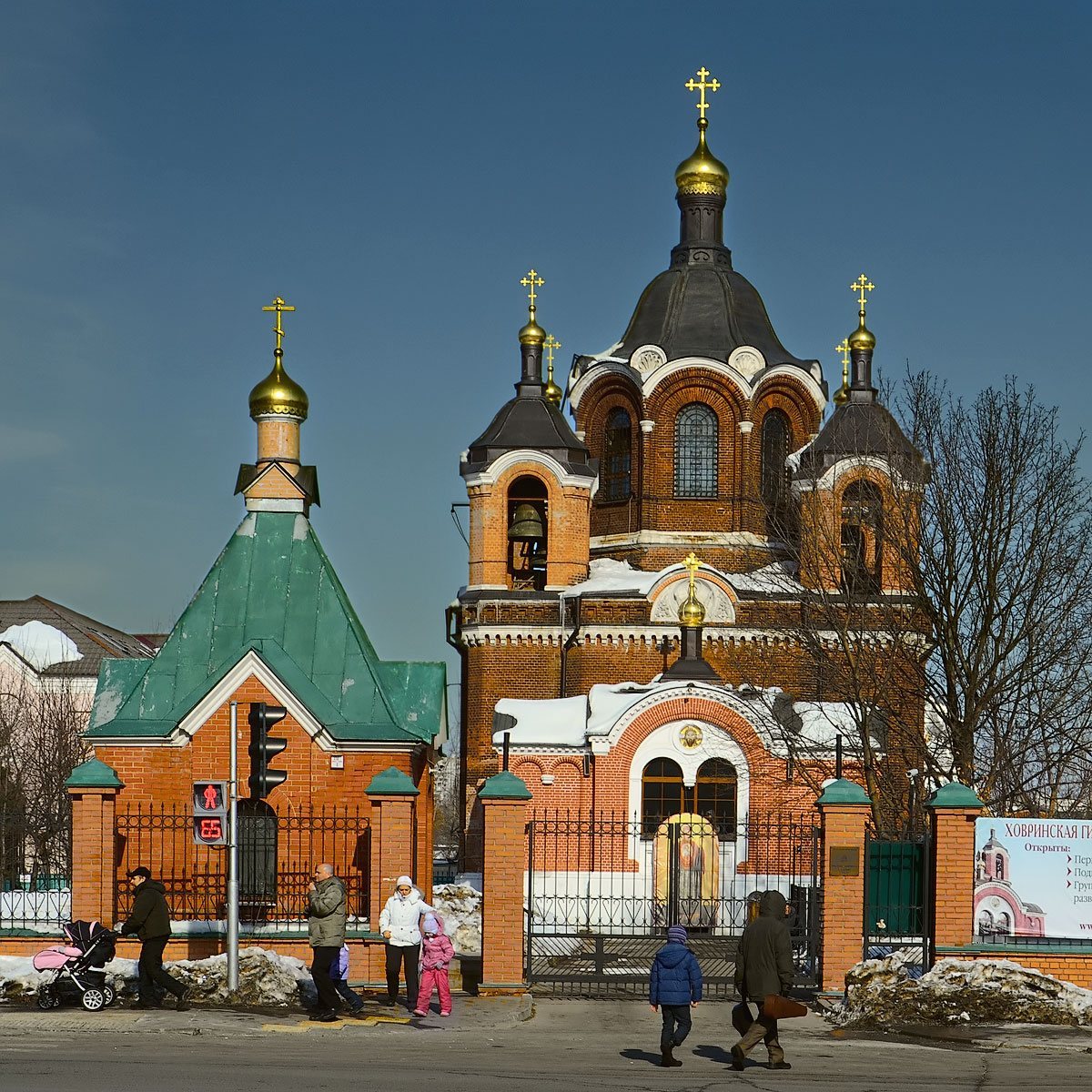
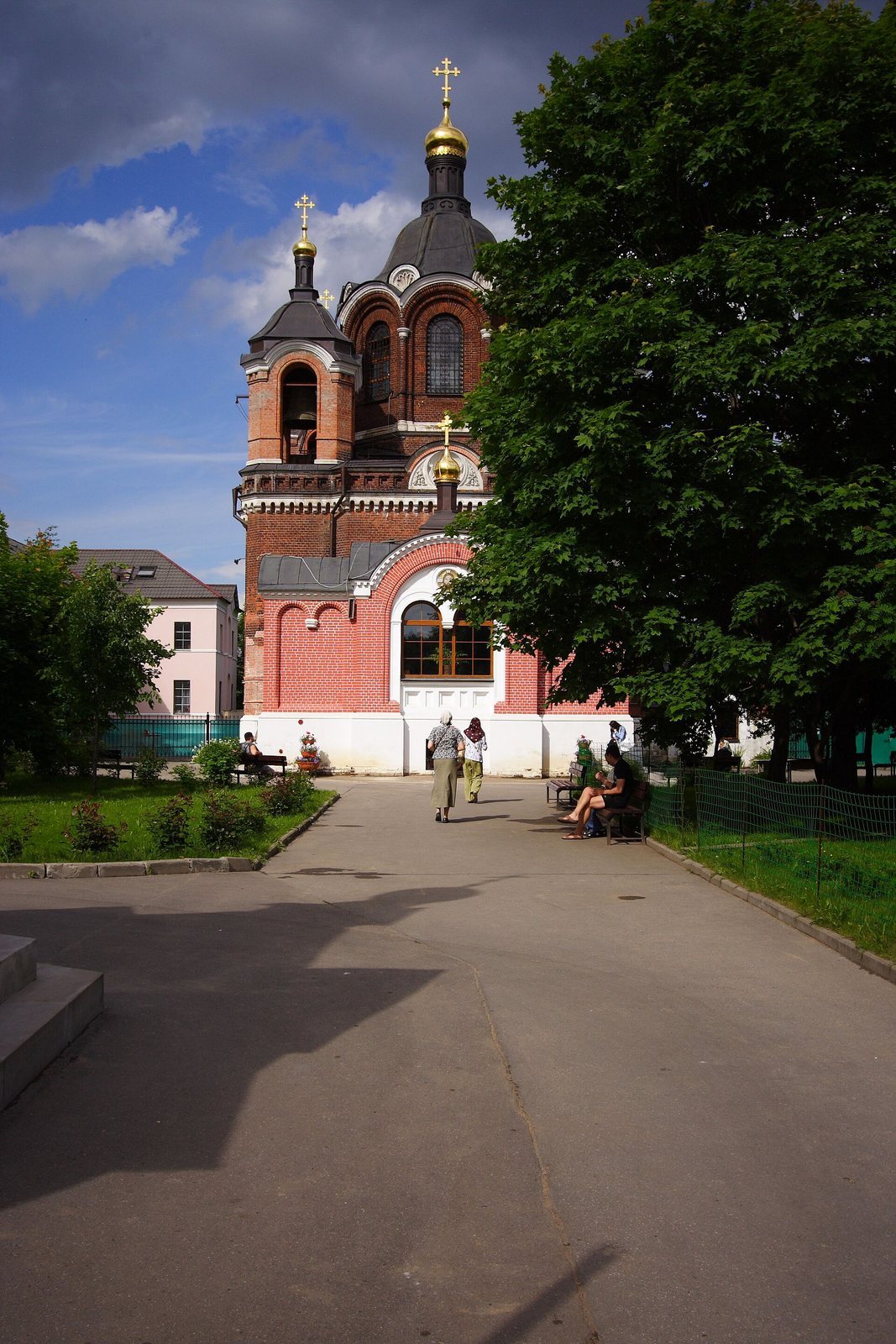
The Church of the Theotokos of the Sign in Khovrino is a Russian Orthodox church in Moscow, Russia. Theotokos is the Christian title for Mary meaning God-bearer, and the Sign is an icon showing her with the Christ Child. The present church is a nineteenth-century building in the Byzantine-Russian style. Its foundation was laid in 1868, construction ended in 1870, and it was consecrated in 1871.
Early churches and the Golovin estate
Khovrino appears in written records from 1585, although they do not establish whether a church stood there at that time. A church dedicated to St George is associated with the village in the late sixteenth century. Documents from 1623-24 describe Khovrino as a church site, and the St George church is thought to have been destroyed during the Time of Troubles, a period of political upheaval and dynastic crisis in early seventeenth-century Russia.
By 1646, Khovrino had a church dedicated to St Nicholas, with a second altar for St George. A separate wooden church dedicated to the Sign was built in 1682. Its altars honored Sergius of Radonezh and the Moscow metropolitans Peter, Alexius, and Jonah. Later additions included altars for St Nicholas and St Sebastian and his companions.
After Franz Lefort died in 1699, Peter I, later known as Peter the Great, advanced Fyodor Golovin, awarded him the Order of St Andrew, and appointed him General-Field Marshal and General-Admiral, senior army and naval ranks. Golovin received the Khovrino estate, which passed to his son Nikolai after his death. In 1740, Nikolai ordered the wooden Sign church demolished and replaced by a stone building on the same site. Work was completed in 1741, and its side altars were enlarged in 1749 and again in 1753-54.
War damage and rebuilding
N. Obolensky, who acquired the estate later, planned to enlarge the church, but the French-Russian War of 1812 prevented the project. The estate was destroyed and the church desecrated during the conflict. Afterward, Obolensky paid to rebuild the St Nicholas altar, and that altar and the main altar were reconsecrated. Unable to afford reconstruction of the burned estate, he sold Khovrino to the Stolypin family. The family later repaired the church and restored its use for worship.
The nineteenth-century church
Evgraf Molchanov acquired the former Golovin estate in 1860 and chose to replace the older church. Architect Mikhail Bykovsky designed the new building, and its foundation was laid in 1868. Work continued after Molchanov’s death under his wife, Elizaveta. The building was completed in 1870 and consecrated in 1871; its lower church opened for worship in 1874.
Bishop Parteniusz (Lewicki) visited Khovrino in 1900. The liturgy held during his visit was the church’s only service attended by a bishop before 1917. At Elizaveta Molchanova’s request, an altar dedicated to St Evgraf was later added in memory of her husband.
Closure and changing use
In 1937, the clergy Father Nikolai and Archimandrite Ambrose (Astakhov), a senior monastic cleric, were executed. Regular worship became irregular afterward, and the church closed in 1939. Its furnishings were looted. The building served as a hospital in 1941, then remained unused for an extended period after the war. In 1960, it was assigned to a cooperative employing blind workers and used for production. That year it also suffered fire damage, after which it was used for storage. From 1980, it served as a garage. A proposal to demolish it for a highway interchange was not carried out.
Protection and renewed worship
The Khovrino estate, including the church, received state protection in 1972. Restoration begun in 1979 worsened the building’s condition. The church is now a regional cultural heritage site. The Russian Orthodox Church received it in 1991, and services resumed in the lower church in 1994 and the upper church in 1997. After restoration, Patriarch Kirill, head of the Russian Orthodox Church, consecrated the building on 27 April 2014. It remains an active church in the Church’s Moscow City Diocese and Sign deanery, a grouping of parishes within a diocese.
Remains
Plan and worship spaces
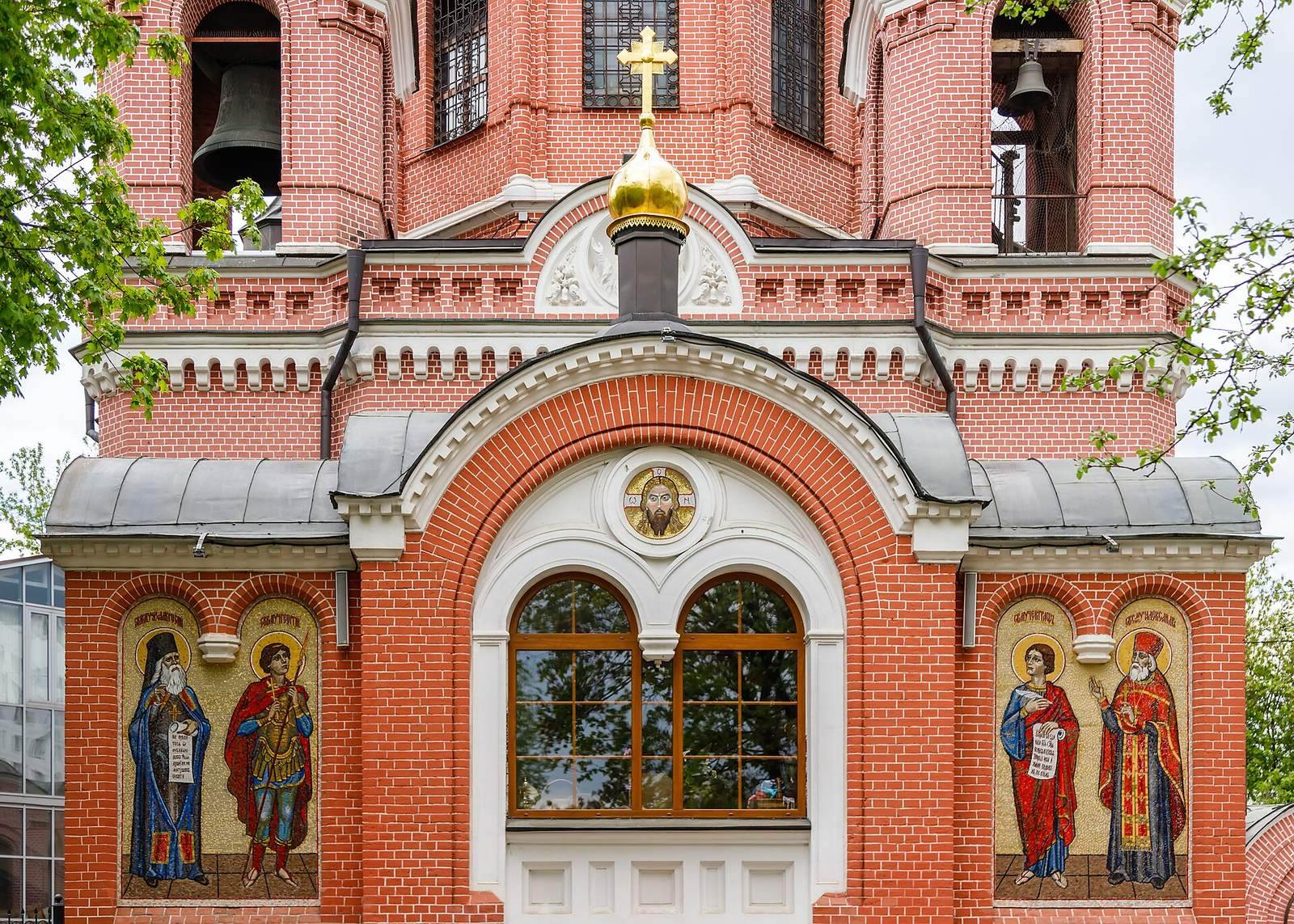
The present brick church has six domes and one nave, the main worship space. It is arranged as an upper church dedicated to the Sign and a lower church dedicated to St Nicholas. The main altar, the sanctuary area, honors the Sign; the other two altars are dedicated to St Nicholas the Wonderworker and the martyr St Evgraf. One iconostasis, a screen of icons separating the sanctuary from the worship space, stands within the church.
Icons and sacred objects
Surviving original icons
Among the church’s original furnishings, three icons survived the looting: its patronal icon, an icon of St Nicholas, and an icon of Christ the Savior.
Icons given to the church
An anonymous parishioner donated an icon of the Sign, which was brought to the church on 10 December 1991, the day of its first service after worship resumed. An icon of the Theotokos titled Quick to Hear, from the Athonite Monastery of St Panteleimon, was given to the church in 1996.
Other sacred objects
The lower St Nicholas church contains an icon of the Theotokos titled Kazan. At the entrance to that church stands a carved Crucifix, one of the earliest sacred objects of the revived parish. In the upper church, a reliquary, a container for relics, holds fragments of saints’ relics for veneration during services. Other sacred objects include icons of the apostles Peter and Paul and of St Alexis of Yuzha.