Church of the Protection of the Theotokos in Pokrovskoye-Streshnevo: An Orthodox Estate Church
Site at a Glance
- Popularity
- Medium
- Country
- Russia
- Primary era
- Early Modern
- Eras represented
- Early Modern, Modern
- Civilizations
- Russian
- Site type
- Religious
- Remains
- Church
On this page11 sections
History
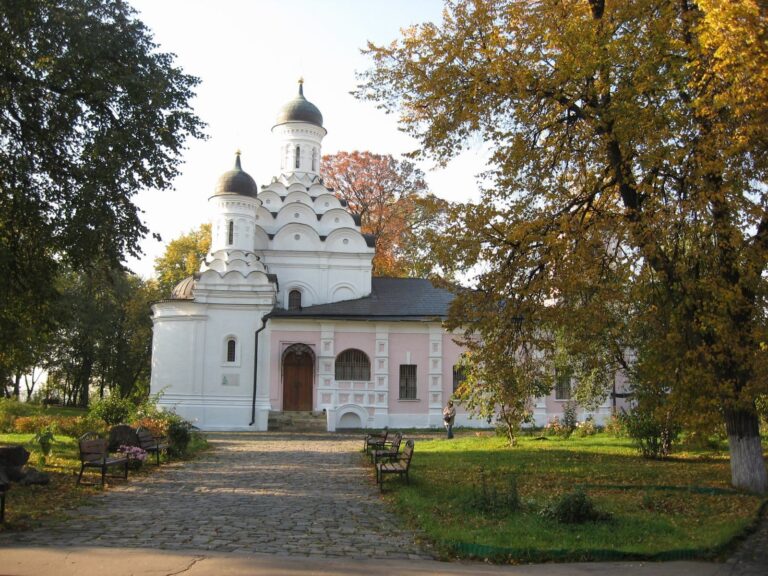
The Church of the Protection of the Theotokos in Pokrovskoye-Streshnevo is an active Orthodox manor church associated with the Pokrovskoye-Streshnevo estate in Russia. Its dedication refers to the Intercession of Mary, the mother of Jesus, an Eastern Christian feast focused on her protective intercession. Built by the early seventeenth century, the church is an uncommon example of an estate church from this period in Moscow and the surrounding region.
Foundation and eighteenth-century remodeling
Deacon Mikhail Danilov, an ordained minister who assisted in Orthodox worship, built the church after buying the land from a son of Andrei Palitsyn, a high-ranking noble. The church is first recorded in 1629, a date also given for its foundation, although its exact construction date is uncertain. One interpretation places its building in the 1620s. Later estate owners argued that it was several decades older and that a refectory, or communal dining room, was added around 1629.
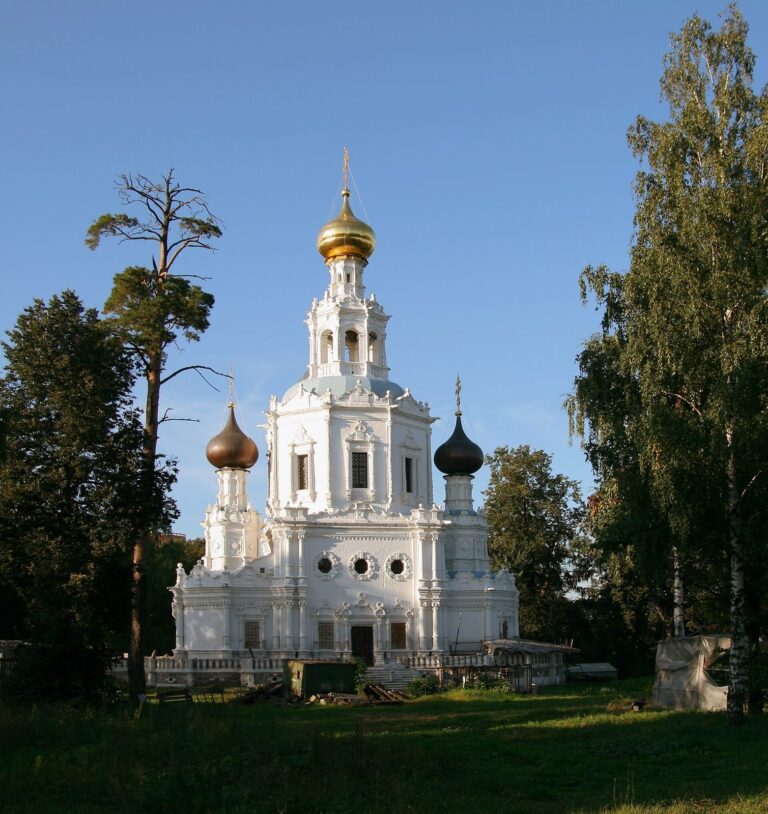
In 1750, estate owner Peter Streshnev arranged a remodeling that introduced Baroque features, an elaborate architectural style, while preserving the earlier plan. A three-tier bell tower was completed about 1760. The church’s exterior underwent little change until the late nineteenth century.
Nineteenth-century disruption and expansion
During the French invasion of Russia, the church was desecrated and used as a stable. Following the French defeat, it was reconsecrated in 1812, and the bell tower’s upper tier was rebuilt soon afterward.
The parish grew considerably in the second half of the nineteenth century. Estate owner Princess Evgenia Shakhovskaya-Glebova-Streshneva opposed enlarging the church and unsuccessfully sought to have some parishioners transferred to another parish. In 1894, villagers petitioned the Moscow Ecclesiastical Consistory, the diocesan administrative body, for permission to expand it. Tea merchant Pyotr Botkin financed the reconstruction. The church walls and ceiling were painted in 1905, and the paintings were restored about two decades later.
Closure, restoration, and renewed use
The Moscow Oblast Executive Committee ordered the church closed in 1931, and its rector, Father Peter Velezhev, was arrested. After the Second World War, the building was assigned to a fuel laboratory at the Civil Aviation Research Institute and ceased to serve as a church. Its appearance and interior were substantially altered.
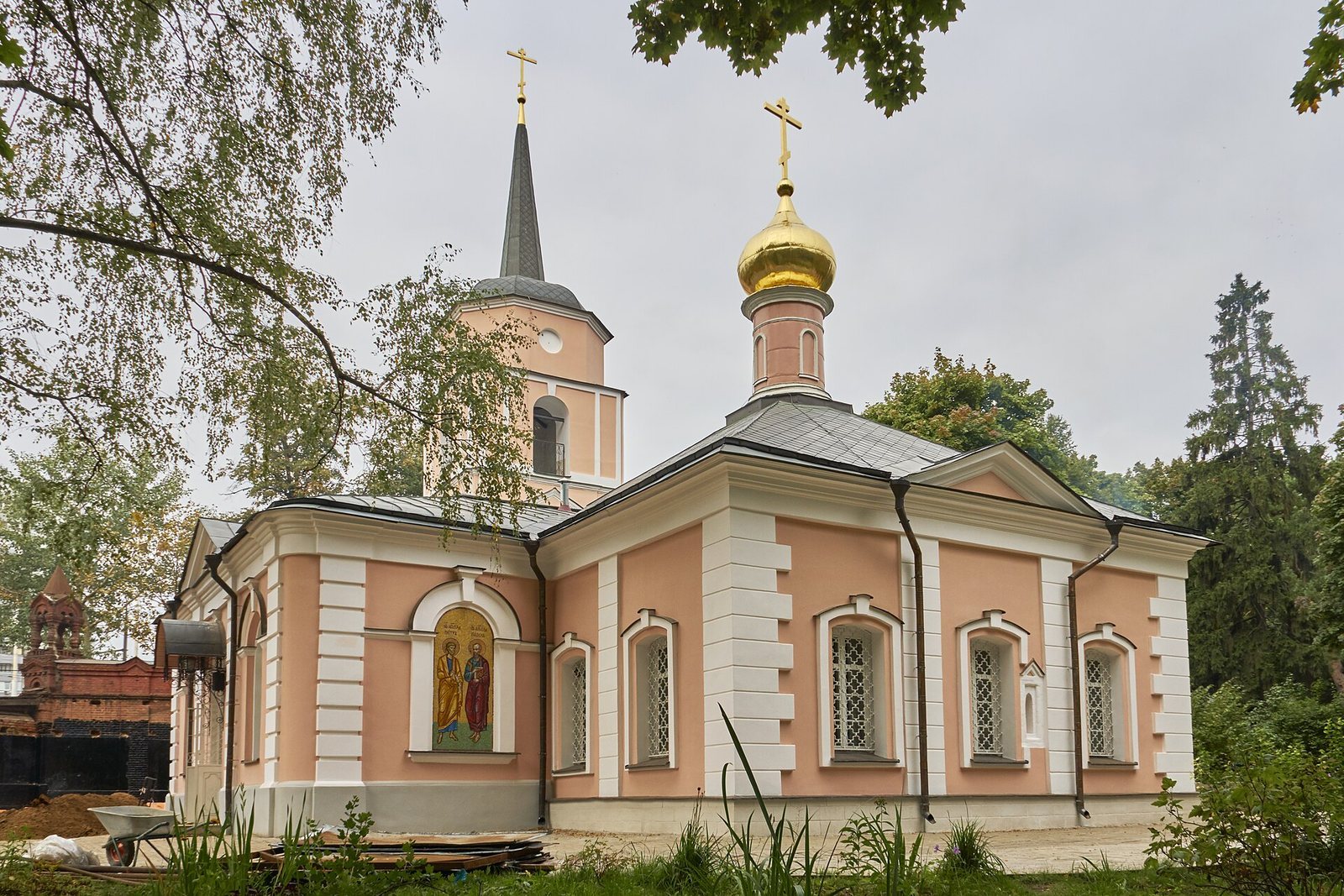
A restoration campaign began in the late 1980s and continued into the early 1990s. The Russian government transferred the building to the Russian Orthodox Church in 1992, and it was consecrated on 6 December 1993. Further restoration continued in later years, including work on the facade and its original pink color. In September 2011, Patriarch Kirill granted the church the status of a patriarchal metochion, a church under the patriarch’s direct authority. It belongs to the Moscow Diocese and the Assumption Deanery, and is part of the Pokrovskoye-Glebovo-Streshnevo estate complex. The church is protected as a federally significant architectural monument.
Remains
The surviving brick church brings together its early plan, later side chapels, and bell tower. Its fabric and decoration reflect successive periods of remodeling and restoration.
Building and tower
Main church and side chapels
The 1750 remodeling added Baroque features while retaining the earlier plan. In 1894, reconstruction removed the old refectory and added two side chapels, one dedicated to Saint Nicholas the Wonderworker and the other to Saints Peter and Paul. These additions form part of the church’s later architectural composition.
Bell tower
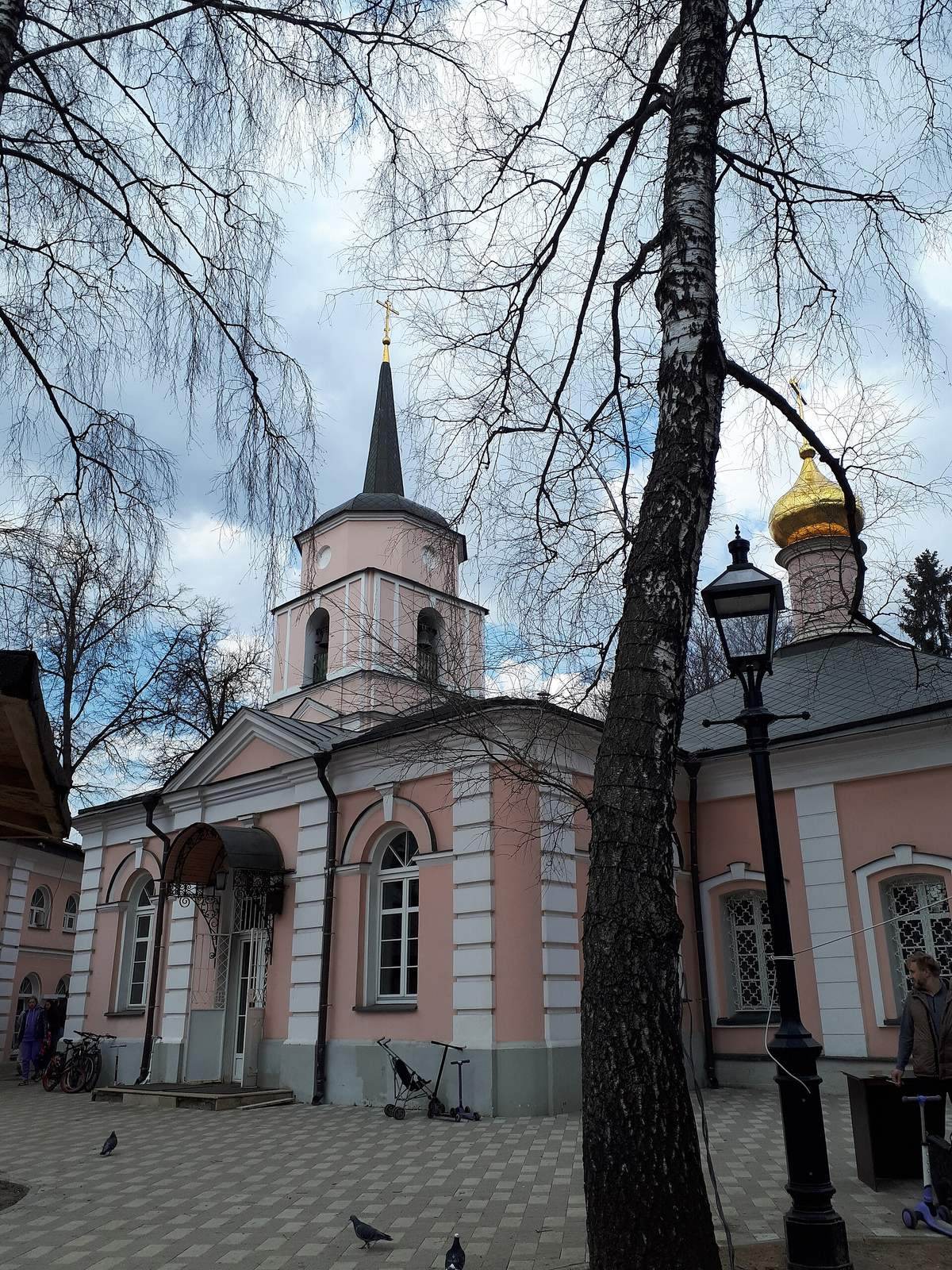
The three-tier bell tower was completed around 1760. Its upper tier was rebuilt after the church’s reconsecration in 1812, then dismantled during the postwar period.
Decoration and devotional furnishings
Paintings and facade mosaics
Paintings covered the church’s interior walls and ceiling. After the early twentieth-century painting and subsequent restoration, postwar use brought major changes to the interior. Later restoration recovered key decorative features. Three mosaic murals adorn the facade; Belarusian specialists completed the last of them in May 2006. The church’s original pink exterior color was restored in the second half of the 2010s.
The Nicholas chapel
The chapel dedicated to Saint Nicholas contains a reliquary with a fragment of the saint’s relics and an icon of Saint Nicholas, Archbishop of Myra.