Church of the Protection of the Theotokos in Bratzevo: A 17th-Century Orthodox Church
Site at a Glance
- Popularity
- Medium
- Country
- Russia
- Primary era
- Early Modern
- Eras represented
- Early Modern
- Civilizations
- Russian
- Site type
- Religious
- Remains
- Church
On this page10 sections
History
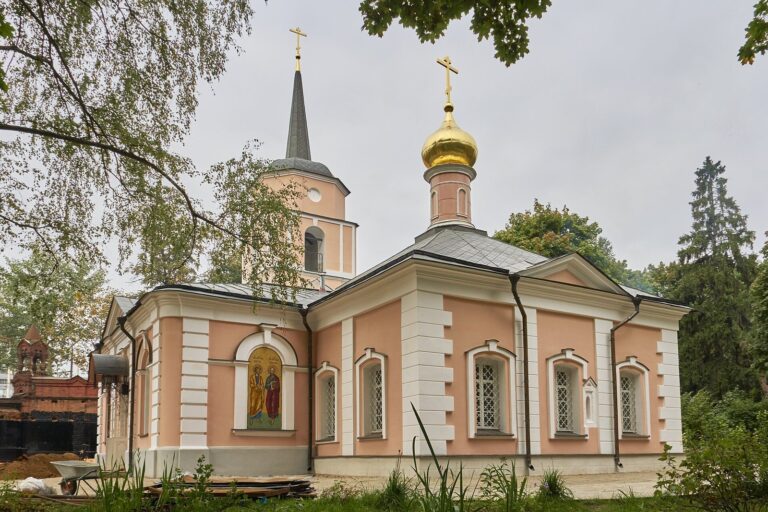
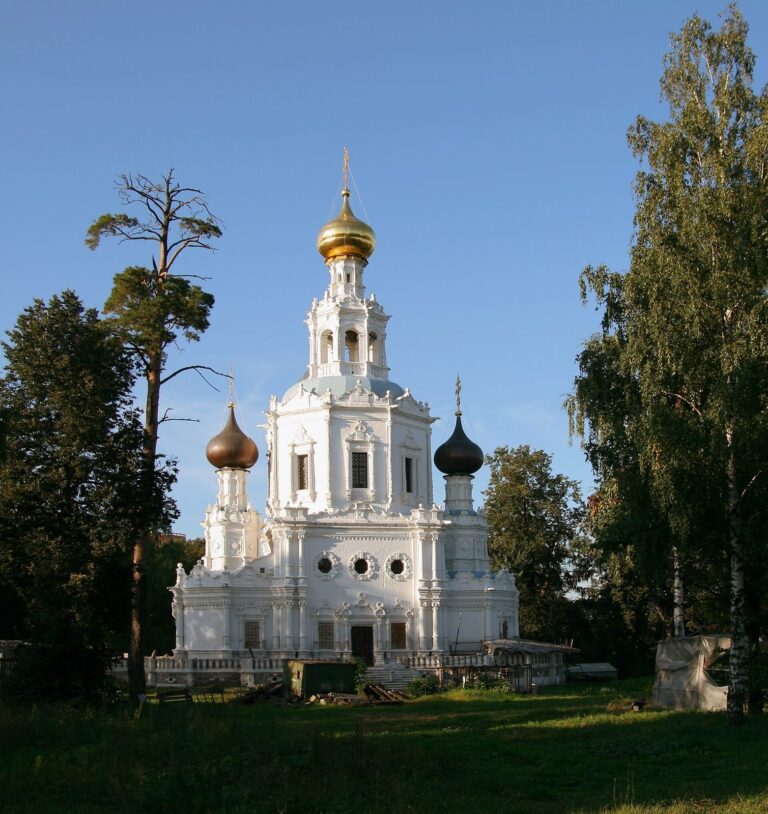
The Church of the Protection of the Theotokos in Bratzevo is an active Russian Orthodox parish church in Moscow’s Severnoye Tushino district, Russia. Theotokos is the Eastern Christian title for Mary, the mother of Jesus. Built in 1672 on Bogdan Khitrovo’s estate, the church is closely connected with Brattsevo Estate, an architectural and landscape-garden ensemble dating from the 17th to 19th centuries.
Brattsevo and the church’s construction
The village of Brattsevo was first recorded in 1565. It briefly belonged to a monastery before passing through the hands of Dmitry Godunov, nobles A. I. and M. I. Zubov, and A. M. Supneva. Supneva sold the village to Bogdan Khitrovo in 1657, after which building activity on the estate expanded.
Khitrovo was a close associate of Tsar Alexei Mikhailovich, who ruled from 1645 to 1676. He became a boyar, a high-ranking Russian noble, and served as a palace steward. From 1661 he oversaw the Armory Chamber, a royal institution responsible for arms, regalia, and skilled crafts. The stone church was built on his estate in 1672.
Closure and return to worship
After 1917 the church fell into disrepair, and valuable furnishings and icons were taken away. At the initiative of the Progress factory, it closed in early 1934. The bell tower was demolished, while the dome drums and deteriorated porticoes were dismantled. From the mid-1960s, the altered building was used first by a dye factory, then as a warehouse and an automobile service station. The parish school building became housing, and a shop occupied the watchman’s lodge.
An all-night Orthodox vigil took place in the church on October 13, 1992, followed by a lesser consecration. The first Divine Liturgy, the church’s principal Eucharistic service, was held on April 17, 1993, Holy Saturday. The church is now part of the Russian Orthodox Church’s Moscow City Diocese, a church district, and Spasskoye Deanery, a subdivision of a diocese. Its parish also serves five chapels: one honoring Prince Dmitry Donskoy, a 14th-century prince of Moscow, in Severnoye Tushino; two at Tushino Children’s Hospital, dedicated to the Theotokos under the title “The Healer” and to Saint Panteleimon, venerated as a healer and martyr; one in Brattsevo dedicated to the Feodorovskaya Icon of the Theotokos; and one honoring Saint Nicholas of Myra. The church is protected as a cultural heritage monument of federal significance in Russia.
Remains
Church architecture and fittings
Plan and form
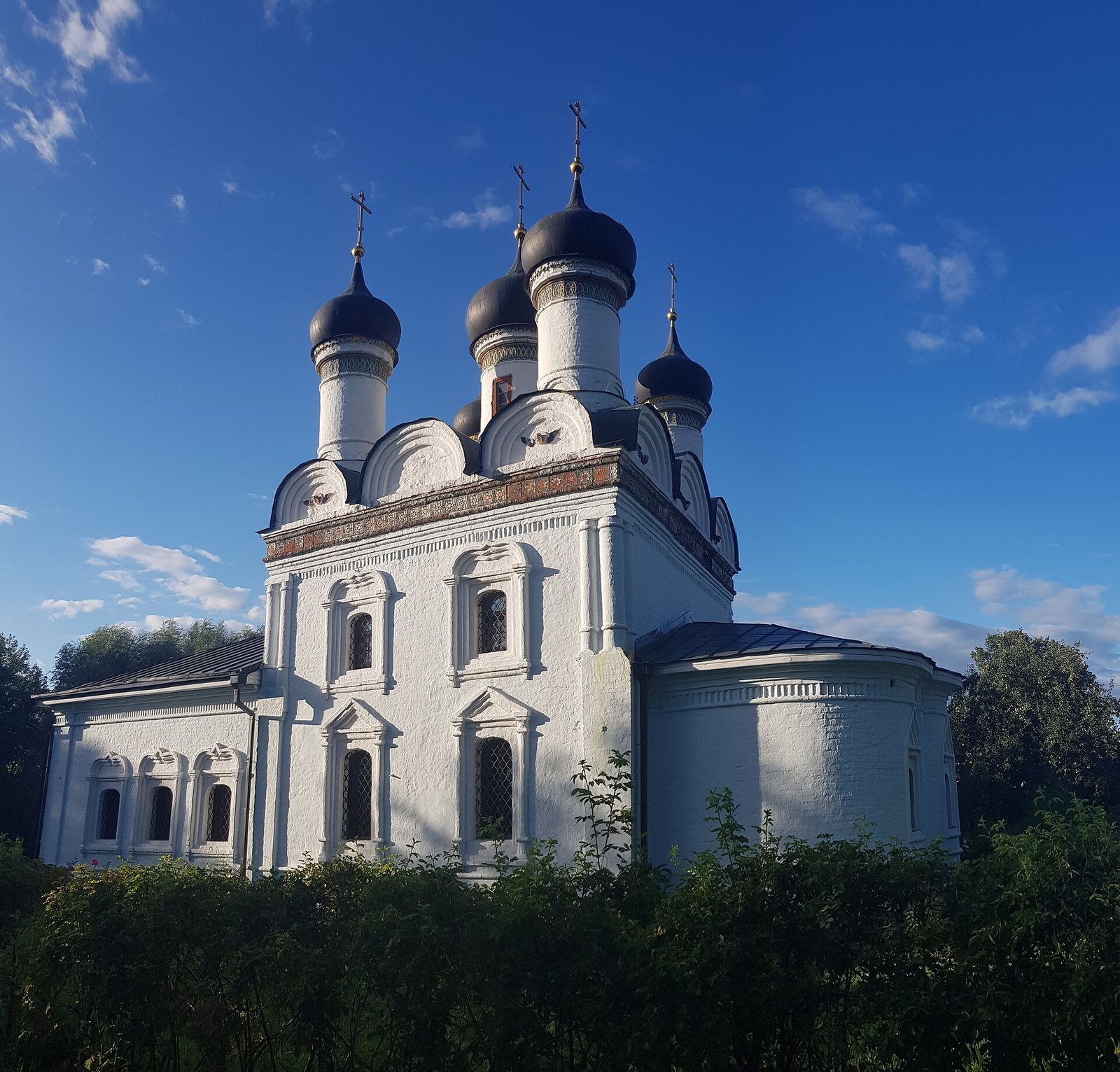
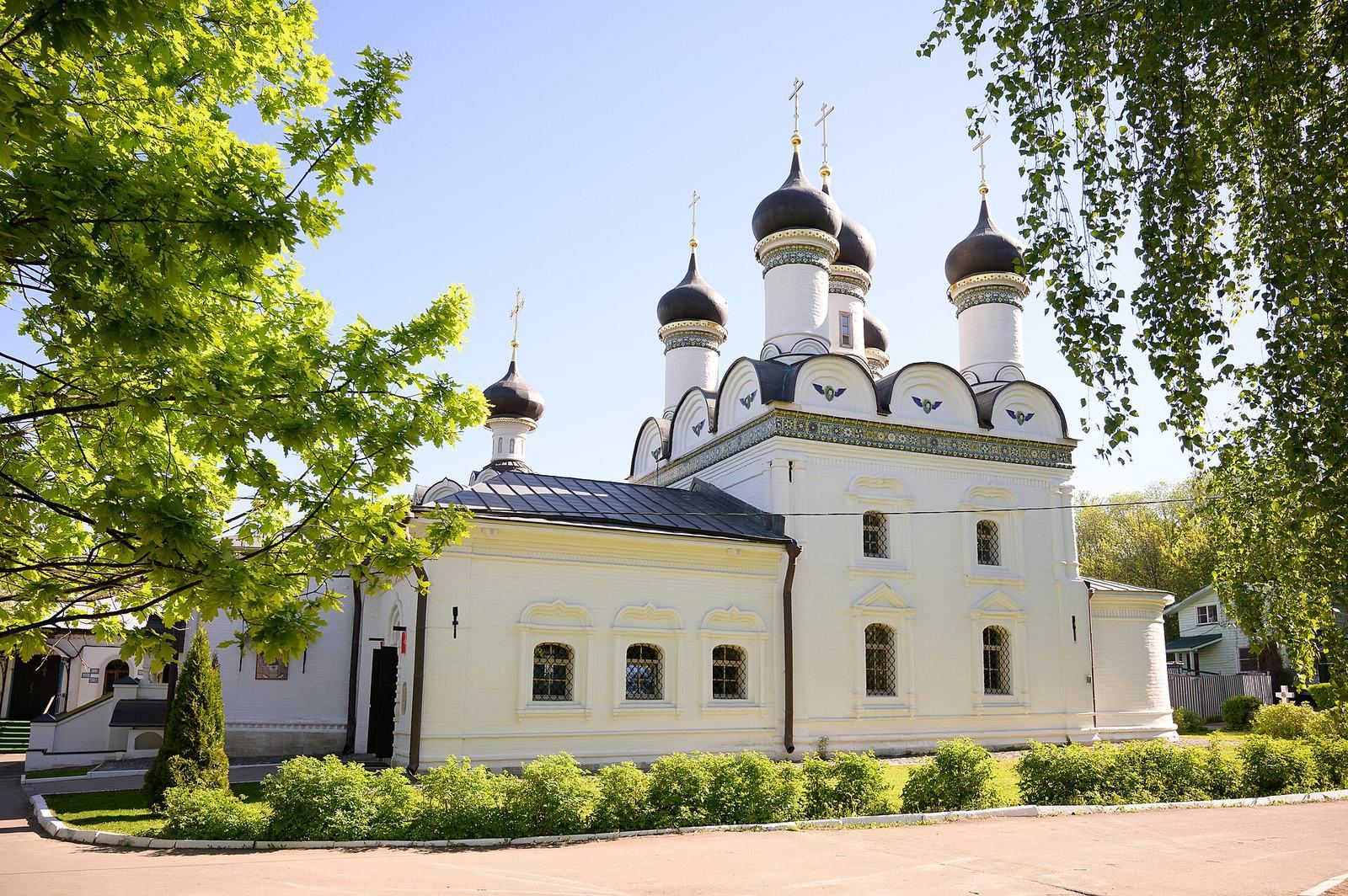
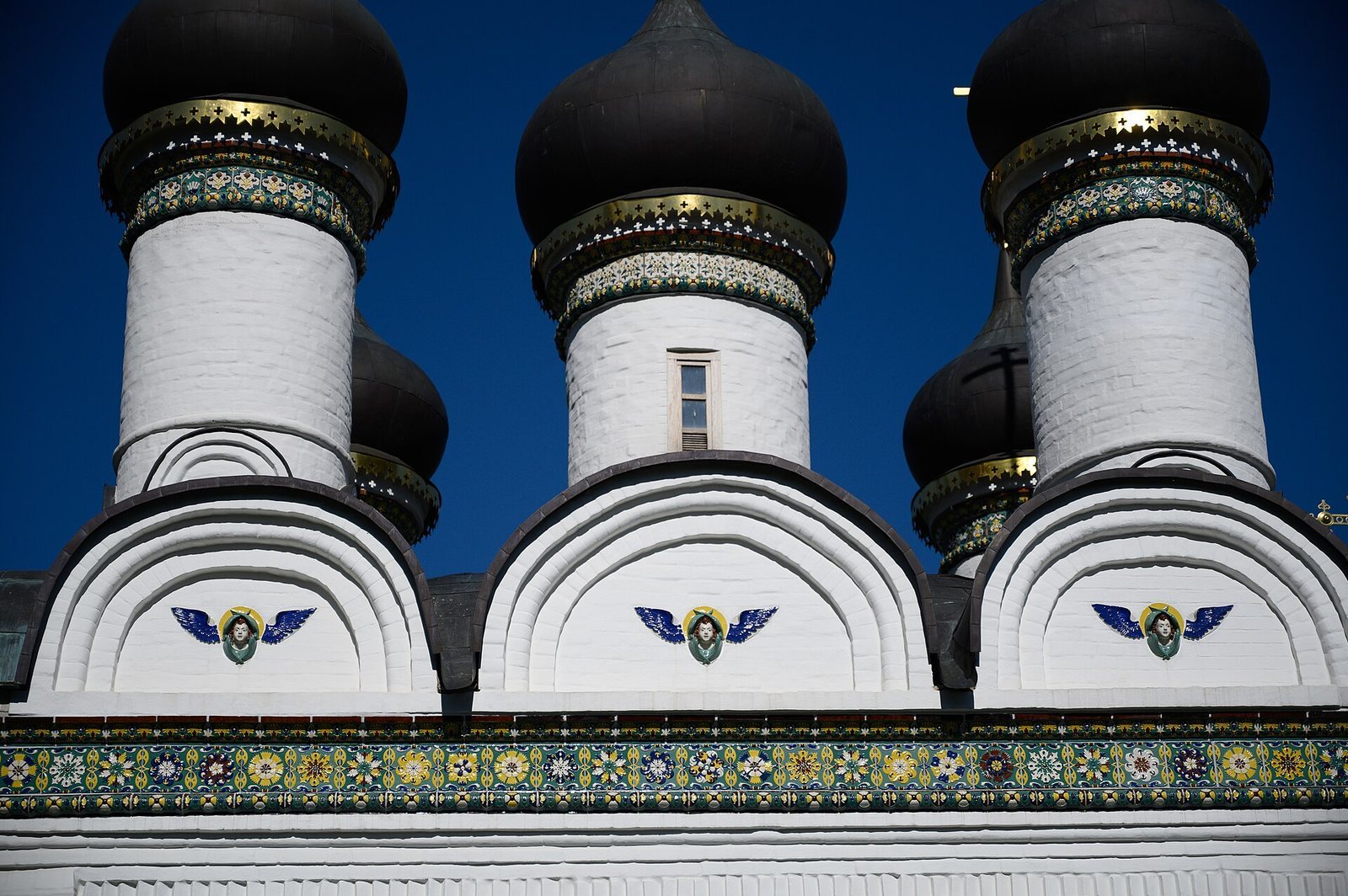
The stone church is centered on a four-sided main body that rises through two storeys and has no interior support pillars. Its interior is covered by a vaulted ceiling. The design uses five domes and several tiers of kokoshniks, decorative gable-like forms. A strongly projecting, three-part apse, the projecting end of the church, extends to the east.
Glazed tile decoration
Colored glazed tiles ornament the main cornice and all five domes, with smaller patterns on the domes. Beneath the kokoshnik tiers, a band of separate rectangular tiles circles the main body. Their low-relief rosettes use geometric shapes that suggest flowers, set against green and painted in yellow, blue, and white. A lower glazed molding and a curved-profile cornice echo the band. Relief cherubim decorate the triangular panels beneath the kokoshniks; their blue wings and modeled heads stand out against the whitewashed surface.
Side chapels
The church has two side chapels, one dedicated to the Protection of the Theotokos and the other to Saint John Chrysostom, a fourth-century Christian theologian and archbishop of Constantinople.
Foundation inscription
A stone slab bears an inscription in ornamental old Russian lettering. It gives August 30, 1672, as the church’s date and names Bogdan Matveevich Khitrovo and his wife, Maria Ivanovna, as its builders. It also identifies Job as Khitrovo’s namesake. The slab was first set into the outside of the church porch, later kept inside the church, and returned to a wall in July 2012.
Venerated icons
The church’s venerated icons include a wonderworking icon of the Theotokos titled “The Inexhaustible Cup” and an icon of the Protection of the Most Holy Theotokos.