Sts. Boris and Gleb Church: Palace Church of the Princes of Rostov
Site at a Glance
- Popularity
- Low
- Country
- Russia
- Primary era
- Early Modern
- Eras represented
- Medieval, Early Modern
- Civilizations
- Russian
- Site type
- Religious
- Remains
- Church
On this page7 sections
History
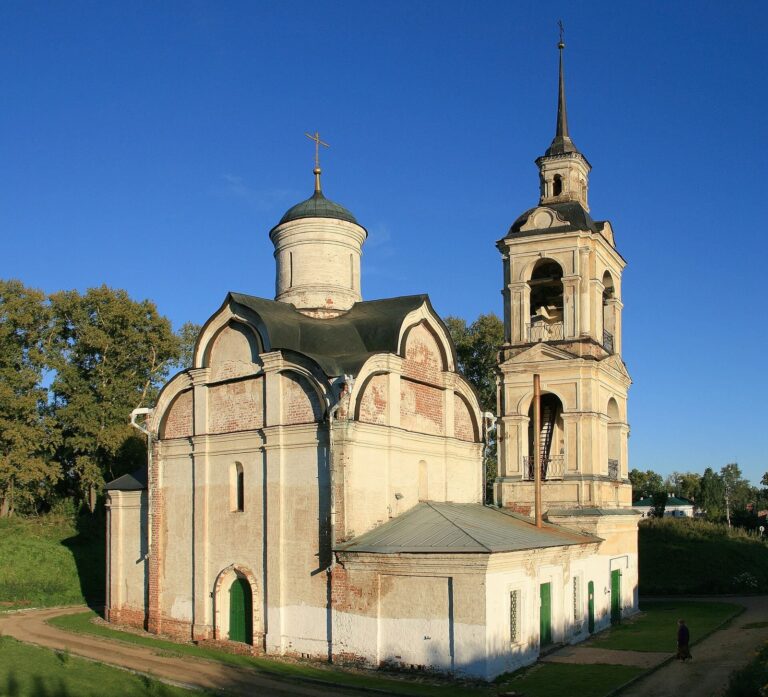
Sts. Boris and Gleb Church is a ruined Orthodox church in Russia that served as the palace church of the princes of Rostov. Its stone foundation dates to the early 13th century, while the present building took provincial Baroque form in 1761. The church is the sole surviving architectural monument of the Rostov Appanage Principality, a territory governed by a branch of the ruling dynasty.
Foundation and princely role
Local tradition credits Prince Konstantin Vsevolodovich with building a stone church on the site of an earlier wooden one dedicated to Saints Cyricus and Julitta. The Laurentian Chronicle, a medieval Russian chronicle, places the stone church’s construction between 1214 and 1218. Its dedication honored Boris and Gleb, princes venerated as the first saints of Rus. Other Rurikid rulers, members of the dynasty that governed medieval Rus, also dedicated palace churches to them, including at Vyshgorod, Grodno, and Kideksha.
The church stood in Rostov’s oldest core, a place associated with communal baptisms during the Christianization of Rus. Its dedication also gave its name to the medieval Boris-and-Gleb half of the city, ruled by descendants of Prince Konstantin Vasilyevich. The church belonged to the Orthodox Church and the Yaroslavl diocese.
The buried church and its identification
In the 1970s, archaeologist N. N. Voronin found fragments of thin brick at the site but did not recognize their importance. In 1986, archaeologist Oleg Ioannisyan identified the remains of a church buried beneath the later building and linked it to a Nikon Chronicle account of construction at the princely court in 1287. This interpretation challenged the belief that stone construction in northeastern Rus stopped after the 13th-century Mongol conquest until the time of Ivan Kalita, a 14th-century prince of Moscow. The buried building was considered the earliest surviving structure erected in Rus after the invasion.
Rebuilding and later use
Local merchants funded the church built in 1761. A small church dedicated to Saint Demetrius of Rostov was added on its north side the following year for services in cold weather. Both churches closed in 1928 and were subsequently used as a workshop and garage. Plans for a museum in the buried church and proposals to cosmetically restore the exterior led to debate; conservation instead kept the church in its ruined state.
Remains
The eighteenth-century complex
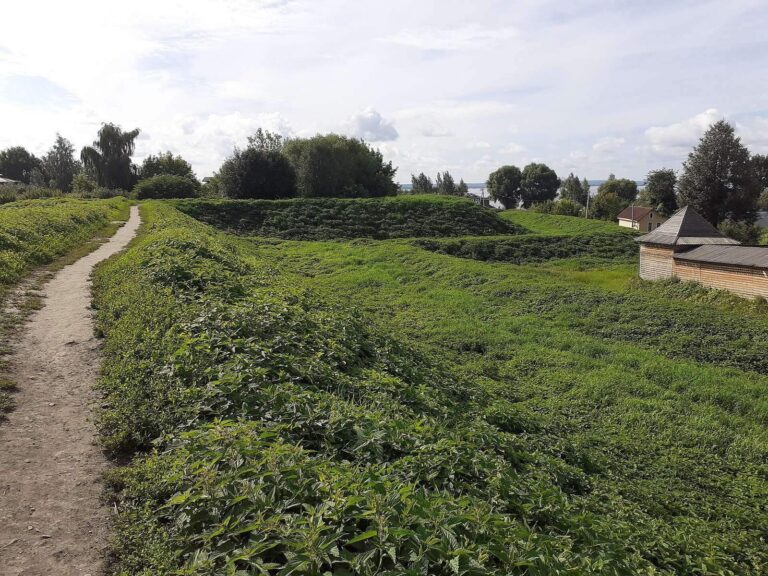
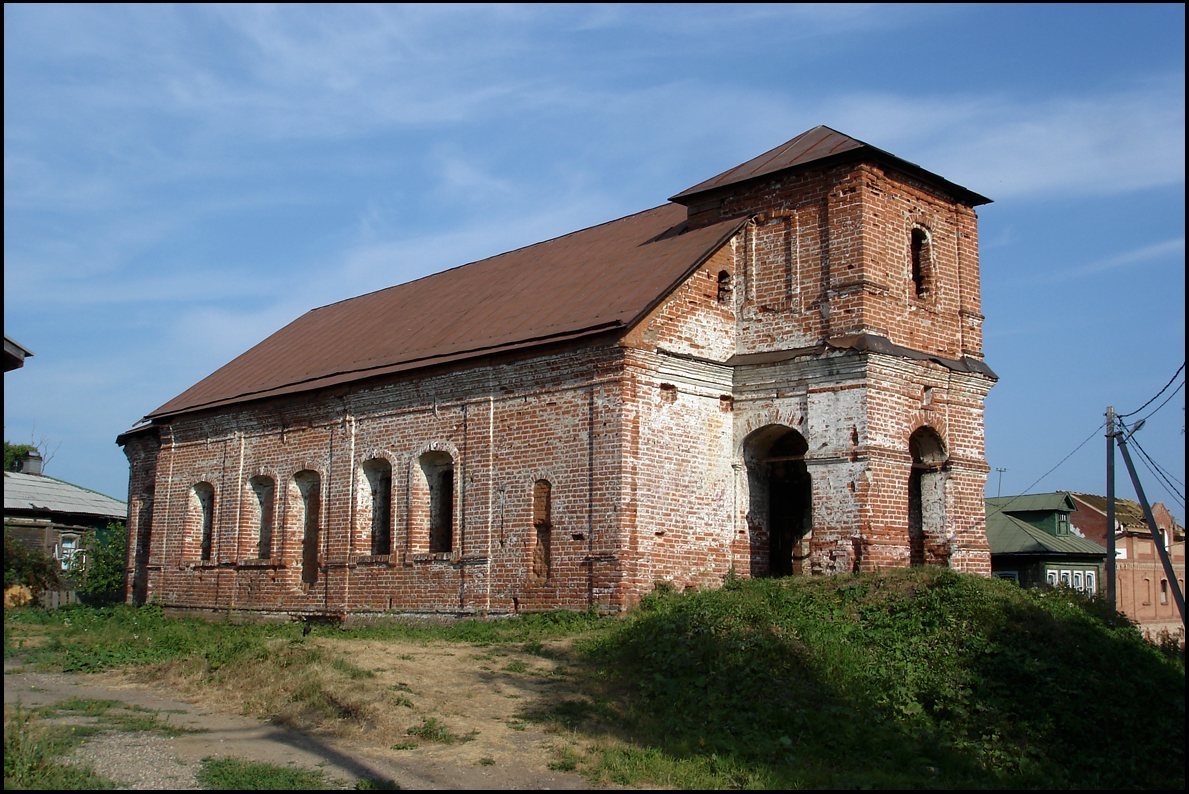
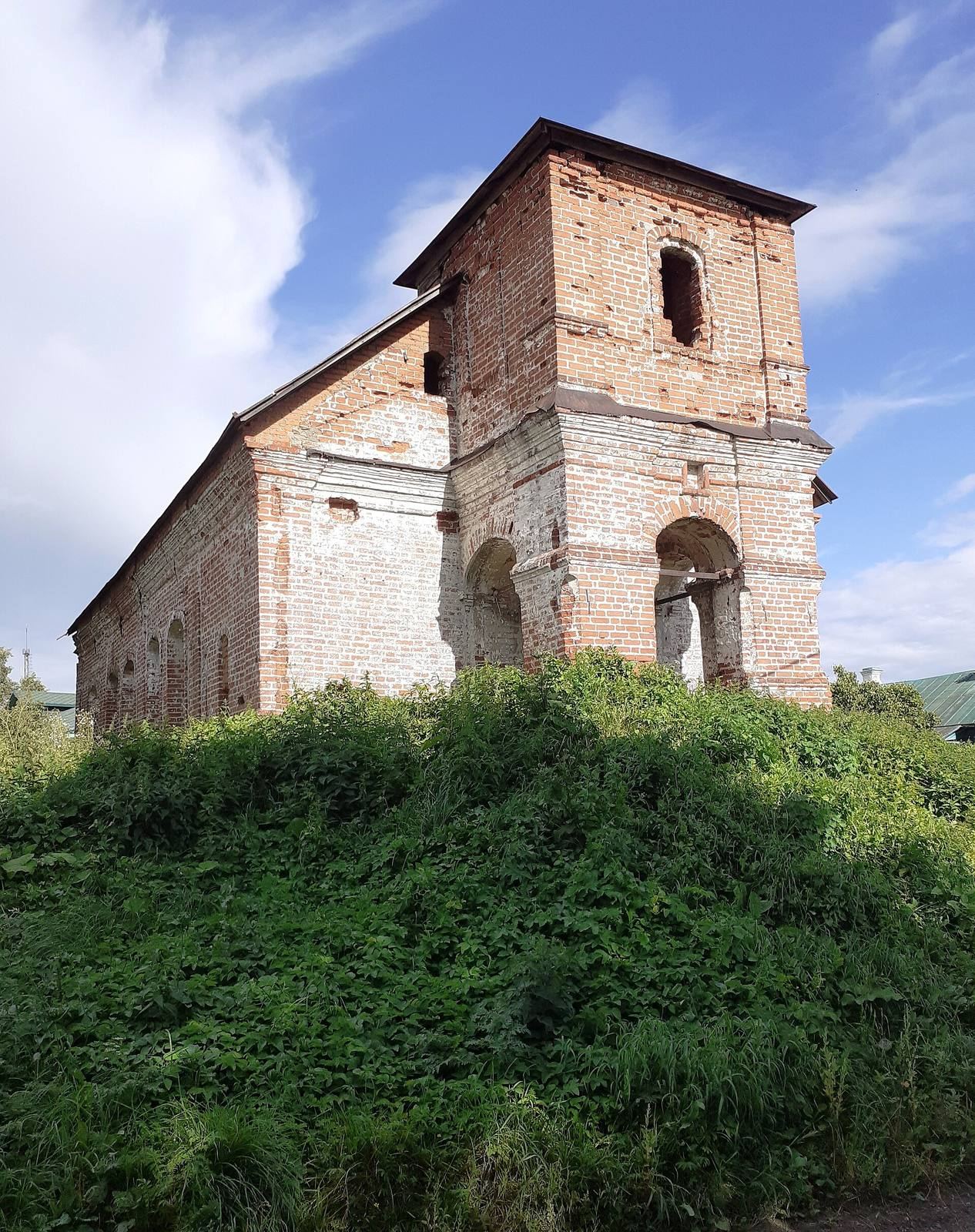
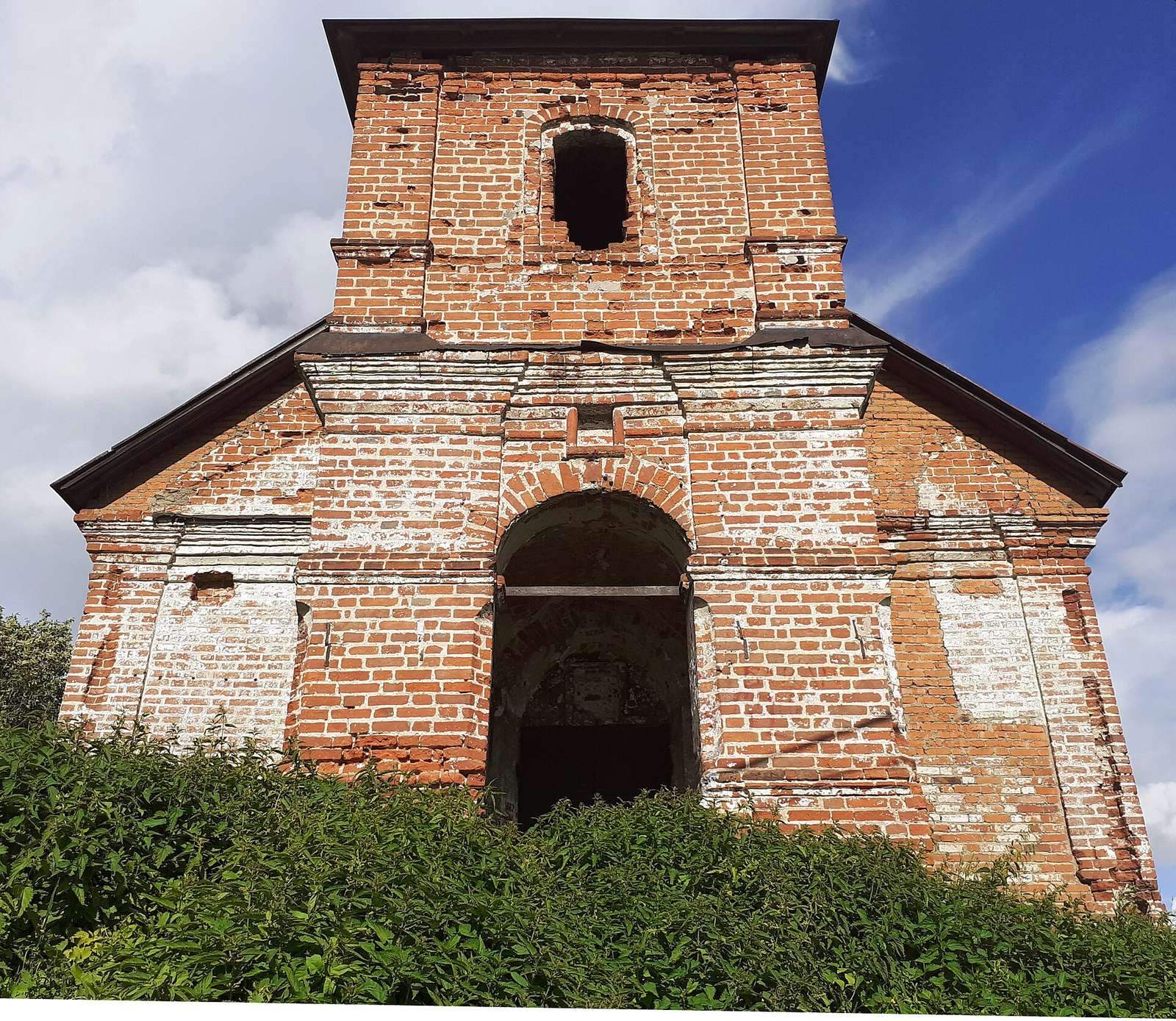
The church stands on a 17th-century fortification rampart at the western end of the Metropolitan’s Garden, where a river that has since disappeared once flowed into Lake Nero. Its main parts were arranged in a line: a high, eight-sided upper section, a hall beneath a gabled roof, and a three-tier bell tower once crowned by a spire. The building is now in ruins, and its domes and bell tower are lost. The smaller, pillarless church added on the north side in 1762 was intended for cold-weather worship.
The buried medieval church
About two-thirds of the earlier church was understood to survive beneath the 18th-century building, within the rampart. Its position resulted from its submergence in marshy ground and burial when the rampart was built. The structure has been reconstructed as a building with four substantial internal supports and a single projecting sanctuary end. Its rough rubble-stone walls were laid using formwork and later faced with thin white-stone slabs, a construction style considered unusual for church building before the Mongol conquest. Broken pieces of thin, flat brick found at the site may have been reused in the church rather than made for it.