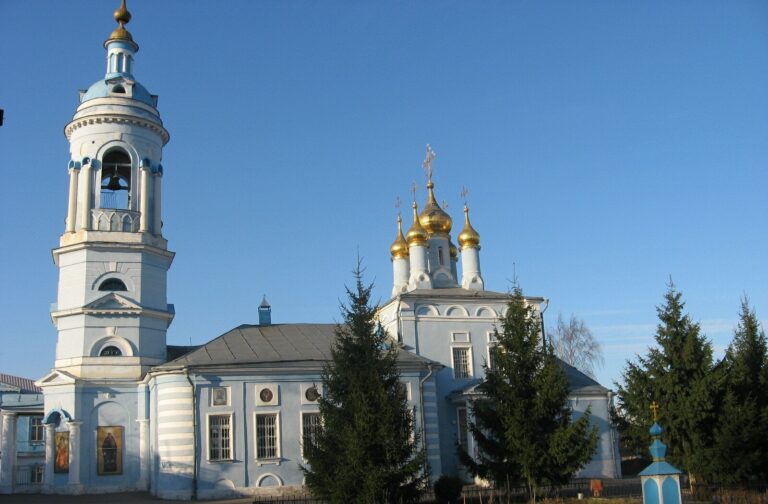
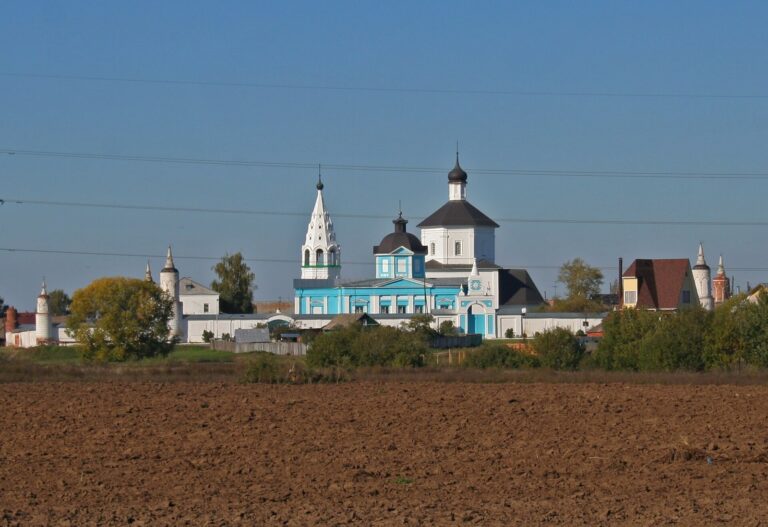
Church of the Holy Trinity, Kolomna: A Russian Orthodox Church
Site at a Glance
- Popularity
- Low
- Country
- Russia
- Primary era
- Early Modern
- Eras represented
- Early Modern, Modern
- Civilizations
- Russian
- Site type
- Religious
- Remains
- Church
On this page9 sections
History
The Church of the Holy Trinity is a Russian Orthodox church in Kolomna, Russia. Its stone building is dated to 1696, though 1713 is also given as a construction date. The church’s original design was Russian Baroque, and a Classical-style bell tower was added later.
Early church and settlement
Kolomna records from 1572 name the Church of the Life-Giving Trinity and a heated church dedicated to the Nativity of the Virgin. They also list a priest’s yard, a clerk’s yard, a prosphora baker’s yard, and 13 household plots on church land. A prosphora baker prepared the small loaves used in Orthodox worship.
The original Trinity church was made of wood. A chapel dedicated to the Prophet Elijah is mentioned in 1680. A settlement grew around the church, with coachmen among its main residents. After the village joined Kolomna, the area became known as the Yamskaya Settlement, a name reflecting its association with coachmen. The church was also called Trinity on Yamki, and is known as Trinity in the Yamskaya Settlement and Trinity on Repna.
Stone church and nineteenth-century rebuilding
The stone church replaced the wooden building. Mikhail Rodionov is credited with its design in the dating that places its construction in 1713. In 1816, a heated refectory, an attached hall, joined the bell tower to the church. The altars dedicated to Elijah and the Nativity of the Virgin were restored there.
The deteriorated bell tower was replaced between 1823 and 1825 by a Classical-style tower designed by Leonty Carloni. A substantial rebuilding in 1868 altered the church’s dome and roof.
Parish life and twentieth-century change
A parish school served the church, and a public library began operating there in 1902. An affiliated chapel was dedicated to an icon of the Mother of God associated with the Passion, the suffering and death of Jesus. When the chapel closed, its venerated carved wooden icon was moved to the Trinity church. After that church closed, the icon went to the Epiphany Church in Gonchary, named for the Orthodox feast commemorating Christ’s baptism. The former chapel became a House of Culture for Deaf people and was demolished in the mid-1970s.
The church survived the 1917 October Revolution, which brought the Bolsheviks to power, but later closed during the Soviet period. Its building was first used to make mustard, horseradish, and starch, and later served as a restoration workshop.
The church returned to worship in 1998, when restoration began, and a Sunday school opened that November. It is active and belongs to the Russian Orthodox Church’s Kolomna Diocese, a regional church jurisdiction, and First Kolomna Deanery, a local grouping of parishes.
Remains
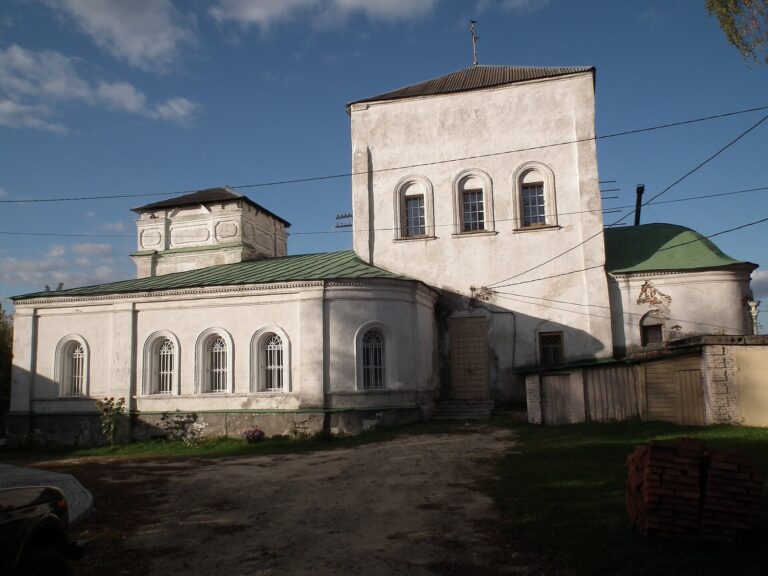
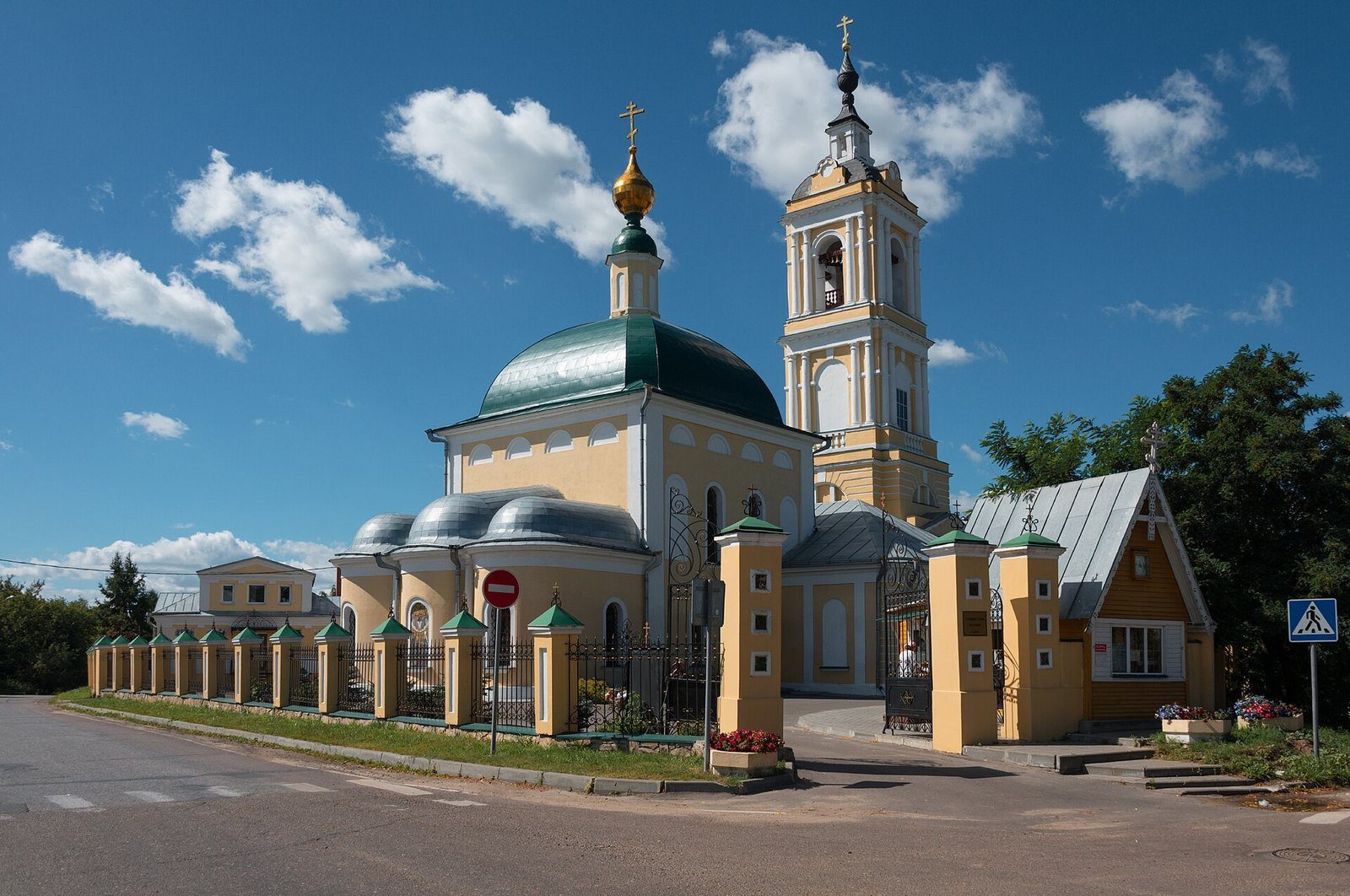
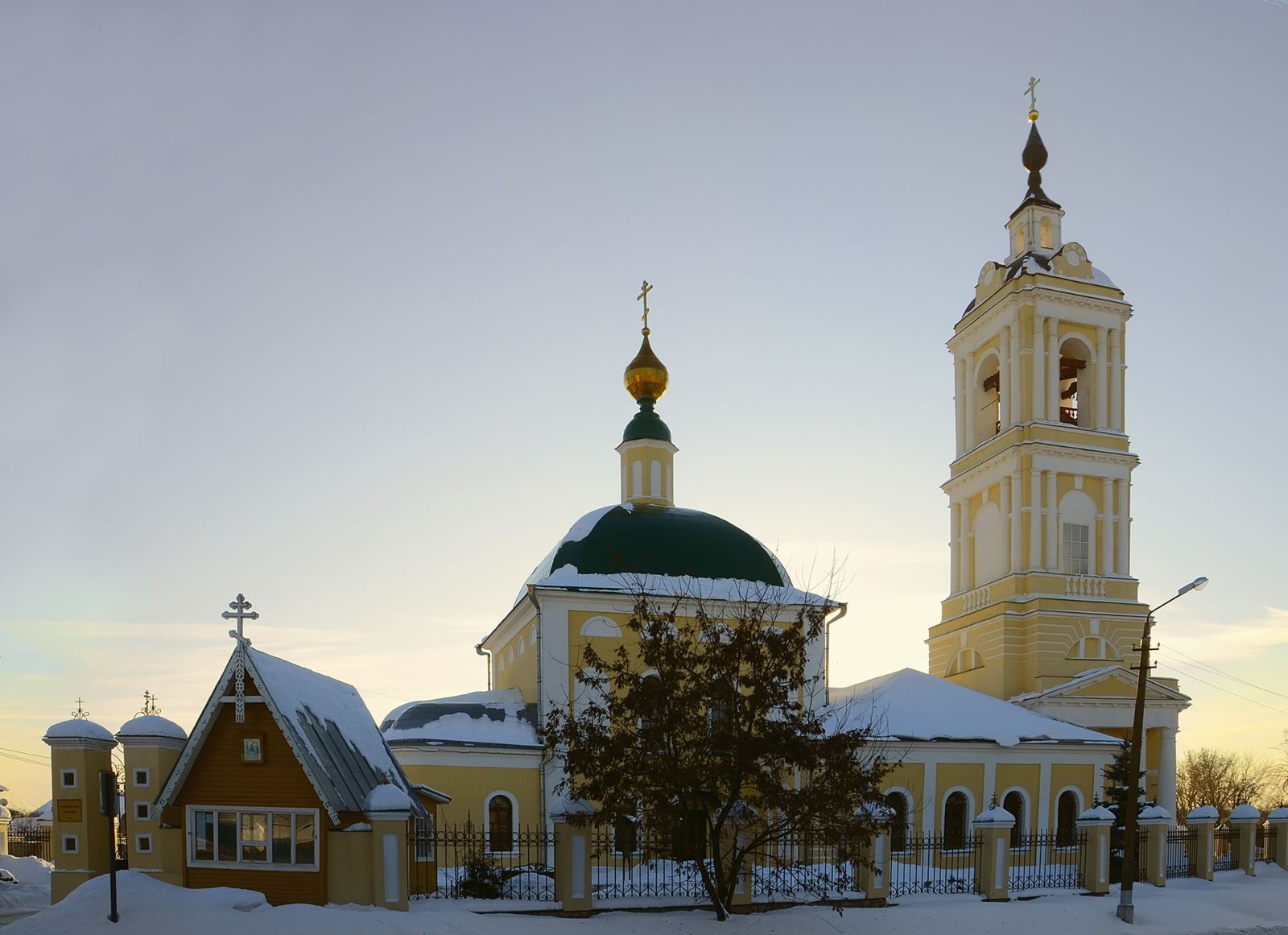
The church complex consists of the main worship building, a bell tower to its west, and a refectory connecting the two. The surviving ensemble brings together the church’s Russian Baroque design and the tower’s Classical style.
Main church
The church was originally crowned by five domes, and its walls had carved brickwork and tiers of kokoshniks, ornamental arch- or gable-shaped forms used in Russian architecture. Later alterations removed the carved brickwork and these ornamental forms, and a vault covered the upper part of the main block. The dome and roof were reshaped during the nineteenth-century rebuilding, leaving the church with a single dome. The exterior has been fully restored, while work on the interior continues.
Bell tower and refectory
The first bell tower stood west of the church and had a tent-shaped top. The replacement tower has a Classical design. The refectory forms the connection between the tower and church; it contains the restored altars dedicated to Elijah and the Nativity of the Virgin.
Parish grounds
The church property included a wooden gatehouse and a building for the parish school. An iron fence was erected around the church in 1868, and a wrought-iron fence was installed after the church returned to worship.
Interior and bells
During the building’s Soviet-era use, its frescoes and wall paintings were destroyed, and rubbish accumulated in the main altar. The church later received a set of bells cast in Voronezh. A further bell, weighing 140 kilograms, arrived from Yekaterinburg in 2004.