Roman Theatre of Aspendos: A Second-Century Roman Theatre
Site at a Glance
- Popularity
- Very High
- Country
- Turkey
- Primary era
- Classical
- Eras represented
- Classical
- Civilizations
- Roman
- Site type
- Entertainment
- Remains
- Theatre
On this page4 sections
History
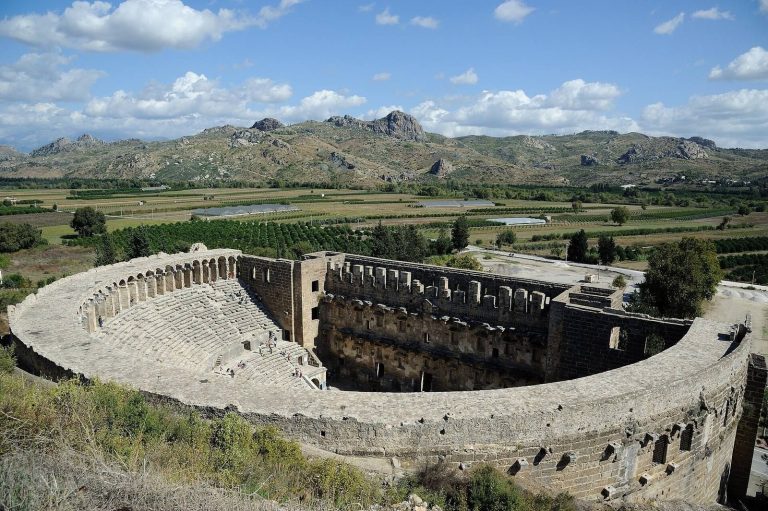
The Roman Theatre of Aspendos, in Turkey, was built in the second century CE during the reign of Marcus Aurelius (161 to 180). An inscription names the brothers Curtius Crispinus and Curtius Auspicatus as the patrons who commissioned the building, and identifies Zenon, a local Greek architect, as its designer. The theatre is among the best-preserved ancient theatres of the Greco-Roman world.
After Byzantine rulers left Aspendos, the theatre fell out of use. Under Seljuk rule it was repaired periodically and served as a caravanserai, a lodging and service stop for travelling caravans. In the thirteenth century, the Seljuks of Rum, a medieval Turkic dynasty that ruled parts of Anatolia, converted the stage building into a palace. In modern times, restoration returned the theatre to its original state.
Remains
Layout and seating
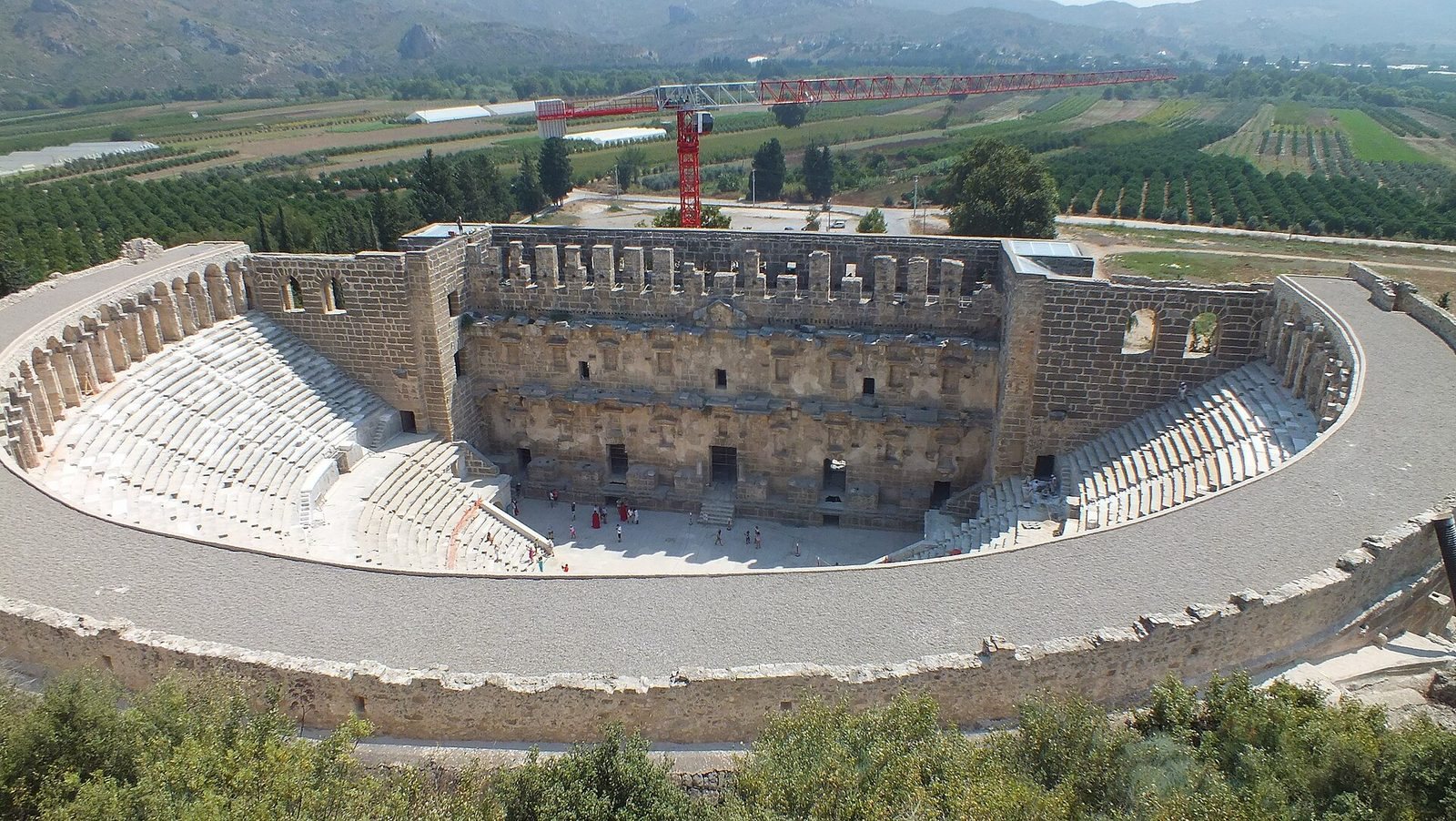
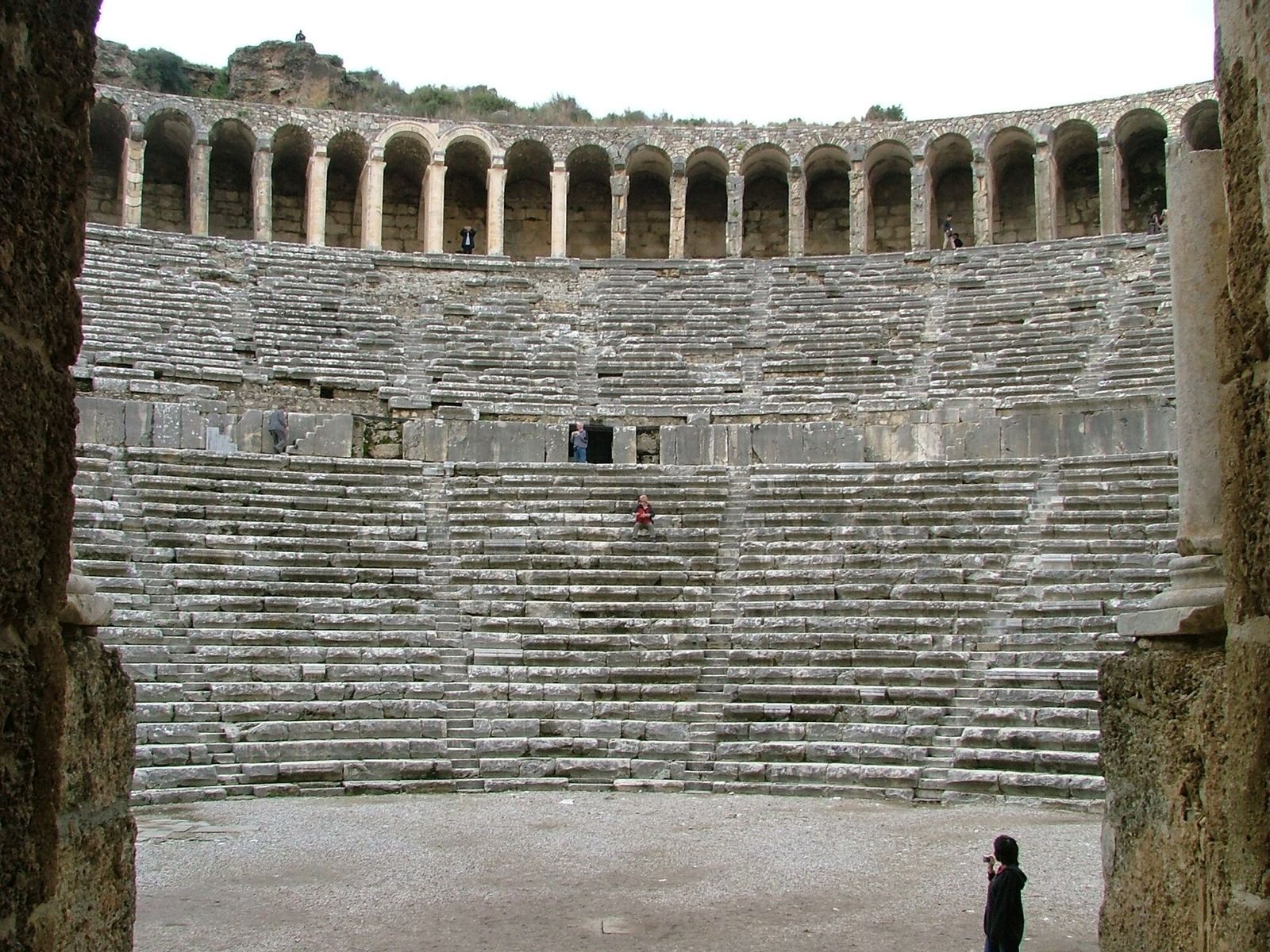
Built in stone near the former agora, an ancient city’s public gathering place and marketplace, the theatre rises about 15.7 metres. Its semicircular seating area is set partly into the northeastern hillside and partly above rows of stone arches. The seating measures about 96 metres across and has roughly 40 rows, divided into tiers by a single passage. The facade faces the city. Capacity estimates vary: some range from about 7,000 to 13,000, while other calculations suggest 7,300 to 7,600 seats, with capacity potentially reaching 8,500. Its semicircular plan distinguishes it from a fully circular or oval amphitheatre.
Stage and awning supports
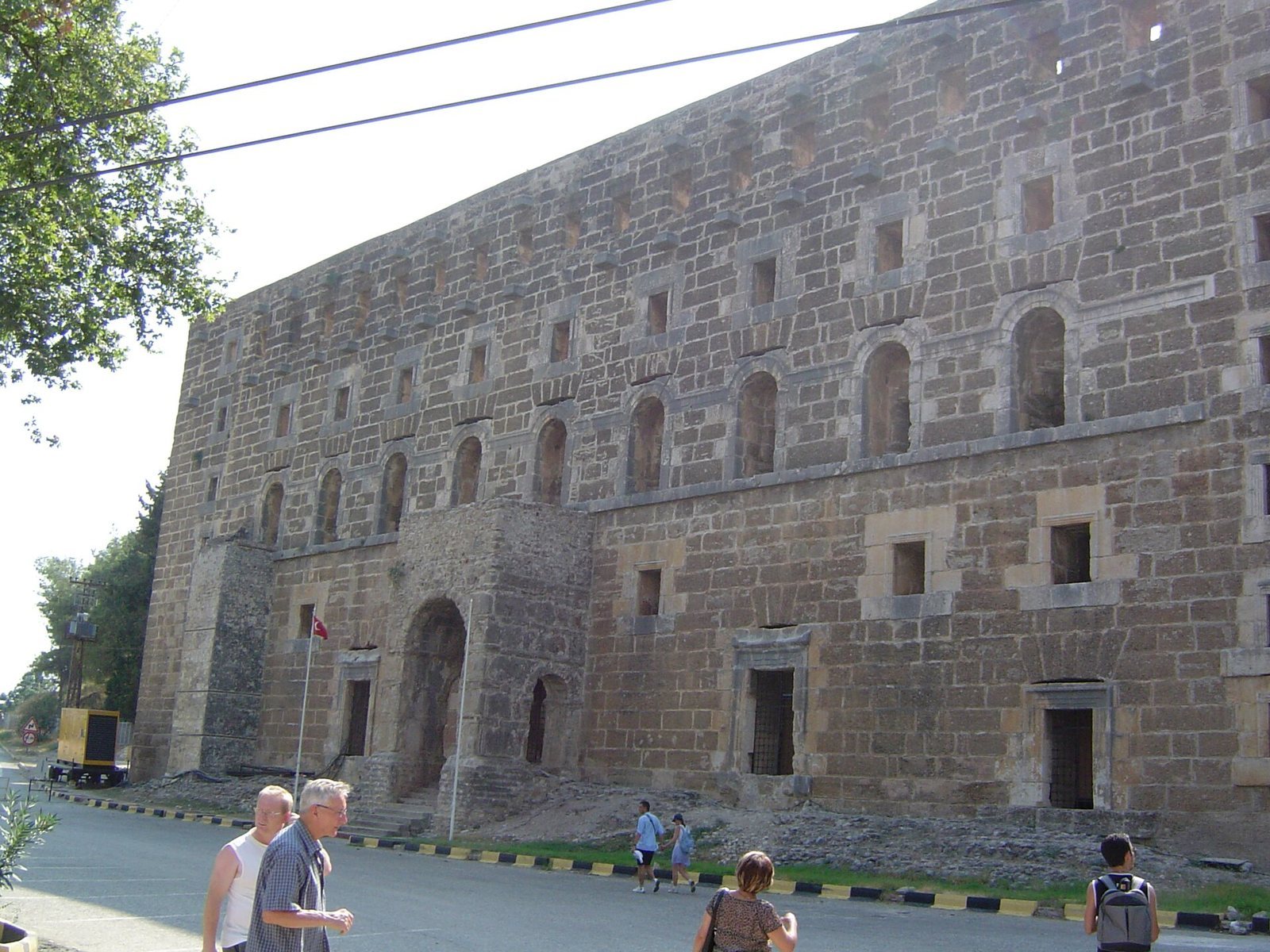
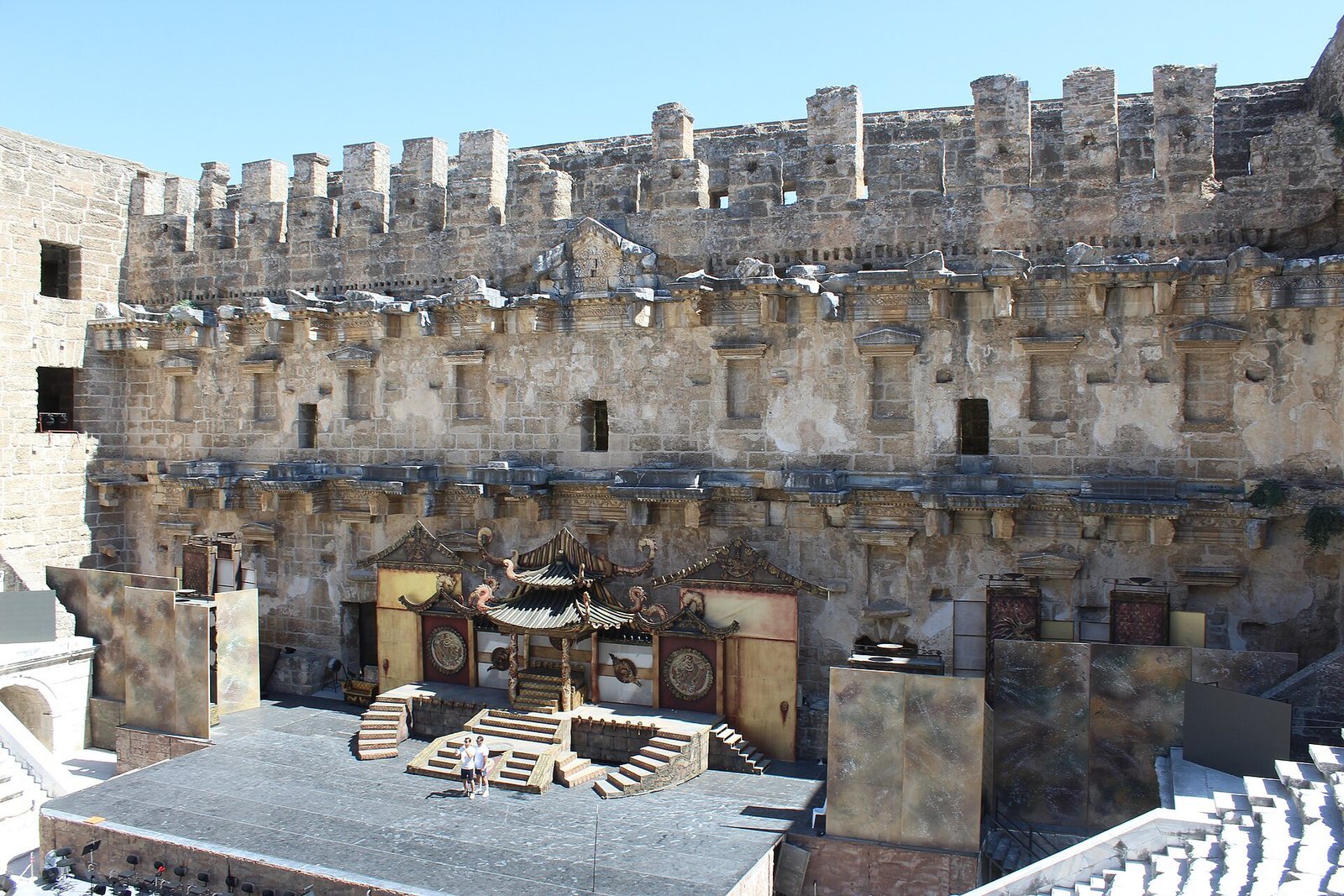
The stage wall remains intact, and its architectural decoration is well preserved. The original wooden ceiling extended about eight metres but no longer survives. Fifty-eight holes remain for the poles that once supported an awning; the poles and awning were lost during the building’s non-theatrical use.