Church of the Exaltation of the Holy Cross: A Terem Palace Chapel in the Moscow Kremlin
Site at a Glance
- Popularity
- Medium
- Country
- Russia
- Primary era
- Early Modern
- Eras represented
- Early Modern
- Civilizations
- Russian
- Site type
- Religious
- Remains
- Chapel
On this page13 sections
History
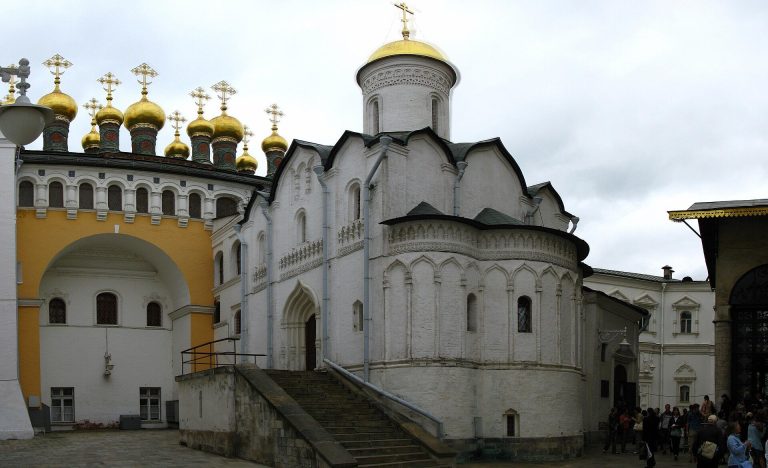
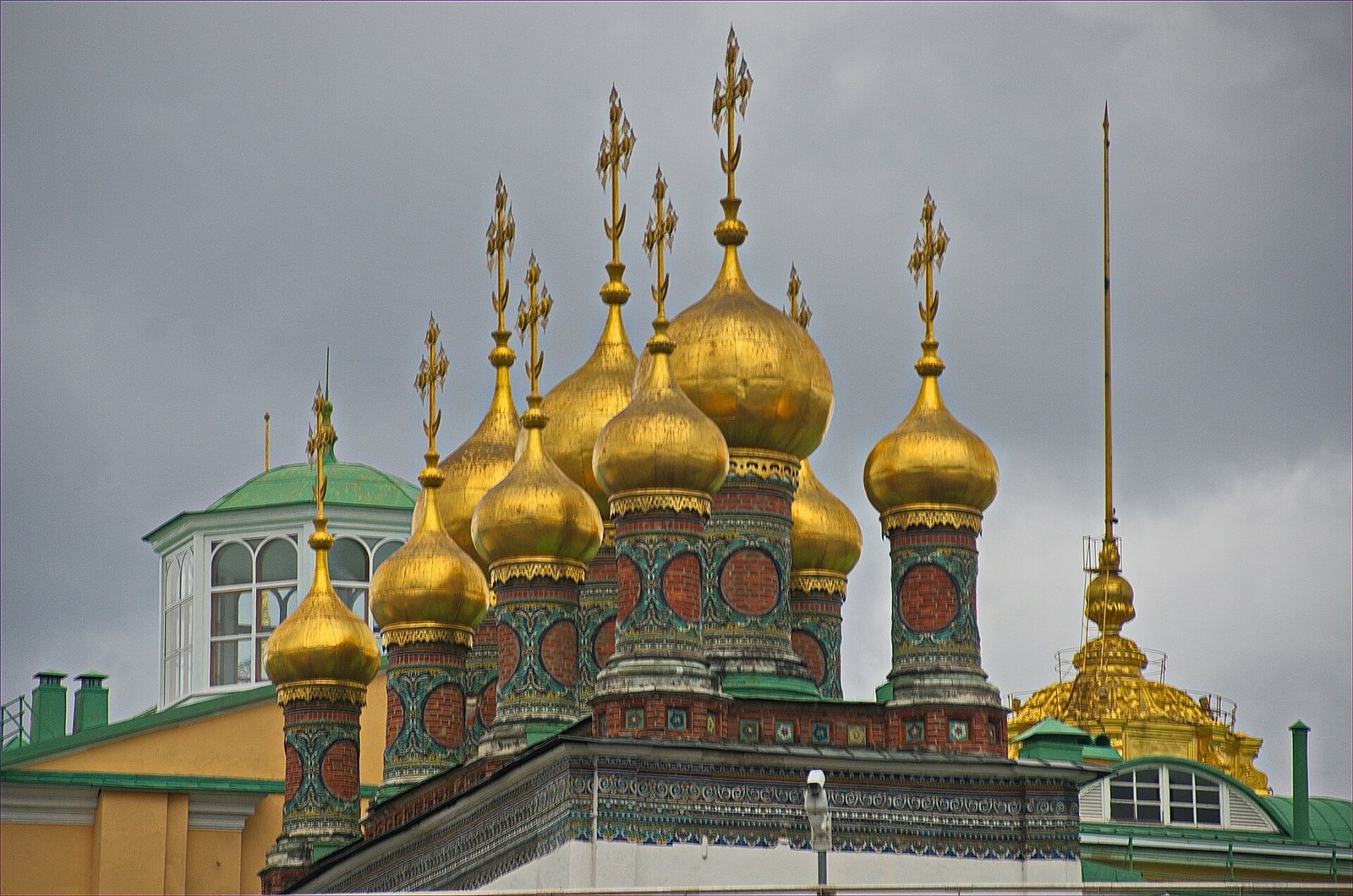
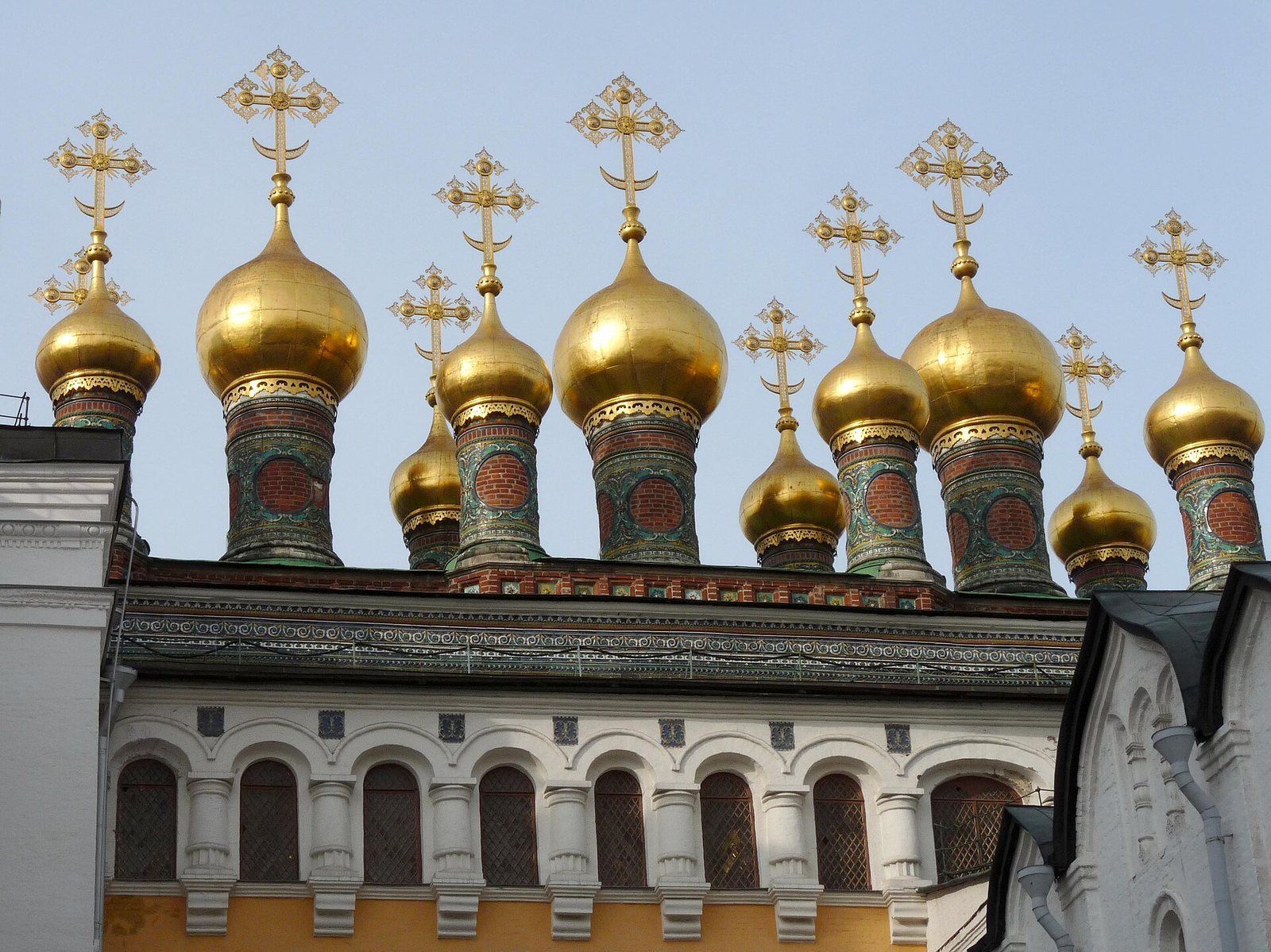
The Church of the Exaltation of the Holy Cross is a Russian Orthodox domestic chapel of the Terem Palace in the Moscow Kremlin, Russia. Tsar Feodor Alexeyevich had it built in 1681–82; its Baroque character has been attributed to Western European craftsmen working in the Kremlin. Dedicated to the Exaltation of the Holy Cross, a Christian feast centered on the Cross of Christ, it became an important place of worship within the palace.
Construction and royal use
Work began on May 10, 1681, and was completed the following year. The chapel stood above the north side chapel of Verkhospassky Cathedral, a palace church associated with the Terem Palace. It was also linked in its religious role to the now-demolished Ascension Cathedral. Historian Ivan Snegiryov later suggested that the chapel had been formed from the prayer room of Tsar Alexei Mikhailovich, offering this as an explanation for its small size.
In the late seventeenth century, the chapel and the Church of the Resurrection of Christ together held a leading place among the Kremlin palace churches. Feodor Alexeyevich often prayed here and married his second wife, Marfa Matveyevna Apraksina, in the chapel. In April 1681, he gave it crosses and silver church vessels. Tsar Ivan V prayed there regularly, while Peter I visited for prayer less often.
Later history
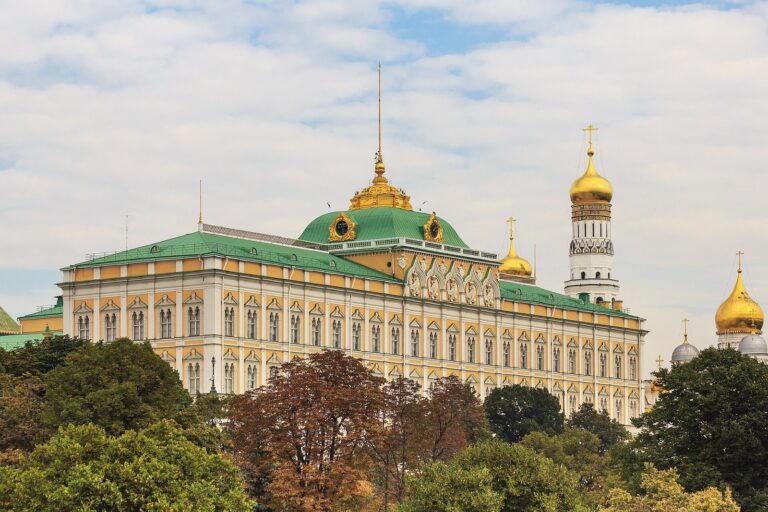
The church survived the Kremlin fire of 1737 without damage. It closed after the October Revolution, and services are no longer held there. The chapel now forms part of the Russian president’s residence within the Grand Kremlin Palace. It is designated a cultural heritage monument of federal significance in Russia.
Remains
The chapel has a compact footprint of approximately 7 by 4 metres. Its central dome occupies the middle position among the domes of the Terem churches, while a closed vault covers the interior. The surviving building and its fittings preserve details of its roof construction, adjoining spaces, and richly furnished interior.
Structure and adjoining spaces
Roof and openings
The domes were clad in gilded sheets, with chains attached to their crosses. The altar roof had a copper-and-iron covering, while tin covered the other roof sections. Two windows lit the chapel. Wooden doors dating to the sixteenth century were transferred here from a church in Troitskoye-Golenishchevo.
Platform and chambers
A covered stone platform in front of the chapel was paved with slabs. Nearby stood a small stone closet with a tin roof and a green-glazed stove. A separate warm chamber beside the church had two doors, painted decoration, and a wooden roof. Its glazed stove served in place of a refectory.
Access
The original approach was by a stone spiral staircase. Entry is now possible only through the choir loft, an elevated church gallery, of the Church of the Resurrection of the Word. A passage from the altar leads to the roof of the Faceted Chamber, a ceremonial hall in the Kremlin.
Interior and decoration
Vault and floor
The chapel’s closed vault covers an interior floor paved with black and white marble slabs. The church remained among the least altered of the Kremlin churches and escaped damage in Kremlin fires.
Iconostasis
The four-tier iconostasis, an icon-bearing screen separating the sanctuary from the main worship space, was designed by Karp Zolotaryov and made of copper worked in relief. Its wooden supports had copper finials and carried 78 smooth plates silvered with leaf silver, 90 gilded foliage ornaments, and 20 cast-copper bands covered in gold. The screen was restored in 1781 without changes to its design.
Icons and image cases
Royal painter Vasily Poznansky made the iconostasis icons using satin silk for painted faces and hands, with textile and gilded paper applied for other details. Flemish engravings provided models for the images. A tradition held that Russian princesses embroidered them with tiny pearls. Mica-covered cases designed by Zolotaryov contained works by Ivan Saltanov and Ivan Bezmin showing the Last Judgment, the Christian belief that Christ will judge humanity, and the Passion of Christ, his suffering and death. Other icons behind mica included the Savior to the right of the royal doors and the Virgin Mary to the left. An image of Emmanuel, a title for Christ meaning “God with us,” stood near the main choir stand, while an image of the Virgin and crowned Child was placed by the left choir stand. The church’s shrine also included an icon of Our Lady of Gracious Heaven.
Crosses and altar painting
A relief image of the Cross, made in 1687 from three kinds of wood, bore an inscription in three languages. Tradition held that the original Cross had been made from those same woods and acquired by Queen Helena in Jerusalem. The church also contained a crucifix made in 1687 by Hippolytus the Elder, a carver at Novospassky Monastery, to the dimensions of the Cross of Christ. This crucifix gave the chapel its other customary name, the Crucifixion Church. Other images included a Crucifixion with the Virgin Mary and John the Theologian, both wearing silver-gilt crowns, and Bogdan Saltanov’s canvas painting Adoration of the Cross. It depicts the Roman emperor Constantine, Queen Helena, Tsar Alexei Mikhailovich, Tsarina Maria Ilyinichna, and Patriarch Nikon.