Church of the Assumption of the Virgin Mary in Oświęcim: A Roman Catholic Parish Church
Site at a Glance
- Rating
- 4.6
- Popularity
- Medium
- Country
- Poland
- Primary era
- Medieval
- Eras represented
- Medieval, Early Modern, Modern
- Civilizations
- Habsburg, Kingdom of Poland, Polish–Lithuanian Commonwealth
- Site type
- Religious
- Remains
- Church
On this page12 sections
History
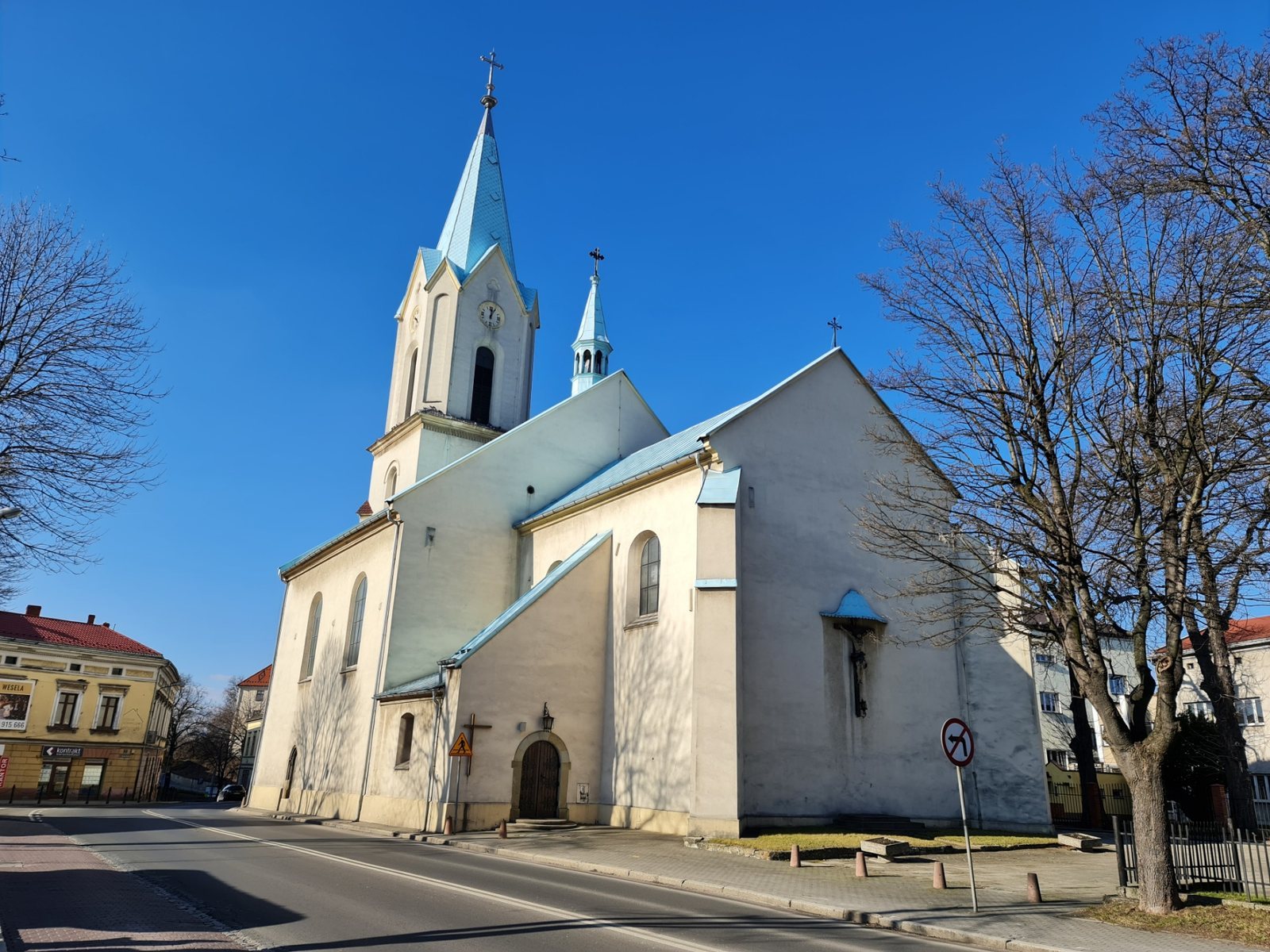
The Church of the Assumption of the Virgin Mary in Oświęcim is an eclectic-style Roman Catholic parish church in Poland, first recorded in 1325–1327. Its dedication refers to the Catholic belief that Mary was taken into heaven. The date of the church’s foundation is unknown.
Medieval records and later alterations
Jan Długosz, a fifteenth-century Polish cleric and chronicler, described the church as a masonry building. It underwent repeated alterations, including major remodeling in the third quarter of the seventeenth century.
A fire in 1863 led to restoration of the church. Work on its tower continued through 1877, when the tower was completed.
During the Second World War, Nazi Germany’s secret state police, the Gestapo, took over the neighboring rectory as its headquarters. After the war, the rectory housed the County Public Security Office, a Polish state-security institution.
Remains
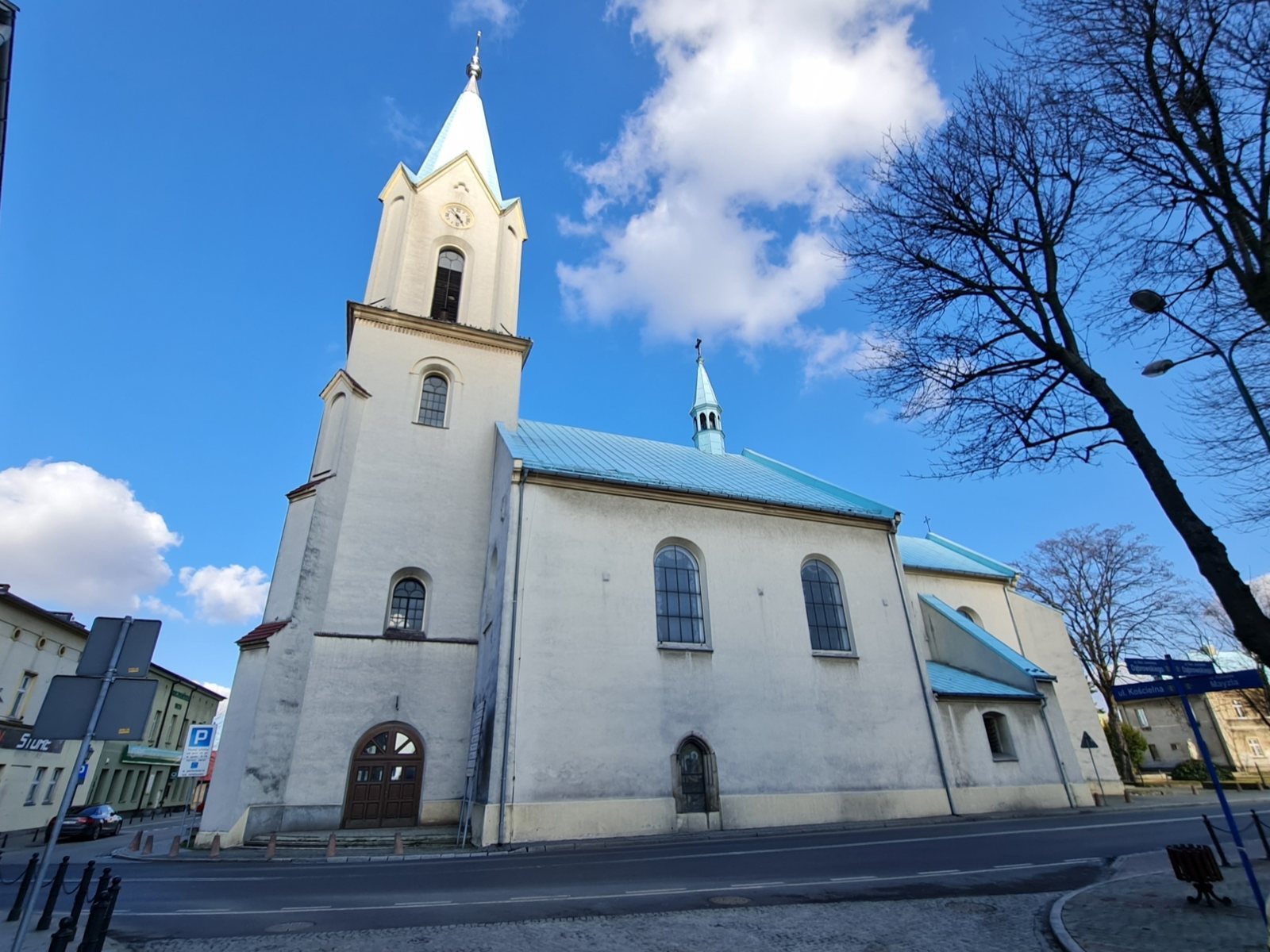
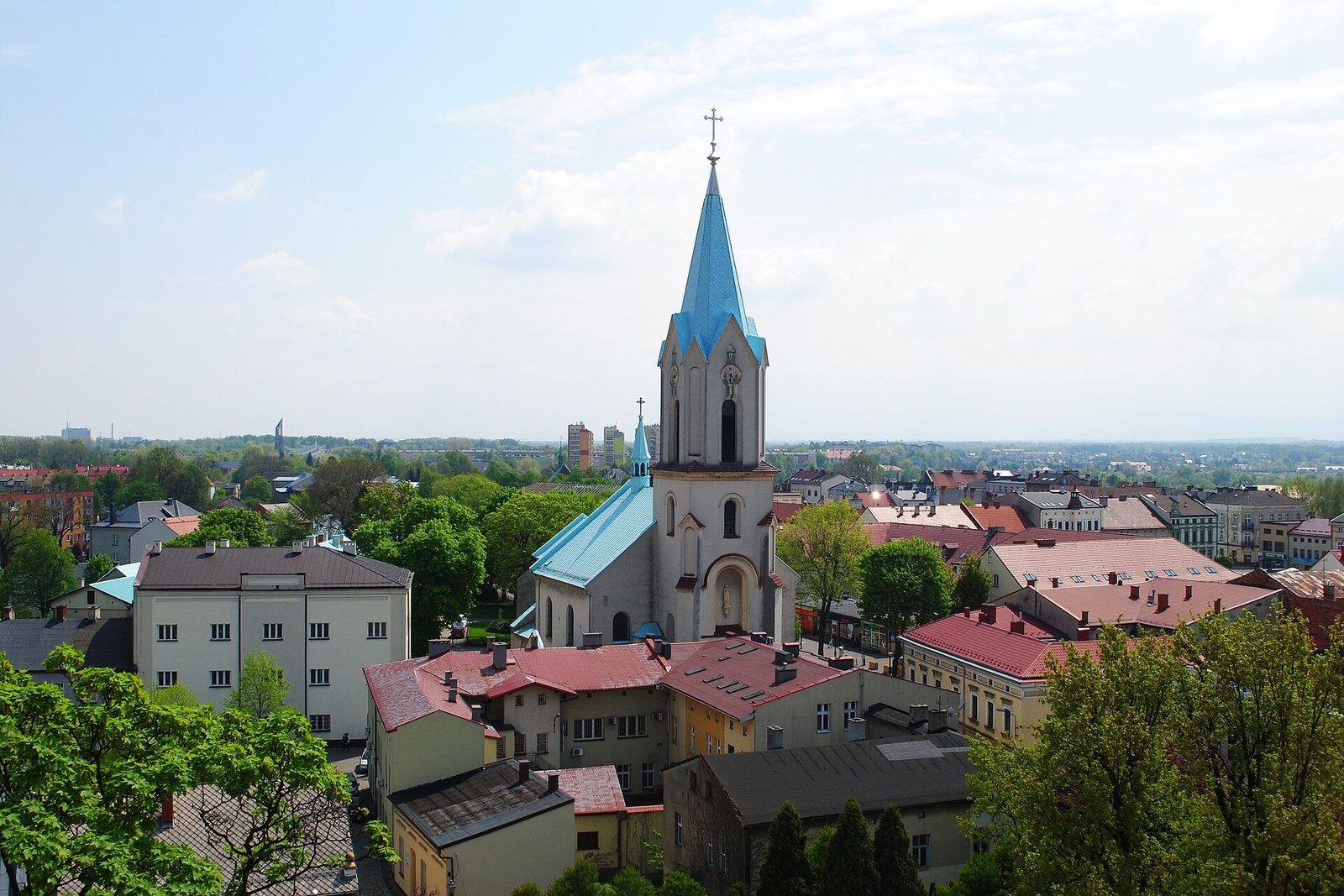
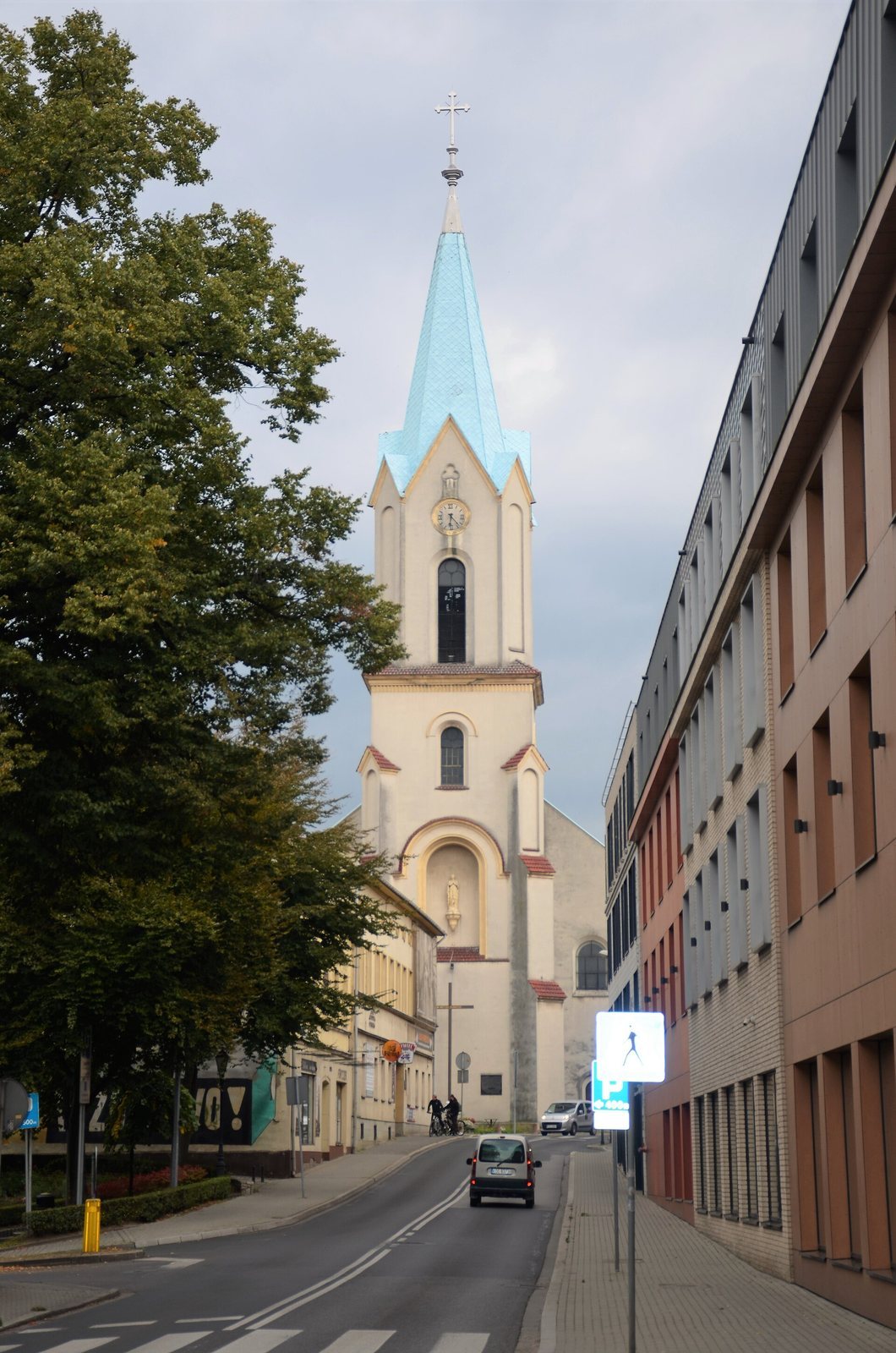
The church stands north of Oświęcim’s old-town market and is aligned east–west. Its eclectic design brings together a three-aisled body, an eastern sanctuary, and a square tower at the western end.
Plan and interior
Chancel and chapels
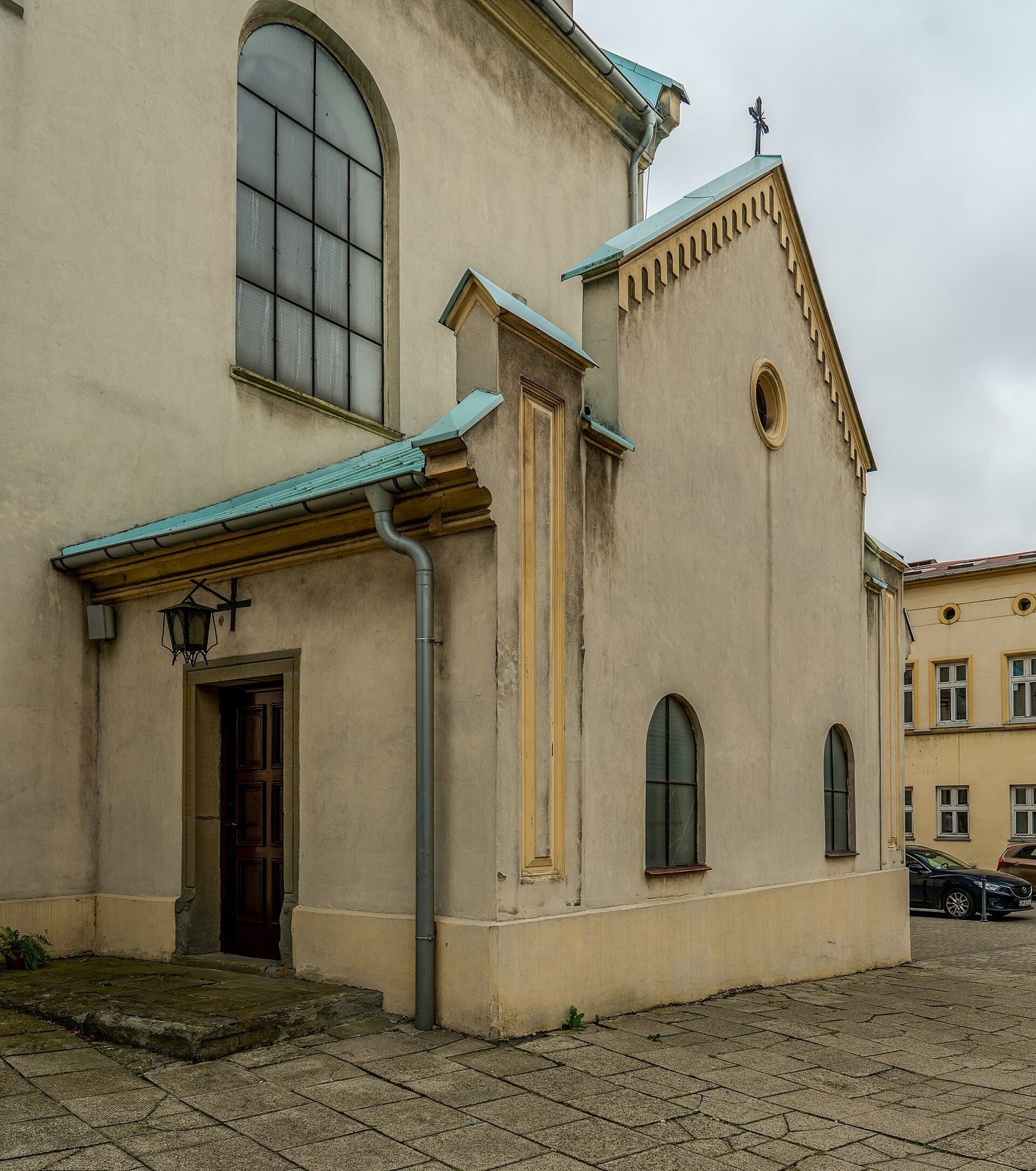
The rectangular, two-bay chancel, the sanctuary end of the church, has a sacristy on its south side and a chapel dedicated to the Crucified Christ on its north side. A separate chapel of St Maximilian Mary Kolbe, a Polish Franciscan friar and Catholic saint, is also on the north side. A semicircular chancel arch separates the sanctuary from the body of the church.
The chancel and side aisles have multicolored stained-glass windows. A crucifix from the second half of the seventeenth century is fixed to the chancel’s east wall.
Nave and music gallery
The church body has two bays, with a central nave and two side aisles. Rectangular arcades, or rows of arches, connect the nave to each aisle; their piers are decorated with pilaster-like motifs. The chancel and nave have barrel-vaulted ceilings, shaped like half-cylinders, with lunettes, the curved sections where a vault meets a wall. Crosswise arches support the vaults.
A music gallery spans the body on three arcades, and its parapet curves at the center. Geometric designs formed from raised stucco strips decorate the parapet and vaults.
Exterior and entrances
Tower and roof
A tall, square clock tower stands on the church’s western axis, with a porch at its base. Quatrefoils, four-lobed decorative motifs, adorn its upper storey. The tower’s lower section dates to the late sixteenth century. Buttresses reinforce the tower and the chancel corners, while a small roof turret rises above the church body.
Portals and doors
Two Gothic-Renaissance doorways connect the porch to the north aisle and the chancel to the sacristy. The sacristy doorway bears the date 1529. Its iron doors are clad in gridded metal plates, as are the doors between the north aisle and the Chapel of St Maximilian.
Furnishings and memorials
Altars and devotional objects
The late-Baroque high altar dates to the first quarter of the eighteenth century and has undergone several renovations, most recently in 2004. Its late-Baroque figures represent Saints Peter and Paul, the apostles, and four angels. Baroque paintings of Saints Hyacinth and Dominic, the latter the founder of the Dominican Order, are in the side altars.
A late-Baroque feretron, a devotional object carried in religious processions, is among the church’s furnishings. The church also contains a separate seventeenth-century crucifix.
Font, pulpit, organ, and epitaphs
The marble baptismal font has a metal cover and bears the date 1613. A late-Baroque pulpit stands against the chancel’s north wall, near the transition to the church body and beneath the chancel arch. The organ has 30 stops, three manuals, and a pedal. Epitaphs inside the church range in style from Baroque to Classicist.