Church of St Nicholas, Bathampton: Parish Church and Historic Burial Place


Site at a Glance
- Rating
- 4.5
- Popularity
- Very Low
- Country
- United Kingdom
- Primary era
- Early Modern
- External website
- Open
- Eras represented
- Medieval, Early Modern, Modern
- Civilizations
- British, English
- Site type
- Religious
- Remains
- Church
On this page10 sections
History
Church of St Nicholas, Bathampton, in the United Kingdom, is an Anglican parish church with thirteenth-century origins, a sixteenth-century tower, and major Gothic rebuilding in the eighteenth century. Its history is connected with Bath Abbey, Bristol Cathedral, the Reformation, and the later commemoration of Admiral Arthur Phillip.
Medieval parish and the Black Death
Bathampton was granted to Bath Abbey by Edmund I, a tenth-century king of England, around 940. The first church probably followed soon after the Norman Conquest, although its early history is uncertain. The first known vicar served in 1261, and a vicarage, an endowed clerical appointment, was established in 1317.
The parish was severely affected by the Black Death, the fourteenth-century epidemic that caused widespread mortality across Europe. Five vicars served Bathampton between 1348 and 1349, and several probably died during the crisis.
Late medieval and Tudor changes
The church was altered during the late medieval and early Tudor periods. An additional chapel was built in 1500, followed by the tower in 1532. The original church is believed to have had a central tower. Richard Gibbons was vicar from 1527 to 1567, serving through the Reformation, the sixteenth-century religious and institutional transformation that separated the Church of England from papal authority and changed Catholic worship in England.
Patronage passed from Bath Abbey to Bristol Cathedral in 1539 and remains with the cathedral. The church’s bells were made in 1540 and named for St Thomas and St Lucy. Two statuettes were hidden in the chancel wall and recovered several centuries later. By the brief restoration of Roman Catholicism under Mary I, the church had already disposed of its Catholic service books.
Parish administration and rebuilding
Around 1663, the vicarage of Bathampton was joined to that of Bathford. The two parishes were separated again in 1855, during the incumbency of the Reverend Edward Duncan Rhodes. Bathampton is now part of the Anglican benefice of Bathampton with Claverton, a group of parishes served through one ecclesiastical appointment.
Ralph Allen acquired Bathampton Manor in 1731 and rebuilt most of the church in 1754 and 1755 in Gothic style, a medieval architectural tradition associated with pointed arches and strong vertical emphasis. He also added a family chapel beside the south side of the nave. The work removed many medieval features and changed the character of the surviving building.
The church underwent further alteration during the nineteenth century. Major C. E. Davis added a north aisle and a small vestry in 1858, an organ chamber followed in 1879, and a south aisle and new porch were completed in 1882. The vestry was enlarged in 1897.
Memorials and later associations
A cross was erected in the churchyard in 1904 to commemorate the Coronation, and plaques for later coronations and jubilees were added afterwards. Memorials beside the main door honour villagers who died in the First and Second World Wars.
The former Allen Chapel was renovated in 1974 and 1975 and dedicated as the Australia Chapel in 1975. It commemorates Admiral Arthur Phillip, the British naval officer who became the first governor of the British colony of New South Wales. Phillip was buried in the chapel in 1814. A service held near his birthday on 11 October commemorates his life, and the Australian High Commissioner lays a wreath on his grave.
Other people buried in the churchyard include Adolphe, Viscount du Barry, who was killed in a duel on Claverton Down with Captain Rice after an argument over cards. The churchyard also contains the graves of the inventor William Harbutt, the architect Kenneth Murchison, and the painter Walter Sickert. The church is a Grade II* listed building, a designation for buildings of particularly important architectural or historical interest, granted on 1 February 1956. Many of the churchyard’s chest tombs, free-standing stone tombs shaped like chests, are listed separately.
Remains
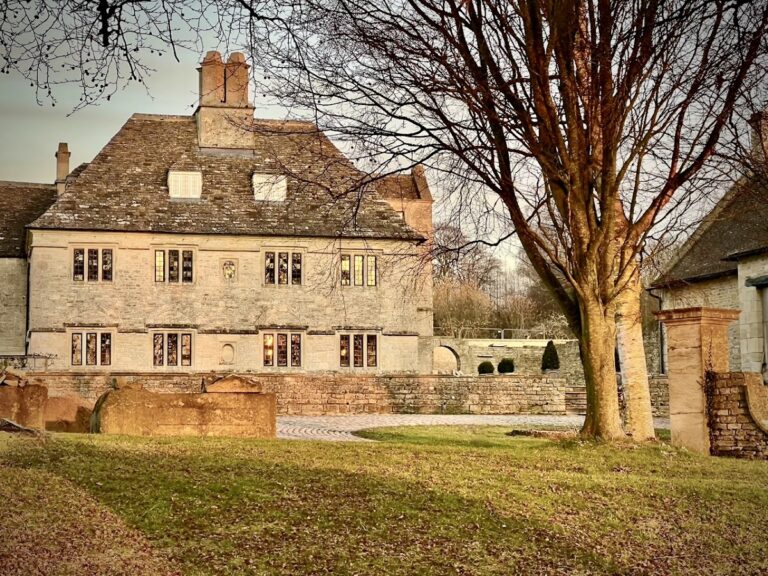
Church of St Nicholas stands between the River Avon and the Kennet and Avon Canal. The present building combines a church with thirteenth-century origins, the tower added in 1532, Ralph Allen’s eighteenth-century rebuilding, and substantial nineteenth-century additions. The surviving fabric therefore brings together medieval, Gothic, and later Victorian work.
Medieval fabric and church interior
An effigy set into the outer wall of the chancel probably represents St Nicholas, the fourth-century Christian bishop associated with charitable giving and sailors. The figure wears late-eleventh-century episcopal dress. A piscina, a small wall basin used for washing sacred vessels near an altar, survived into the Victorian period. A gable cross also survived then and has since been replicated. The bells made in 1540 bear the names of St Thomas and St Lucy.
The chapel added in 1500 formed part of the church’s late medieval development, while the tower built in 1532 represents the principal surviving Tudor addition. The eighteenth-century rebuilding altered the medieval structure extensively. Late-fourteenth-century statues of a knight and his lady were moved into the churchyard, and the medieval font may also have been placed outside the porch.
Nineteenth-century additions
The later fabric includes the north aisle and small vestry added in 1858, the organ chamber constructed in 1879, and the south aisle and new porch completed in 1882. The vestry was enlarged in 1897. These additions surround and extend the earlier church, while the south aisle incorporates the former Allen Chapel.
Australia Chapel
The Australia Chapel contains a floor of Australian Wombeyan Marble and a memorial screen made from Australian Blackbean wood. Its kneelers come from Tasmania, and its stained-glass windows carry the coats of arms of the Australian federal government and all six Australian states. The chapel also contains the grave of Arthur Phillip, whose burial there in 1814 gives the space its commemorative purpose.
Churchyard and commemorative features
The churchyard contains Phillip’s grave along with those of Adolphe, Viscount du Barry, William Harbutt, Kenneth Murchison, and Walter Sickert. Numerous chest tombs occupy the burial ground. The 1904 commemorative cross stands there with plaques added for later coronations and jubilees, while the war memorials to local villagers are positioned by the main door.