Little Solsbury Hill: An Iron Age Hillfort Above Batheaston
Site at a Glance
- Country
- United Kingdom
- Primary era
- Iron Age
- Eras represented
- Iron Age, Medieval, Early Modern
- Civilizations
- Celtic
- Site type
- Military
- Remains
- Fort
On this page12 sections
History
Iron Age occupation
Little Solsbury Hill is an Iron Age hillfort above Batheaston in Somerset, United Kingdom, occupied from about 300 to 100 BC. After some of its huts were burned and the rampart was overthrown, the settlement was abandoned and never occupied again. This destruction probably took place during the Belgic invasion of Britain in the early first century BC. The name Solsbury may derive from Sulis, a Celtic deity worshipped at the thermal spring in nearby Bath. The hill is also called Salisbury or Solisbury, possibly through confusion with Salisbury Plain or the city of Salisbury. An 1888 geological map labels it “Stilisbury Hill.”
Possible Battle of Badon
Little Solsbury Hill is one of several proposed locations for the Battle of Badon, fought around AD 496 between Britons associated in legend with King Arthur and the Saxons. The battle’s location and historical details remain uncertain. It is mentioned by Gildas, a sixth-century British Christian writer, and by Nennius, the name traditionally associated with an early medieval history of Britain.
Later history and modern associations
Part of the hill was quarried for minerals during the nineteenth century. The National Trust acquired it in 1930, and the hillfort became a scheduled monument, a site protected under British law, on 8 October 1956. The hill also lies within the Cotswolds Area of Outstanding Natural Beauty.
Little Solsbury Hill inspired Peter Gabriel’s song “Solsbury Hill,” released in 1977 as his first solo single. During protests against widening the A46 in 1994, protesters cut a small labyrinth into the turf. In one clash, security guards beat 11 people, including a journalist, who were then hospitalized. Natural sounds recorded on the hill appear in “A Quiet Moment” on Gabriel’s 2011 album New Blood, before an orchestral version of “Solsbury Hill.”
Remains
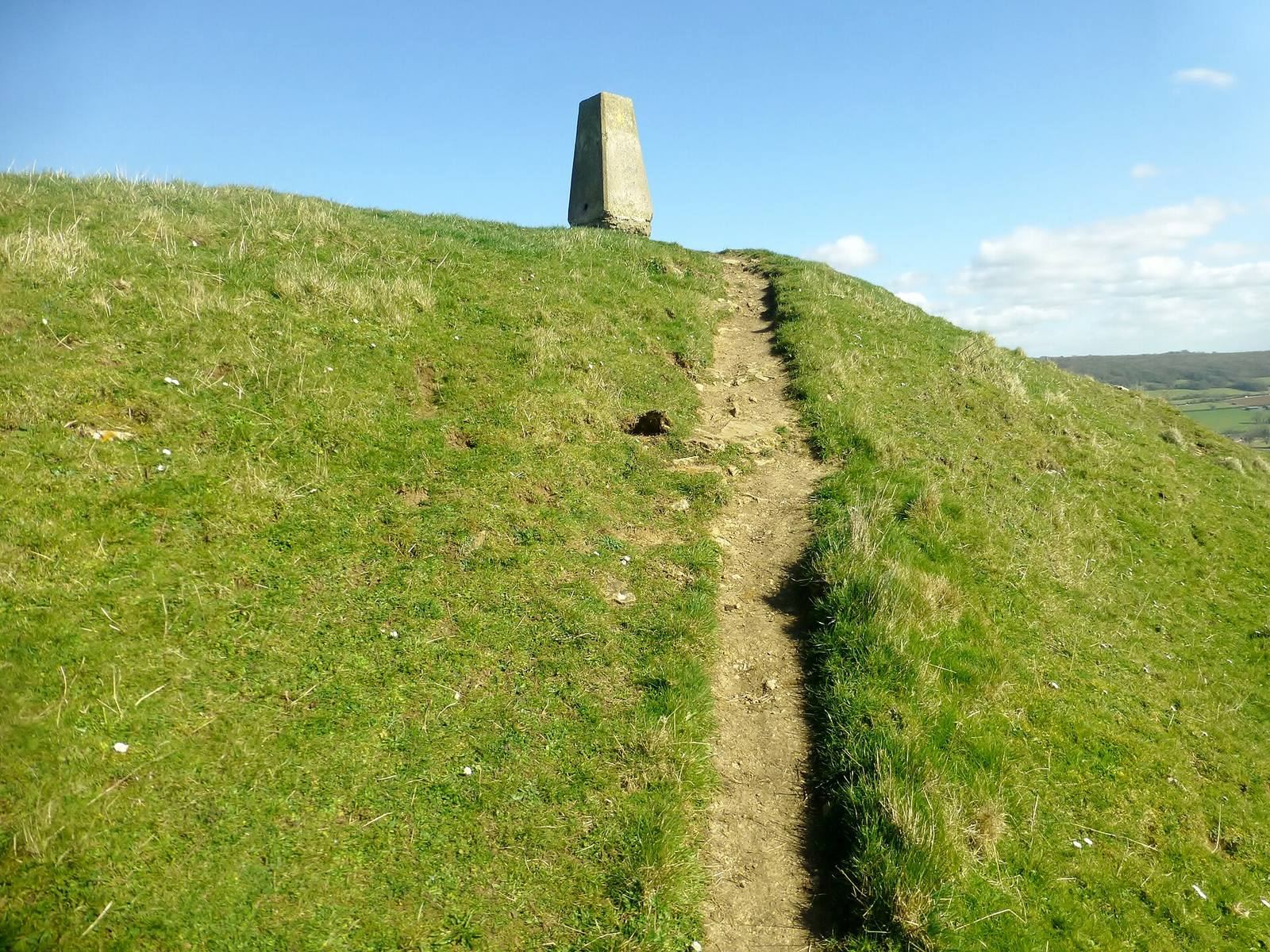
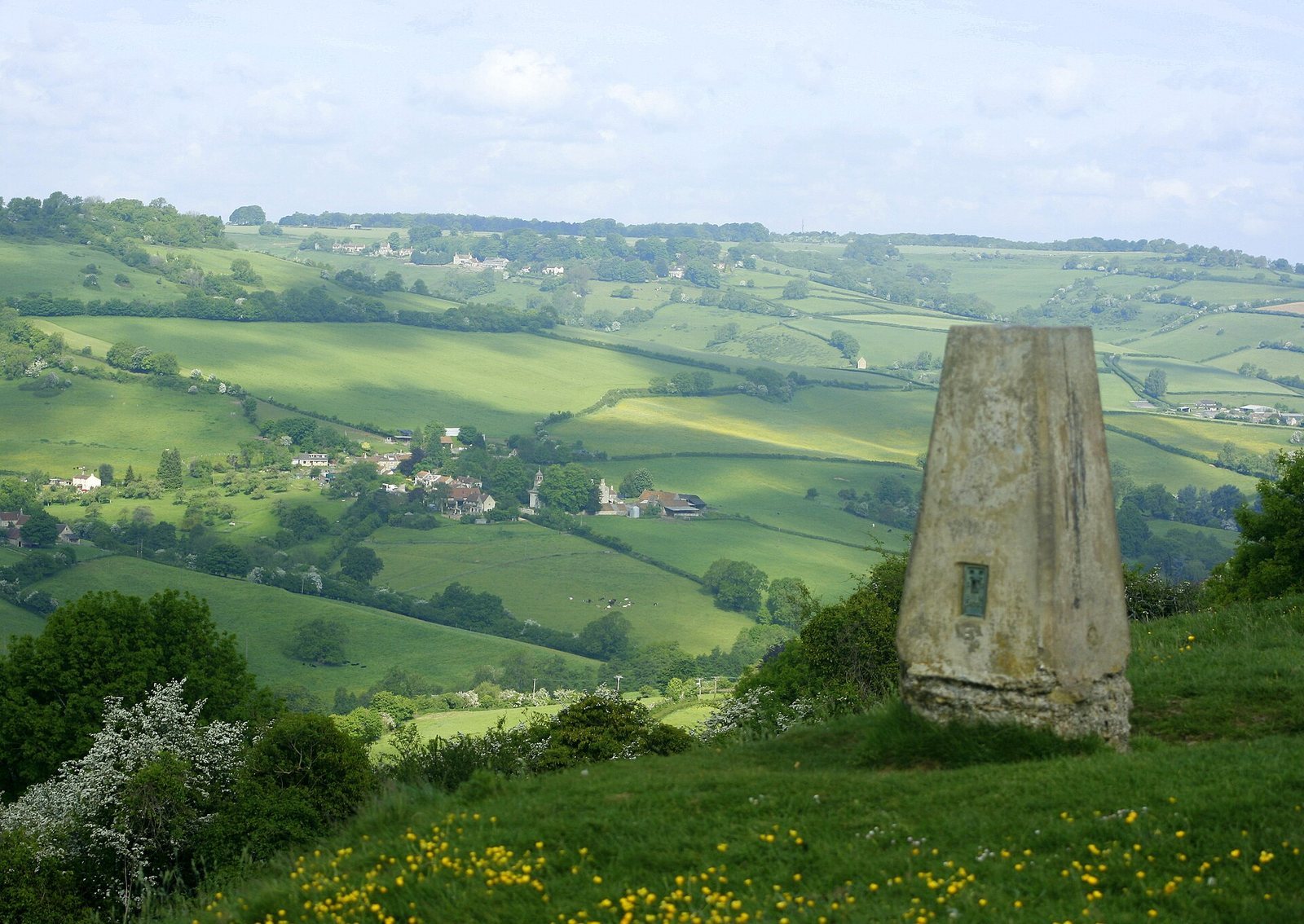
The hill is a small, flat-topped rise reaching 191 m above Batheaston. Its summit contains a triangular hillfort enclosure with a single rampart around the settlement area. The River Avon lies just over 2 km to the south, and the summit offers views of Bath and the surrounding area.
Hilltop archaeology
Iron Age hillfort
The rampart was 6 m wide, with rubble filling between dry-stone faces, walls built without mortar. Its outer face stood at least 4 m high. Inside, the summit was cleared to bedrock, where substantial huts were constructed on timber frames with walls of woven rods coated in earth, a method known as wattle and daub.
Field system and Roman road
Traces of a medieval or post-medieval field system remain on the hilltop. The hill is also near the Fosse Way, a Roman road that descends Bannerdown towards Batheaston and Bath.
Quarries
Two disused quarries occupy parts of the hill. A quarry on the northwest side appears on a 1911 map, while the west-side quarry was described as old by 1900.
Geology and natural landscape
Rock layers and slopes
The hill is formed from Jurassic rocks. The summit includes the Chalfield Oolite Formation, limestone formed from small rounded grains, above the Fuller’s Earth Formation. Together these belong to the Bathonian-age Great Oolite Group. Bathonian, Bajocian and Toarcian are subdivisions of the Jurassic. Below are Bajocian limestones of the Inferior Oolite Group and Toarcian sandstones of the Bridport Sand Formation, part of the Lias Group. The Charmouth Mudstone Formation lies beneath these layers and rises from the edge of the valley-floor alluvium. Landslips affect all sides of the hill.
Grassland and wildlife
Grassland over limestone supports plants and animals of calcareous grassland, including some rare species. The presence of yellow meadow ants indicates a landscape largely unaffected by agriculture. Recorded plants include bird’s-foot trefoil, vetches, greater knapweed, harebells, yarrow and scabious. Insects include six-spot burnet moths, hummingbird hawk-moths and chalkhill blue butterflies. Common buzzards and skylarks nest on or around the hill, and roe deer, badgers and red foxes occur in the area.