Church of St. Basil of Caesarea: A Wooden Church in Slovakia
Site at a Glance
- Popularity
- Very Low
- Country
- Slovakia
- Primary era
- Early Modern
- Eras represented
- Early Modern, Modern
- Civilizations
- Habsburg, Hungarian
- Site type
- Religious
- Remains
- Church
On this page8 sections
History
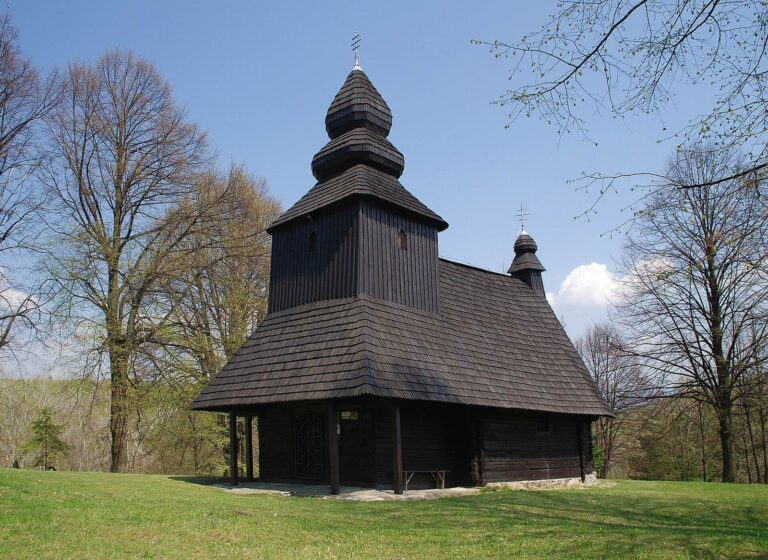
The Church of St. Basil of Caesarea is a wooden church above Hrabová Roztoka in Slovakia, built in 1750. Its folk architecture follows the Lemko type, a regional wooden-church tradition associated with the Lemko people of the Carpathians, and belongs to a distinctive church tradition of the Snina area. The church is named for Basil of Caesarea, a fourth-century Christian bishop and theologian also known as Basil the Great. It is a National Cultural Monument of Slovakia.
The Orthodox Church used the building in the 1950s, and it returned to Greek Catholic worship in the 1990s. Greek Catholic churches follow Byzantine liturgical traditions while belonging to the Catholic Church. When too few worshippers remained to sustain a parish, the parish was discontinued. The church now falls under Šmigovec parish in the Snina deanery and Prešov Archeparchy, an Eastern Catholic archdiocese within the Slovak Greek Catholic Church, although the building is not currently in use.
Exterior repairs took place in 2000, and five icons were stolen in 2003. From 2013 to 2016, the church underwent extensive restoration as part of a wider effort to renew wooden churches.
Remains
Plan and exterior
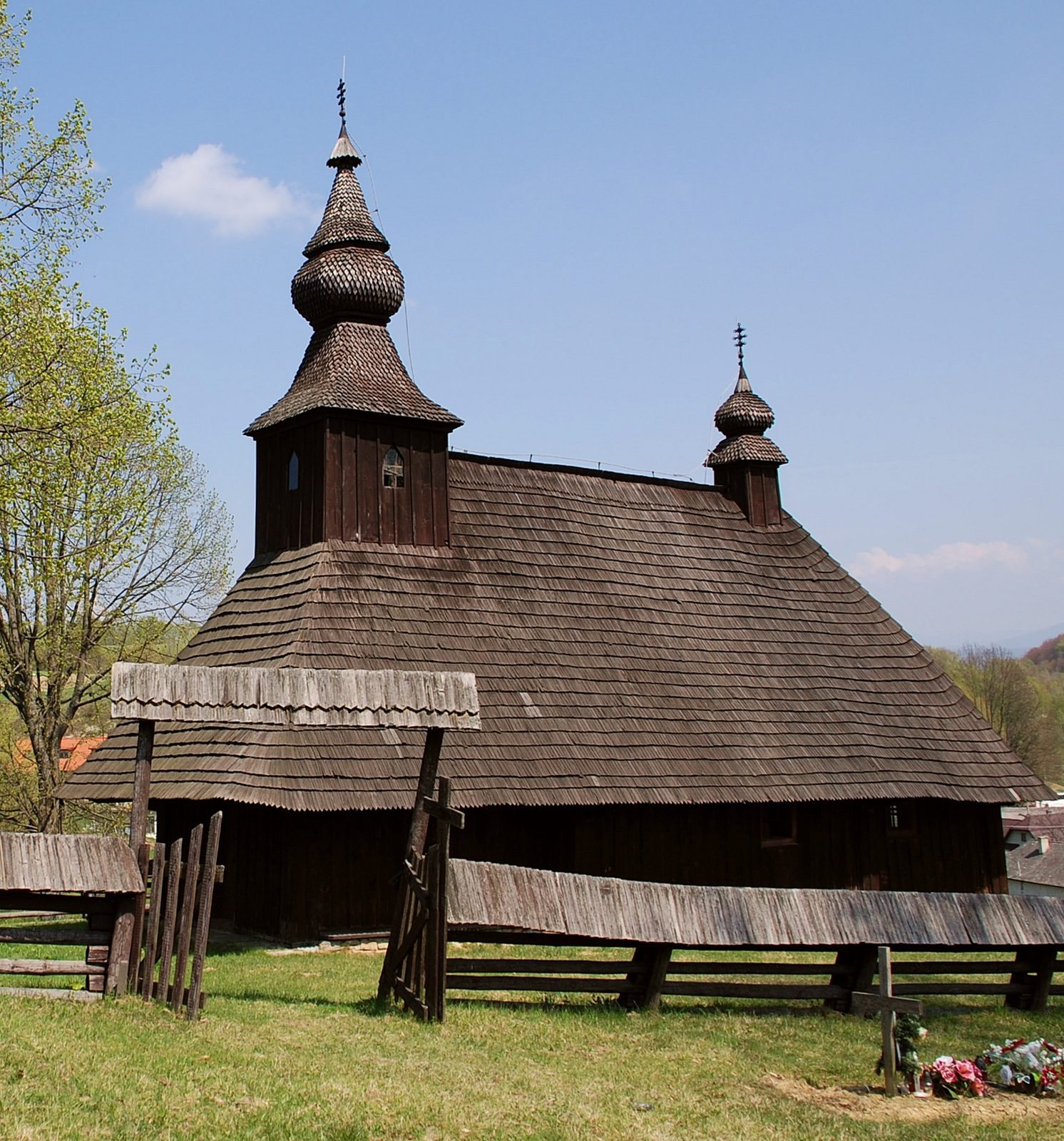
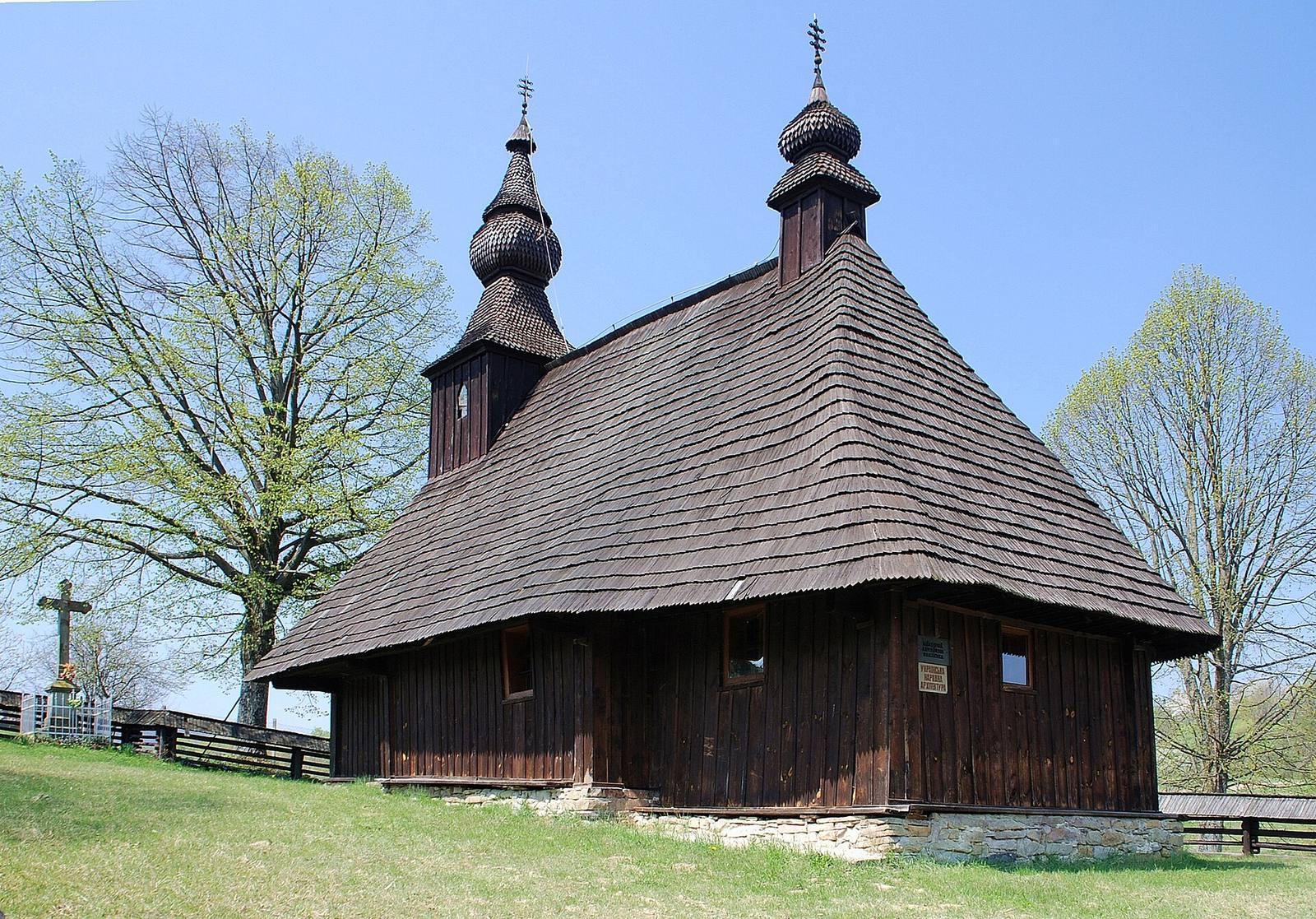
The church stands on a hill above Hrabová Roztoka, on a northwest-facing slope reached by steep stone steps. A wooden fence and gate enclose the grounds, which include a cemetery. The building is a three-part log structure on a stone base, with a sanctuary, a main worship space, and a western vestibule, or entrance space. Birch and fir were used in its construction. A timber-framed tower clad in boards rises above the vestibule; its truncated, tent-like roof supports an onion dome and iron cross. A smaller turret stands on the main roof. Shingles cover the roof in upright bands, with broad eaves around the building.
Interior and furnishings
Interior finish
The interior has flat ceilings. In the sanctuary, an unfinished log-built dome is supplemented by a flat ceiling. Vertical boards line the walls, painted white and green, and the interior furnishings and decoration are Baroque in style.
Iconostasis
The four-tier Baroque iconostasis, an icon-bearing screen separating the sanctuary from the main body of the church, dates to 1794 and reflects the work of the Rybotychi icon-painting center in present-day southeastern Poland. It incorporates icons from the seventeenth century, while its principal icons date to the nineteenth century. The first tier shows St. Nicholas, the Virgin Hodegetria, an image type in which Mary points toward Christ, Christ the Teacher, and St. Basil. Feast-day images fill the second tier, divided by a representation of the Last Supper. The third presents Christ as High Priest among the apostles. Six images of paired prophets make up the fourth tier; this tier and the cross are tilted to fit the available space.
The paired royal doors carry a Jesse tree, a depiction of Christ’s genealogy, and ten medallions. The deacon doors have no door panels. Before restoration, the iconostasis was in very poor condition. Work at a restoration workshop in Bratislava between 2011 and 2016 removed about three layers of later paint. Fragments revealed beneath them suggest that some icons, including the royal doors, date to the early seventeenth century.
Altars and other furnishings
The sanctuary contains a Baroque main altar with an image of Christ, a richly carved altarpiece, and a tabernacle. A side altar dates to the late seventeenth century, and the furnishings include a Baroque chest. Two painted processional crosses from the late eighteenth century hang on the walls of the main worship space.
Bells and icon display
Three bells hang in the tower, two dating to 1796. The original ladder used to reach the tower was made from a single piece of wood. The church also houses an exhibition of icons from Zemplín, a historic region in eastern Slovakia.