Church of Santa María la Real, La Hiniesta: A Thirteenth-Century Gothic Church
Site at a Glance
- Popularity
- Low
- Country
- Spain
- Primary era
- Medieval
- Eras represented
- Medieval, Early Modern
- Civilizations
- Crown of Castile, Spanish
- Site type
- Religious
- Remains
- Church
On this page4 sections
History
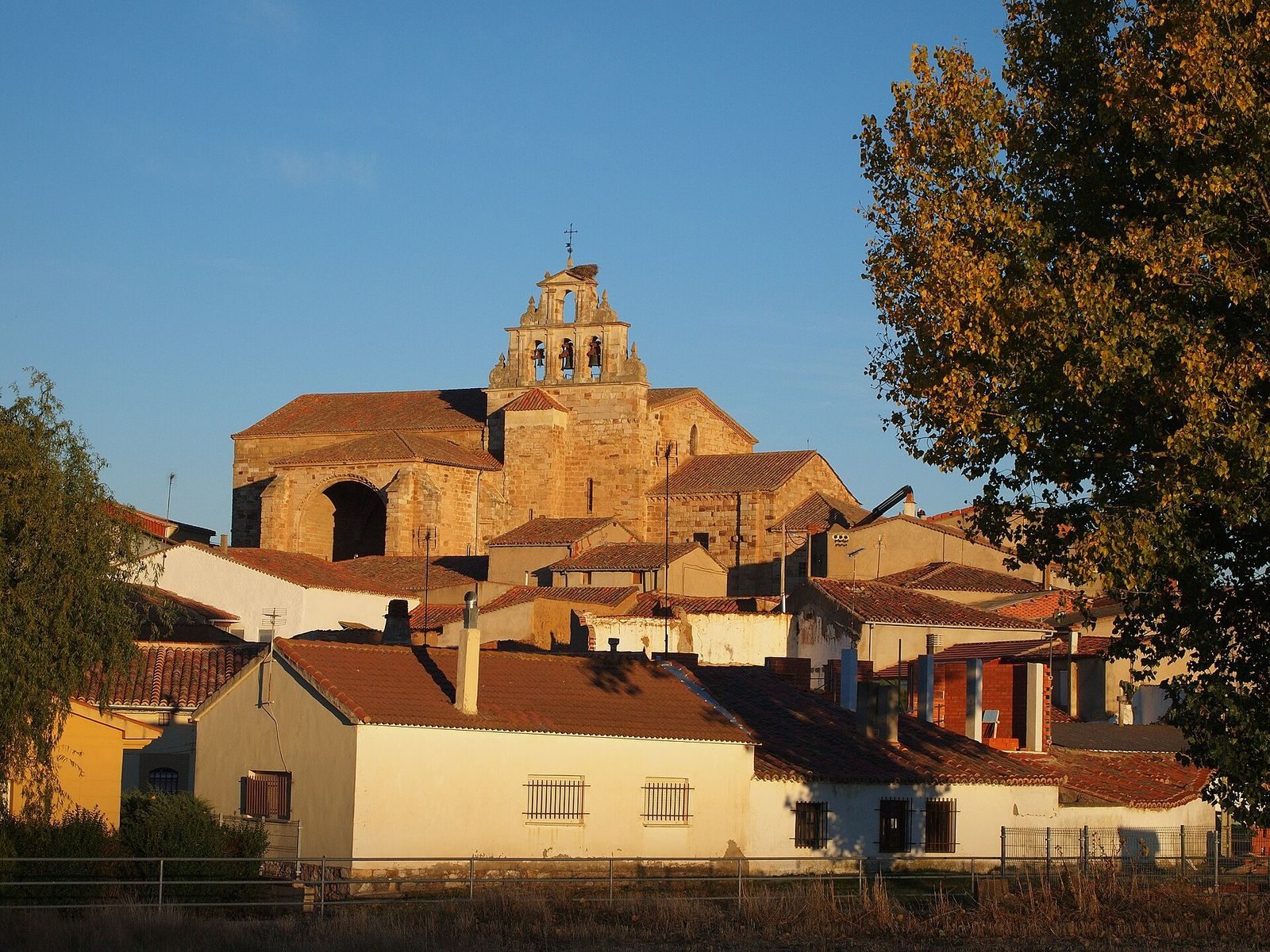
The Church of Santa María la Real is a thirteenth-century church in the Gothic architectural tradition, a broad European style, in La Hiniesta, Zamora province, Spain. It is regarded as an important example of Gothic architecture in the province.
A document dated 1290 recounts the church’s traditional origin. While hunting in the Zamora region, King Sancho IV of Castile and León found a small image of the Virgin among broom after his falcon brought down a partridge. The image was taken to the Church of San Antolín. The king then ordered a church to be built where it had been found and a settlement to be established nearby. According to this tradition, the church and town of La Hiniesta grew from those orders.
Construction was directed by Pedro Vázquez, a master stonemason responsible for leading the stonework. In 1944, the church received protected status as an Asset of Cultural Interest in the Monument category.
Remains
Plan and construction
The church has a single nave, the main body of the building, divided into five structural sections called bays. At its eastern end is a rectangular chancel, the area around the altar. The masonry consists of ashlar blocks, carefully cut stones with smooth faces. A sacristy, a room for preparing for services and keeping liturgical objects, is in the Baroque style, a broad European artistic tradition. Its upper chamber holds an image of the Virgin that is venerated there.
Entrance and interior decoration
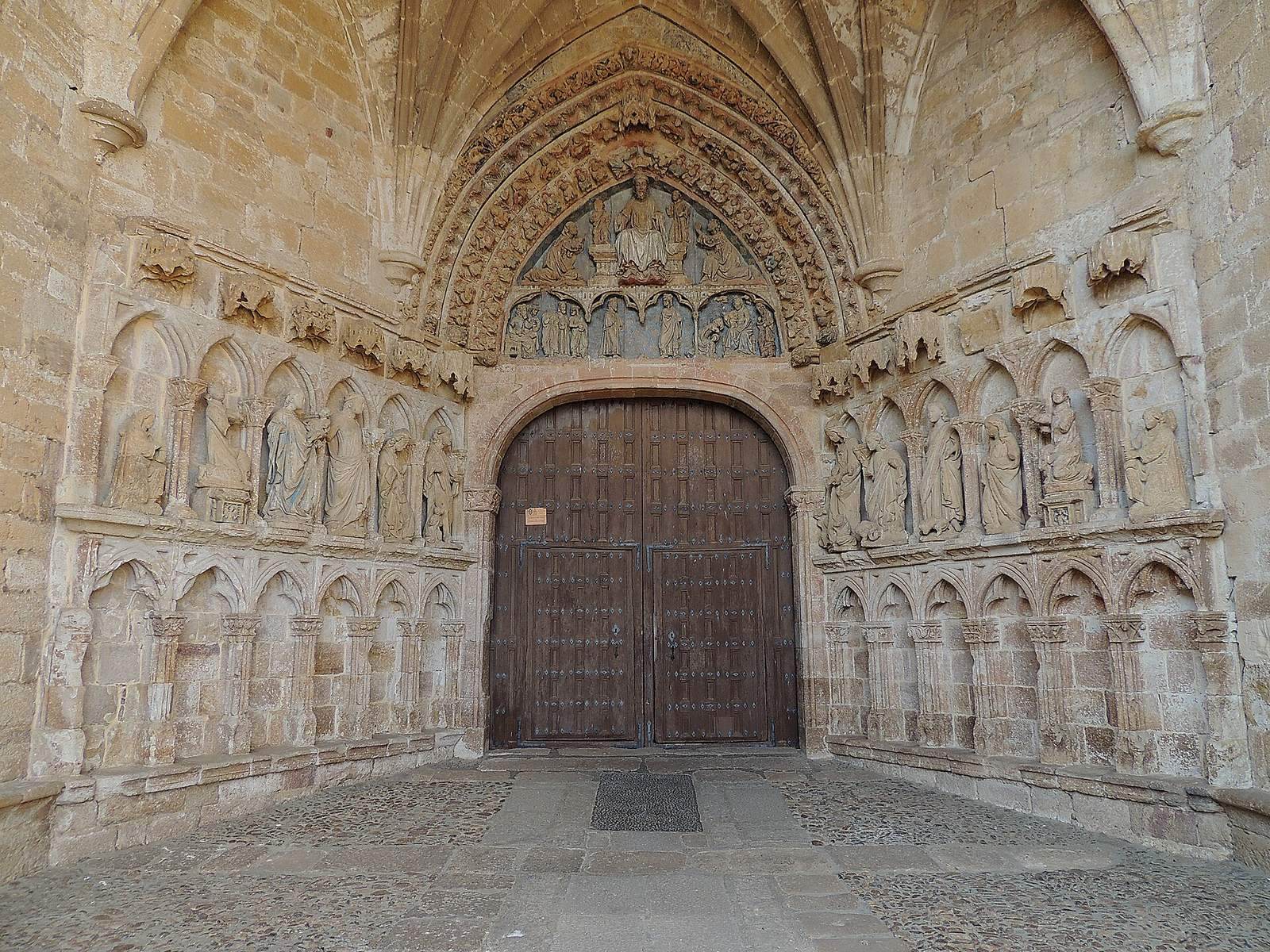
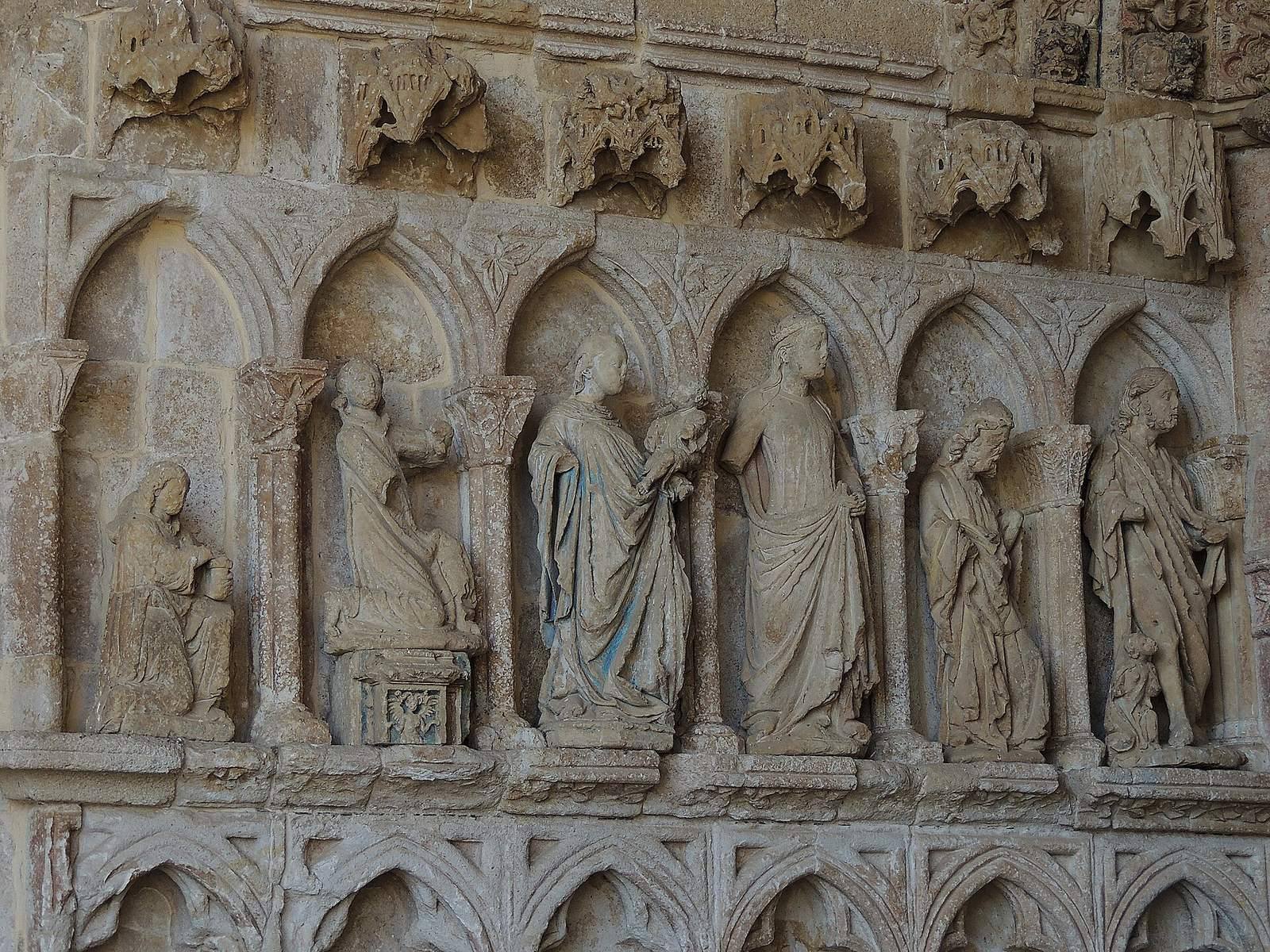
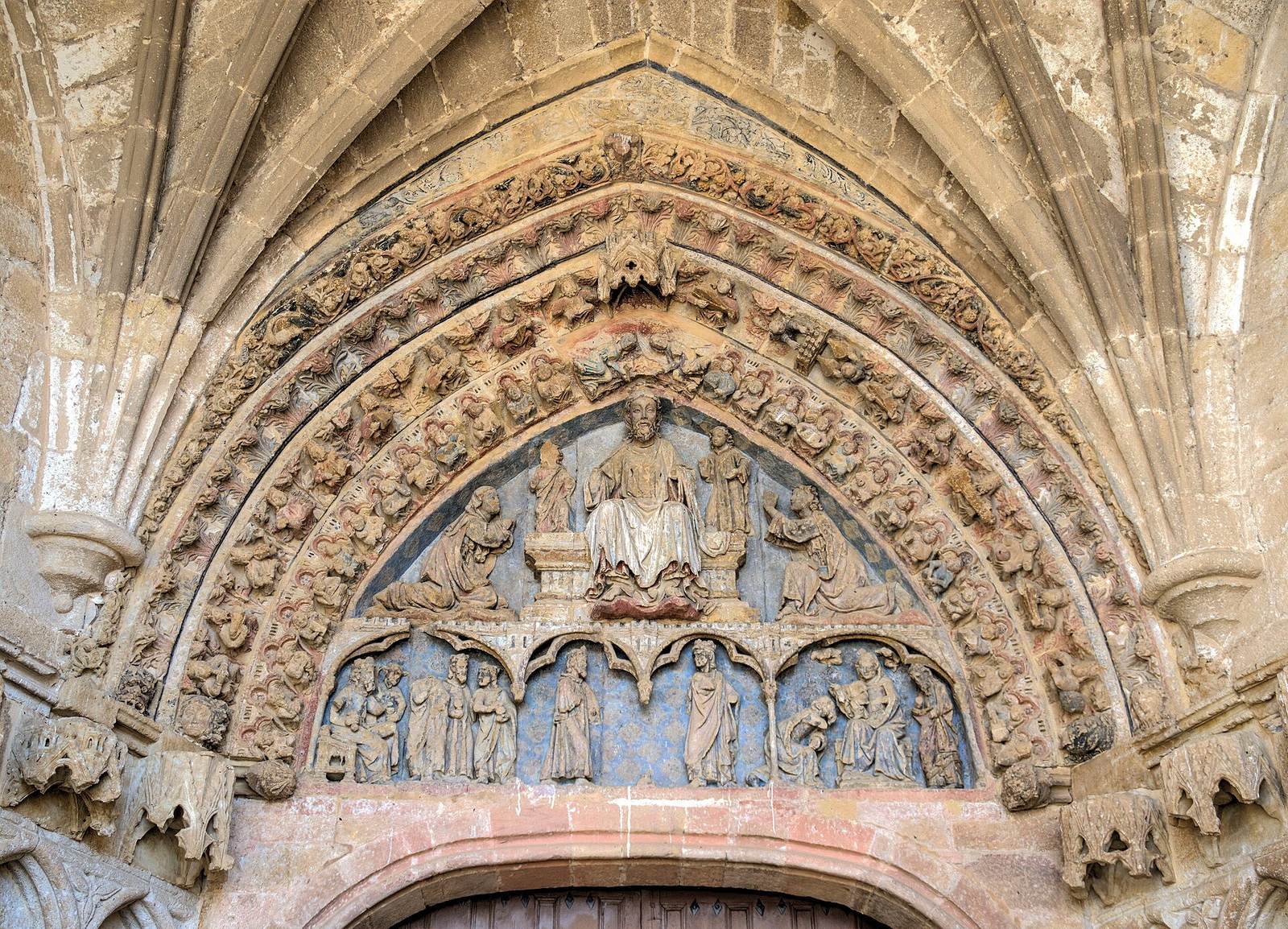
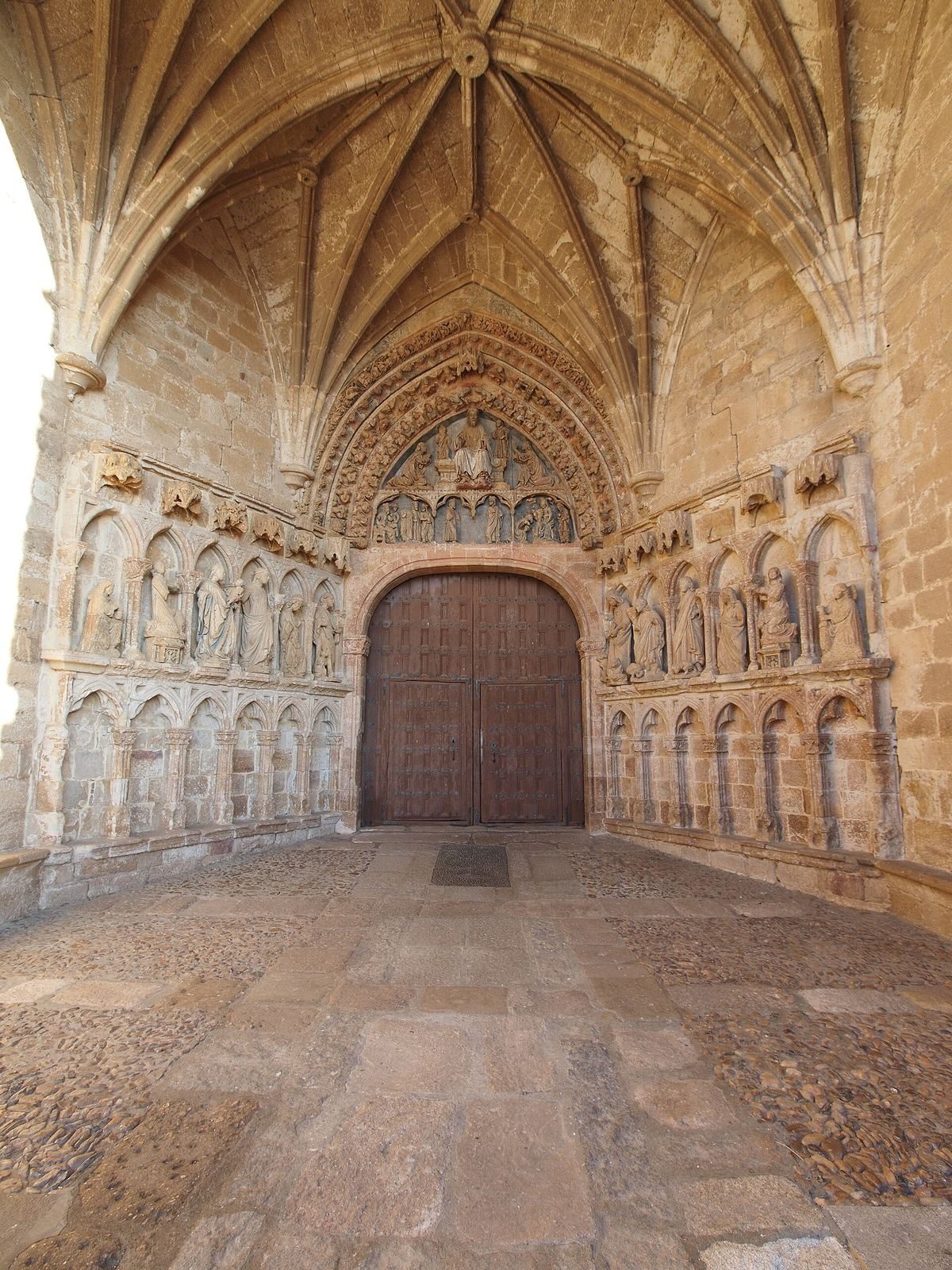
On the south side, an atrium is sheltered by a large portico dating to the period of the Catholic Monarchs, Ferdinand II of Aragon and Isabella I of Castile, in the late fifteenth century. The doorway has a shallow-curved arch; above it, a pointed arch frames a decorated panel called a tympanum, bordered by four successive molded bands. The panel’s lower horizontal zone shows the Magi taking leave of Herod on one side and the Adoration of the Child on the other. In the upper zone, Christ sits enthroned as Judge, accompanied by the Virgin, Saint John, and two angels. Inside are three stone figures: the pregnant Virgin, the archangel Gabriel, and the Virgin holding the infant Jesus. Murals behind the main altarpiece, the ornamental work behind the altar, show scenes from the Old and New Testaments and are associated with the French Gothic tradition.