Battlesbury Camp: An Iron Age Hillfort in Wiltshire
Site at a Glance
- Popularity
- Medium
- Country
- United Kingdom
- Primary era
- Iron Age
- Eras represented
- Bronze Age, Iron Age
- Civilizations
- Unclassified
- Site type
- Military
- Remains
- Fort
On this page7 sections
History
Battlesbury Camp is an Iron Age hillfort near Warminster in Wiltshire, southwest England, United Kingdom. The Iron Age takes its name from iron’s importance in toolmaking during the period. Pits within the fortifications indicate permanent occupation in the first century BC.
Earlier settlement
Excavations and surveys in 1998 identified settlement activity beside the hillfort from the Late Bronze Age, the period of bronze-based toolmaking before the Iron Age, through the Middle Iron Age, a subdivision of the Iron Age.
Burials and the name
A group of graves outside the eastern entrance contains the remains of men, women, and children. The graves have been interpreted as war burials, possibly connected with the Roman conquest, Rome’s annexation of parts of Britain during the first century AD.
The name Battlesbury has been interpreted as referring to a battle fought on the hill. Jordan proposed another origin, deriving it from the personal name Paettel and an Old English word for a fortified place, giving the sense of “Paettel’s fortified settlement.”
Remains
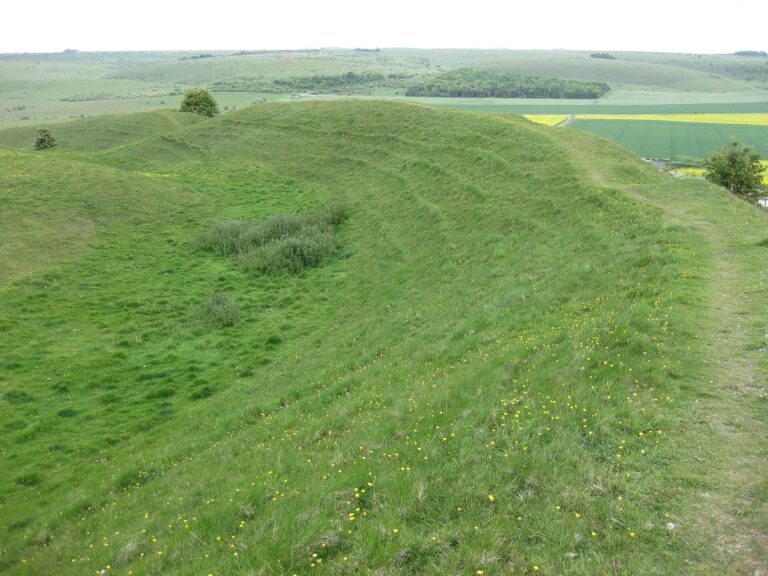
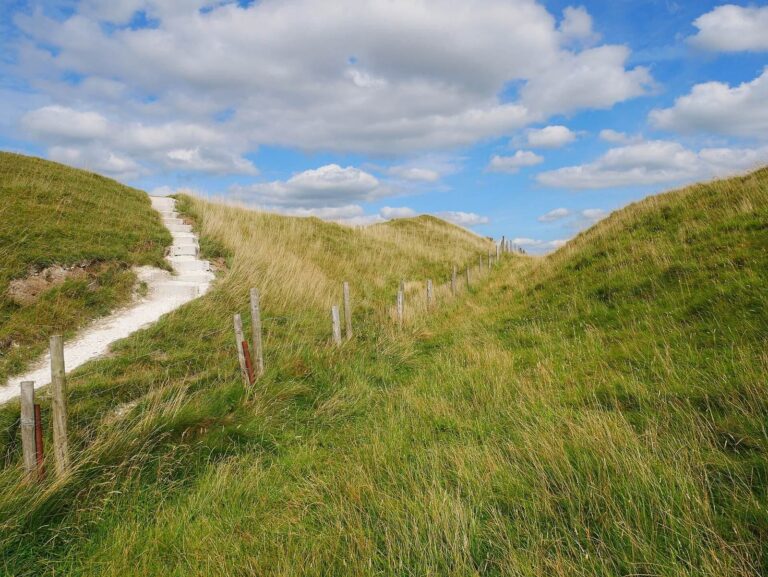
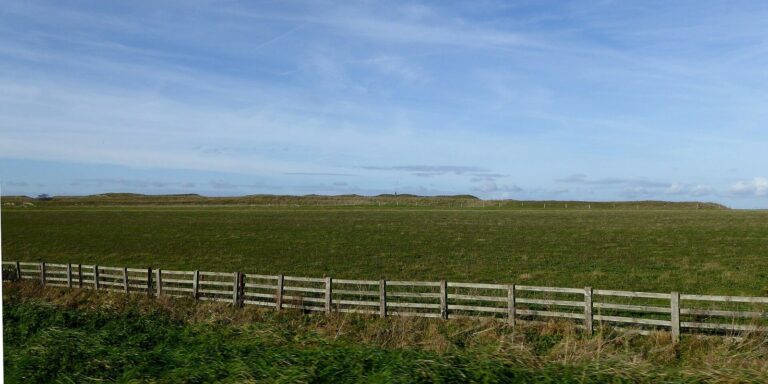
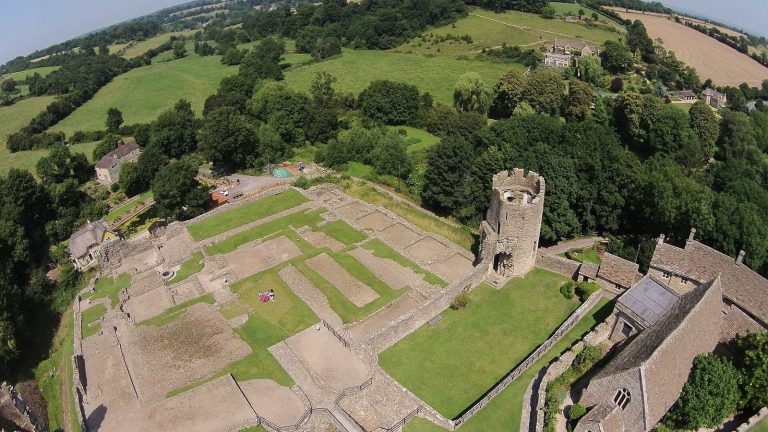
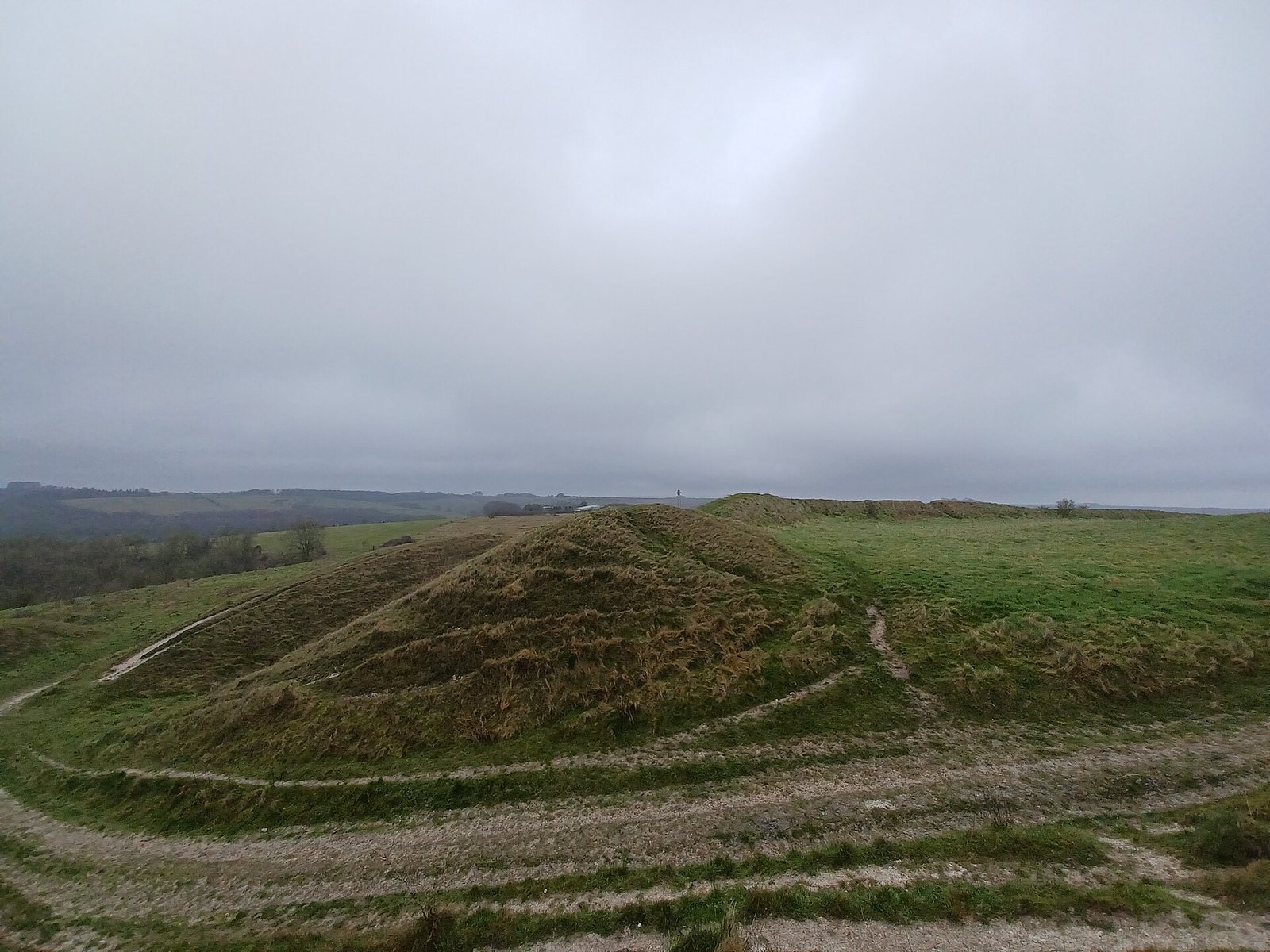
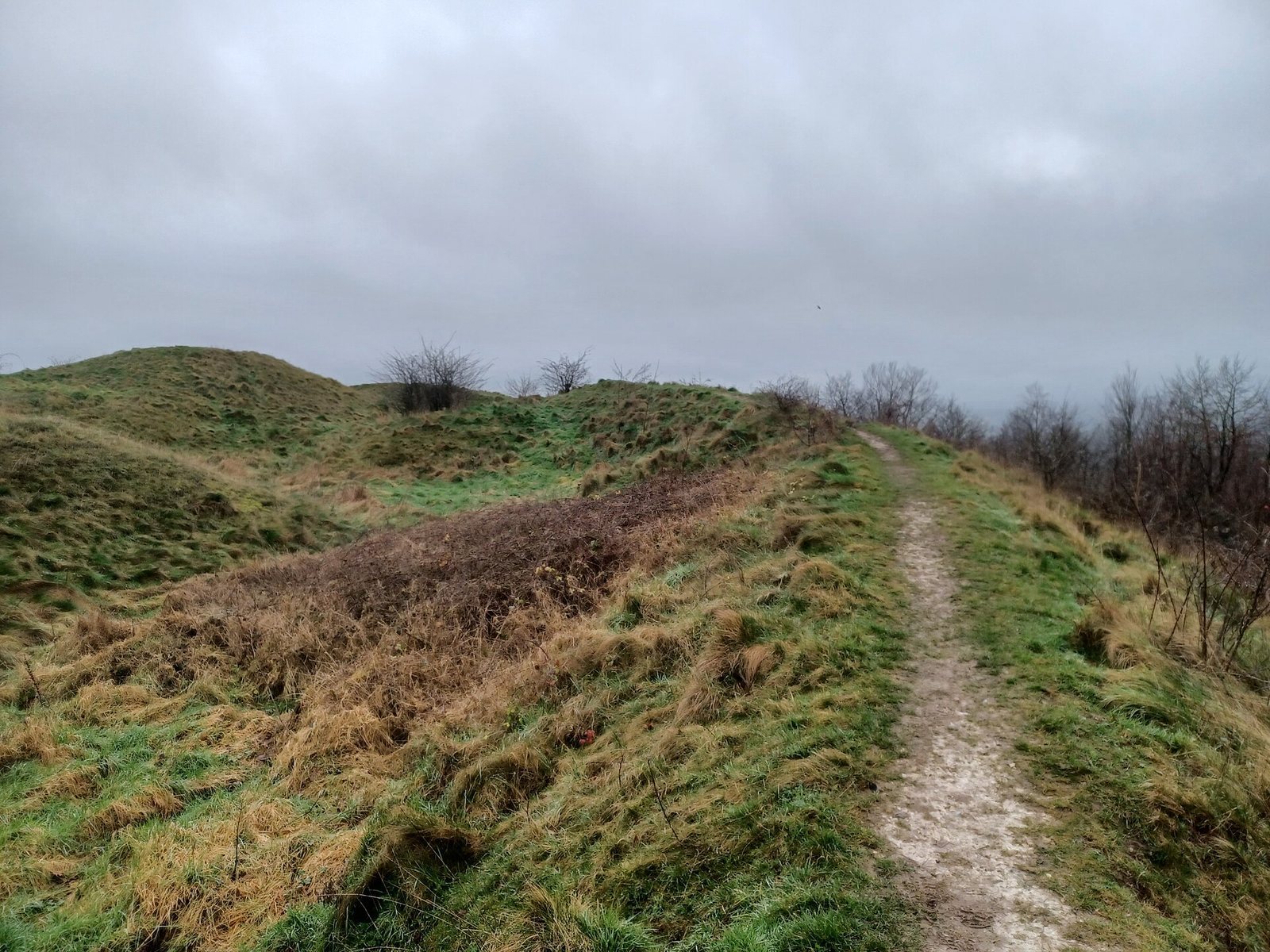
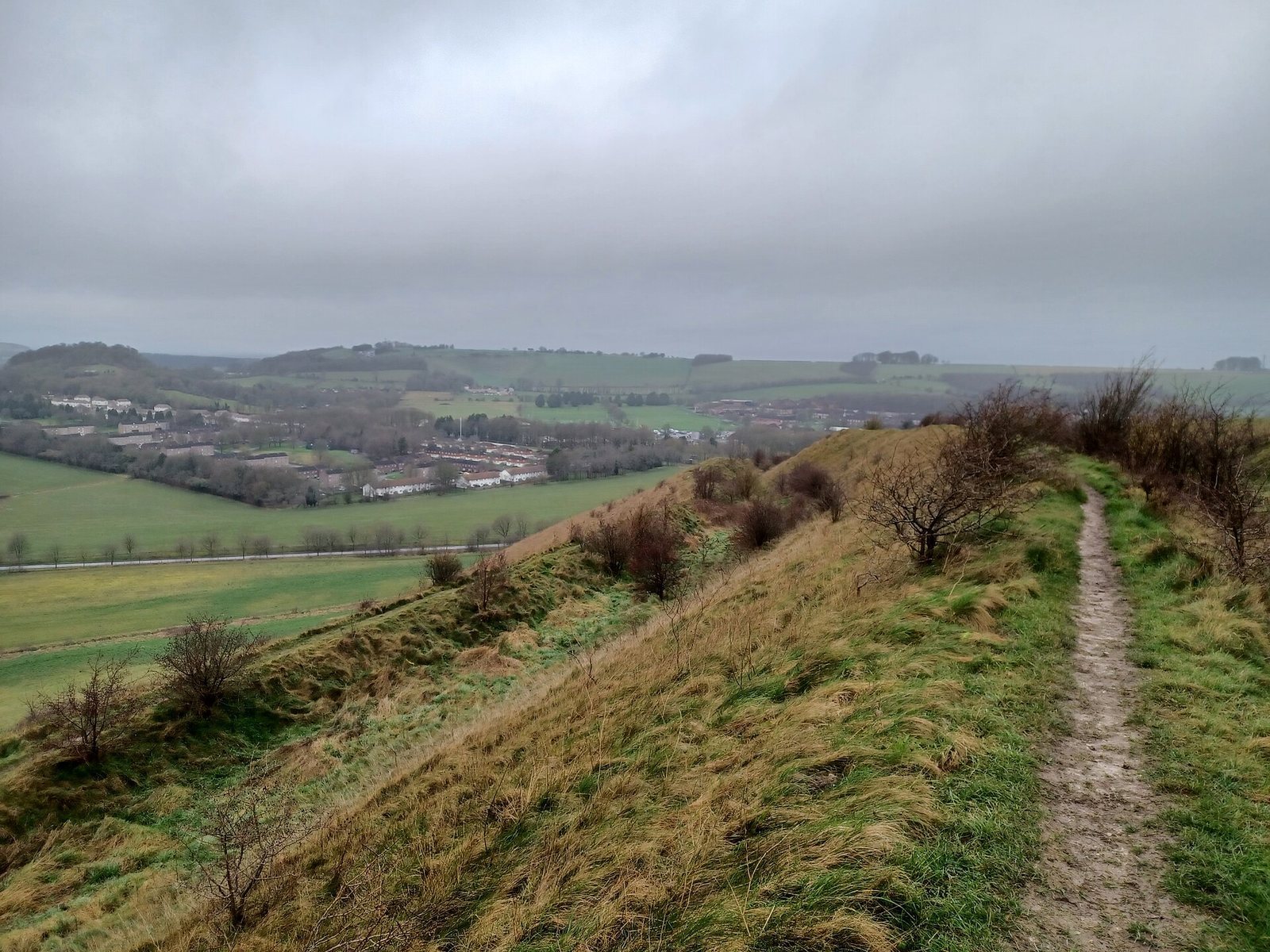
The hillfort occupies the summit of an irregular down, or open upland, at 208 metres above Ordnance Datum, Britain’s elevation reference level. It covers 23.5 acres (9.5 hectares) and is described as being in good condition. Its earthworks follow the contours of the hill. The fort is classed as bivallate, meaning it has two lines of ramparts, while most of its defences are also described as triple ditches and ramparts; on the southeast, the defences are doubled. The western and northeastern sides are naturally almost inaccessible. Entrances lie at the northeastern and northwestern corners.
Pits and finds
Pits within the defences contained pottery from the later Iron Age, a chariot-wheel hub, an iron carpenter’s saw, and a tool for lifting a hut-door latch. Other finds include querns, hand-operated stone mills for grinding grain, whetstones, sling stones, and animal bones.
Earlier burial mounds
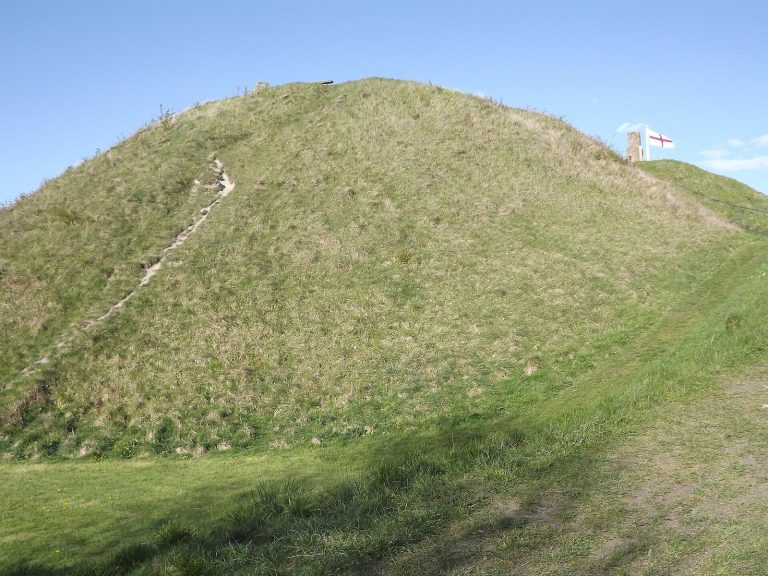
In the southwest, the fort appears to have been built across and around earlier Bronze Age burial mounds. A large circular mound occupies part of the inner ditch, while two others lie a few feet to the west beneath the inner rampart. Excavation of the larger of these two revealed a small stone burial chamber, or cist, containing burnt human bones about two feet below the surface. The smaller mound contained two skeletons laid south to north, with the smaller skeleton’s head resting on the other’s breast. A small stone ring or bead on the larger skeleton’s breast was probably worn as an amulet.
Settlement beside the hillfort
Remains of the neighboring settlement include ditches, roundhouses, or circular buildings, four-post structures identified by four principal postholes, and numerous pits. Some pits contained human burials. Other deposits of artefacts and animal bones appear to have been placed deliberately.