Church of Nativity of the Theotokos, Brody: An Orthodox Parish Church
Site at a Glance
- Popularity
- Very Low
- Country
- Ukraine
- Primary era
- Early Modern
- Eras represented
- Early Modern, Modern
- Civilizations
- Austrian Empire, Habsburg, Polish–Lithuanian Commonwealth
- Site type
- Religious
- Remains
- Church
On this page6 sections
History
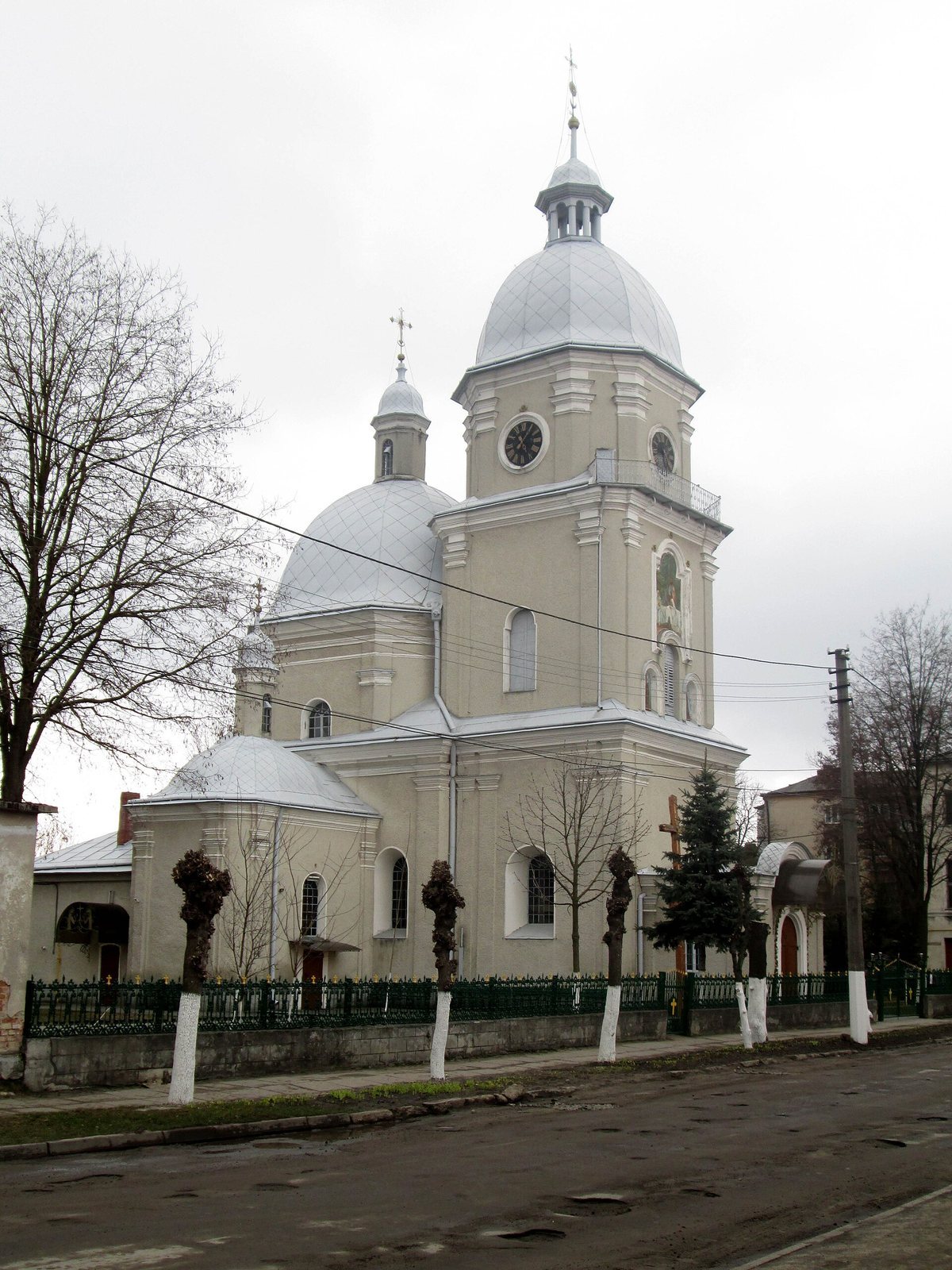
The Church of Nativity of the Theotokos, named for Mary using a title common in Eastern Christianity, is an active Orthodox parish church in Brody, Ukraine. Generally dated to 1600, it serves as the city’s principal Ukrainian church and, together with the Church of St George, is among Brody’s oldest buildings.
Foundation and rebuilding
The church’s first known reference dates to 1630, when its priest, Father Stefan, entered into a purchase-and-sale contract. A hospital was associated with the church in the first half of the seventeenth century. Some Polish participants in a gathering of Eastern Galicia’s heritage conservators proposed a different history: they regarded it as a rebuilt Roman Catholic church, constructed in the second half of the seventeenth century and later given to Brody’s Ruthenians. Ruthenians was a historical name for East Slavic peoples in this region; the transfer, in this interpretation, took place in the second half of the eighteenth century.
The church underwent reconstruction in the eighteenth century. A visitation record from 18 September 1783, made during an inspection by church authorities, describes a building that already had its present appearance.
Parish changes and modern history
In 1811, parishioners from the city’s Churches of the Exaltation of the Holy Cross and St George joined the church’s parish. The Exaltation of the Holy Cross is a Christian feast commemorating the cross on which Jesus was crucified. From 1823, the church’s parish priest administered all the town’s Greek Catholic parishes. Greek Catholic churches are Eastern Christian churches in communion with the Roman Catholic Church. A staff assistant priest was added in 1844.
The church was restored in 1902–1904. It remained in use during the Soviet period, helping preserve the building, and suffered no significant damage in the Second World War. Until December 2018 it belonged to the Ukrainian Orthodox Church of the Kyiv Patriarchate; since 15 December 2018 it has belonged to the Orthodox Church of Ukraine.
Remains
Church and architectural additions
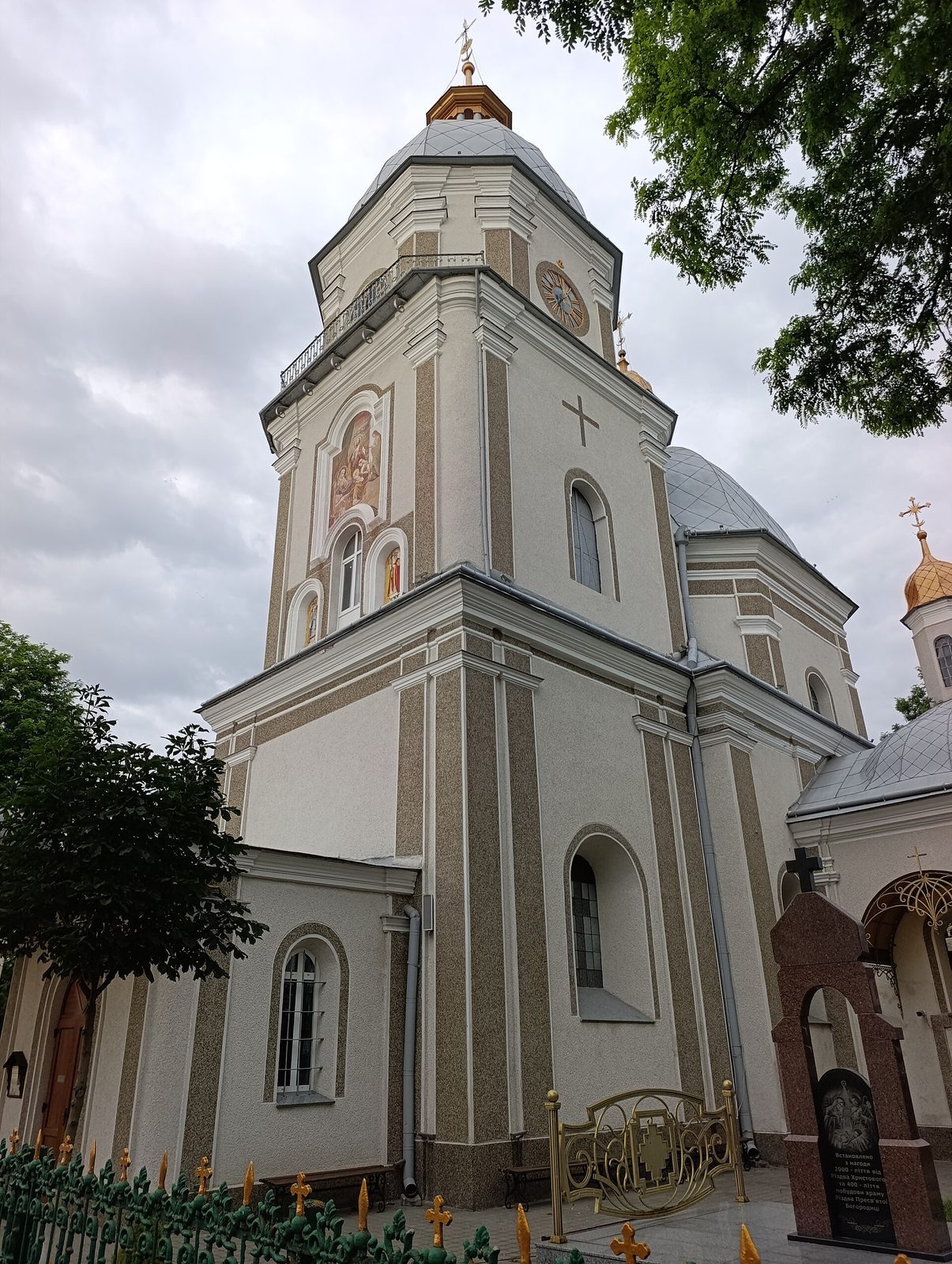
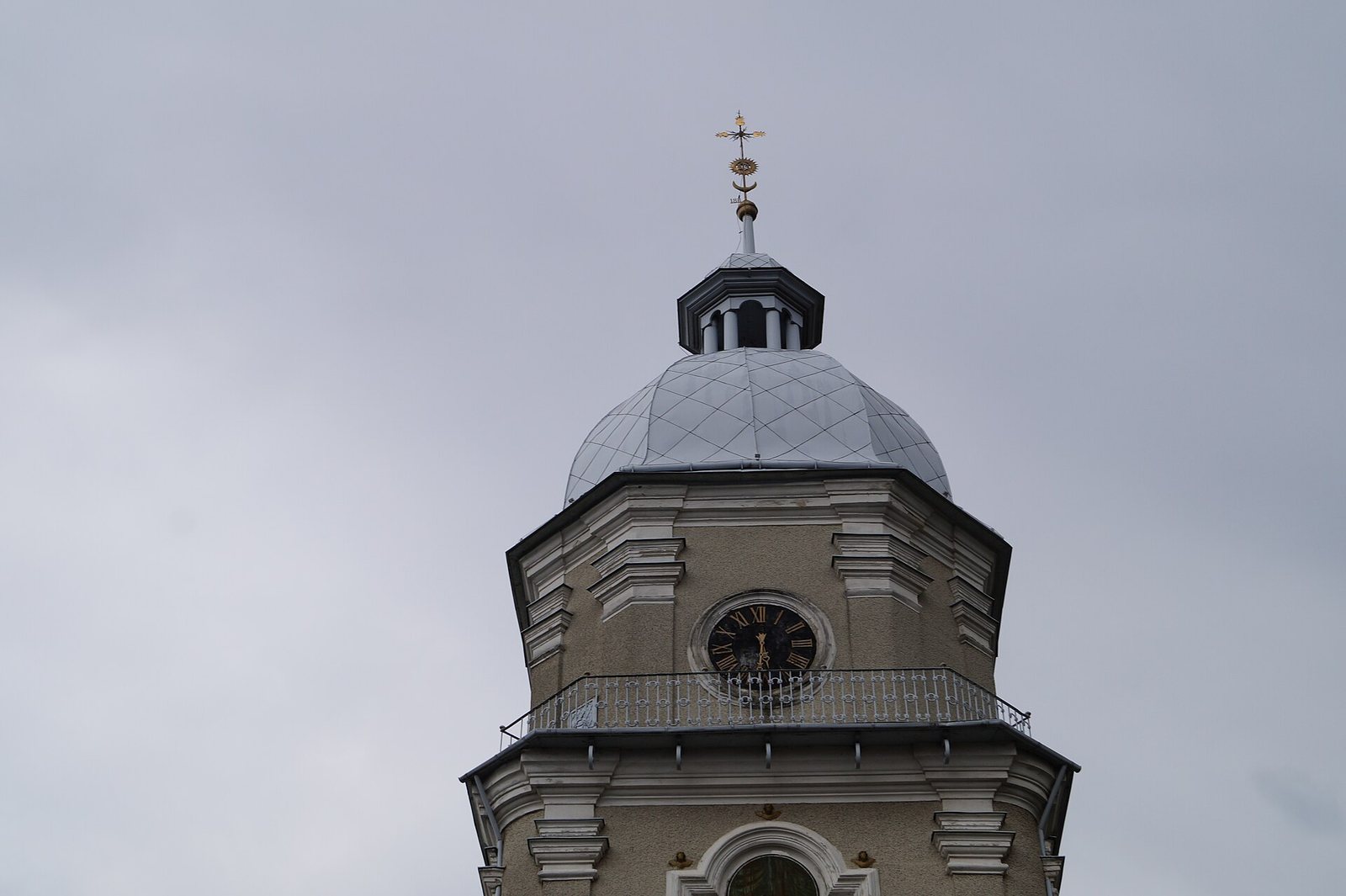
The church stands north of Market Square on present-day Ivan Franko Street. Its eighteenth-century additions are in the late Baroque style, a later phase of Baroque architecture. An early Polish guide compared their effect with that of the eighteenth-century Church of St Nicholas in Lviv. In 1839, a sacristy, a room used to prepare or store items for worship, was added on the north side of the altar. A clock was installed on the bell tower during the nineteenth century. Painters Anatol Yablonskyi, Mykhailo Osinchuk, and Mykola Fediuk decorated the church in the first half of the twentieth century, and the entrance porch was extended in 1937–1938.
Churchyard memorials
A memorial sign to the right of the church was installed in 2000 to mark the 2,000th anniversary of the birth of Christ and the 400th anniversary of the church’s construction. A commemorative cross to the left was erected in 2013 for the 1,025th anniversary of the Baptism of Rus-Ukraine, referring to the Christianization of the medieval East Slavic polity of Kyivan Rus.