Church of the Assumption of the Blessed Virgin Mary in Zbrosławice: A Gothic-Baroque Parish Church
Site at a Glance
- Popularity
- Low
- Country
- Poland
- Primary era
- Medieval
- Eras represented
- Medieval, Early Modern, Modern
- Civilizations
- German, Habsburg, Holy Roman Empire, Kingdom of Bohemia, Kingdom of Prussia
- Site type
- Religious
- Remains
- Church
On this page8 sections
History
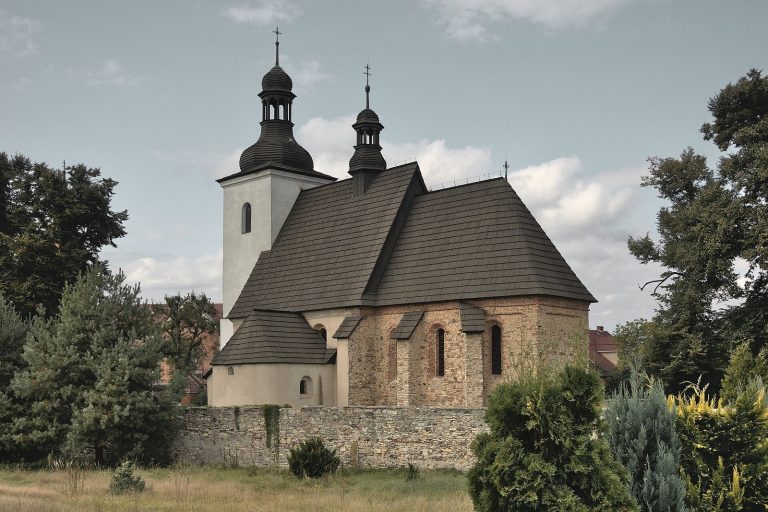
The Church of the Assumption of the Blessed Virgin Mary in Zbrosławice is a Catholic church in Poland, built in 1447 in a Gothic-Baroque style. Its history includes a period of Lutheran worship, a return to Catholic use, and a long-standing devotion to a figure of the Virgin Mary.
Foundation and changes in worship
Jerzy Larisch funded an enlargement between 1610 and 1620 that added a nave, the main body of a church. From 1610 to 1629, the church was in Lutheran hands. On 16 March 1629, an imperial decree restored Catholic worship in the parish amid the Counter-Reformation, Catholic efforts to renew the Church and respond to the spread of Protestantism. Adam Barankowitz became the parish’s first Catholic priest. The church was dedicated to All Saints until 1737, when its dedication changed to the Assumption of the Blessed Virgin Mary, the Catholic belief that Mary was taken into heaven.
Remodeling and rebuilding
A master builder remodeled the church between 1774 and 1777. In June 1909, a fire damaged the roof while repairs were in progress. Priest Florian Sobotta then proposed enlarging the church by two bays, or structural divisions, but the plan did not gain the support of Baildon, the church’s patron. The damaged building was rebuilt soon afterward, around 1909–1910, and received additions.
The Marian devotion
The church is also a sanctuary dedicated to the Motherhood of the Blessed Virgin Mary, a form of devotion to Mary as the mother of Jesus. Its focus is a 43-centimetre wooden figure of the Virgin. In 1707, pregnant duchess Maria Petronela von Darmstadt, born Stockmans, found the figure in the sacristy of the Dominican convent at Imbach. It had been hidden there from an attack by Swedish troops and concealed for more than 130 years. After a series of dreams led her to search for it, she eventually dug it up; she had initially doubted the dreams, and her first searches failed. The figure became her property.
The figure passed to Zbrosławice by inheritance in 1799. In 1823 it was placed in the Stockmans family tomb as private property, then moved to an altar on the tomb chapel’s upper floor. In 1828 it was transferred to the church’s side altar of Christ Crucified, and in 1944 it was placed above the main altar’s tabernacle, the receptacle for the consecrated Eucharist. The church’s liturgical commemoration of the Assumption is on 15 August. The feast of Our Lady of Zbrosławice is held on the second day of Pentecost, which commemorates the descent of the Holy Spirit on Jesus’s apostles and falls fifty days after Easter. Pilgrims come to the church several times a month.
Remains
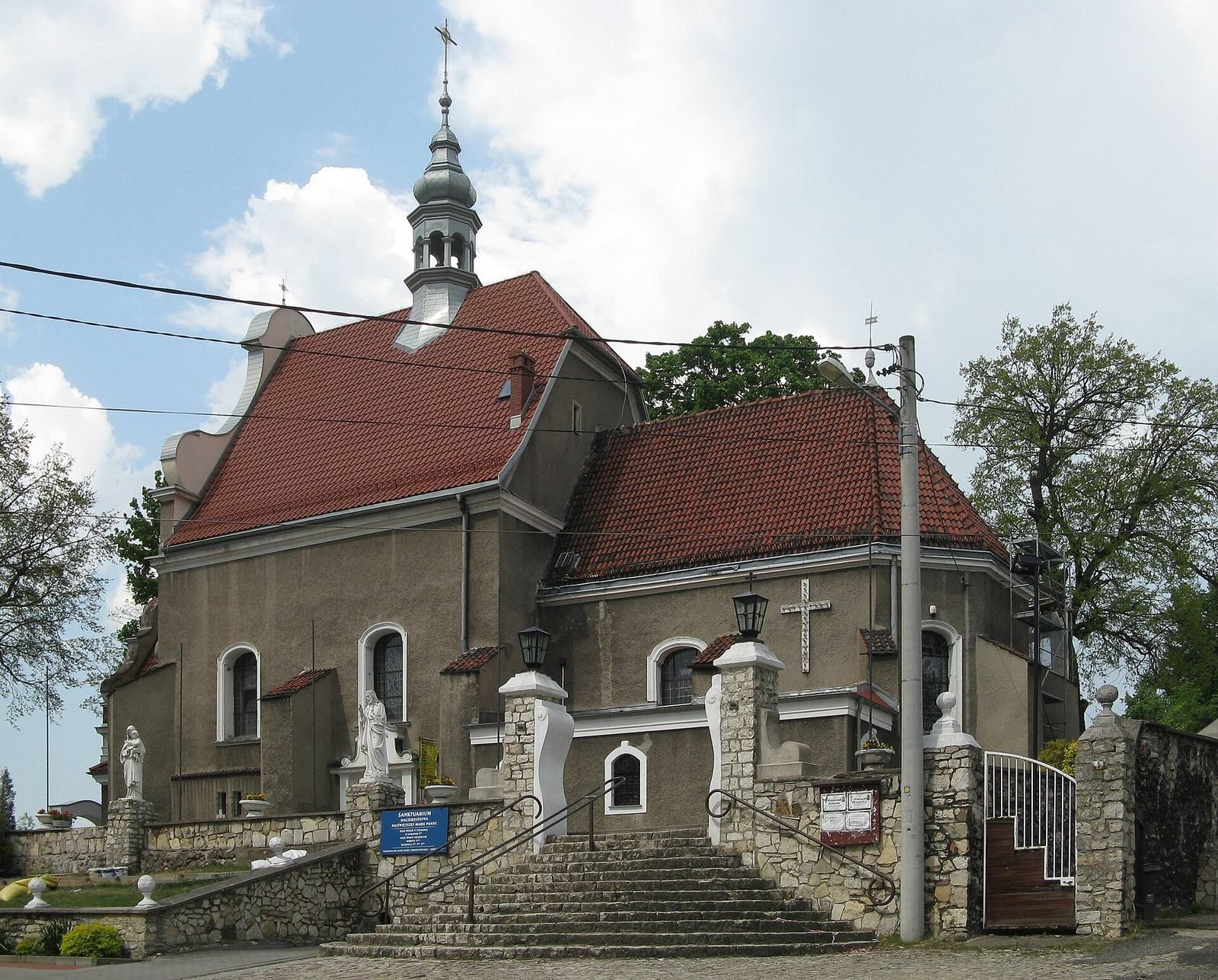
The church is aligned along an east-west axis and has a single nave. Its walls are built of stone and limestone masonry and reinforced by buttresses, projecting supports that strengthen the walls.
Church exterior and interior
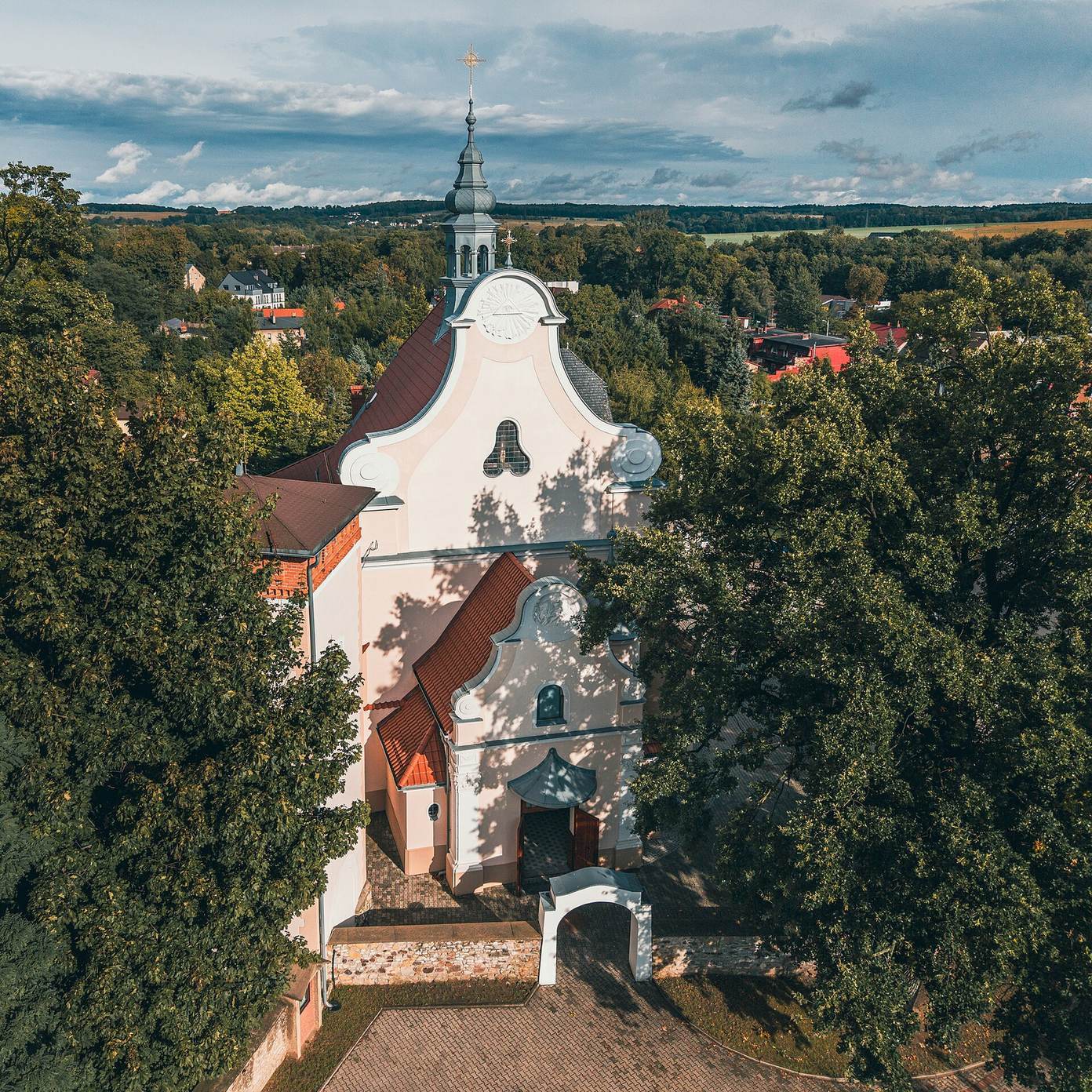
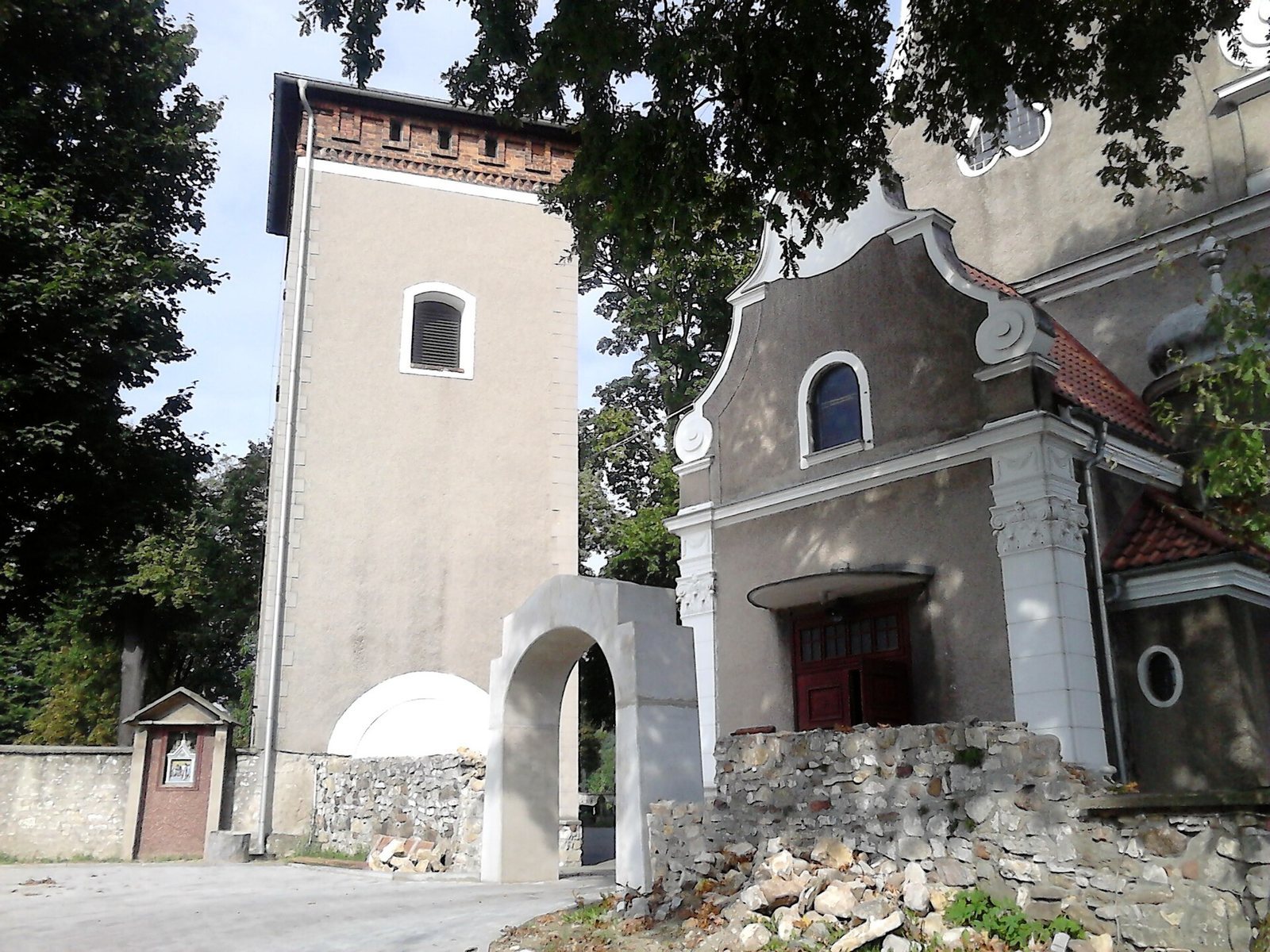
The church has gabled roofs with clipped ends and a small turret above the nave roof ridge. It is described as having two towers, a dome, and three altars, including the side altar of Christ Crucified. The chancel, the area around the principal altar, has a barrel vault, a continuous curved ceiling. Over the nave, a sail vault curves upward between arches that cross the space and rest on paired pilasters, shallow column-like features attached to the walls. Late-Baroque furnishings from the second half of the eighteenth century remain inside, along with several tomb slabs from the first half of the seventeenth century bearing full-length human figures.
Bell tower and churchyard
A freestanding square masonry bell tower stands northwest of the church. Built in 1564, it was restored in 1893 and raised in 1909. A semicircular arch opens at ground level, and a pyramidal spire tops the tower. The cemetery wall dates to the first half of the seventeenth century. Beside it is the Stockmans family tomb chapel, built in 1827 as a two-storey masonry structure with a hipped roof in the Neo-Gothic style, a revival of Gothic forms. A small shrine stands beside the church, and a cross is situated behind it.
Altar figure and organ
The 43-centimetre wooden figure of the Virgin Mary was installed in 1954 on a gilded throne at the top of the main altar’s retable, the structure behind the altar. The organ, made in 1917 by Paul Berschdorf’s company of Nysa, stands in the gallery above the main entrance. Its case is Neo-Baroque, a revival of Baroque forms. The instrument has 14 stops, which select sets of pipes, two hand-operated keyboards, and a foot-operated pedal. Pneumatic action uses air pressure to connect the keys and pedal to the pipes.