Kangi-in Temple: A Shingon Buddhist Temple in Kumagaya, Japan


Site at a Glance
- Rating
- 4.3
- Popularity
- Medium
- Country
- Japan
- Primary era
- Early Modern
- External website
- Open
- Eras represented
- Early Modern
- Civilizations
- Tokugawa
- Site type
- Religious
- Remains
- Temple
On this page8 sections
History
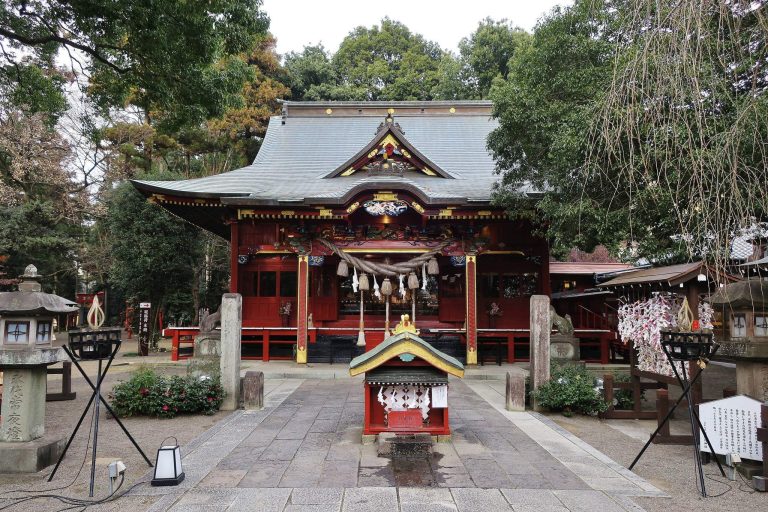
Kangi-in Temple is a Kōyasan Shingon-shū Buddhist temple in Kumagaya, Japan, traditionally founded in 1179 during the late Heian period. Its principal sanctuary, Shōden Hall, follows the Gongen-style arrangement of connected inner, middle, and exterior halls, an architectural form known for elaborate decoration. The temple developed around the worship of Kangiten, a Buddhist deity associated with prosperity, auspiciousness, and the removal of obstacles.
Foundation and Medieval Patronage
The temple’s origins are traditionally linked to Saitō Sanemori, a military leader associated first with Minamoto no Yoshitomo and later with the Taira clan during the Genpei War, the late twelfth-century conflict that led to the establishment of the Kamakura shogunate. In 1179, Sanemori established a sanctuary for Kangiten, also called Shōten or Shōden in Japan. In 1197, his second son, Sanenaga, founded Kangi-in Chōrakuji to serve the sanctuary. The temple’s original principal image was the Eleven-Headed Kannon, while Kangiten was the principal object of the sanctuary.
Minamoto no Yoritomo, the first shogun of the Kamakura shogunate, visited Kangi-in. During the medieval period, the lords of Oshi Castle protected the temple, and Tokugawa Ieyasu later revived it. Kangi-in is regarded as one of Japan’s three major Kangiten temples and became widely known as Menuma Shōdenzan, meaning “Menuma Shōden Mountain.”
Fire, Rebuilding, and Restoration
An extensive fire at Menuma in 1670 destroyed the earlier temple buildings. The present Shōden Hall was rebuilt during the eighteenth century. Construction of its three connected halls began in 1735 under the master carpenter Hayashi Masakiyo, and his son completed the work in 1760.
Restoration of the main hall took place from 2003 to 2011, with the principal construction work completed in 2010. A Buddhist service reporting completion was held on 1 June 2011, when the restored hall was opened to the public. Shōden Hall received designation as a National Treasure of Japan on 9 July 2012, becoming the first building in Saitama Prefecture to receive that status. Kangi-in is also known as “Saitama’s Nikkō,” a name referring to the richly decorated main hall.
Religious and Local Traditions
Kangi-in continues to hold Buddhist services for its major festivals. The Spring and Autumn Grand Festival services take place annually on 18–19 April and 18–19 October, while a Setsubun ceremony is held on 3 February. Long, narrow inari sushi has been eaten by visitors to Kangi-in since the Edo period and became a specialty of the Menuma district. Known locally as “Shōden sushi,” it was recognized in 2023 through the Agency for Cultural Affairs’ “100-Year Food” program for traditional local foods continuing from the Edo period.
Remains
Shōden Hall
Shōden Hall, also called the main hall, is the principal sanctuary of Kangi-in. Its Gongen-style plan connects inner, middle, and exterior halls used for worship. The elaborate treatment of these connected spaces gives the building its distinctive character and underlies the comparison with Nikkō. The hall houses a secret principal object in the form of a ritual scepter head dated by an inscription to 1197. Its central section carries cast images of Kangiten and two attendant child figures. A ritual scepter is a staff associated with Buddhist figures such as Jizō, and its upper section can bear Buddhist images.
Kisōmon Gate
Kisōmon stands at the principal entrance to the temple grounds. Built by the local craftsman Hayashi Masamichi, the approximately 18-metre-high gate has eight supporting legs and a roof covered with copper sheets. Its unusual two-tiered roof places gabled roofs at both the front and rear of the lower tier, producing three gables when viewed from the side. Guardian figures of Jikokuten and Tamonten stand on its two sides. The gate was completed in 1851, with the work described as finished around 1855. Kisōmon is designated an Important Cultural Property of Japan.
Temple Compound and Associated Objects
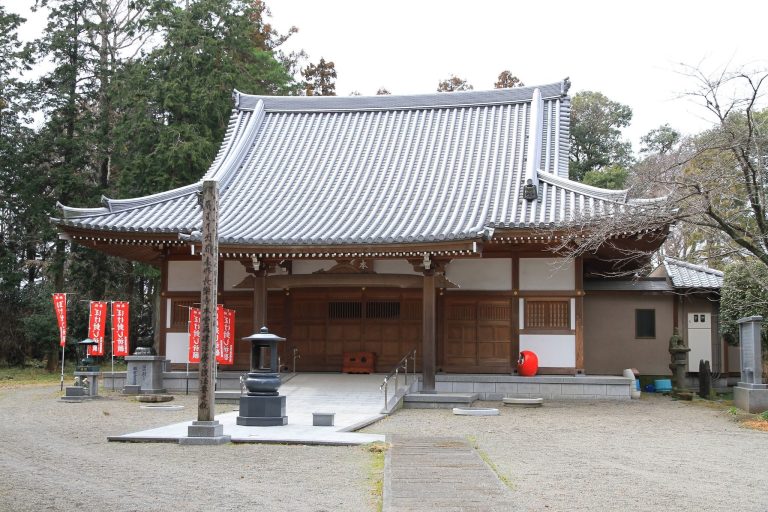
The main precinct includes the temple’s principal buildings and its residential compound, known as the honbō. A separate hall serves the religious instruction of priests, while Shōden Hall is used for public worship. Seidenzan Gakuen Menuma Kindergarten adjoins the honbō on its northwest side, and the temple’s head priest serves as the kindergarten’s chair and director.
Associated cultural properties include a silk canopy and a hanging metal gong, both designated as tangible cultural properties by Saitama Prefecture. Together with Shōden Hall, Kisōmon, and the Kangiten ritual object, these objects form part of the material heritage connected with Kangi-in’s religious history.