Church and Monastery of Sant’Antonio in Polesine: A Benedictine Complex in Ferrara
Site at a Glance
- Popularity
- Medium
- Country
- Italy
- Primary era
- Early Modern
- Eras represented
- Medieval, Early Modern
- Civilizations
- Papal States
- Site type
- Religious
- Remains
- Monastery
On this page10 sections
History
Origins and Este patronage
The Church and Monastery of Sant’Antonio in Polesine is a Catholic church and women’s monastery in Ferrara, Italy. Augustinian hermits, members of a religious order following the Rule of Saint Augustine, founded the monastery in the early Middle Ages. It is dedicated to Saint Anthony the Great, an early Christian ascetic traditionally regarded as a founder of Christian monasticism.
Around 1257, Beatrice II d’Este entered the convent after her father, Marquis Azzo VII d’Este, gave the monastery to the Benedictine community she joined. The Benedictine Order takes its name from Benedict of Nursia, a foundational figure in Western monasticism. In 1297, the monastery passed to Benedictine nuns. Beatrice died there in 1264 and was beatified in 1270. The Este family continued to protect and patronize the community.
Urban setting and later care
The monastery lies within the area of Ferrara expanded under Borso d’Este, a fifteenth-century ruler of the city. In the early nineteenth century, Ferrariae Decus, an association concerned with Ferrara’s historic buildings and cultural heritage, intervened in the complex’s restoration.
The monastery belongs to the Benedictine Order and is part of the urban Vicariate of Ferrara, a smaller administrative district within the Archdiocese of Ferrara-Comacchio, a major territorial jurisdiction of the Catholic Church.
Remains
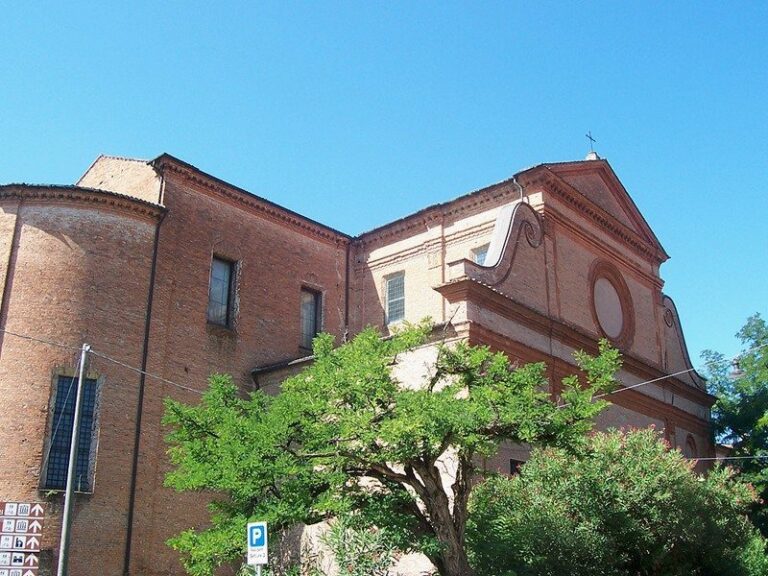
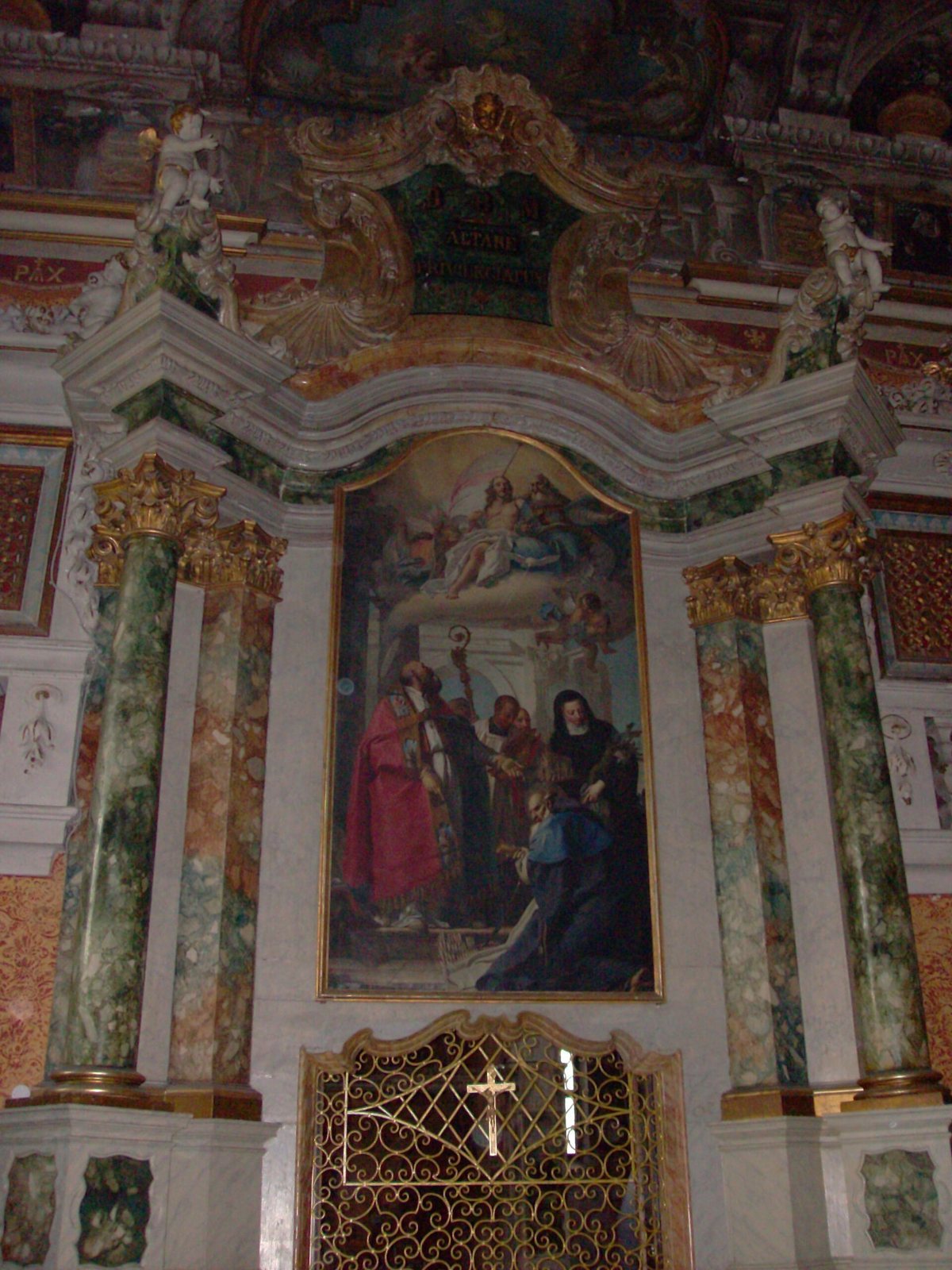
The complex pairs an outer church with an inner church and a cloister, combining a Baroque exterior with a frescoed inner worship space. The site once occupied a raised island surrounded by water in the Po River, south of a Byzantine castrum, or fortified settlement. The name ‘in Polesine’ refers to this watery terrain, rather than to the separate Polesine region.
Churches and painted decoration
Outer church
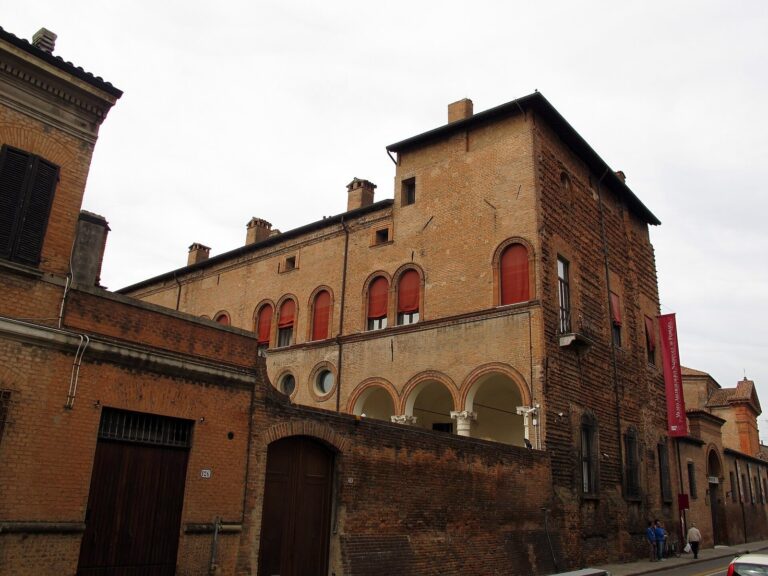
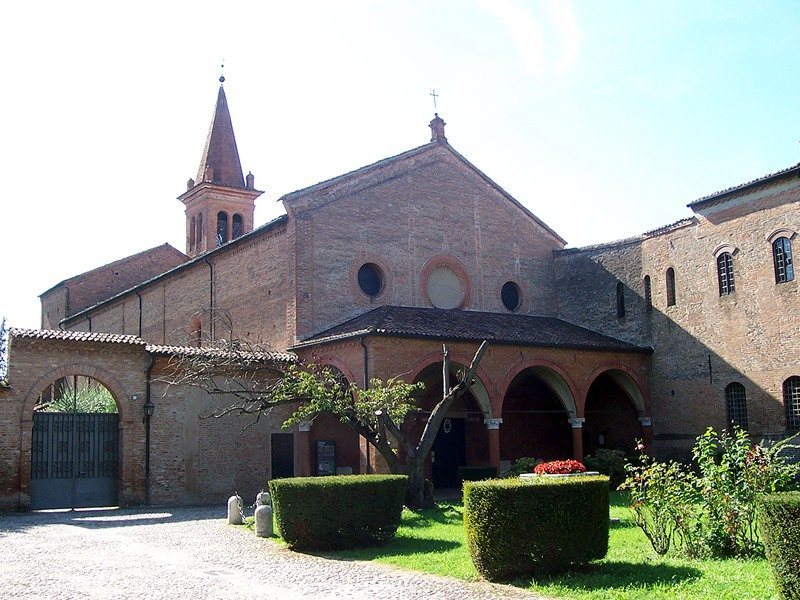
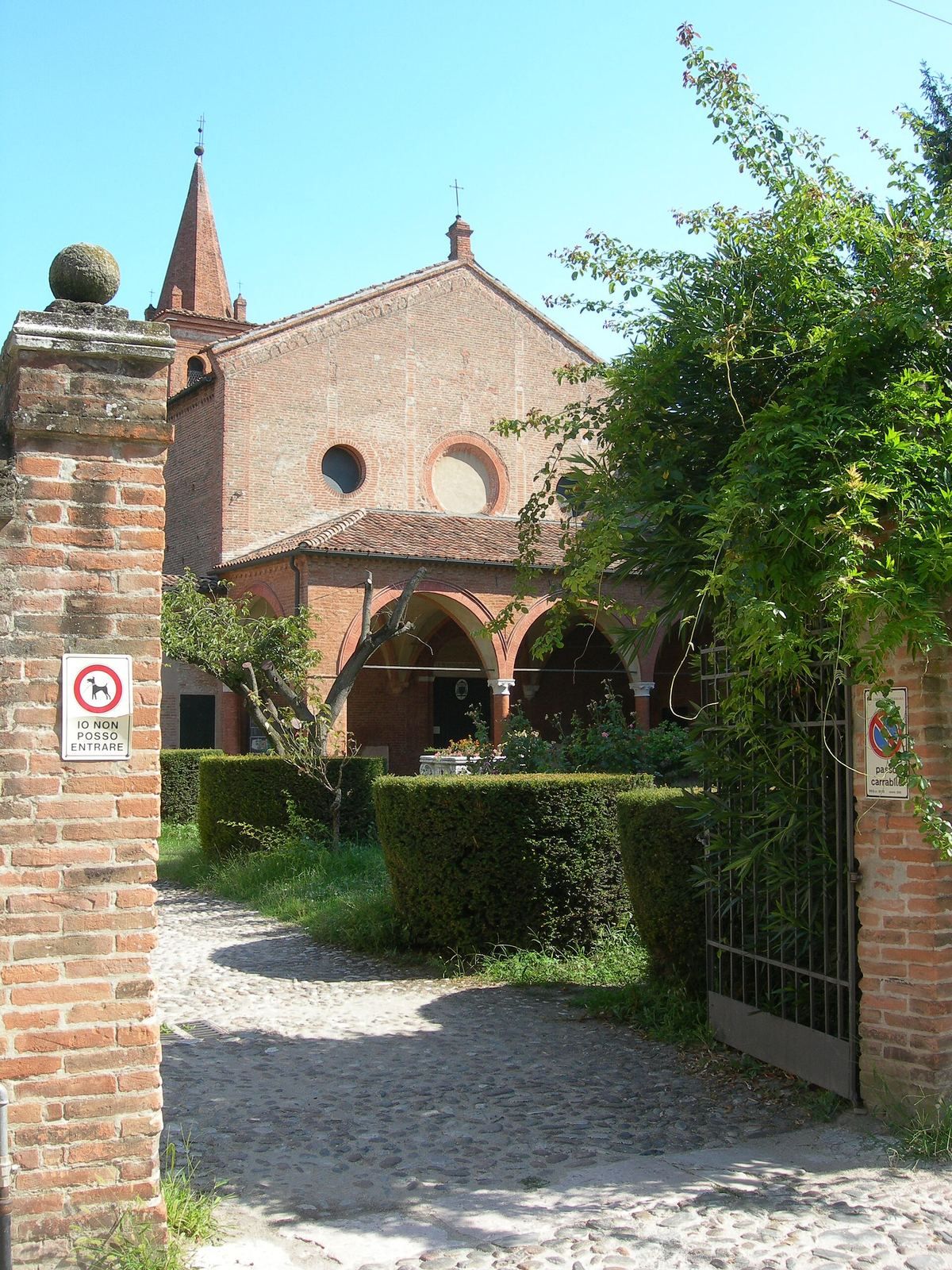
The outer church served public worship. Its brick façade includes a portico. A seventeenth-century ceiling fresco by Francesco Ferrari depicts God the Father, the Madonna and Child, and Saints Benedict and Anthony Abbot.
Inner church
Also known as the nuns’ choir, the inner church contains three frescoed chapels. Paintings in the left chapel show episodes from the childhood of Jesus and the life of the Virgin. Dating to 1315–1320, they follow the artistic tradition associated with Giotto’s school, rather than being attributed to Giotto himself. The right chapel presents scenes from the Passion in the same tradition. Decoration in the central chapel belongs to different periods: it includes a fifteenth-century Annunciation by Domenico Panetti and a sixteenth-century ceiling ornamented with grotesques, fanciful forms arranged in decorative patterns. The chapel also contains Nicolò Roselli’s sixteenth-century altarpiece of the Flagellation, still set in its original carved and gilded wooden frame. Pagan imagery in the church’s decoration has been interpreted as reflecting ties to the Este court, where such ornament was fashionable in the late seventeenth century.
Cloister and associated features
Cloister and founder’s tomb
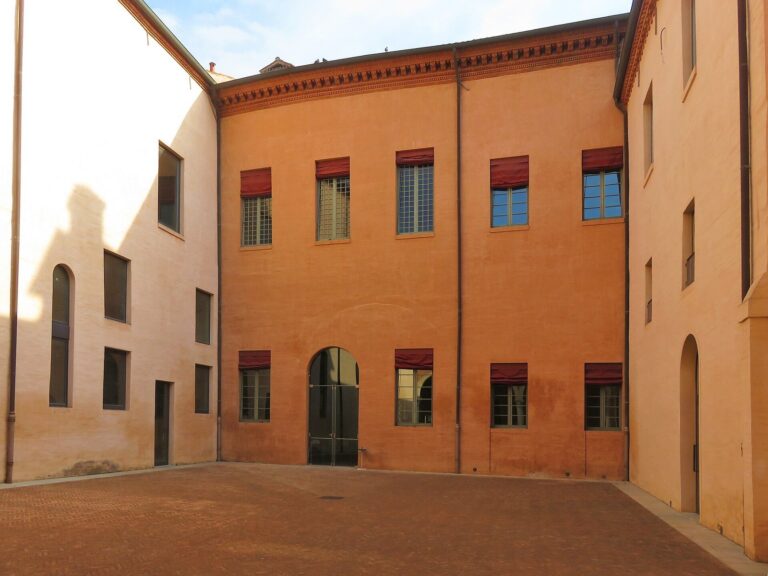
The complex includes a cloister and the monumental tomb of its founder, Beatrice.
Grille, cross, and plaque
Other identified features include a grille in the outer church, a Cross of Saint Benedict, and a stone plaque associated with Cristoforo di Messisbugo, a steward at the Este court known for writing about court banquets.