Chiesa di San Bartolomeo: A Historic Roman Catholic Church in Villa Popolo


Site at a Glance
- Rating
- 4.4
- Popularity
- Very Low
- Country
- Italy
- Primary era
- Early Modern
- Eras represented
- Medieval, Early Modern, Modern
- Civilizations
- Italian, Kingdom of Naples, Kingdom of Sicily, Spanish
- Site type
- Religious
- Remains
- Church
On this page8 sections
History
Chiesa di San Bartolomeo is a Roman Catholic church in Villa Popolo, Italy, dedicated to Saint Bartholomew, one of the Twelve Apostles and a Christian martyr. Its construction date is unknown, but the church existed before 1267 and was part of the ecclesiastical landscape of the Diocese of Teramo, a territory governed by a bishop, in the medieval period.
Medieval parish records
The earliest known reference dates to 6 November 1267. At that time, the church was called San Bartolomeo de Juanello or de Juanella, names associated with the nearby hamlet of Ioanella. A record in the collation of the Chapter of Teramo, the body of clergy connected with the cathedral, confirmed Jacopo di Giovanni di Alberto di Joanella as rector and chaplain.
Two papal bulls issued in 1327 established a rector and an ecclesiastical prebend for the parish church of Villa Popolo. A prebend was an income or benefice assigned to a cleric for service within a church institution. The arrangement reflects the church’s established place within the local ecclesiastical administration.
Early modern administration and restoration
On 2 April 1509, the notary Matteo Tuzj prepared a document requesting the church’s collation to the Chapter of Teramo on behalf of the rector and its co-patrons. A pastoral visitation to Villa Popolo is also recorded in 1583, providing evidence of continued ecclesiastical attention during the early modern period.
Major restoration work took place in 1684. The intervention included changes that shaped the building’s present form, including the raising of its walls, the addition of an entrance portico, and the installation of a painted wooden ceiling. The date appears in several parts of the building and is associated with the painting of the ceiling’s first four bays.
Local tradition attributes the oldest part of the ceiling cycle to a painter-soldier from Toledo. According to this hypothesis, Don Carlo Cortino, the church’s rector and prebendary, commissioned the painter after the artist reached the Teramo area during a military campaign against banditry. No contract, payment record, or commission document has been found, so the attribution remains unconfirmed.
The proposed Spanish origin of the painter is used to explain the ceiling’s seventeenth-century Spanish artistic character. The decoration was created while brigands attacked the surrounding area. In November 1684, the campaign against banditry in the Diocese of Teramo ended, and a Royal Audience, a historical judicial and administrative institution, was held in Teramo as the city became a provincial capital.
Later recognition
The church was placed on the list of Italian national monuments in 1902. On 29 November 1986, a decree recognized it as a civilly recognized ecclesiastical entity under the name San Bartolomeo. The decree was published on 21 January 1987.
Remains
Exterior and construction
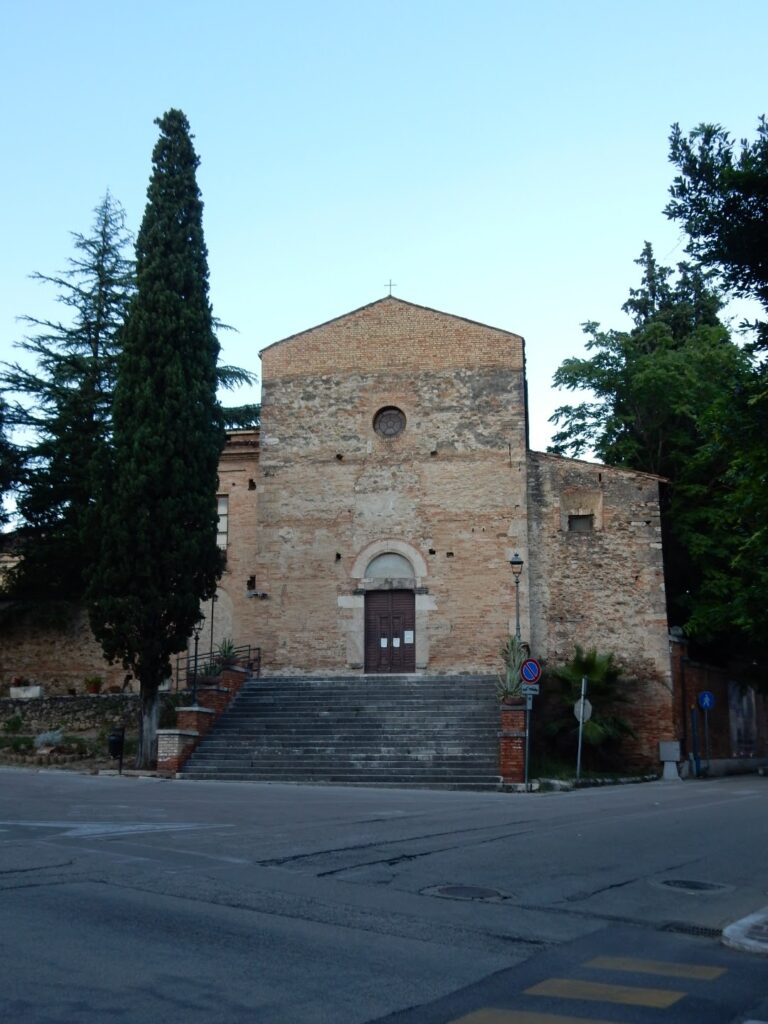
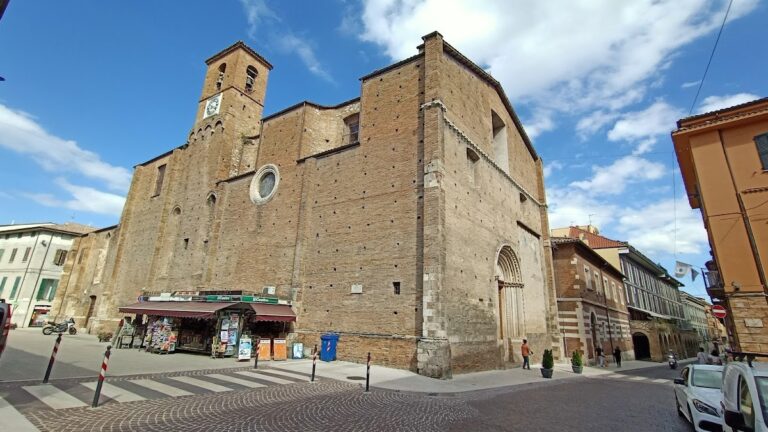
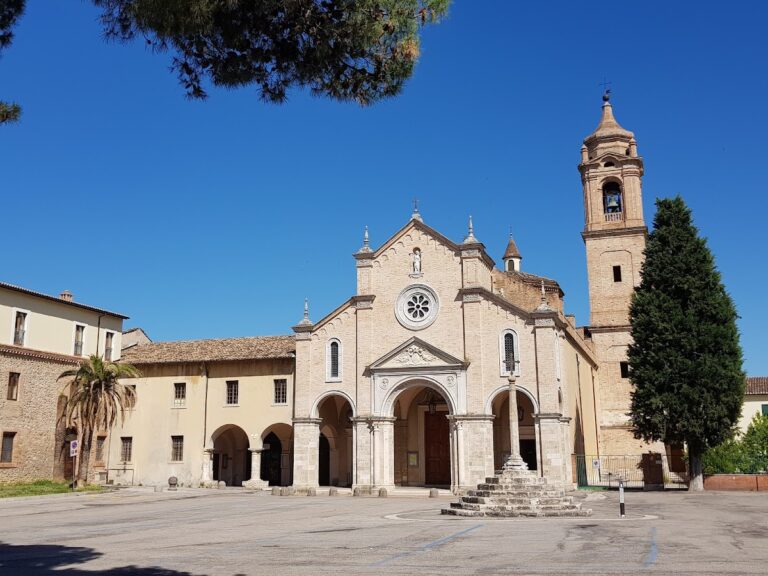
Chiesa di San Bartolomeo has a massive, compact, and austere appearance, with restrained lines and no general ornamental treatment. Its fabric preserves evidence of several construction phases. The lower part of the masonry uses smaller, unworked stones, while changes in the composition of the walls and in the types of stone indicate later building phases.
A small entrance loggia, or portico, stands before the façade. Two brick columns with rectangular bases support it, and its roof is covered with bricks painted white and red. The central doorway is surmounted by an oculus, a circular opening in the façade. Three windows and a second entrance occupy the right side wall. Above this side doorway, the curved stone lunette bears the carved date 1803.
A brick incorporated into the portico roof carries the inscription 1684/ D. Desideri. Together with the dated elements inside the building, it preserves a reference to the major restoration carried out in 1684.
Liturgical interior
The interior is a single rectangular liturgical space without an apse. A fifteenth-century baptismal font, consisting of a basin and wooden cover, stands among the surviving furnishings. The church also contains a lobed holy-water stoup and two Baroque altars.
The stucco high altar is dedicated to Saint Bartholomew and reflects the taste of the late seventeenth century. The second altar is wooden and dates from the period between the end of the sixteenth century and the beginning of the seventeenth. Its crowning molding bears the coat of arms of the Forti family, an oval shield with supports and mantling that shows a lion above three Italian-style mountains, facing a star.
A niche cut into the inner right wall served as a cupboard for the sacred oils. The 1643 bell is preserved inside the liturgical hall. It bears the inscription Sancte Bartolomeo ora pro nobis, followed by the date. A floor stone covering the opening used for burials bears the date 1846.
Painted wooden ceiling
The ceiling is divided into five bays, repeated structural and pictorial sections containing distinct groups of panels. More than 100 individually painted wooden boards are set between decorated beams that support the roof over the liturgical hall. The imagery is organized around larger central panels and accompanied by inscriptions and biblical references.
The first four bays were painted in 1684. The first centers on Saint Bartholomew holding the knife associated with his martyrdom, an emblem explained by his traditional Christian iconography. Twelve military martyrs surround him, and the central panel also includes Don Carlo Cortino.
The second bay presents the Crucifixion, with Christ on the cross and the Virgin Mary and Mary Magdalene at its foot. The surrounding boards show angels carrying the instruments or symbols of the Passion. The third bay depicts God the Father enthroned among twelve prophets and Fathers of the Church.
The fourth bay shows the Immaculate Conception, the Catholic doctrine that Mary was preserved from original sin from the moment of her conception. Twenty-four holy virgins and martyrs surround the central image. The fifth bay was painted during the nineteenth century, probably toward the end of that century, and differs in style and execution from the earlier work. It depicts the Risen Christ surrounded by the twelve apostles.