Chiesa del Santissimo Corpo di Cristo: Parish Church of Valvasone in Italy


Site at a Glance
- Rating
- 4.3
- Popularity
- Very Low
- Country
- Italy
- Primary era
- Medieval
- External website
- Open
- Eras represented
- Medieval, Early Modern, Modern
- Civilizations
- Italian, Venetian
- Site type
- Religious
- Remains
- Church
On this page7 sections
History
Foundation and consecration
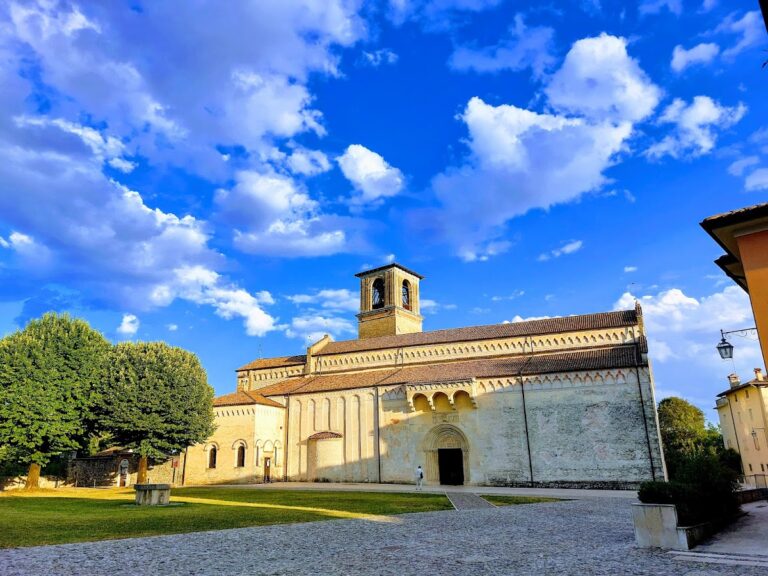
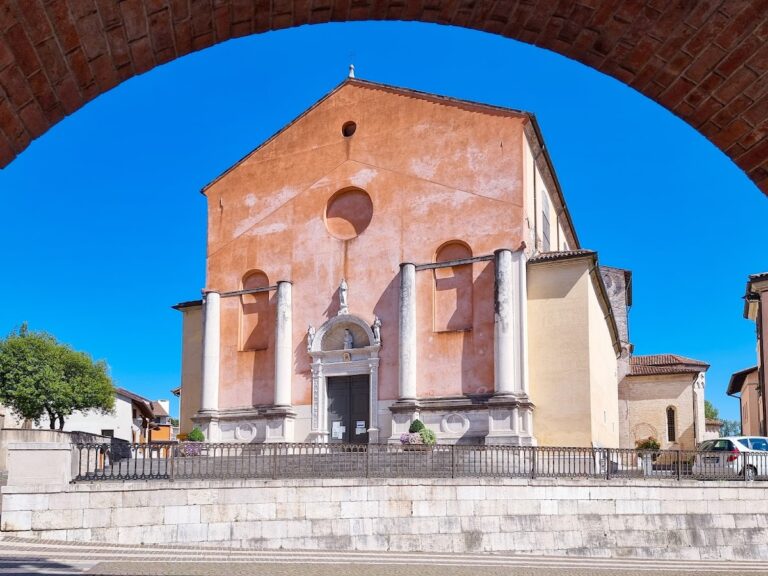
The Chiesa del Santissimo Corpo di Cristo in Italy is the parish church of Valvasone, a hamlet of Valvasone Arzene, and a Catholic church dedicated to Corpus Christi, the Christian feast focused on the Eucharist. Its foundation dates to 1449, and construction took place during the fifteenth century. The building was completed in 1454 and consecrated in 1484.
The church belongs to the Diocese of Concordia-Pordenone and the Spilimbergo deanery. A diocese is a territory administered by a bishop, while a deanery is an administrative grouping of parishes within a diocese.
Renovation and religious significance
Between the late nineteenth and early twentieth centuries, the church underwent a complete renovation in the Neo-Gothic style. Neo-Gothic architecture revived medieval Gothic forms during the nineteenth and early twentieth centuries, giving the building its combination of Gothic and later revival features.
The church preserves relics of a sacred cloth traditionally identified as the bloodstained corporal associated with the Eucharistic miracle said to have occurred in nearby Gruaro in 1294. A corporal is a square liturgical cloth placed beneath the Eucharistic vessels during Mass. The association with this reported miracle forms an important part of the church’s religious identity.
Remains
Architecture and furnishings
The surviving building combines Gothic elements from its fifteenth-century foundation with Neo-Gothic features introduced during the later renovation. Its interior also preserves important artistic and liturgical furnishings from different periods, including a sixteenth-century organ and a Baroque altar with its associated painting.
Organ
The organ dates from 1532 and was made by the Venetian organ maker Vincenzo Colombi. It is described as the last surviving example of the great sixteenth-century Venetian organ school, linking the church’s interior to the musical craftsmanship of Renaissance Venice.
Altar and painting
The altar dedicated to Saint Catherine is a Baroque work attributed to Francesco Cabianca, an Italian sculptor associated with Baroque art. Above it is Giulio Quaglio the Younger’s painting Mystical Marriage of Saint Catherine, completed in 1701. Quaglio was an Italian painter, and the painting remains associated with the altar of the same name.
Nearby sites