Nagelmackers Castle: An Eighteenth-Century Country House in Angleur, Belgium
Site at a Glance
- Popularity
- Low
- Country
- Belgium
- Primary era
- Early Modern
- Eras represented
- Early Modern, Modern
- Civilizations
- Holy Roman Empire
- Site type
- Domestic
- Remains
- Elite Residence
On this page4 sections
History
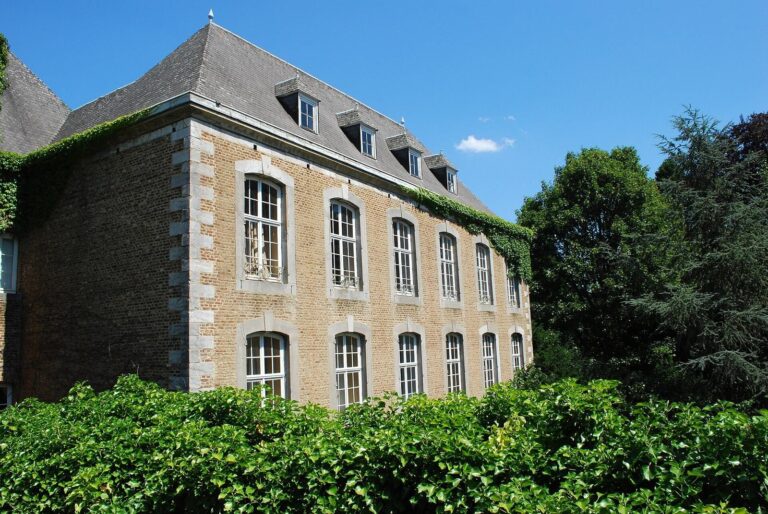
Nagelmackers Castle is an eighteenth-century country house in Angleur, Belgium, built by the de Horion family between 1720 and 1723. It stood near an older fortified house associated with the Peace of Angleur, signed in 1313 to end a war that had devastated the Liège Country for forty years. By the time the new château was planned, the older castle no longer had a military function.
De Horion ownership
The de Horions acquired the lordship of Angleur after Ernest of Bavaria, Prince-Bishop of Liège, bought the land from Saint-Remi Abbey of Reims in 1598. A prince-bishop combined religious authority as a bishop with secular rule over a territory. In 1600, Ernest granted the land as a fief to his councillor Gérard de Horion.
In 1720, Gérard-Assuère-Louis de Horion, Gérard’s great-grandson, chose to build the new château as a country retreat. His marriage in 1725 made him the brother-in-law of François-Charles de Velbrück, later Prince-Bishop of Liège. Two years afterward, de Horion became grand and sovereign mayor, a senior civic office in Liège’s historic government. Following the death of his father in 1731, he sold the estate to Arnold François de Thier, a knight of the Holy Roman Empire and lord of Grimonster.
The de Horion line later ended with Marie-Charlotte, the widow of Count Ferdinand de Hamal. During the revolutionary upheaval of 1795, she accompanied Canon Michel-François de la Brassinne and seminarians resisting the authorities’ religious requirements to the Château Op Mulkes at Herderen, the home of her relative Adrien de la Brassinne.
The Nagelmackers family and public uses
Banker Gérard-Théodore Nagelmackers acquired the château on 18 May 1814. The following year, he replaced the arms of Arnold François de Thier and his wife with his own and those of his second wife, Marie-Anne Dupont. After his death in 1859, the estate passed to his daughter Valérie, Countess de Stainlein-Saalenstein. The composer and pianist Franz Liszt visited her and her husband there on several occasions. Valérie later transferred the property to her brother Edmond, who died at the château in 1892.
Jules Nagelmackers, brother of the entrepreneur Georges Nagelmackers, subsequently took ownership with his wife, Élisabeth de Serdobin. Their descendants retained the estate, giving it the name Château Nagelmackers by which it became commonly known. The family lived there until shortly after the First World War. Developers then sought to clear the property for housing, but Angleur’s mayor, René Jadot, opposed demolition. The municipality acquired the château on 21 February 1939, after Ulrich de Fraipont had owned it from 1930.
The building later housed a police school and served as Angleur’s town hall from 1944 to 1951, while the Château de Kinkempois, also known as Péralta, was reconstructed. It subsequently became a vocational school for girls. Following the transfer of school activities to new buildings and a fire in 1975, the château was abandoned. After municipal mergers, it passed to the City of Liège. It received protected-heritage status in 1984.
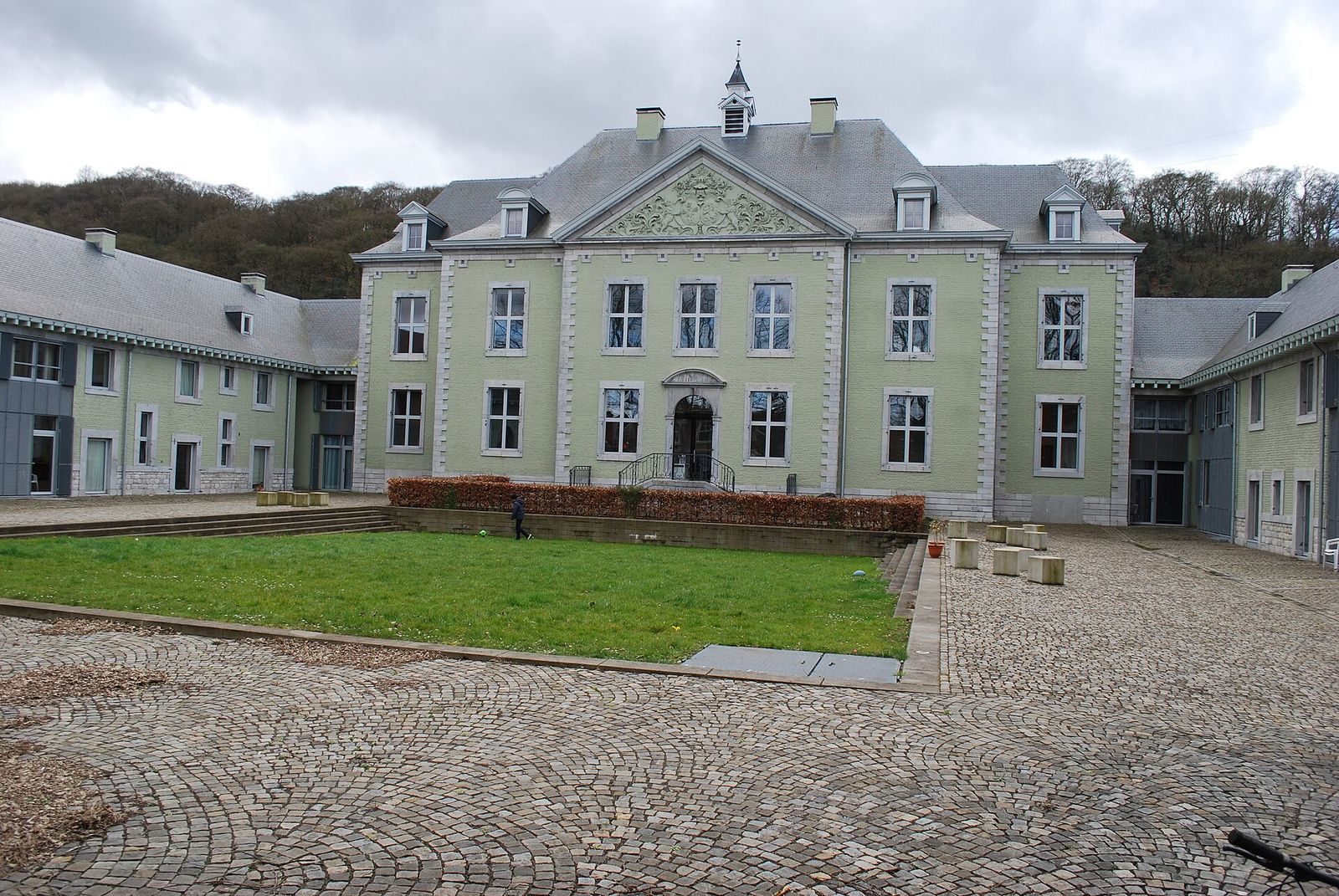
Liège put the property up for public sale in 1994, and Marc de la Brassinne bought it in poor condition. He repaired the roofs and cornices and submitted a full renovation proposal in 1995. Although permits were granted in 1996, he dropped the larger project the following month amid scandals affecting Belgium. His work nevertheless prevented the château’s demolition. Spi+ and Logis social de Liège acquired it in 2005. A renovation in 2009–2010 adapted the principal block for businesses and the outbuildings for social housing.
Remains
The château comprises a principal block and outbuildings. Its north pediment carries engraved construction dates and displays the arms of the Nagelmackers and Dupont families. The building’s exterior color changed over time: its early eighteenth-century façade was red, with brightly colored arms on the pediment; in 1815, Nagelmackers selected linden green for the château, including the pediment. It was later painted white, as it was during Valérie de Stainlein’s ownership. The 2009–2010 renovation restored the linden-green color. The principal block now accommodates businesses, while social housing occupies the outbuildings.