Château Giscours: A Classified Bordeaux Wine Estate in the Médoc


Site at a Glance
- Rating
- 4.7
- Popularity
- Low
- Country
- France
- Primary era
- Modern
- External website
- Open
- Eras represented
- Medieval, Modern
- Civilizations
- Duchy of Aquitaine, English, French
- Site type
- Economic
- Remains
- Production Complex
On this page11 sections
History
Château Giscours is a wine estate in France at Labarde, near Margaux in the Médoc, whose present complex largely took shape during the nineteenth century. Its origins may reach back to the fourteenth century, and a reference from around 1330 mentions a fortified keep. Vineyard cultivation is explicitly recorded in a deed dated 19 November 1552, when Gabriel Giraud sold the estate to Pierre L’Homme for 1,000 pounds.
Early ownership and the Revolution
Before the French Revolution, Giscours belonged to the Saint-Simon family. The revolutionary government confiscated it from Claude-Anne de Rouvroy de Saint-Simon, a French aristocrat who had represented the nobility of Angoumois at the Estates-General of 1789. The estate was sold as national property in 1793 to John Gray and Jonathan Davis, two Americans based in Boston.
Nineteenth-century expansion
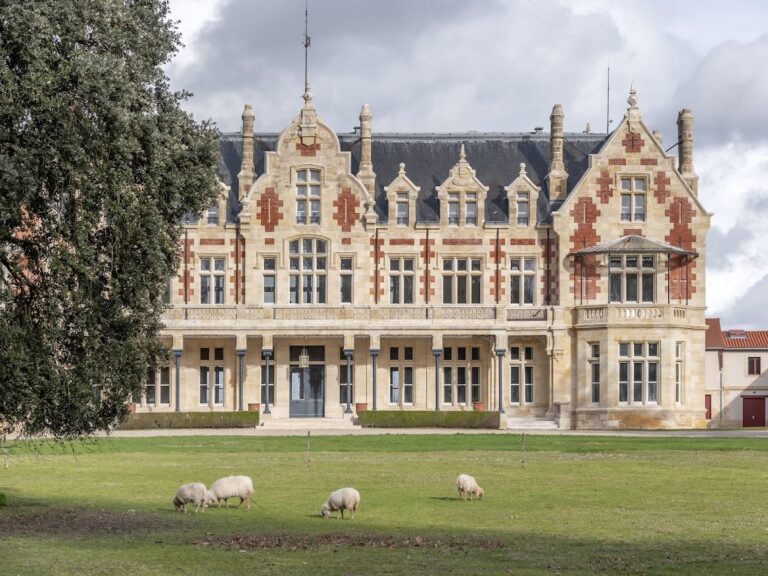
Marc Promis substantially enlarged and developed Giscours between 1825 and 1835. During this period, the principal château and associated stables, presses, cellars, and fermentation buildings were constructed. In the 1840s, Parisian banker and count Jean-Pierre Pescatore acquired the property. He rebuilt the château and agricultural buildings in 1847 and appointed Pierre Skawinski to manage the estate.
Skawinski directed Giscours’s agricultural development for about fifty years. His work helped establish the property among the leading classified estates of the Médoc. During the ownership of the Cruse family, including the years when Skawinski continued as manager, Giscours entered one of its most successful periods. The Cruses sold the estate in 1913, after which it endured difficult years and repeated changes of ownership.
The 1855 classification and vineyard crisis
Giscours was designated a Troisième Grand Cru Classé, or Third Growth, in the Bordeaux Wine Official Classification of 1855. This classification placed it among the fourteen estates in the Third Growth tier. The Bordeaux wine industry later suffered a severe crisis when phylloxera, an insect pest, devastated European vineyards, while powdery and downy mildew, fungal diseases affecting grapevines, spread from North America. Giscours was affected by these problems and struggled through successive ownerships.
Modernization under the Tari family
Nicolas Tari acquired Giscours in 1952 and began restoring and enlarging the property. He modernized its operations, renovated the wine cellar, replanted parts of the vineyard, and created an artificial lake intended to exert a lasting influence on the estate’s local microclimate. His son Pierre Tari took over in 1970 and continued the program of modernization and quality improvement.
In 1976, Pierre Tari served as a judge in the Judgment of Paris, an international blind tasting that compared French and Californian wines. He was also a member of the Union des Grands Crus de Bordeaux. His involvement connected Giscours with the wider organization and promotion of classified Bordeaux estates.
Disputes, reform, and heritage protection
During the 1990s, Dutch businessman Eric Albada-Jelgersma acquired Giscours’s wine-growing business. The transaction led to prolonged legal disputes with the Tari family over the ownership of the vineyards, cellars, and buildings, as well as the conditions of the sale.
A scandal became public in 1998 when illegal winemaking practices were uncovered, particularly in relation to the 1995 and 1996 vintages. The practices included unauthorized chaptalization, the addition of sugar to grape must to raise potential alcohol, unlawful blending of vats and vintages, and improper use of oak chips. The second wine was especially affected. Albada-Jelgersma replaced much of the estate’s team, including oenologist Jean-Michel Ferrandez, and Giscours obtained ISO 9002 certification in 2001 while carrying out measures intended to restore its former quality.
In 2023, the agricultural land-holding group that possessed most of Giscours’s land was placed into liquidation by the Tari family. The Albada-Jelgersma family subsequently acquired the group’s assets and consolidated them within the estate’s operating company. The château, its dependencies, and the park were listed as historic monuments in 2011.
Remains
The estate complex
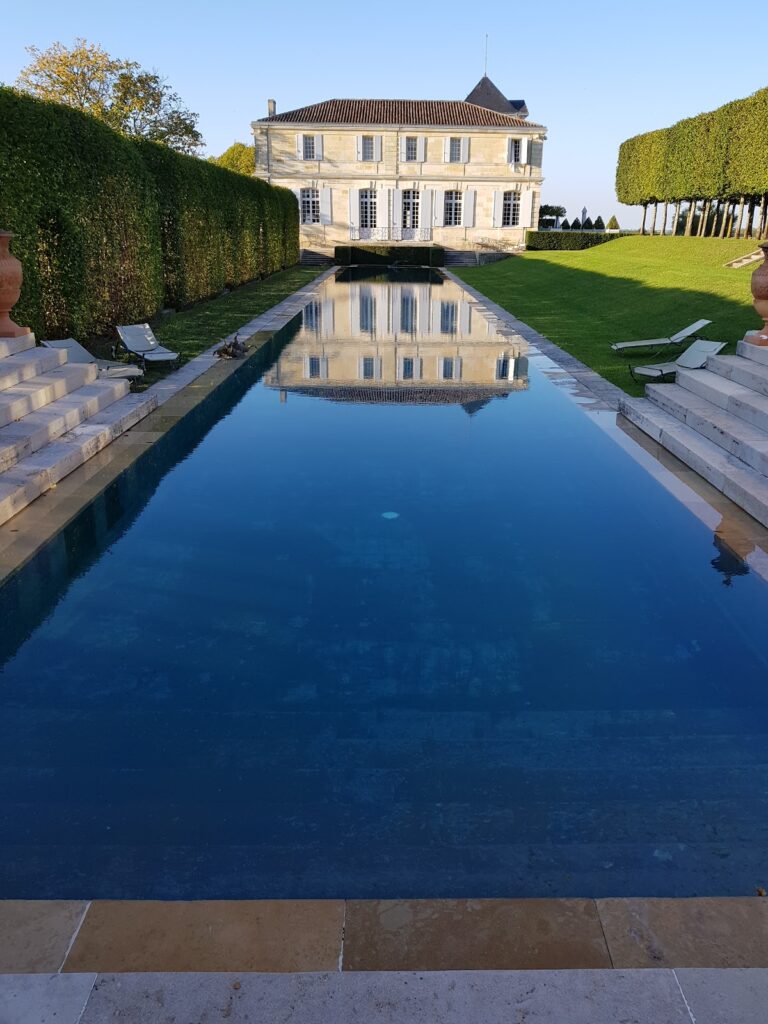
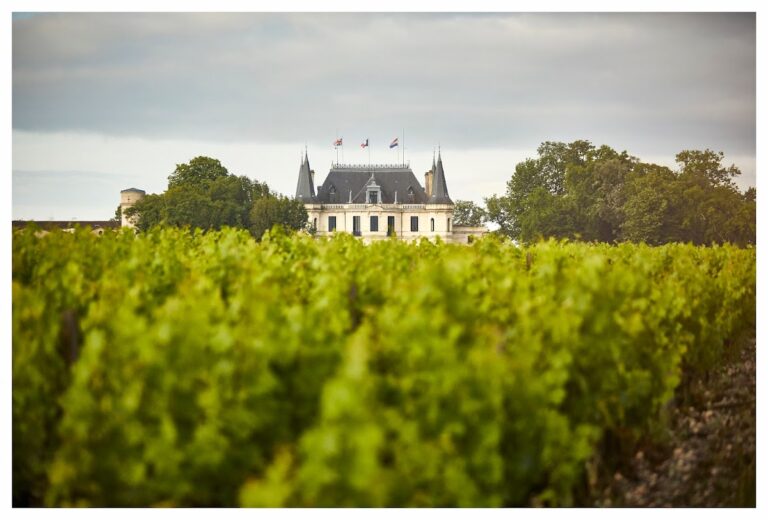
Château Giscours covers several hundred hectares, including approximately 80 hectares of planted vineyards. The nineteenth-century estate complex is organized around the principal château and includes stables, presses, cellars, fermentation buildings, agricultural structures, and a park. Much of this group was built or rebuilt during the expansion directed by Marc Promis and the reconstruction undertaken for Jean-Pierre Pescatore.
The park and model farm
The park was laid out in 1875 by landscape designer Eugène Bülher. During the same period, architects Duphot, father and son, built Ferme Suzanne, a model farm named for Suzanne Baour, the wife of Edouard Cruse. An artificial lake created under Nicolas Tari forms another element of the estate and was intended to influence the local microclimate over the long term.
Vineyards and winemaking facilities
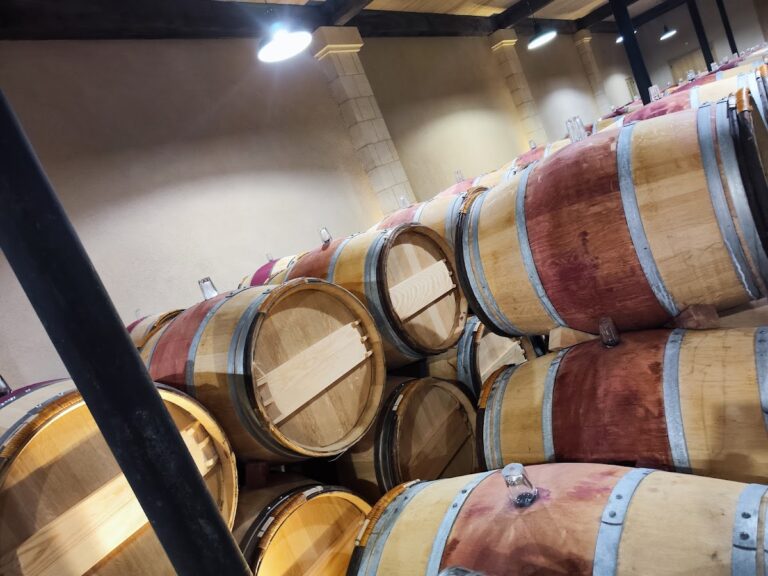
The vineyards occupy several plots of gravelly ground, including large and medium-sized gravel soils. Plantings consist of approximately 53 percent Cabernet Sauvignon and 42 percent Merlot, with the remaining 5 percent divided between Cabernet Franc and Petit Verdot. The density is about 10,000 vines per hectare, and nearly one-quarter of the vines are more than forty years old. Wine undergoes malolactic fermentation in wooden barrels, a practice introduced in the early 1990s, and matures for approximately sixteen to eighteen months in small oak barrels before blending.
Associated wines and properties
The estate produces the second red wine La Sirène de Giscours and a rosé called Rosé de Giscours. It also produces or has produced Le Haut-Médoc de Giscours from a forty-hectare vineyard plot outside the Margaux boundary. Two other properties, Château Dutheil and Château Houringe, are Haut-Médoc cru bourgeois estates, a designation applied to certain non-classified Bordeaux properties. Château Dutheil is made at Giscours, while Château Houringe has operated under lease since 1982.