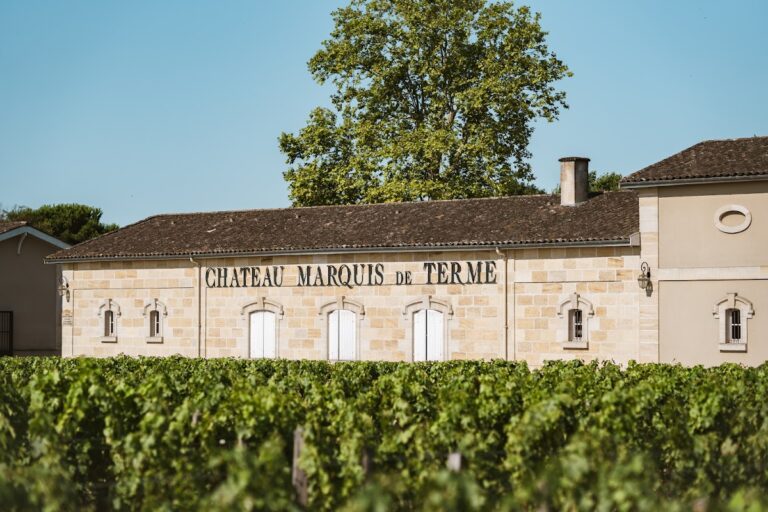
Château du Tertre: A Classified Margaux Wine Estate in France


Site at a Glance
- Rating
- 4.8
- Popularity
- Very Low
- Country
- France
- Primary era
- Early Modern
- External website
- Open
- Eras represented
- Early Modern
- Civilizations
- French
- Site type
- Economic
- Remains
- Production Complex
On this page8 sections
History
Château du Tertre is a wine estate in Arsac, France, whose château was built around 1736 during the eighteenth-century development of the property. The estate produces wines under the Margaux appellation, a legally defined Bordeaux wine-producing area in the Médoc, and was classified as a Fifth Growth in the Bordeaux Wine Official Classification of 1855. This classification placed it among the eighteen estates in the Fifth Growth category.
From the Seigneurie d’Arsac to the wine estate
The estate’s history reaches back to the Seigneurie d’Arsac, a feudal lordship or territorial estate governed by a lord, which was documented from 1143. Its descendants kept the land into the sixteenth century. The family had supported the English during the Hundred Years’ War, the prolonged conflict between the English and French crowns, and maintained a residence at Arsac.
In the sixteenth century, Thomas de Montaigne, brother of the French writer and philosopher Michel de Montaigne, married Jacquette d’Arsac. Thomas was recorded in 1590 as lord of the noble houses of Arsac and Castéra, along with other properties in the Médoc. The land later passed through the Arrérac and Ségur families.
Pierre Mitchell and the eighteenth-century foundation
Pierre Mitchell, an industrialist and gentleman glassmaker, acquired part of the former seigneurial property in 1724. Through more than twenty notarial transactions between 1724 and 1740, he progressively assembled the Tertre wine estate. He had the château built around 1736. His wife and their son, François-Patrice Mitchell, enlarged the holding through further purchases in 1748 and 1749.
Nineteenth-century reputation and the 1855 classification
During the nineteenth century, Henri de Koenigswarter owned the estate, whose wines developed a strong reputation, including in the Dutch market. In 1870, the property was sold to Jonas von Königswarter of Vienna. His son, Henri de Koenigswarter, later became its owner.
The 1855 classification organized leading Bordeaux estates into growth categories based largely on historical reputation and market value. Château du Tertre was designated a Cinquième Cru Classé, or Fifth Growth, and its wines entered this internationally recognized classification of Bordeaux estates.
Decline, restoration, and later ownership
Achille de Wilde, a Belgian wine merchant, purchased the estate in 1925. It remained in his family until 1952. By the Second World War, both its reputation and production had declined.
Philippe Gasqueton acquired Château du Tertre in 1961 and restored the vineyards and château with financial backing from Belgian business partners. After his death in 1995, ownership changed before Eric Albada Jelgersma completed the acquisition in 1997. Albada Jelgersma also owned neighboring Château Giscours and undertook major investment to restructure the estate.
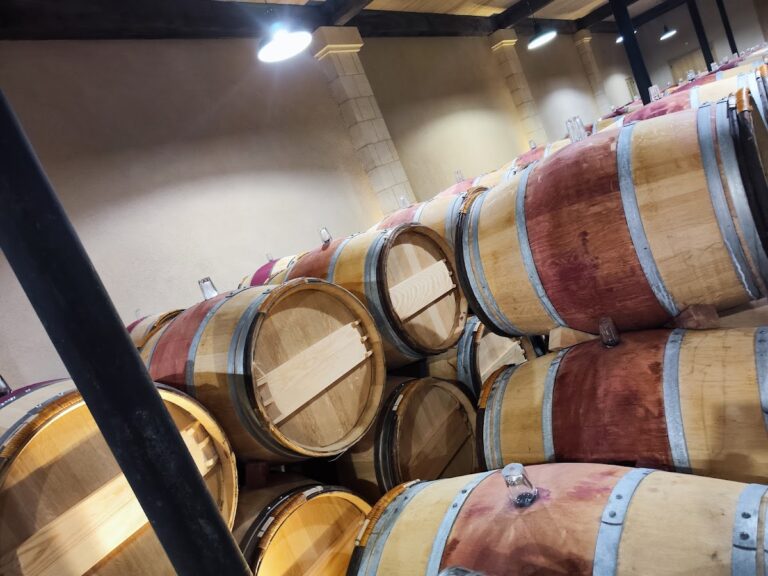
In January 2021, the property was sold to an insurance company, which granted the Helfrich family, owners of Grands Chais de France, a 25-year lease to operate the estate. In a normal year, production is approximately 300,000 bottles. The principal wine is accompanied by the second wine Les Hauts du Tertre and the white wine Tertre Blanc; the wines mature in barrels for 12 to 15 months.
Remains
The château and historic estate
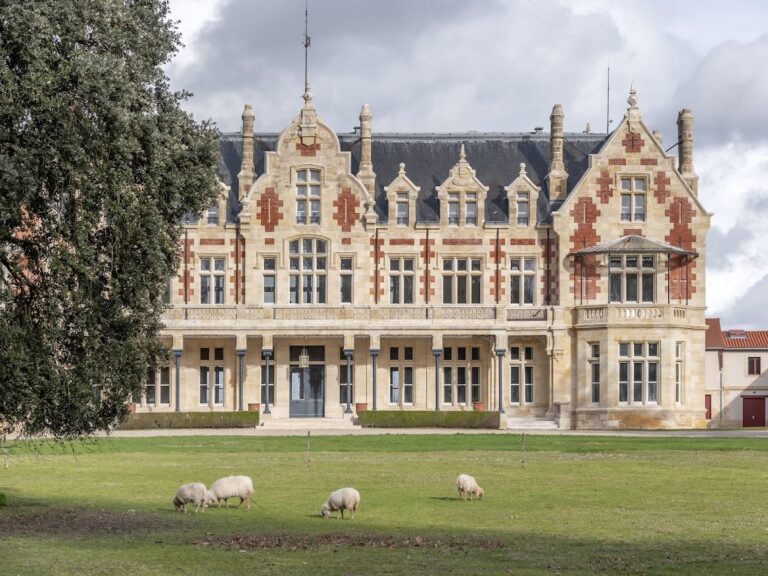
The château is the principal historic building of the estate. Constructed around 1736 under Pierre Mitchell, it was later restored during the twentieth century. The available architectural record identifies the building’s historical role and restoration, while its plan, materials, and ornament are not described.
Vineyard landscape
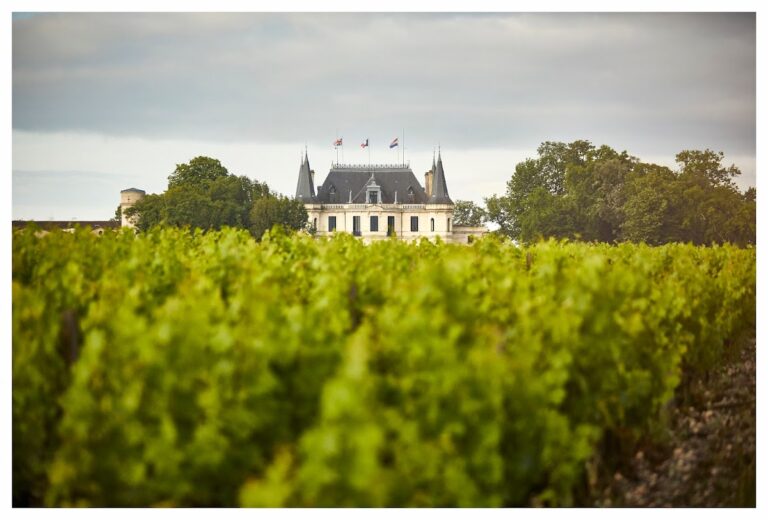
Château du Tertre covers approximately 80 hectares, including about 58 hectares planted with vines. The vineyard occupies raised ground, reflected in the name Tertre, meaning “hillock” or “rising ground.” Its soils consist of gravelly and sandy ancient Günz gravels over a slightly clayey subsoil. Günz gravels are deposits associated with the Günz glacial stage in the traditional Alpine chronology of the Pleistocene.
The red-grape plantings comprise approximately 53 percent Cabernet Sauvignon, 20 percent Merlot, 15 percent Petit Verdot, and 12 percent Cabernet Franc. The white plantings comprise 50 percent Chardonnay, 27 percent Sauvignon, 15 percent Viognier, and 8 percent Gros Manseng. The vines have an average age of approximately 40 years.