château du Puy: 17th-century seigneurial house in Ruillé-Froid-Fonds, France


Site at a Glance
- Rating
- 4.6
- Popularity
- Very Low
- Country
- France
- Primary era
- Early Modern
- External website
- Open
- Eras represented
- Early Modern
- Civilizations
- French
- Site type
- Domestic
- Remains
- Manor House
History
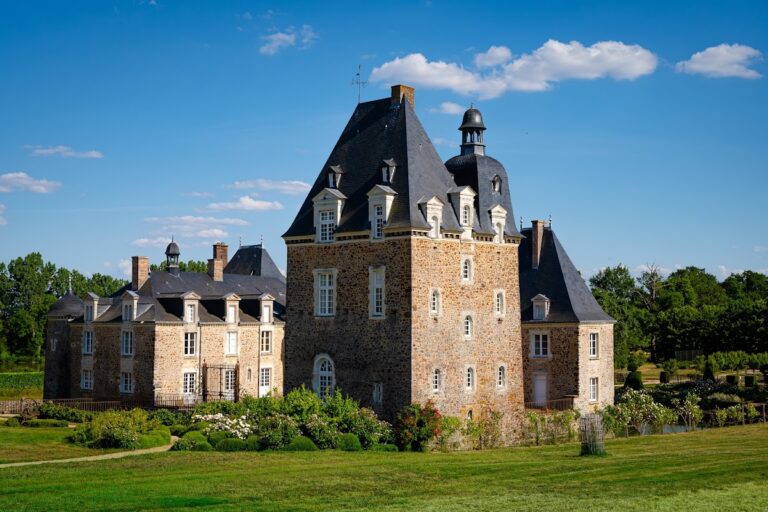
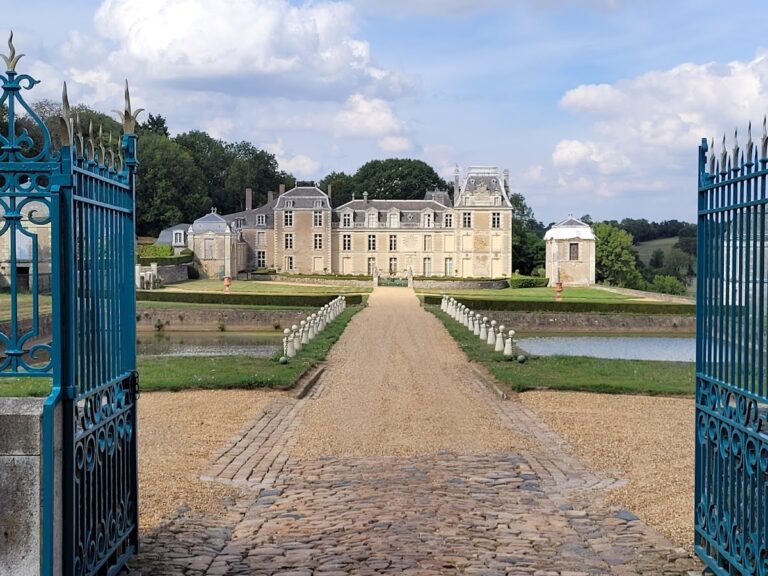
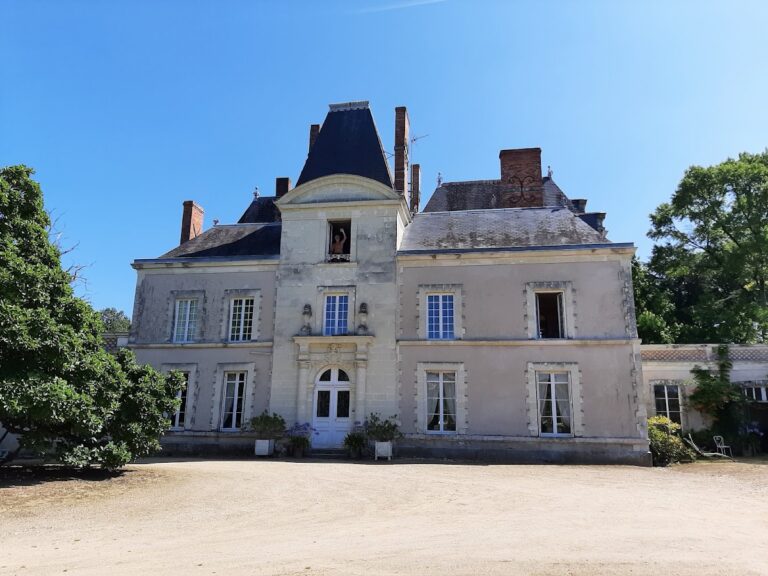
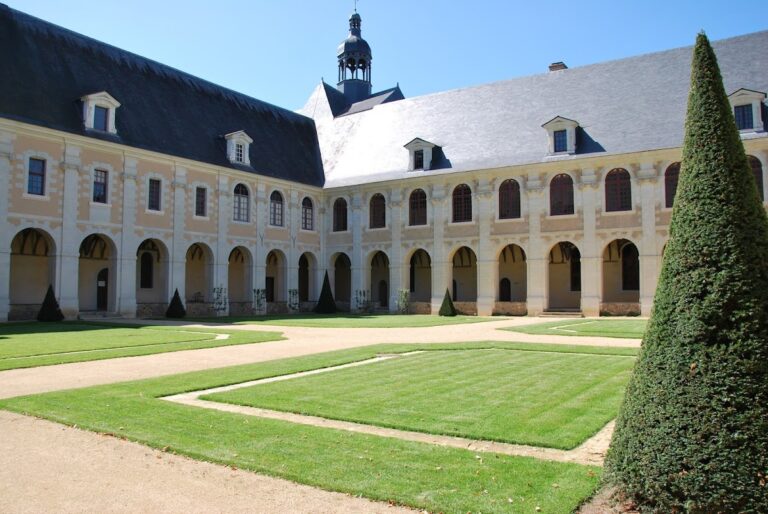
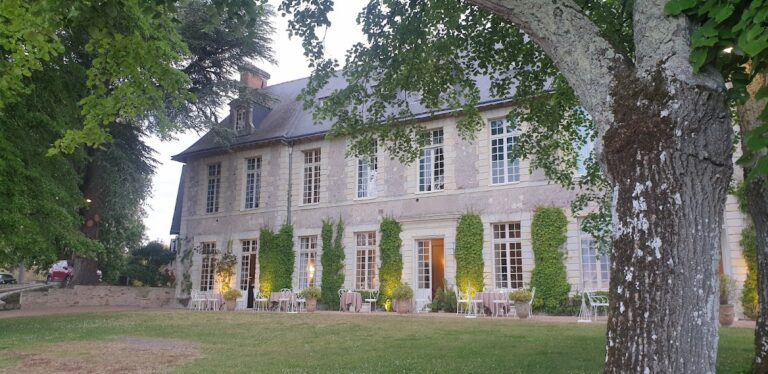
The château du Puy in France is a 17th-century seigneurial house built by a French noble family and marked by a large rectangular main block capped by a triangular pediment. Erected in the early modern period, it grew around a landed fief that appears in surviving records under several evolving names between the early 1600s and the mid-1700s. The site lay within the former parish of Froidfont in the commune of Ruillé-Froid-Fonds and stands about 2,500 metres east of the village.
Ownership and family ties shaped the estate through the 17th and 18th centuries. François du Puy, who had lived at the Cour-de-Froidfont, became lord of Froidfont, rebuilt the house around 1650 and gave the property his name. He married Marguerite de Lorme in 1630 and was still alive in 1667 at age 62. Later local records show Yves-Antoine du Puy recorded as lord and husband of Françoise Mallet in the 1660s and 1670s. In the early 1700s the estate passed by marriage into the de Cumont family. Henri-Alexandre de Cumont and Renée-Marguerite du Puy were parents to several children born at the Puy between 1700 and 1715. Members of the de Cumont household continued to produce births and alliances at the property through the mid-18th century, including a marriage in April 1763 that linked branches of the family.
The final decades of the old regime and the revolutionary era brought turbulence to the Puy. A widow of the estate entertained François-Gaspard de Jouffroy de Gonsans after 1780. Louis-Timothée de Cumont represented the seigneurial interest when he attended the assembly of the nobility at Angers on 16 March 1789. During the years of counter-revolutionary unrest, the château was involved in local incidents. In February 1794 two young Vendéen boys were kept at a farm on the estate and were later taken to Laval. On 19 October 1798 authorities carried out an unsuccessful search at the house for arms. On 13 June 1799 a column of about eighty armed men in blue, described in reports as false chouans and said to have been led by a spy, surprised the place, killing a returning émigré known as Edouard (identified with M. de la Moussaie and a Knight of Malta), his servant, the brother of the former vicar of Loigné, and two men named Serein and his brother. The same band stole linen, money and two horses, threatened to kill a farmer named Delaunay and then moved on to other thefts, according to official complaint.
In the post-revolutionary period the Puy continued to serve as a local gathering point. On 22 May 1832 Arsène Avril de Pignerolles assembled the third battalion of the Gaullier division at the estate. Religious life at the site had been formalized earlier when the chapel was founded on 13 December 1697 under the invocation of Saint Louis. By the end of the nineteenth century the chapel had fallen out of regular maintenance. In the late twentieth century the chapel and, separately, the château together with its park received legal protection as historic monuments, with the chapel receiving its designation in July and the house and grounds in October.
Remains
The complex is centered on a large rectangular main residence built in the 17th century. This principal block presents a formal main façade dominated by a triangular pediment (triangular decorative gable) set over the central axis. The plan and frontal emphasis reflect the period’s seigneurial domestic architecture, with the main house serving as the focal point of the former estate.
A chapel stood as a distinct component of the property and was founded in December 1697 under the invocation of Saint Louis. The chapel is recorded separately from the house and park and by the late nineteenth century had ceased to be regularly maintained. The chapel later received formal recognition as a protected monument, with the remainder of the château and the surrounding park entering the same protection at a later date.
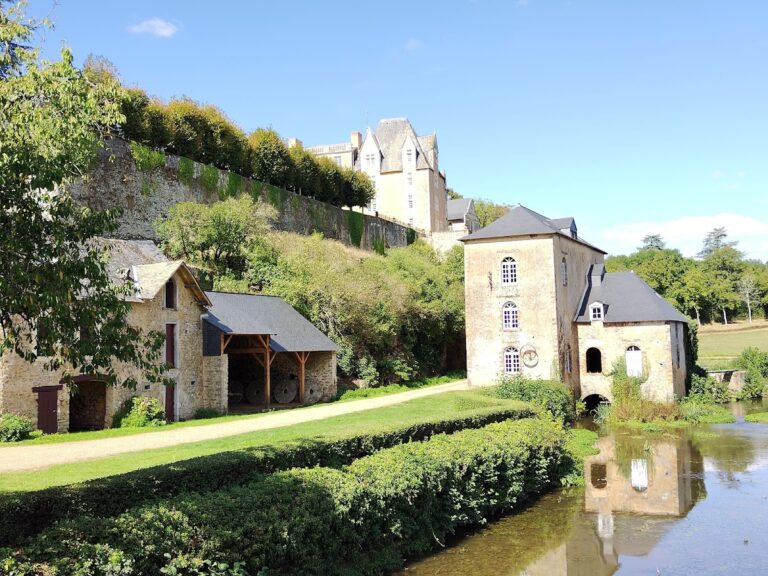
The estate historically included a pond and parkland that formed part of its setting. These landscape elements are noted in period place-names and formed part of the property’s grounds as recorded in ownership and mapping references. The château, chapel and park were each incorporated into official historic protection in the late twentieth century, preserving the core elements that survive from the 17th-century estate.
Nearby sites