Château de Noirieux: A Historic Estate and Chapel in France


Site at a Glance
- Rating
- 4.2
- Popularity
- Very Low
- Country
- France
- Primary era
- Early Modern
- External website
- Open
- Eras represented
- Early Modern, Modern
- Civilizations
- French
- Site type
- Domestic
- Remains
- Castle
On this page15 sections
History
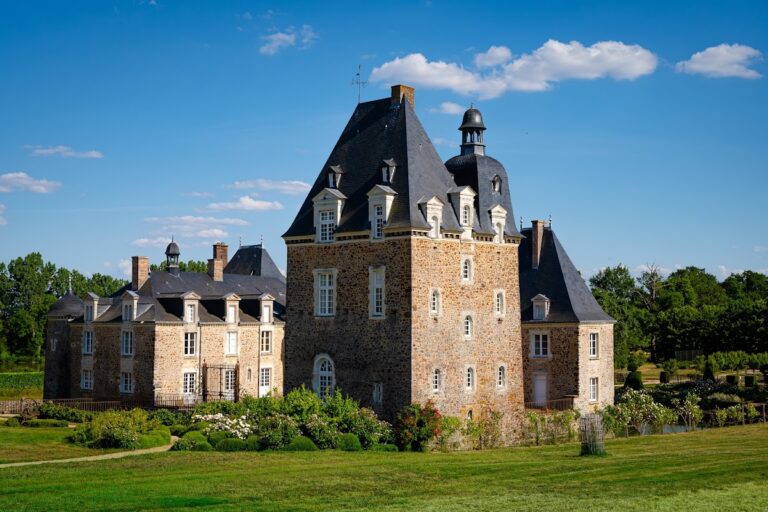
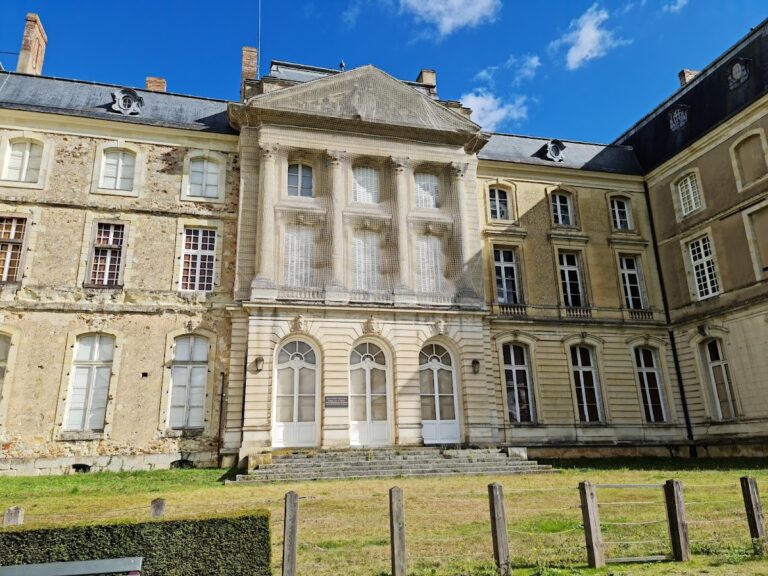
Château de Noirieux is an eighteenth-century château in Noirieux, France, built between 1742 and 1747 for Louis-Pierre Ernault de Montiron on the site of a medieval fief, a landed holding within the feudal system. The estate had earlier forms of its name, including Noyrieux and Noerieux. Its name may derive from the Latin nucariosum, a reference to walnut trees, although this explanation remains uncertain and the documentary forms do not securely extend beyond the eleventh century.
Medieval Fief and Early Lords
An ancient Roman road was discovered near the château, following approximately the former route between Saint-Laurent-des-Mortiers and Bierné. It reportedly led toward Angers and ended at the confluence of the Sarthe and Mayenne rivers. During the medieval period, Noirieux was a fief. Abbé Angot described it as dependent on Azé, while Léon Maître identified it as a fief of the marquisate of Château-Gontier that extended across Bierné and Saint-Laurent.
A monk named Radulphus monachus of Nuchariis, associated with the priory of Azé, has been identified as Raoul of Noirieux in Saint-Laurent-des-Mortiers. The earlier manor itself is not described in detail, but records of its owners establish its existence. Huet de Baïf held the fief between 1441 and 1444. Antoine de Baïf apparently inherited it and sold it in 1446 to Guillaume de Cens, who later sold it to Jean Briand, lord of Brez.
The Briand family held Noirieux and the neighboring lordship of La Grenonnière from the fifteenth century into the early seventeenth century. Pierre Briand, lord of Brez, La Grenonnière, and Noirieux, died before 1467. The inheritance of Jean Briand and Jeanne Frézeau was divided in 1507. Pierre’s son Claude Briand held the three lordships from 1599 to 1628, after which his eldest son René sold Noirieux and La Grenonnière to Pierre Le Maistre.
The Eighteenth-Century Château
Pierre Le Maistre probably acquired the two fiefs in 1630. His son Claude Le Maistre, a counsellor of the Grand Chamber of the Parliament of Paris, a high judicial court of the French monarchy, and a commissioner for petitions, was lord of Noirieux from 1639 until his death in 1685. Claude’s daughter Anne Le Maistre rendered homage for Noirieux in 1677, probably after receiving the lordship as part of her dowry when she married Marc-Anne Goislard in 1676.
In 1742, Anne-Louis de Goislard de Montsabert, count of Richebourg and counsellor of the Parliament of Paris, sold Noirieux and La Grenonnière for 58,000 livres to Louis-Pierre Ernault de Montiron, an écuyer and counsellor to the king. Ernault ordered the old manor of La Grenonnière to be demolished and reused its materials for a new residence at Noirieux. Construction took place from 1742 to 1747 and was completed on 16 January 1747.
A slate inscription recording the completion was rediscovered around 1880. Occupants later sold it, but it was recovered from an antiques dealer and returned to the château. The chapel of Notre-Dame Refuge des Pêcheurs was blessed on 27 September 1747 by René Louis François Chaliaud, lord of La Fautraize and parish priest of Argenton, with permission from Jean de Vaugirault, bishop of Angers.
Chapel and Revolutionary Conflict
Before the French Revolution, the Rogations procession stopped at the chapel for Mass. These Christian processions, traditionally held before Ascension Day, sought protection for crops and communities. During much of the Terror, the period of intensified revolutionary repression generally dated to 1793 and 1794, the chapel continued to host Mass after parish churches were closed in 1793.
During the French Revolution, Noirieux became associated with violent episodes of Chouan resistance. The Chouans were royalist insurgents who fought the revolutionary government in western France. Joseph Coquereau and his men used the surrounding area as a base, and during the night of 11 to 12 January 1795 about 300 Chouans camped at the château while Abbé Baudoin prepared to celebrate Mass. They withdrew when approximately 800 republican soldiers approached from Angers, reinforced by the garrison of Château-Neuf.
A rear guard remained so that Abbé Baudoin could complete the Mass. The retreat then became a rout. Baudoin was captured after stopping beside a wounded republican soldier and taken to Angers, where he remained imprisoned until after the pacification. Local testimony places at least part of the fighting within the château and states that bloodstains remained on its walls for a long time.
Tradition associates the forge beside the south wing with the confinement of prisoners and wounded men during the fighting. Some victims were buried at Noirieux. Two of Coquereau’s soldiers were captured near an earlier roadside cross, where a calvary, a devotional monument representing the Crucifixion, still stands. A plaque in the chapel commemorates the episode. The participants associated with the action included Jacques Vignais, René Hyvert known as Verdeau, Petit-Jean, Biquet, Hoisnard known as Branche d’or, Pierre Logerais known as Chasse-Bleu, René Logerais known as Petit-Chouan, Poirrier known as Justice, Pichon known as l’Espérance, Marin-Pierre Gaullier known as Grand-Pierre, Jarnigon, Nicolas Châtelain, and René Châtelain.
Joseph Coquereau was killed at Daon on 29 June 1795 after attacking a squadron of hussars with only four or five men. The events at Noirieux were later mentioned by Victor Hugo in his historical novel Quatrevingt-treize, which also names Abbé Baudoin.
The Quatrebarbes Restoration
Baron Léopold I de Quatrebarbes bought Noirieux in 1842. The Quatrebarbes family restored and partly remodelled the 1747 château, giving it much of its present appearance. Family testimony stated that the estate’s tenant farmers had succeeded one another from father to son for approximately four centuries.
By 1842, the chapel had deteriorated, with its altar, two chestnut-wood steps, and consecrated altar stone remaining. Léopold I sought episcopal authorization for its restoration and use, and the chapel was blessed again on 4 August 1849 in the presence of the Quatrebarbes family. The bishop authorized a Way of the Cross that year, and it was blessed on 3 December 1849.
The chapel also received privileges concerning confession, plenary indulgence, regular Masses, retention of the Blessed Sacrament, and the hearing of confessions. Permission granted in 1883 was extended in perpetuity in November of that year. Léopold II de Quatrebarbes, who succeeded his father, sought the authorization governing the chapel’s continuing liturgical use. The document remains in the château sacristy.
A ciborium, the covered vessel used in Catholic worship to hold consecrated communion wafers, was blessed for Léopold II and his wife by Pope Pius IX. It commemorated Henry de La Chevannerie, who had presented the pope with a field artillery battery and 100 projectiles. The ciborium has since been lost.
Twentieth-Century Uses and Protection
Noirieux later passed to Élisabeth de Quatrebarbes, granddaughter of Léopold II. On 12 February 1937, she sold the château and 41 hectares, 35 ares, and 68 centiares of land to Léonce and Jeanne Grenet. The Grenets carried out major structural work, especially on the roofs, while initially leaving the interior unchanged.
During the Second World War, the château first sheltered refugees from northern and eastern France and was then occupied by the German army. Gothic-script graffiti from the occupation was left on the second-floor walls. A community of nuns from Rennes later took refuge at Noirieux and established its novitiate there. A novitiate is the period and institution in which members of a religious community receive training before taking permanent vows. Their use of the house led to interior alterations, including the creation of cells.
Jeanne Grenet sold part of the agricultural land to the Safer du Maine, a French rural-land agency, on 6 June 1972. On 22 October 1973, she sold the château, its dependencies, and the remaining 10-hectare estate to the Société Civile d’Exploitation Agricole du Domaine de Noirieux, managed by Jean-Claude Tête. Tête and Chantal Sauvade converted the property to goat farming and rural holiday lodging. Furnishings and other objects were sold, including the construction plaque, and many centuries-old oak trees were felled after the sale.
François-Xavier Potier and Chantal Dejean de La Bâtie acquired the property on 14 April 1978 and undertook restoration of the château and its surroundings. Château de Noirieux has been registered as a protected Monument historique since 11 April 1990. This is a formal French heritage-protection category for buildings and sites considered historically or architecturally important.
Remains
The Noirieux estate covers 26 hectares. Its core property extends over 10 hectares, 37 ares, and 31 centiares and includes the château, dependencies, a bakehouse with a communal oven, parkland, paths, an orchard, and meadows. A further 16 hectares of adjoining land, once part of the Noirieux holding, was later reacquired and planted mainly with oak trees.
Estate Layout and Château
Moats and Boundaries
The property is approximately square. A substantial belt of trees borders it to the south and west, while a communal path lies to the north. Ditches survive to the east and west. They are remnants of an earlier moat system that once enclosed the château with two lines of moats.
The Main House
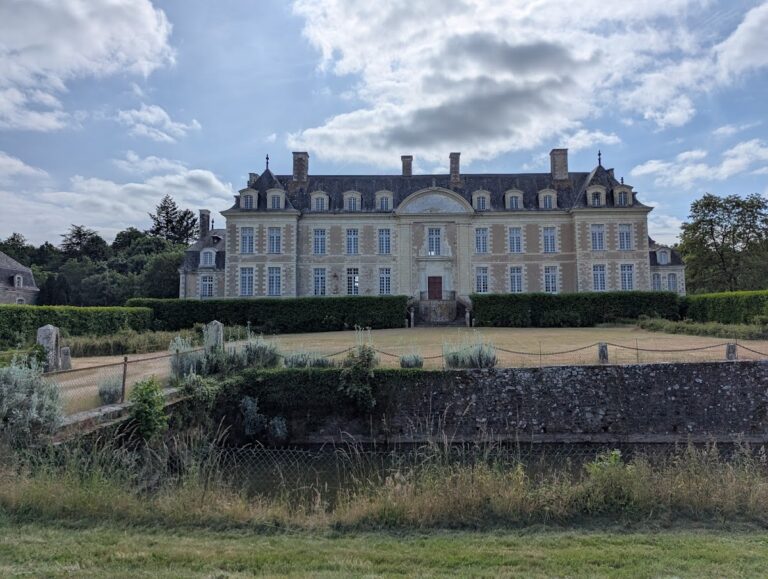
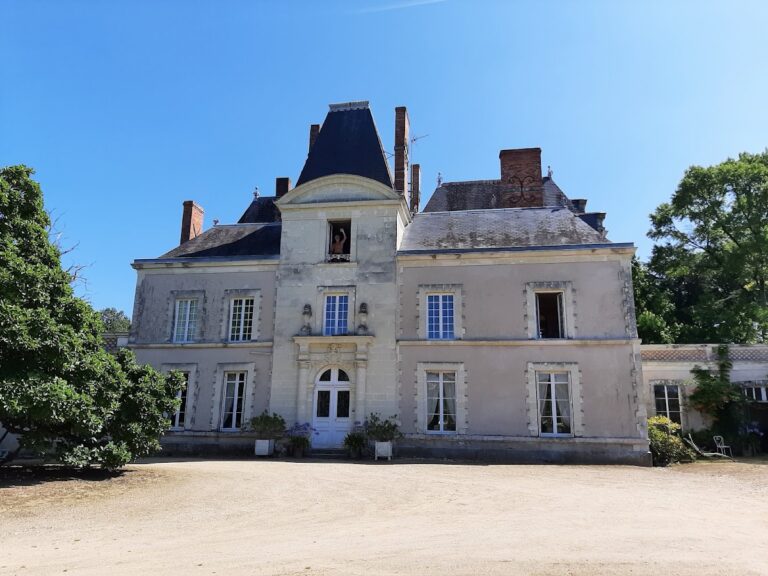
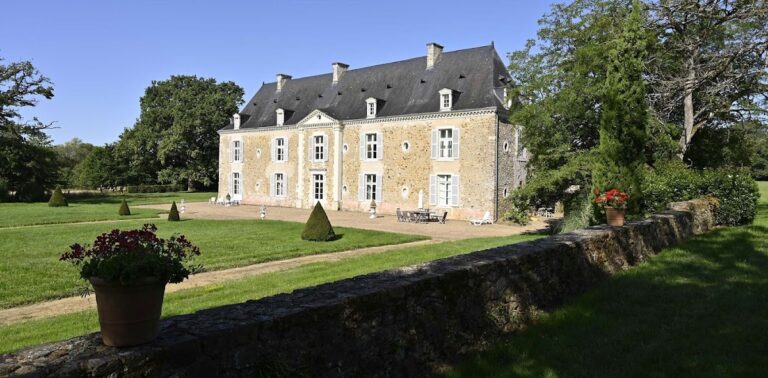
The present château was built in the eighteenth century with materials taken from the demolished manor of La Grenonnière. The Quatrebarbes family later restored and partly remodelled the building. The house retains features from its eighteenth-century construction as well as the effects of those nineteenth-century alterations. Gothic-script graffiti recorded on the second-floor walls belongs to the period of German occupation during the Second World War.
Forge and Agricultural Buildings
The forge near the château’s south wing is linked by local tradition to the 1795 fighting, when prisoners and wounded men were said to have been confined there. This association remains a tradition rather than a confirmed interpretation of the building. The estate also includes dependencies and a bakehouse with a communal oven, together with parkland, an orchard, paths, and meadows.
Chapel and Commemorative Features
Notre-Dame Refuge des Pêcheurs
The chapel contains an altar, two chestnut-wood steps, and a consecrated altar stone, a blessed stone traditionally set into an altar for the celebration of Mass. Its furnishings include a Gothic-form tabernacle with a gilded border, a mahogany crucifix, a statue of the Virgin, and gold cloth bearing an emblem of the Holy Spirit, together with altar linens. These furnishings were blessed in 1849 and remain in the chapel.
Revolutionary Memorials
A plaque inside the chapel commemorates the fighting associated with the 1795 Chouan episode. A related calvary still stands where two of Coquereau’s soldiers were captured, near the former road between Saint-Laurent-des-Mortiers and Bierné. The chapel sacristy preserves the historical concession document governing worship and its later extension. The ciborium once intended for the chapel is no longer part of the surviving contents.
Inscribed and Reused Evidence
The slate inscription that records the château’s completion on 16 January 1747 was returned to the property after having been sold by occupants in 1977 and recovered from an antiques dealer. Interior cells and a large collection of coat hooks installed when the house served as a religious novitiate have been progressively removed during restoration. Together with the occupation graffiti and chapel documents, these surviving elements preserve evidence of the estate’s later uses alongside its eighteenth-century fabric.
Nearby sites