Château du Chillou: A Medieval Feudal Castle in France


Site at a Glance
- Rating
- 5
- Popularity
- Very Low
- Country
- France
- Primary era
- Medieval
- Eras represented
- Medieval
- Civilizations
- French
- Site type
- Military
- Remains
- Castle
On this page5 sections
History
Château du Chillou is a medieval feudal fortified castle in Jaulnay, France, whose construction began in the thirteenth century. Built as the residence of a lord, it held its fief from Faye-la-Vineuse through fealty and liege homage, formal obligations by which a lord acknowledged dependence on a superior while retaining rights over the fief.
The Lords of Chillou
The lineage associated with Chillou begins in the records with Hardouin Maumoine, an esquire and lord of Chavigny active in 1329. Pierre Maumoine, flourishing around 1370 and probably Hardouin’s son or another relative, was the father of Martine-Jeanne Maumoine. She married successively Émery de la Grézille, Guillaume I Le Roy, and Macé de Gémages.
Her son by Guillaume I, Guillaume II Le Roy, held the lordships of Chavigny, La Baussonnière, and Basses. His elder son, Guillaume III Le Roy (1410–1479), became lord of Chillou and Chavigny, served as chamberlain to Charles du Maine, and was captain of Montlhéry Castle in 1436. His marriage in 1442 to Françoise, daughter of Ambroise de Fontenay, continued the family line.
From the Le Roy Family to Richelieu
Among Guillaume III’s descendants was René Le Roy (1450–1512), lord of Chavigny and La Baussonnière and a councillor and chamberlain to Louis XI and Charles VIII, kings of France. Other members of the family held royal and ecclesiastical offices. Guyon Le Roy, born around 1455 and deceased in 1528, was lord of Chillou and Mondon and vice-admiral of France, a senior naval commander below an admiral.
Guyon Le Roy’s daughter Anne, lady of Chillou, married François III du Plessis de Richelieu, lord of Richelieu, in 1506. The lordship consequently passed into the Richelieu family. Anne and François III were followed by Louis I du Plessis, Louis II du Plessis, François IV du Plessis de Richelieu, Henri du Plessis de Richelieu, and finally Cardinal Richelieu, who inherited the seigneurial estate in 1619. Born Armand-Jean du Plessis, Cardinal Richelieu was bishop of Luçon, Duke of Richelieu, and chief minister of Louis XIII; in his youth, he was known as the Marquis du Chillou.
The Duchy-Peerage and Modern Protection
In 1631, Chillou was incorporated into the Duchy-Peerage of Richelieu, a French ducal title combined with the rank of peer and associated with high aristocratic precedence. The succession thereafter included Armand-Jean de Vignerot du Plessis, 2nd Duke of Richelieu; Louis-François-Armand de Vignerot du Plessis de Richelieu, 3rd Duke and Marshal of France; and Louis-Antoine-Sophie de Vignerot du Plessis, 4th Duke.
The castle and its moats have been listed as historic monuments since 14 November 1951. Château du Chillou remains a private residence owned by private proprietors.
Remains
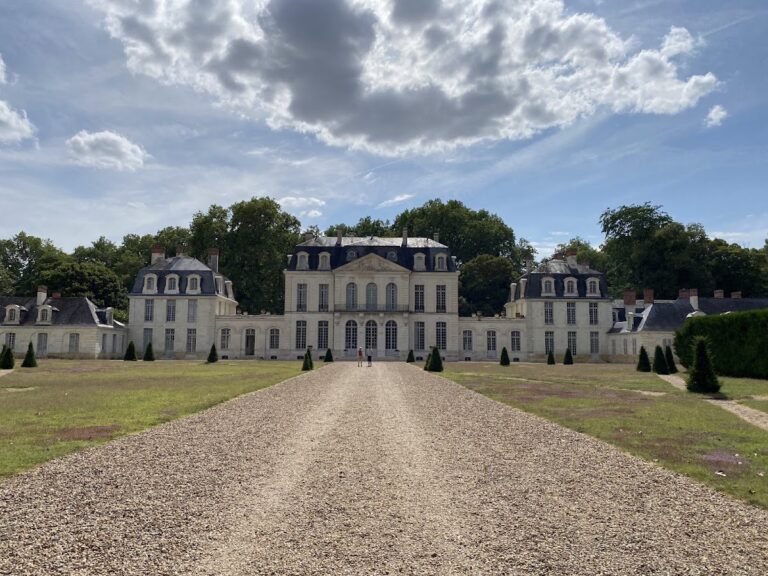
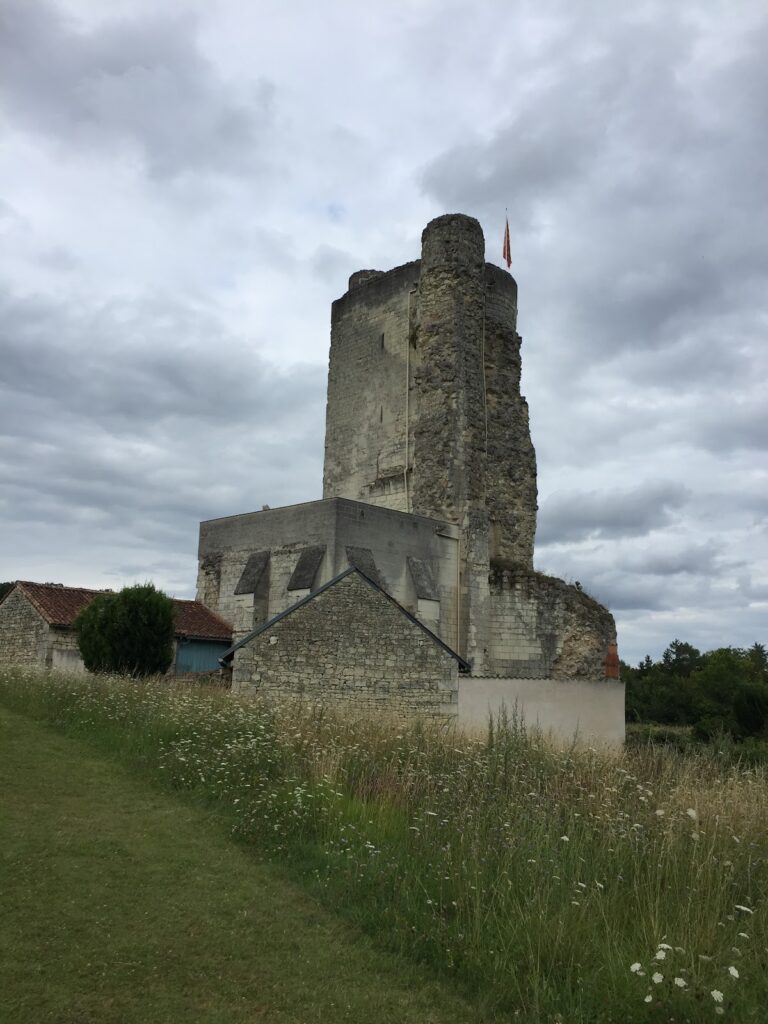
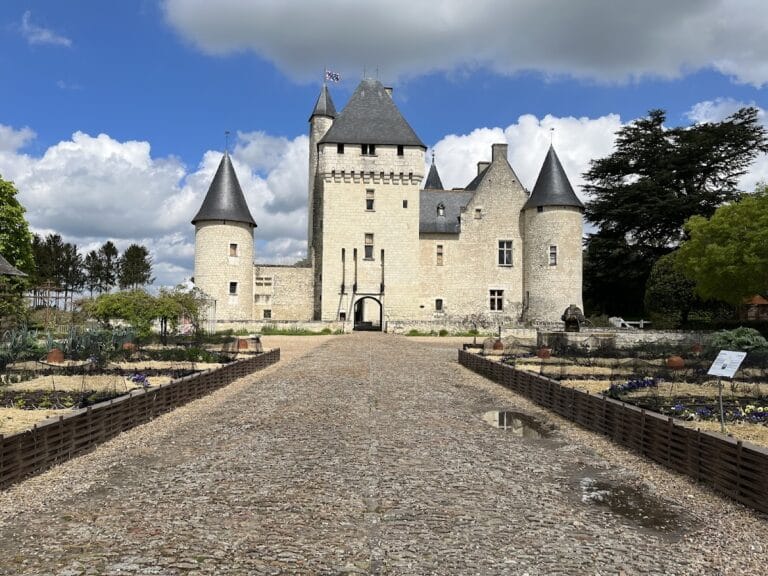
Château du Chillou survives as a medieval fortified castle with moats surrounding the site. Its construction began in the thirteenth century, and its original purpose was to provide the lord’s residence within a feudal stronghold. The surviving castle and water defenses form the documented physical core of the historic property, which continues in use as a private residence.
Nearby sites