Château du Bas-Plessis: A Historic Estate in France
Site at a Glance
- Rating
- 4.8
- Popularity
- Very Low
- Country
- France
- Primary era
- Modern
- Eras represented
- Medieval, Modern
- Civilizations
- French
- Site type
- Domestic
- Remains
- Castle
On this page8 sections
History
Medieval origins and feudal jurisdiction
Château du Bas-Plessis is a historic estate in France, located in Montrevault-sur-Èvre in the Maine-et-Loire department. It originated as a medieval fief and lordship held from Montrevault. In the fifteenth century, the estate passed to the Chenu family through the marriage of the knight Pierre Chenu to Jeanne Bérard, lady of Bas-Plessis and daughter of Jean Bérard and Gervaise de Marigny.
On 23 December 1602, Pierre Chenu, a knight of the Order of the King, received permission from his suzerain, Charles Turpin, Count of Montrevault, to raise Bas-Plessis to a châtellenie. This was a feudal jurisdiction centred on a lord’s castle and accompanied by judicial and administrative rights. The grant included provost jurisdiction, a seal, official measures, a lord-controlled communal oven, and a mill.
Owners and the War in the Vendée
François de Villoutreys and his wife, Renée Chenu, took possession of the estate on 2 November 1666. Later owners included Louis de Villoutreys and his wife, Élisabeth de Rougé, their son Hardy Gilbert Germain de Villoutreys de Brignac, who was born at Bas-Plessis, and Germain de Villoutreys de Brignac, mayor of Chaudron-en-Mauges from 1818 to 1830.
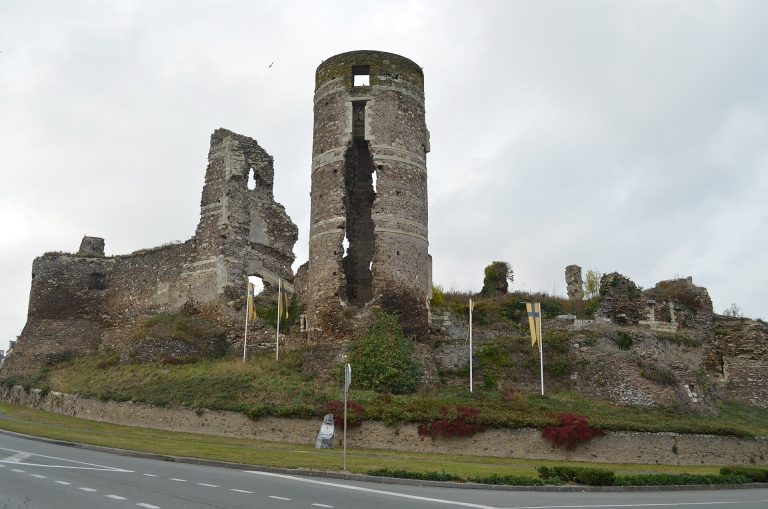
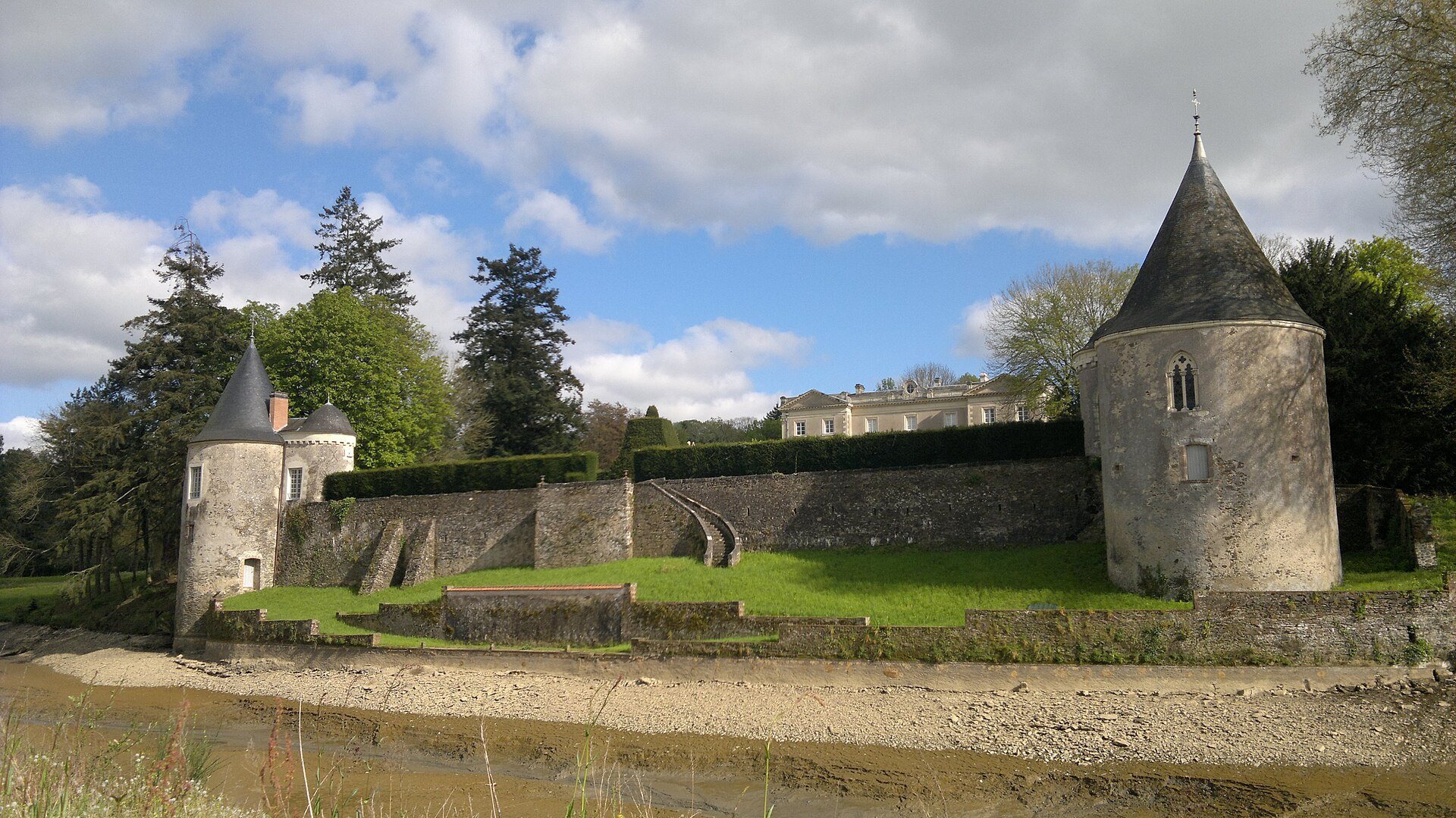
During the War in the Vendée, a civil and counter-revolutionary conflict in western France during the French Revolution, the wounded Jacques Cathelineau’s fellow commander Lescure took refuge at the château. In 1794, Republican forces and Vendéan royalists fought a battle in which the medieval château was burned. Two towers survived beside the pond that remains today.
Nineteenth-century rebuilding and conservation
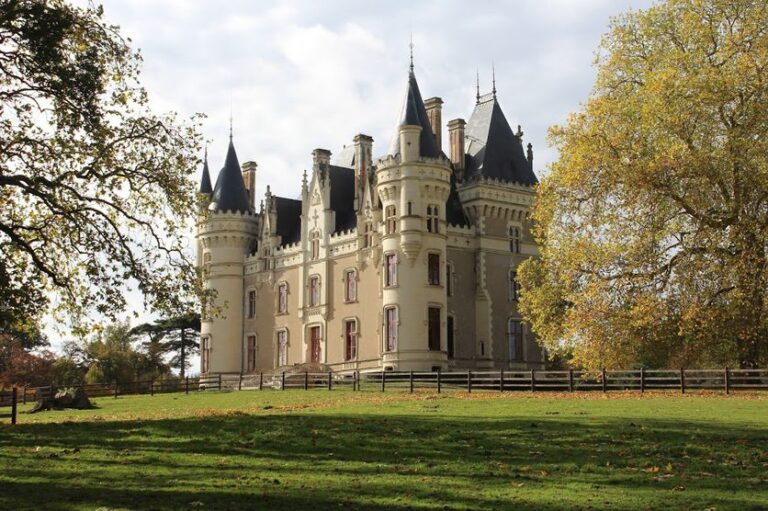
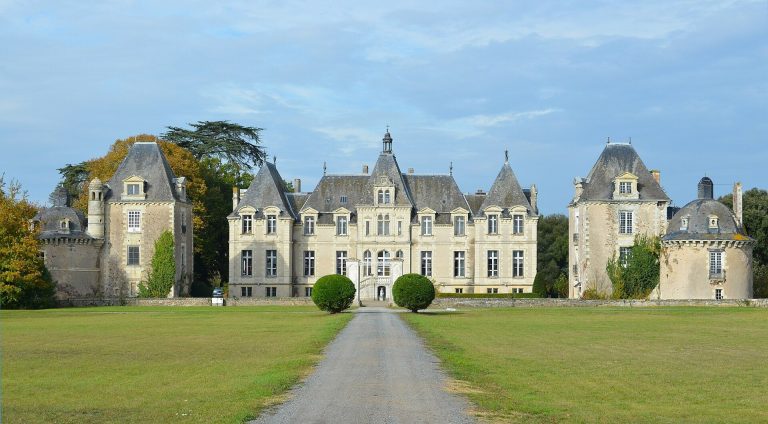
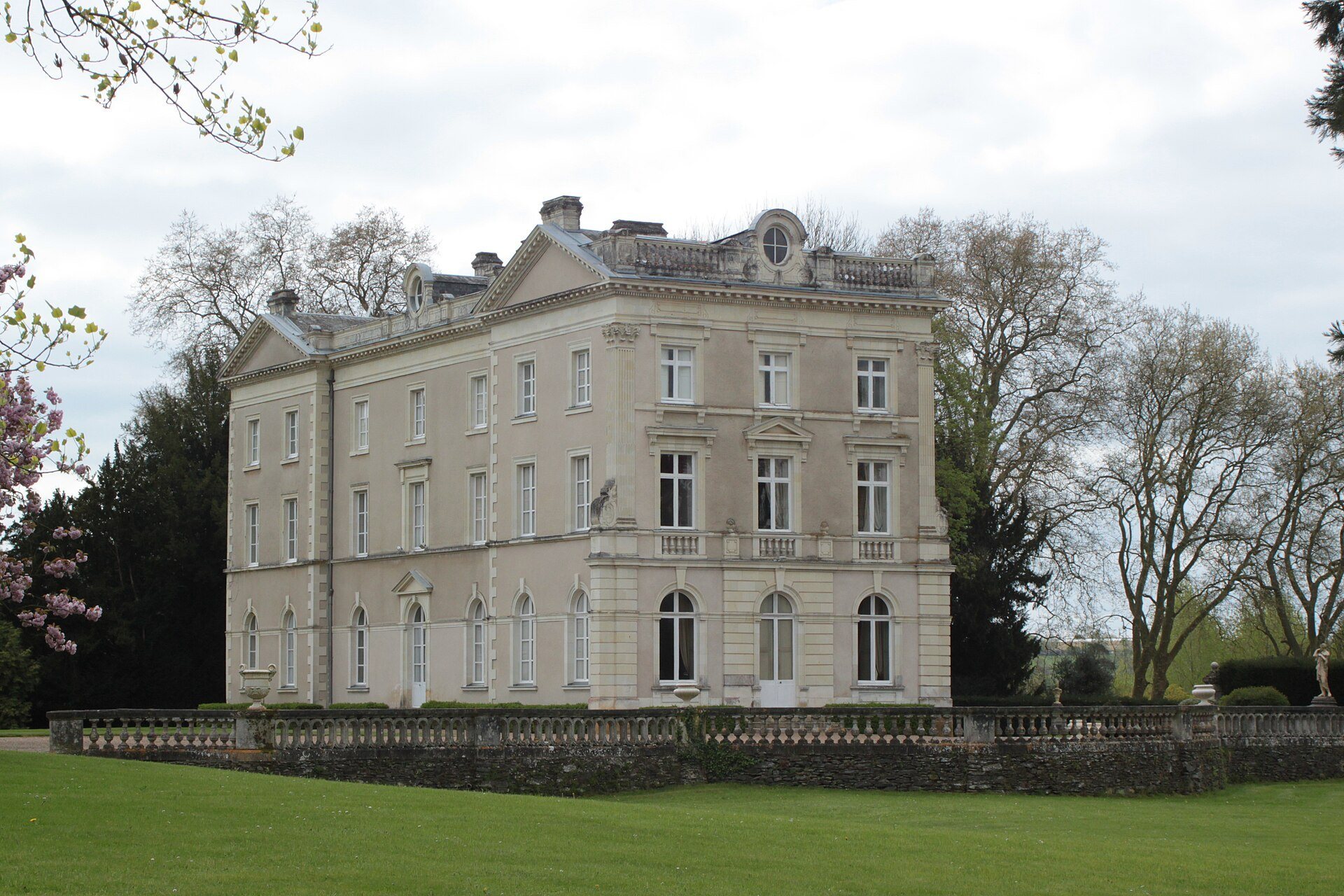
The château was rebuilt in 1845 in a neoclassical, or Empire-style, form associated with Napoleonic France. A library wing was added in 1875 for the Marquis de Villoutreys. In 1982, this wing was dismantled stone by stone to restore the building’s original architectural line, and its books were transferred to the Catholic University of the West.
Château du Bas-Plessis was designated as a historic monument by an order dated 29 January 1992, followed by a further designation order dated 24 October 2024. The property is listed in the Mérimée architectural-heritage database under reference PA00109448. It lies north of Chaudron-en-Mauges within the present commune of Montrevault-sur-Èvre.
Remains
Medieval towers and reconstructed château
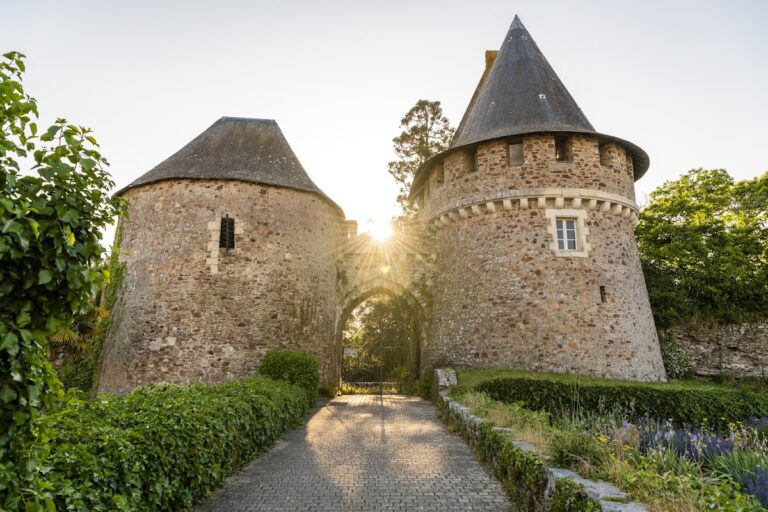
The surviving medieval group stands at the edge of the present pond. It consists of two round towers topped by conical slate roofs and joined by a curtain wall, a defensive wall connecting towers. The first floor of the north tower is described as a chapel. Beside these remains stands the château reconstructed in 1845, whose neoclassical, Empire-style design forms the principal later building. The library wing once attached to it was dismantled in 1982, leaving the restored architectural line of the château.
Park, stream, and pond
The park extends over slightly more than 100 hectares and contains very old trees of various species. Its northern section lies in Botz and its southern section in Chaudron-en-Mauges. The Saint-Germain stream crosses the grounds from northeast to southwest. At its final section, a dam crossed by the D 201 forms a pond that serves as a moat, a water-filled defensive ditch, and redirects water toward the mill.
Park structures and watermill
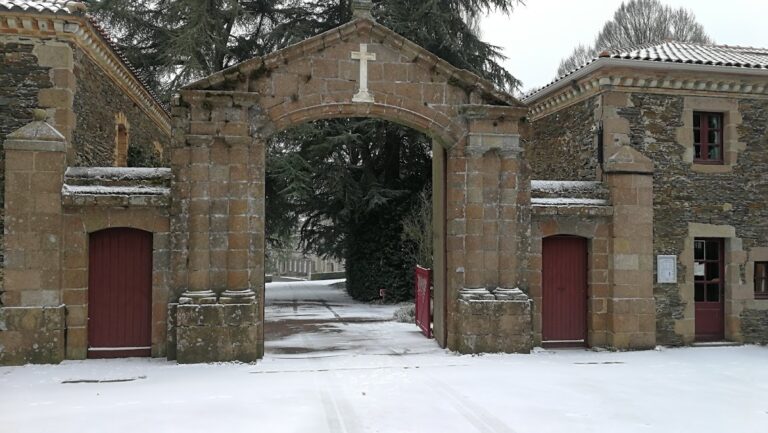
An avenue leads to the Empire-style château. Other features distributed through the estate include a monument to Jacques Cathelineau, a temple, a park column, two park crosses, a fountain, and a mill on the Saint-Germain stream. Together with the pond, dam, and stream, these elements form the surviving landscape setting of the château and its former water system.