Château des Stuarts: A Renaissance Residence and Civic Landmark in Aubigny-sur-Nère


Site at a Glance
- Rating
- 4.4
- Popularity
- Low
- Country
- France
- Primary era
- Early Modern
- External website
- Open
- Eras represented
- Early Modern, Modern
- Civilizations
- French
- Site type
- Domestic
- Remains
- Castle
On this page7 sections
History
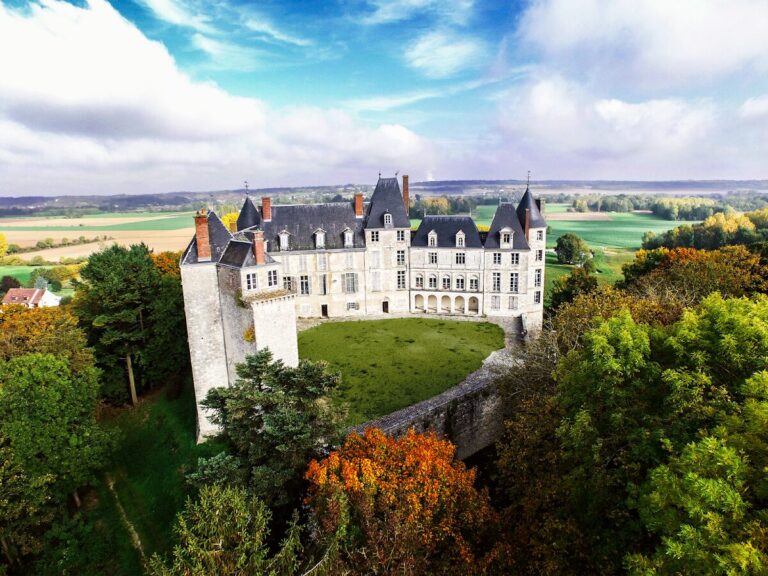
Château des Stuarts is a French Renaissance château in Aubigny-sur-Nère, France, commissioned at the beginning of the sixteenth century by Robert Stuart d’Aubigny after a fire in 1512. It was built as a noble residence and became the historic ancestral seat of a junior branch of the Scottish House of Stewart, the royal dynasty to which the Aubigny family belonged.
The Stewart connection
The estate was first acquired by Sir John Stewart of Darnley, a Scottish nobleman and military commander who held the titles of 1st Count of Évreux and 1st Lord of Concressault and Aubigny. He served as Constable of the Scottish Army in France during the Hundred Years’ War, the prolonged conflict between England and France from the fourteenth into the fifteenth century. Scottish military support for France formed part of the wider alliance between the two kingdoms. Sir John Stewart was also a fourth cousin of James I of Scotland, who reigned from 1406 to 1437.
Rebuilding and later changes
After Robert Stuart d’Aubigny commissioned the château, Louise de Keroualle, Duchess of Aubigny and Portsmouth, rebuilt and embellished the residence. Additional modifications and restorations followed during the seventeenth and nineteenth centuries. Extensive nineteenth-century alterations changed the original building, leaving its original façade and left wing.
During the 1950s, a concrete structure for school and municipal services was attached to the right wing. It was demolished in April 2010 because it disfigured the château. The building had been classified as a French historic monument in 1862. Owned by the commune, it now serves as the town hall and a museum, and houses the Auld Alliance Interpretation Centre, devoted to the longstanding political and military alliance between Scotland and France.
Remains
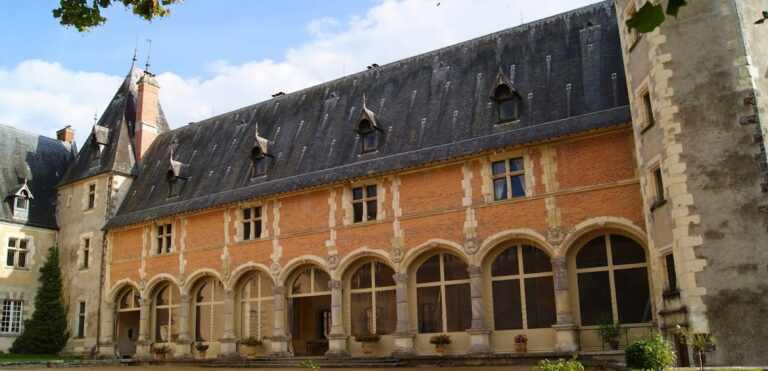
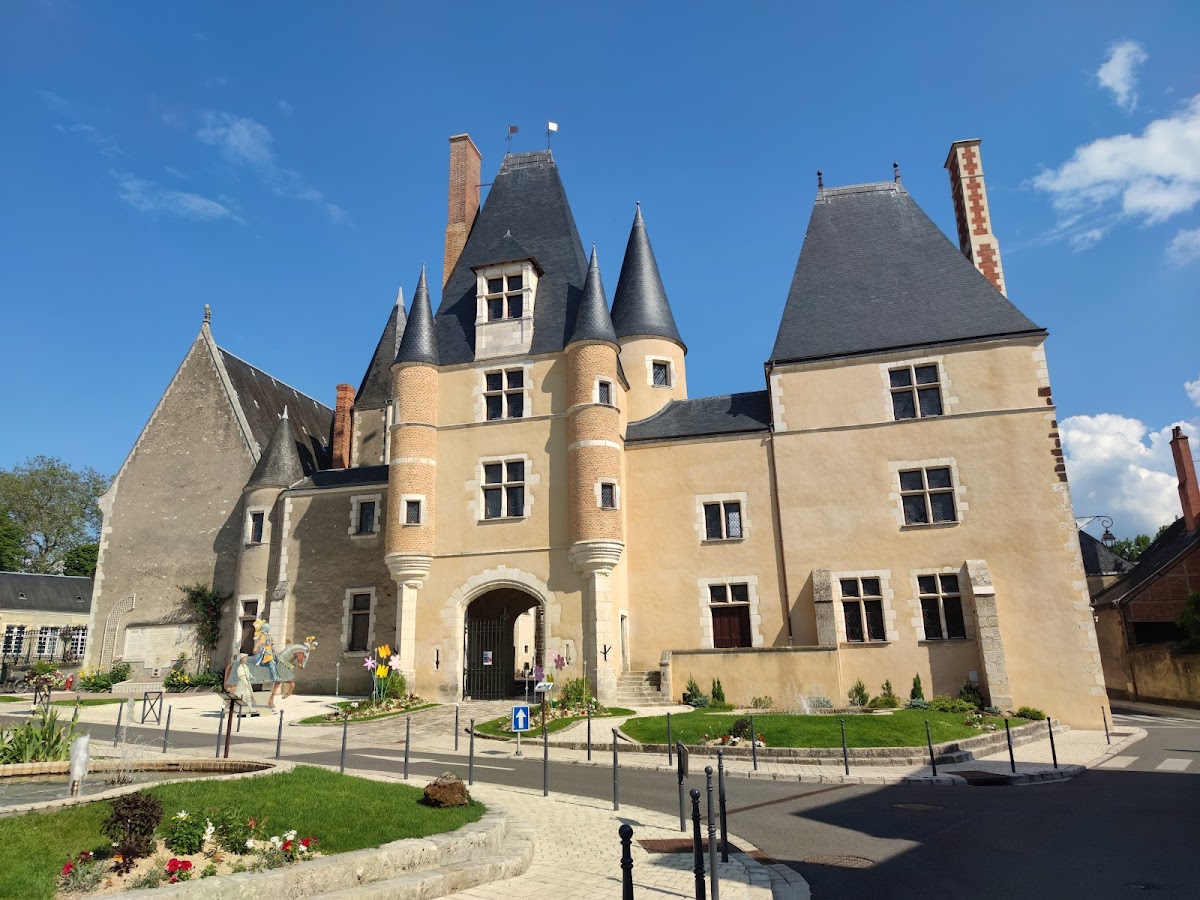
The château stands in the centre of Aubigny-sur-Nère and retains early Renaissance architecture alongside medieval elements. Its original complex was formed by two wings connected by an entrance pavilion. The surviving historic fabric includes the façade and left wing, while the right side reflects the substantial changes made during the nineteenth century.
Surviving architectural features
Entrance pavilion
The entrance pavilion forms the central link between the two wings. Projecting turrets flank the entrance, which includes a notable portico, a roofed porch supported by columns or other structural supports. The keystone, the central wedge-shaped stone in the arch, bears the arms of Robert Stuart d’Aubigny.
Great hall
The château’s great hall remains part of the building’s active civic and cultural use. It hosts art exhibitions throughout the year, bringing a continuing public function to one of the principal interior spaces of the Renaissance residence.