Château de Vogüé: A Fortified Castle and Renaissance Residence in France



Site at a Glance
- Rating
- 4.2
- Popularity
- Medium
- Country
- France
- Primary era
- Medieval
- External website
- Open
- Eras represented
- Medieval, Early Modern
- Civilizations
- French
- Site type
- Military
- Remains
- Castle
On this page10 sections
History
Medieval fortress
Château de Vogüé is a former fortified castle in France, founded in the twelfth century and later transformed in the fifteenth and seventeenth centuries. The lords of Vogüé occupied the site from 1084 and drew substantial income from a toll on the Ardèche River. This revenue helped finance a strong square-plan fortress, probably built in the late twelfth century on the orders of Raymond I de Vogüé.
The castle became the property of the de La Gorce family in the fourteenth century. During the fifteenth century, the Rochemure du Besset family rebuilt the castle and added four towers, creating the principal quadrangular form that survives today.
Renaissance transformation
In 1603, Melchior I de Vogüé, marquis and grand bailiff of Vivarais, bought the castle. A bailiff was a senior judicial and administrative official under the French monarchy, while Vivarais was a historic province corresponding broadly to the modern Ardèche area. Melchior remodelled the building in the Renaissance style, a period associated with renewed interest in classical forms and more regular architectural designs. The work included large windows, ornamental features, a balcony, and a suspended garden above the filled-in moats.
After Charles de Vogüé moved to the Château d’Aubenas, the castle was neglected from the seventeenth century. During the French Revolution, it was burned and ransacked before being sold as national property.
Restoration and later use
In 1839, Léonce de Vogüé bought the castle back and restored it. He established a school there run by the Sisters of Saint Joseph of Aubenas, which remained in operation until 1960. Since 1971, the castle has been open to visitors and has hosted temporary exhibitions devoted to painting, printmaking, sculpture, photography, ceramics, glass, and other disciplines. It also houses the collection of the French engraver Jean Chièze, who lived from 1898 to 1975.
The castle remains privately owned by the de Vogüé family. Its façades and roof have been protected in France as a registered historic monument since 1969.
Remains
Fortress and Renaissance additions
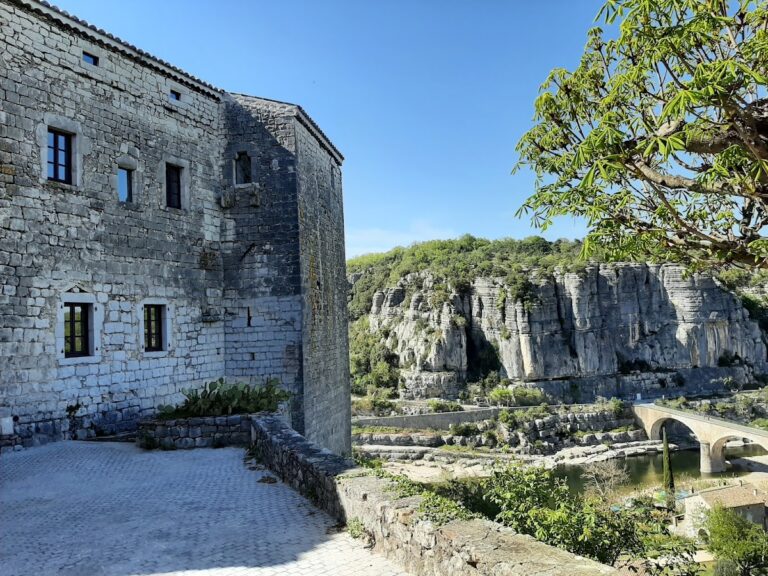
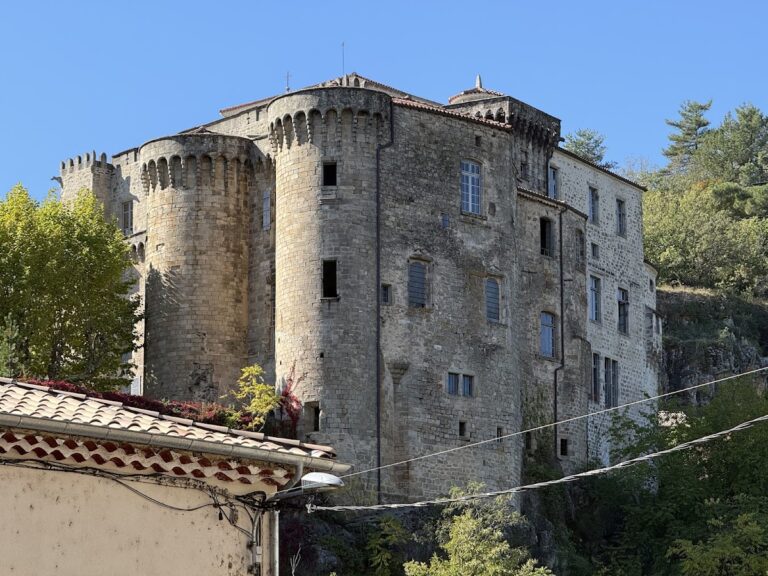
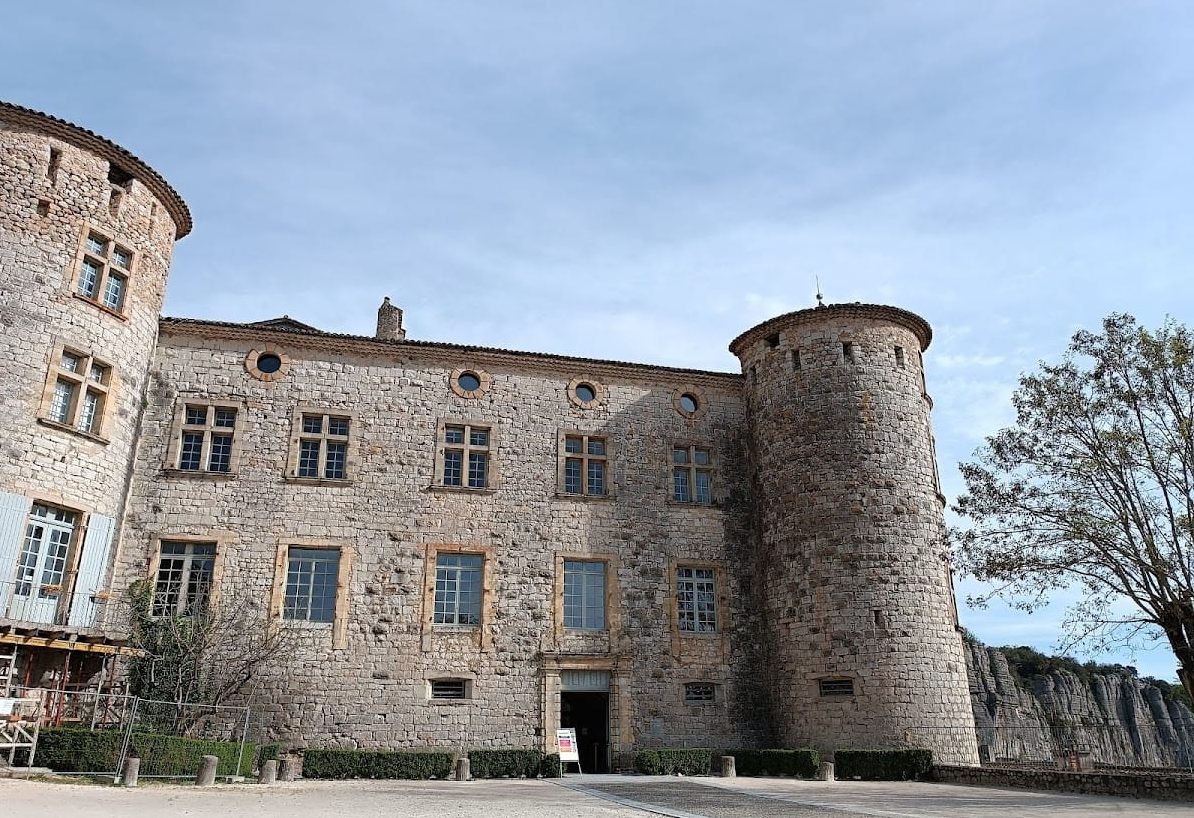
Château de Vogüé stands at the foot of a limestone cliff on the bank of the Ardèche, overlooking the village. The fifteenth-century castle is a large quadrangular building with four substantial round towers. The base of a twelfth-century tower also survives, linking the later structure to the earlier fortress.
Façades and garden
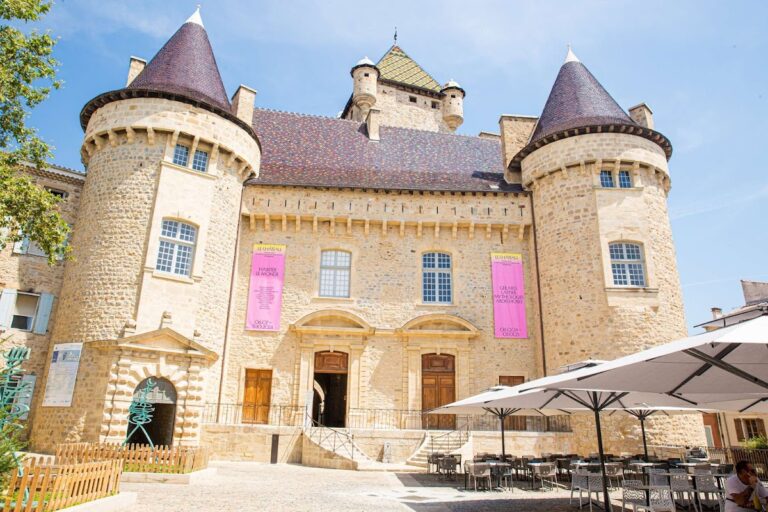
The early seventeenth-century remodelling altered the exterior throughout. Large mullioned windows, divided by vertical stone bars, and oculi, which are round or oval windows, were inserted into the façades and towers. The north façade has a large rusticated doorway. A balcony and suspended gardens belong to the same phase, with the gardens occupying the space above the filled-in moats.
Interior rooms and chapel
State rooms
The interior includes a seventeenth-century salon and the States Room of Vivarais. The States of Vivarais were a provincial representative assembly under the French monarchy, and the room is associated with that institution.
Chapel
The chapel was refitted with elements brought from the chapel of Rochecolombe. These include a sixteenth-century bas-relief depicting the Twelve Apostles, a monstrance, a liturgical vessel used to display a consecrated host or relics, that had contained relics of Saint Bartholomew, and a thirteenth-century coat of arms bearing the arms of the de Vogüé family. The chapel’s stained-glass windows were created in 1980 by the painter Alfred Manessier.
Nearby sites