Château de Thorens: A Historic Fortified Castle in France


Site at a Glance
- Rating
- 4.4
- Popularity
- Low
- Country
- France
- Primary era
- Medieval
- External website
- Open
- Eras represented
- Medieval, Early Modern
- Civilizations
- Duchy of Savoy
- Site type
- Military
- Remains
- Castle
On this page14 sections
History
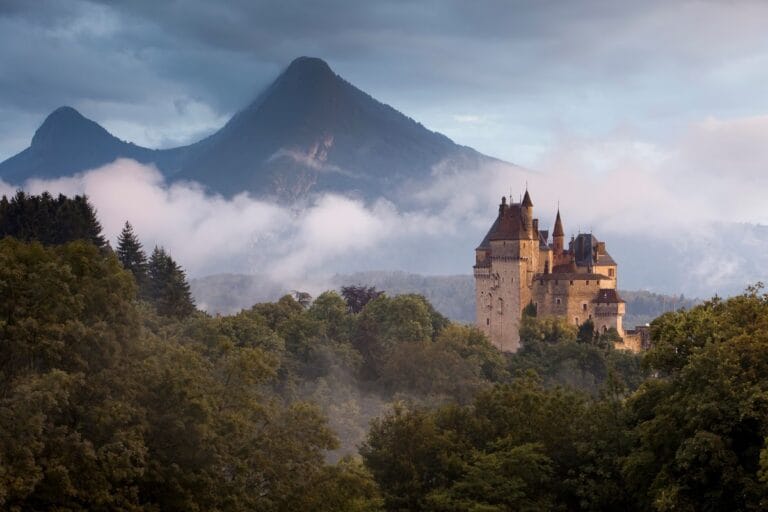
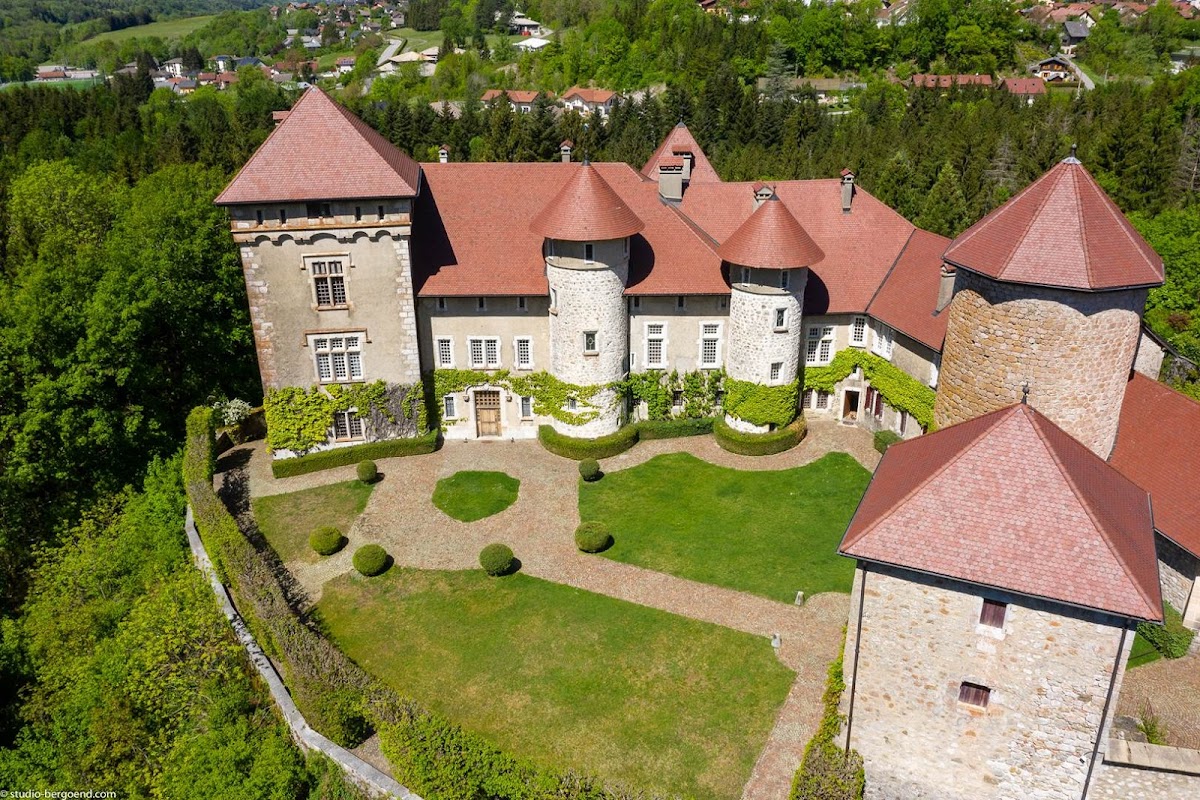
Château de Thorens is a fortified medieval castle in France, in the commune of Thorens-Glières, about 20 kilometres northeast of Annecy. Its documented history begins with a fort built in 1060, and its surviving architecture reflects medieval, seventeenth-century, and nineteenth-century phases. Set near the road rising toward the Glières plateau, the castle became a long-standing seat of influential families connected with the political authorities of Savoy.
The Compey Fort and Savoyard Lordship
The original fort was ordered by Count Gérold de Genève and granted to his companion-in-arms, Odon de Compey. The site was therefore associated from an early stage with the powerful Compey lords. Seventeenth-century documents sometimes referred to the castle as Château de Compey, preserving the memory of that earlier connection.
In 1479, the Duke of Savoy confiscated Thorens from the Compey family because of their reported crimes, abuses, and exactions. He granted the castle to Hélène of Luxembourg-Saint-Pol, the wife of Janus of Savoy. Through inheritance, it later passed to their daughter Louise of Savoy, who was married to François of Luxembourg.
The Sales Family
A transfer of Thorens to François de Sales, the father of Saint Francis de Sales, is dated to 1559. The transaction was completed in June 1602, when Saint Francis de Sales purchased the castle on behalf of his brothers and sisters from Marie of Luxembourg, the widowed Duchess of Penthièvre.
The Sales family had earlier links with the Compey lords and later served the princes of Luxembourg. Its position at the Savoyard court rose quickly. The family became barons in 1613, counts in 1632, and marquises in 1665, remaining close to Savoy’s political authorities during the eighteenth and nineteenth centuries.
Saint Francis de Sales lived from 1567 to 1622 and served as Prince-Bishop of Geneva, a bishop who also exercised secular authority over a territory. The castle’s historical interpretation gives particular attention to him and to his family, whose presence connects Thorens with the religious and political history of the region.
Revolutionary Damage and Later Preservation
Château de Thorens was damaged during the French invasion of Savoy in 1792. In the nineteenth century, Marquise Alexandrine de Sales restored the castle with the assistance of her grandson, Count Eugène de Roussy de Sales. The Roussy de Sales family continues to own and preserve the property.
Count Jean-François de Roussy de Sales was the first member of the family to open the castle to the public. In 1960, during commemorations of Savoy’s 1860 annexation to France, he opened the entire ground floor and almost all of the medieval rooms. The castle’s entrance postern was listed as a French historic monument in 1960. Its façades and roofs, Golden Salon, and garden received the same protection in 1990.
Cavour and the Annexation of Savoy
Count Camille Benso di Cavour, a cousin of the Roussy de Sales family, stayed regularly at Thorens. As prime minister of the Kingdom of Sardinia, he was a leading statesman in the unification of Italy and worked with Emperor Napoleon III. The Treaty of Turin, signed on 24 March 1860, led to the annexation of the County of Nice and the Duchy of Savoy by France, within the political changes surrounding Italian unification.
Cavour’s connection with the castle is preserved through his personal effects, furniture, and artworks. Among them is a desk in the elaborate inlaid style associated with the cabinetmaker André-Charles Boulle and later revived under Napoleon III. The desk is associated with the signing of the Treaty of Turin.
Remains
Château de Thorens combines a fortified medieval core with a noble residence developed and altered across the twelfth, thirteenth, fifteenth, seventeenth, and nineteenth centuries. Its documented construction history extends from the fort of 1060 to works completed in 1873. The site includes the entrance postern, medieval vaulted rooms, the keep, the noble residence, façades, roofs, and a garden set within the mountainous landscape near the route to the Glières plateau.
Medieval Fortifications
Vaulted Medieval Rooms
The oldest surviving areas include austere vaulted rooms from the twelfth and thirteenth centuries. Their heavy construction belongs to the early fortifications and preserves the character of the castle’s medieval defensive phase. These rooms form part of the medieval accommodation opened during the twentieth-century presentation of the castle.
The Keep
The keep, the principal fortified tower of a medieval castle, is associated with the exercise of seigneurial justice. Its presence expresses the authority once exercised from Thorens by its lords, while its survival connects the visible castle with the political and judicial functions of the medieval stronghold.
Entrance Postern
The entrance postern is a small fortified entrance set within or beside an enclosure. At Thorens it forms part of the protected approach to the castle and was listed as a French historic monument in 1960. Together with the surviving façades and roofs, it defines part of the castle’s external defensive fabric.
The Noble Residence
Golden Salon and Furnished Rooms
The noble residence contains a Golden Salon and richly furnished rooms whose decoration reflects seventeenth-century taste. The interiors bring together furniture from the Renaissance, Baroque period, and Second French Empire, the era of Napoleon III’s rule in France from 1852 to 1870. Flemish tapestries, paintings by master artists, and other artworks add to the preserved furnishings of the residence.
Vaulted Kitchen
A vaulted kitchen dates from 1632. Its ceiling and masonry belong to the seventeenth-century development of the residence, when the castle’s domestic spaces were incorporated into the more elaborate noble interiors.
Cavour’s Furnishings
The residence also preserves the personal effects, furniture, and artworks connected with Camille Benso di Cavour. The most notable piece is the sumptuous desk in the Boulle Napoléon III style associated with the signing of the Treaty of Turin. It gives a physical form to the castle’s connection with the political events that transferred Savoy to France in 1860.