Château de Savigny-lès-Beaune: A Fortified Castle and Museum Estate in France



Site at a Glance
- Rating
- 4.5
- Popularity
- Medium
- Country
- France
- Primary era
- Medieval
- External website
- Open
- Eras represented
- Medieval, Early Modern
- Civilizations
- Duchy of Burgundy, French
- Site type
- Military
- Remains
- Castle
On this page7 sections
History
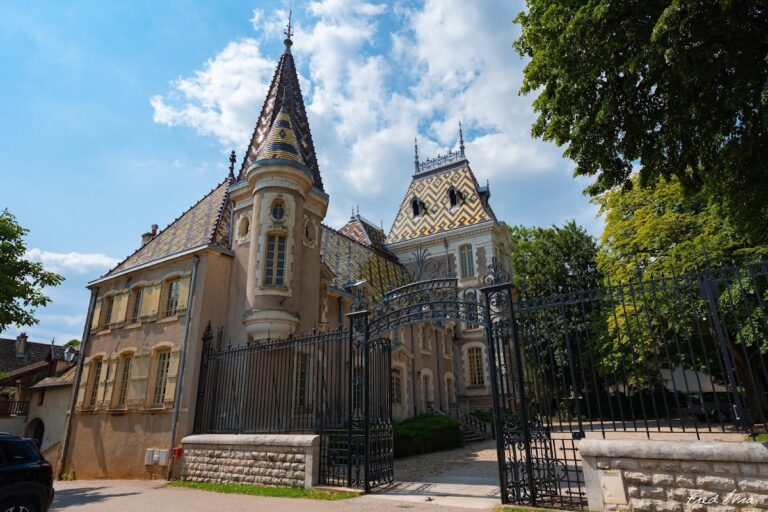
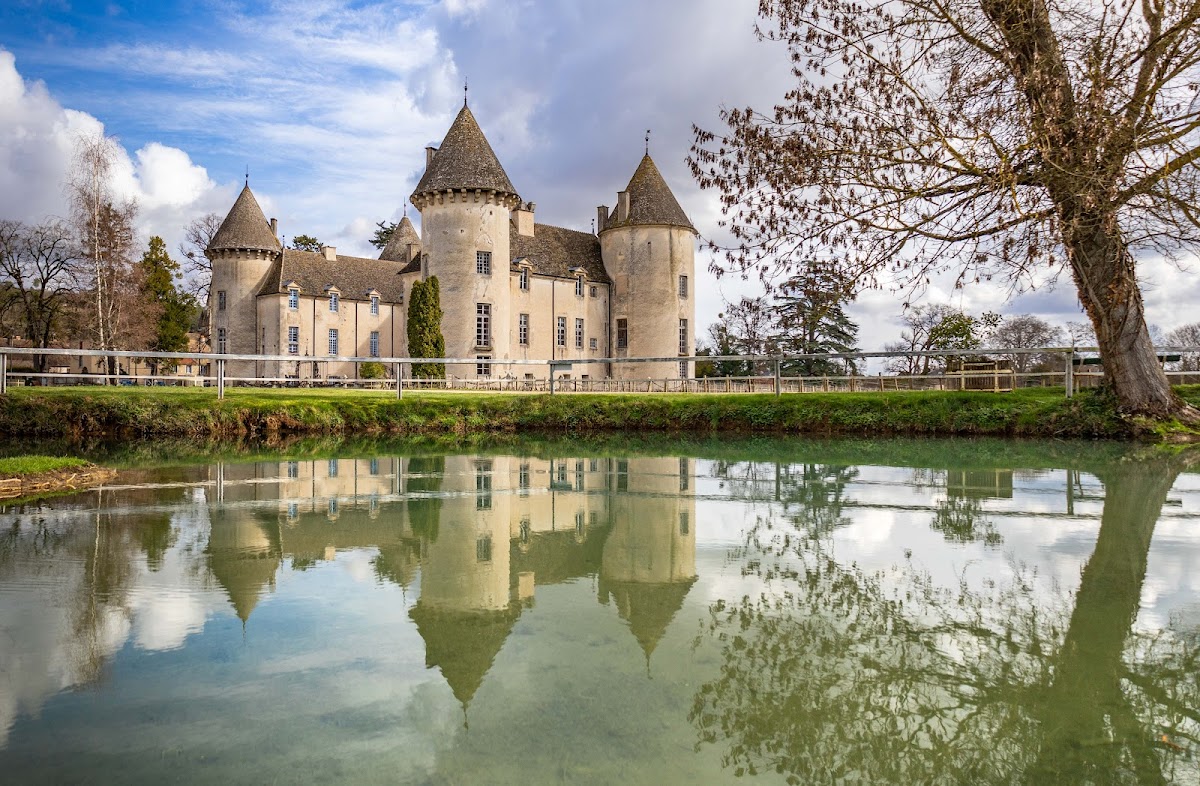
Château de Savigny-lès-Beaune is a fourteenth-century fortified castle in France, built in the historic Duchy of Burgundy. Construction began around 1340, when Jean de Frolois, marshal of the Duchy of Burgundy, built it for Eudes IV, the fourteenth-century duke of Burgundy. The castle formed part of the political and defensive landscape of the duchy.
Destruction and succession
In 1478, Louis XI, king of France, ordered the castle’s destruction. The action followed the support given by its owner to Mary of Burgundy, who had inherited the Burgundian territories, and her husband, the future Emperor Maximilian I, during the Burgundian succession war of 1477 to 1482. The destruction altered the medieval fortress, although parts of its defensive structures survived.
On 21 April 1605, Louise Petit, widow of Antoine Juret, became lady of Savigny. After her death in 1622, the fief, a landed holding governed by feudal succession rights, passed to François Juret, Bénigne Juret, and Catherine Juret. Different portions of the lordship remained associated with members of the family.
Catherine Juret’s second husband, Jean Bouhier, had a son from his first marriage, Étienne Bouhier. Étienne married Claude de Massol in 1604, and their son Jean Bouhier de Savigny gradually brought the estate together. He acquired the share held by François and Bénigne Juret in 1640, Pierre II de Massol’s share on 16 April 1658, and Jean IV de Massol’s property at Savigny in 1668.
Later owners and restoration
After Jean Bouhier de Savigny died in 1671, his son Bénigne Bouhier commissioned the construction of the Petit Château. The estate passed to the de Migieu family in 1689 and later, through marriage, to the family of the Count of La Loyère and his heirs.
In 1719, the castle was vacated for several months and served as the enforced residence of Louise-Bénédicte de Bourbon, Duchess of Maine and granddaughter of Louis II de Bourbon-Condé, during her exile in Burgundy. Jules Guyot, a nineteenth-century French physician and scientist whose work was especially influential in viticulture and vineyard cultivation, died during a stay at the castle.
Michel Pont, a former Abarth rally driver and viticulturist, bought the castle in 1979 and began extensive restoration. He established several museums within the complex, which is now both a wine estate and a museum site. In 2018, its private collection of fighter aircraft was recognized by Guinness World Records as the largest of its kind. The castle and adjoining Petit Château have been listed as historic monuments in France since 1940.
Remains
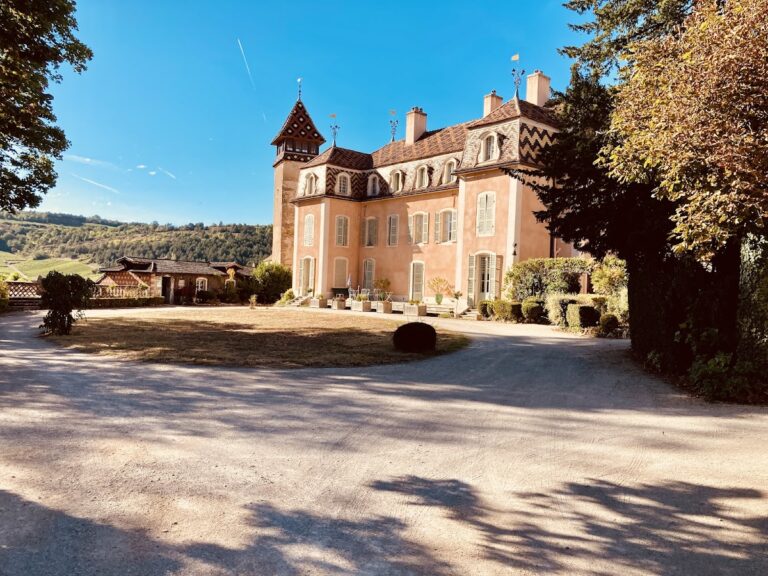
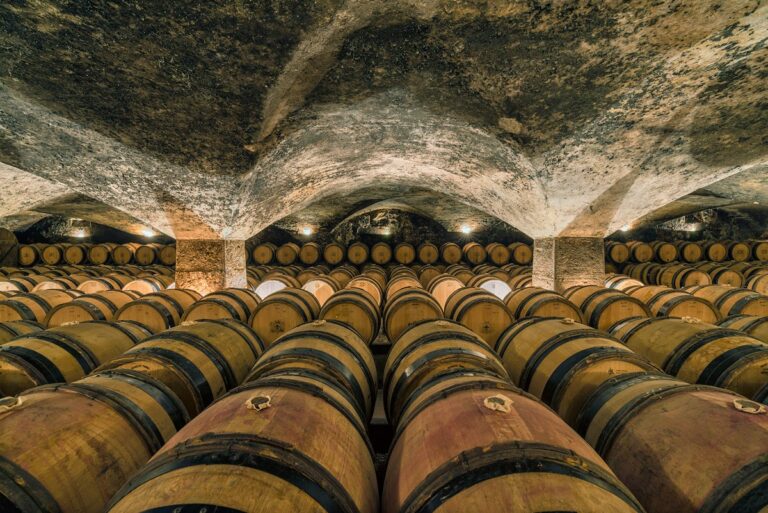
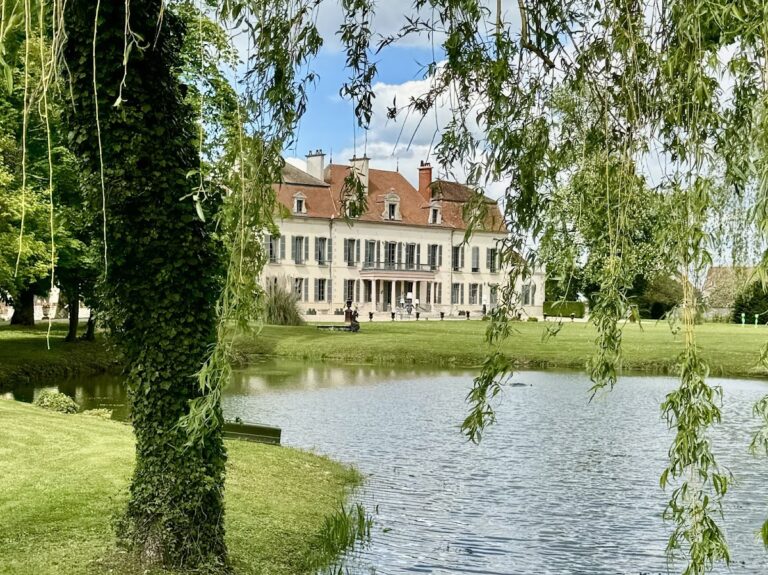
The surviving complex combines the fortified medieval castle, the adjoining Petit Château, and a 20-hectare wine estate in the Côte de Beaune vineyard at Savigny-lès-Beaune. The buildings and park now contain agricultural, automotive, aviation, and mechanical collections alongside features that preserve the castle’s defensive history.
Fortified castle
The main castle is a fourteenth-century fortified building. The destruction ordered in 1478 left the corbels of the machicolations visibly preserved on two towers. Machicolations were projecting defensive structures with openings through which defenders could drop or pour objects onto attackers, while corbels were the projecting stone supports that carried them.
Inside the main castle are wine presses and hand tools, together with approximately 2,000 aircraft models. The second floor contains 300 motorcycles dating from 1903 to 1960 and 1,200 motorcycle scale models made at a scale of 1:18.
Petit Château
The adjoining Petit Château, built after 1671 on the commission of Bénigne Bouhier, houses agricultural equipment and 25 prototype straddle tractors. These specialized vineyard vehicles pass over rows of vines rather than travelling between them.
The building also contains the Abarth racing-car collection, comprising 35 cars and 600 scale models. Other museums within the complex hold numerous engines and mechanical objects, including cars, motorcycles, trucks, tractors, and bicycles.
Park and outdoor displays
The park contains more than 100 fighter aircraft, military aircraft, jet aircraft, and helicopters. Approximately 20 fire engines are displayed beneath a large tent, extending the vehicle collections beyond the two château buildings and into the estate grounds.