Château Corton C.: A Nineteenth-Century Wine Estate in Burgundy


Site at a Glance
- Rating
- 4.5
- Popularity
- Low
- Country
- France
- Primary era
- Modern
- External website
- Open
- Eras represented
- Medieval, Modern
- Civilizations
- Duchy of Burgundy, French
- Site type
- Domestic
- Remains
- Castle
On this page8 sections
History
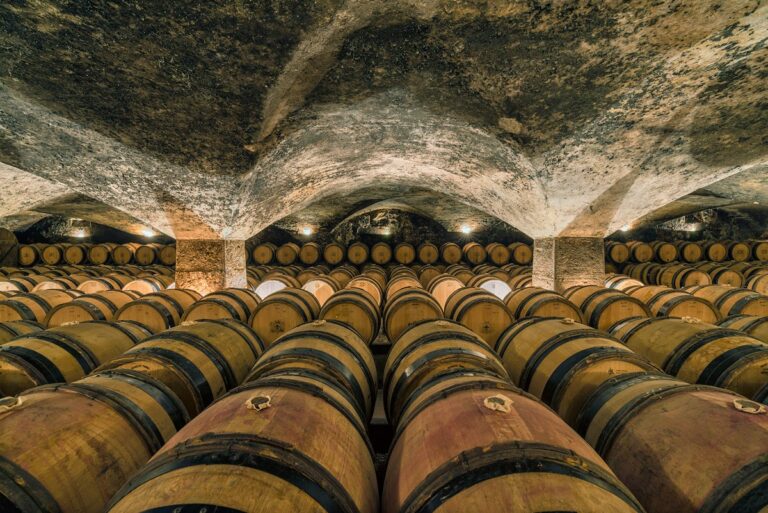
Château Corton C. is a nineteenth-century château and wine estate in France, located at the foot of Corton Hill in Aloxe-Corton, within Burgundy’s Côte de Beaune vineyards. Built at the end of the nineteenth century over fifteenth-century cellars and on the site of an eighteenth-century château, it remains associated with the production of Corton and Corton-Charlemagne, top-level Burgundy wine classifications tied to specific vineyards or appellations.
The Corton-Charlemagne Vineyard
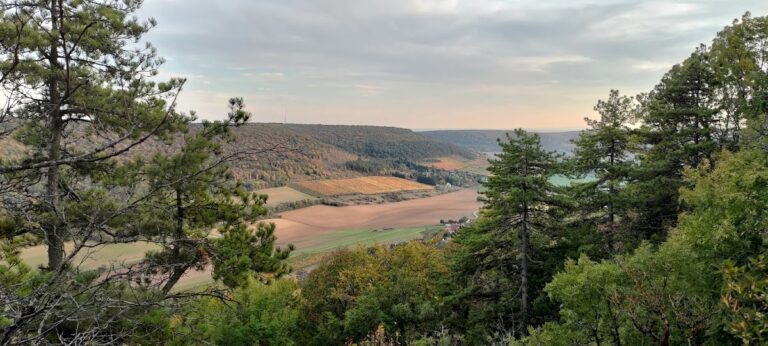
The history of the estate’s setting reaches back to the eighth century. Charlemagne, the Frankish ruler crowned emperor in 800, owned approximately 70 traditional Burgundian vineyard measures, or about 3.5 hectares, on the Corton-Charlemagne site behind the château. In 775, he donated the vineyard to the canons of the Basilica of Saint-Andoche at Saulieu. This vineyard is identified as the origin of the Corton-Charlemagne appellation.
Construction and Wine Estate
The present château was erected at the end of the nineteenth century, replacing the earlier eighteenth-century building while retaining the older cellars beneath it. In 1923, the winegrower Pierre André bought the château and established a wine estate there. The property later passed from his descendants to the Ballande group in 2002.
The Frey family acquired the estate in 2015 and renamed it Château Corton C. that year. The property continues to operate as a wine estate. Its approximately 150 hectares of vineyards extend across Ladoix-Serrigny, Aloxe-Corton, and Pernand-Vergelesses, producing the red Corton grand cru and the white Corton-Charlemagne grand cru. The estate specializes in Burgundy wines and offers appellations from the Côte de Beaune, Côte de Nuits, Mâconnais, Chablis, and Beaujolais, including Aloxe-Corton, Clos-Vougeot, Vosne-Romanée, Meursault, Ladoix, and Savigny-lès-Beaune.
Heritage Protection
The château’s façades and roofs, together with the ironwork enclosing the park, were listed as historic monuments by an order dated 21 April 2017. Entry on France’s register of historic monuments provides legal heritage protection for buildings and sites considered historically or architecturally significant.
Remains
Château and Entrance
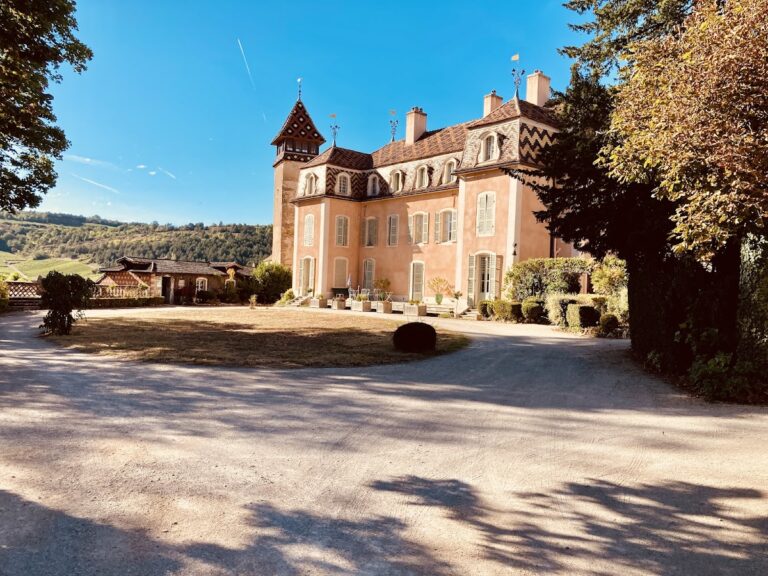
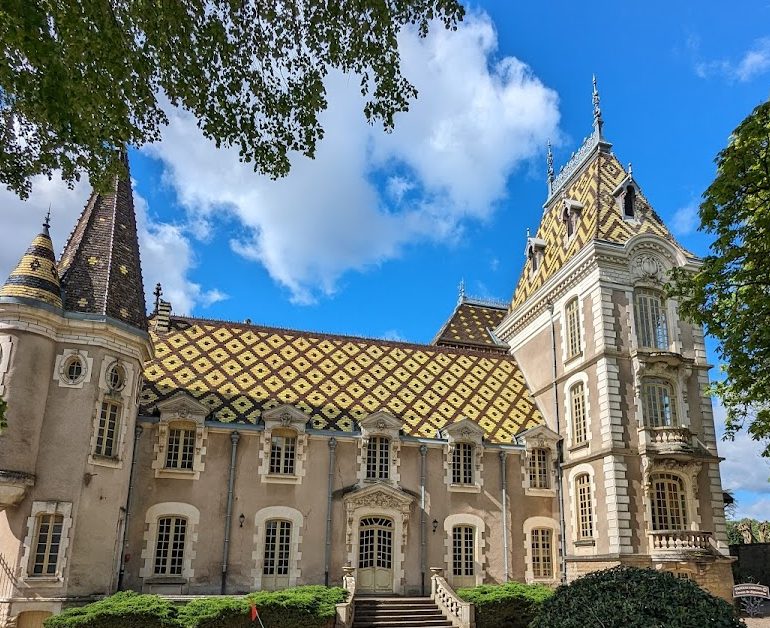
The château stands at the foot of Corton Hill and is distinguished by a long-slope roof covered with traditional glazed Burgundy tiles. These ceramic tiles receive a glass-like coating before firing, producing the colored and reflective surfaces characteristic of Burgundy roofs. An imposing ornamental wrought-iron gate marks the entrance to the property.
The principal building has a projecting rectangular pavilion on the west and a turret on the east, which includes a small projecting watch turret supported outward from the corner. The building contains a raised ground floor, elevated above the surrounding ground, and an upper attic level. On the entrance façade, a staircase bordered by stone balustrades leads to a terrace.
Outbuildings
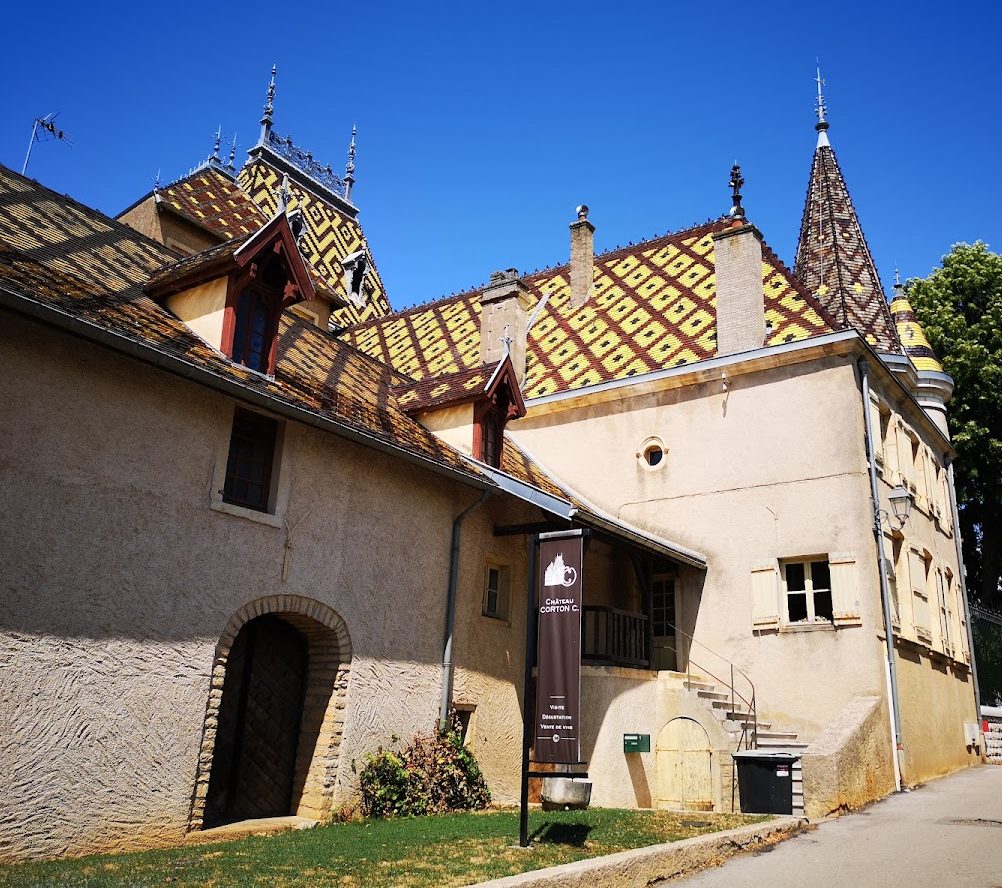
The outbuildings are covered by similarly long-slope roofs with glazed tiles. Their internal arrangement includes a basement, a ground floor, and two upper levels, one of them an attic. Semicircular-headed carriage doors, each closed by two leaves, open onto the entrance façades.
On the north and south entrance façades, right-angled staircases lead to first-floor landings protected by awnings. A door beneath each landing provides access to the basement. Together, these structures form part of the château’s surviving estate architecture.
Position on Corton Hill
The former Corton-Charlemagne vineyard lies behind the château on the hill. This physical relationship connects the surviving building and its estate setting with the vineyard whose history reaches back to Charlemagne’s ownership and his donation of the land in 775.
Nearby sites