Saint-Simon Castle: A Medieval Fortified Residence in Toulouse
Site at a Glance
- Popularity
- Medium
- Country
- France
- Primary era
- Medieval
- Eras represented
- Medieval, Early Modern
- Civilizations
- French
- Site type
- Domestic
- Remains
- Castle
On this page10 sections
History
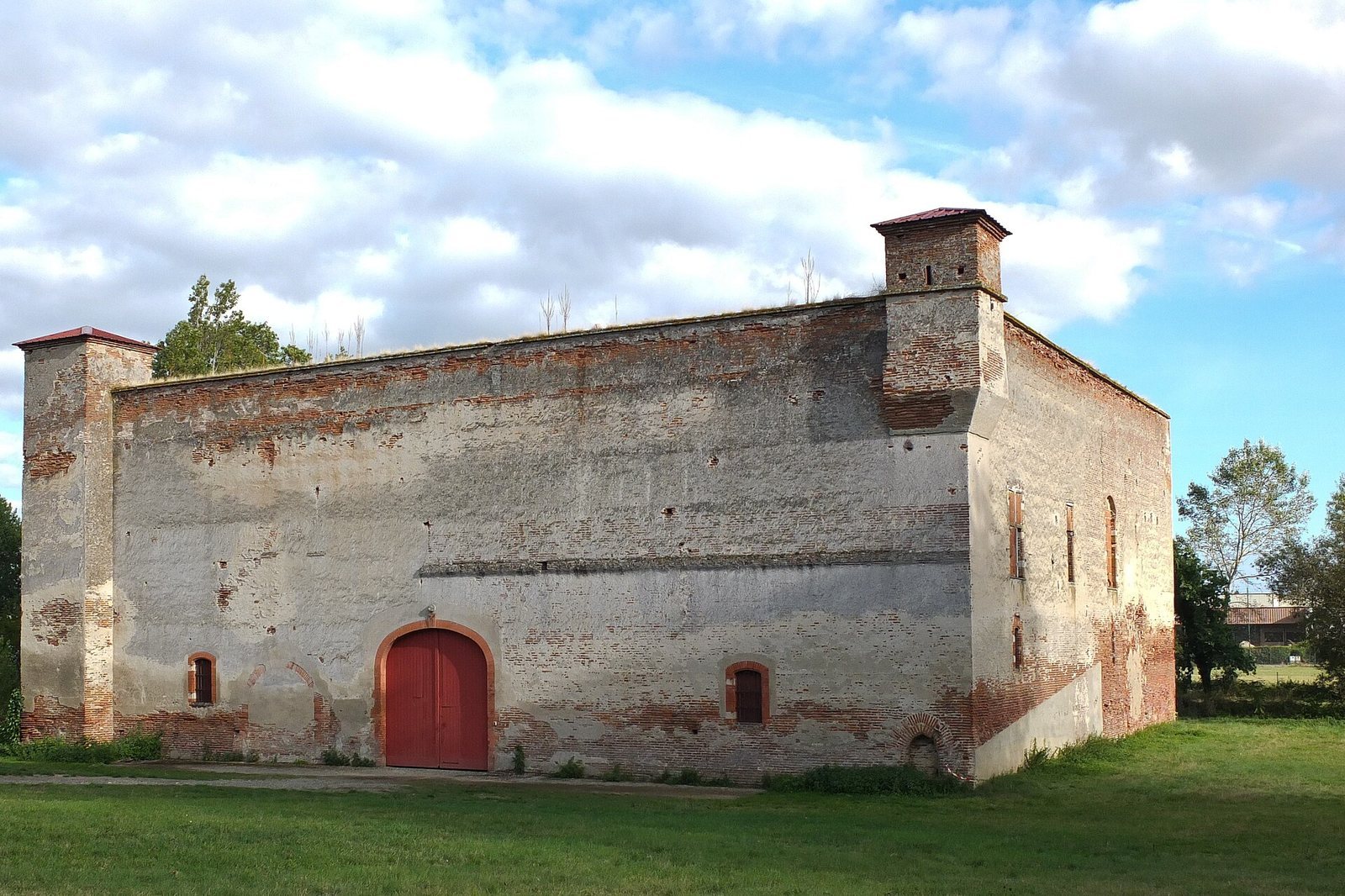
Saint-Simon Castle is a brick-built Gothic fortified residence in Lafourguette, Toulouse, France. Its oldest parts date to the thirteenth and fourteenth centuries. Also known as Château de Candie and Château de Saint-Simon-le-Vieux, it is described as the oldest château in the commune of Toulouse and the city’s only brick fortified castle.
Medieval lordship and later owners
In the thirteenth century, the lordship of Saint-Simon covered about 2.84 square kilometres across the territories of Toulouse, Portet-sur-Garonne, and Cugnaux. A lordship was land held under a lord’s property rights, sometimes including judicial authority. The Ysalguier, an influential Toulouse family with both mercantile and aristocratic standing, held the estate and probably received it from the Falgar family. The Ysalguier exercised high justice there, the power to judge serious crimes.
On 11 November 1498, Adhémar Ysalguier sold the estate and castle to Jean Laysani, a notary in Toulouse. Around 1540, ownership passed to Mariet d’Angilbaut de Chabanès, a councillor of the Parlement of Toulouse, a high court. During the seventeenth century, the lordship was divided among the Caulet, Delpech, and Mariotte families.
The Candie estate and the parish church
The Candie family began acquiring the estate in 1729, when Jean-Baptiste de Candie purchased part of it. In 1734, his son Stéphan married Thérèse Simon, whose dowry brought further land. Purchases in 1750 and 1751 helped reunite portions of the divided lordship. By the middle of the eighteenth century, Jean-François-Marie Candie, a royal finance official in Toulouse, had brought the holdings together and expanded the estate’s agricultural activity.
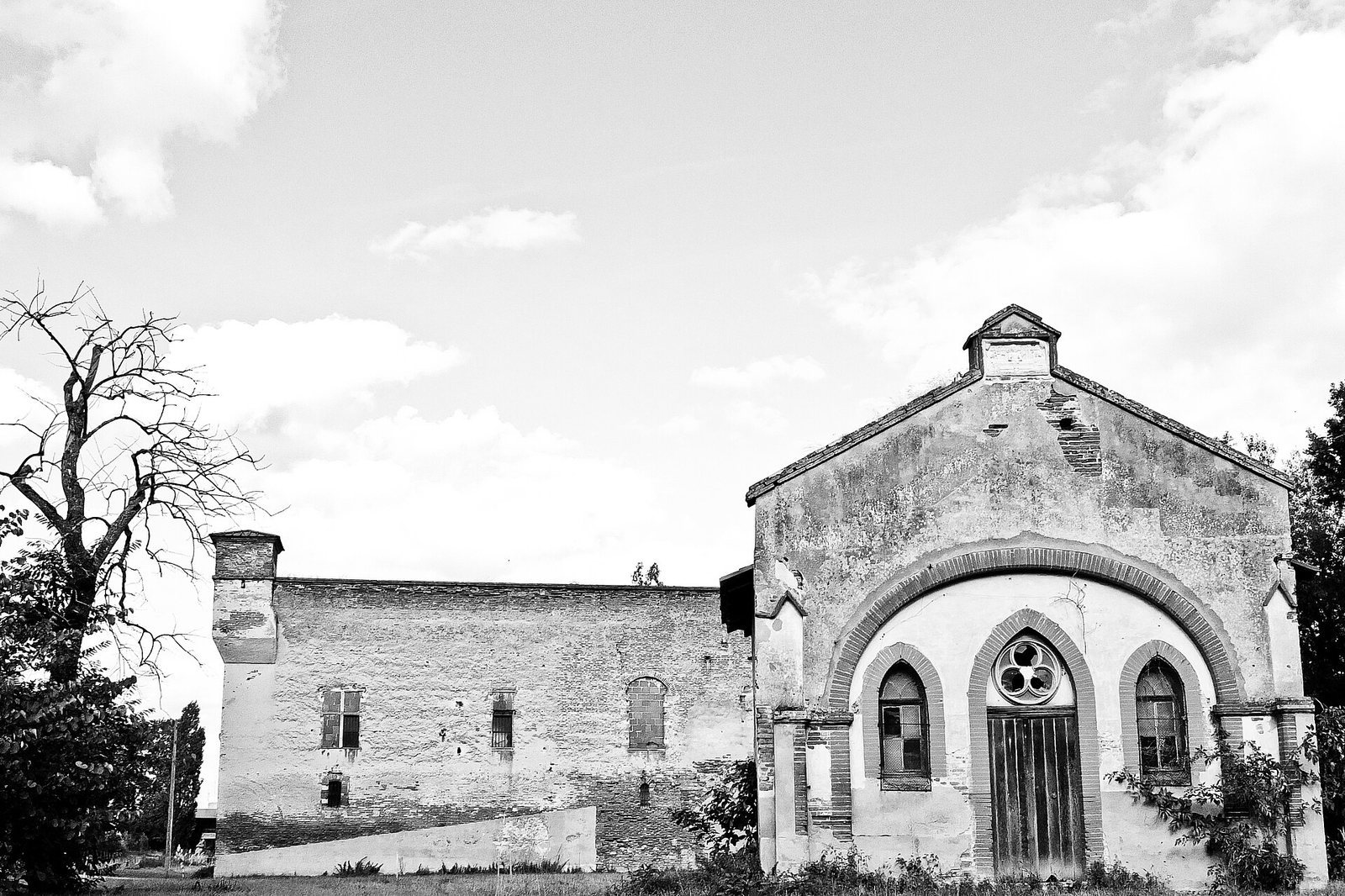
The castle chapel served as the parish church of Saint-Simon until the church moved to the village centre in the late eighteenth century. In 1779, the Archbishop of Toulouse, Étienne-Charles de Loménie de Brienne, ordered the transfer. Jean-François-Marie Candie initially withheld the chapel’s vessels, bells, and paintings, but yielded them in 1782. The French Revolution abolished seigneurial rights, though the castle remained in Candie hands. In 1796, François Candie bought the former parish church, which had become national property.
Family ownership and municipal use
In the early nineteenth century, the estate included cultivated fields, gardens, vineyards, meadows, woods, a willow plantation, and a fishpond. It passed through the Candie family, including to Jean-Théodore Candie and later Guillaume-Camille-Alfred Candie de Saint-Simon (1823–1895), a count and diplomat. After Guillaume-Camille-Alfred’s death, the property went to Madame Bary and then to her son, Jean-Louis-Eugène Bary. Since 1848, the castle has been in Lafourguette rather than Saint-Simon, following the division of the two areas by Paul d’Astros, Archbishop of Toulouse.
In 1976, the City of Toulouse bought the estate, including 90 hectares of agricultural land. The city continued farming through its municipal agricultural operation, producing wine and cereals. The estate, including the castle, park, and other buildings across 18.68 hectares, was registered as a protected site in 1942. In 2001, the castle was added to France’s supplementary inventory of historic monuments. A municipal preservation and restoration program has involved heritage staff, archaeologists, and university researchers studying medieval architecture.
Remains
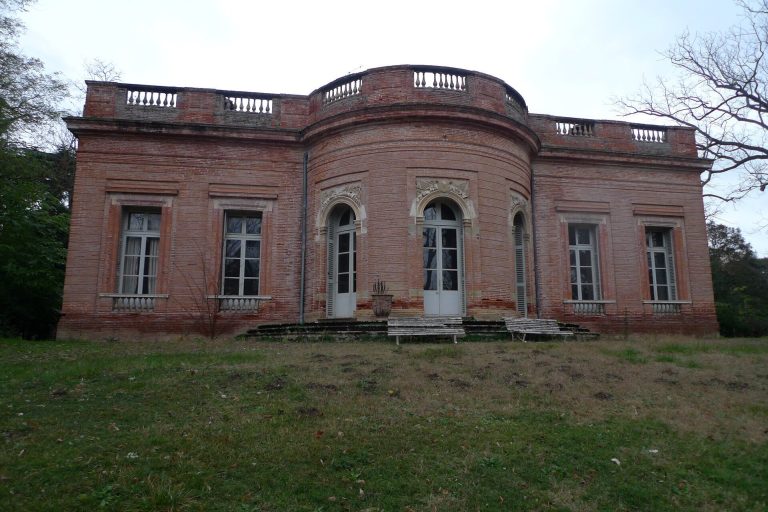
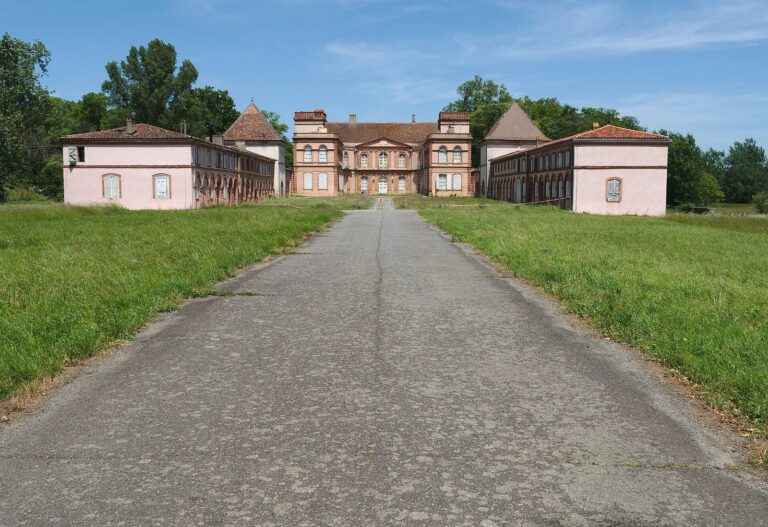
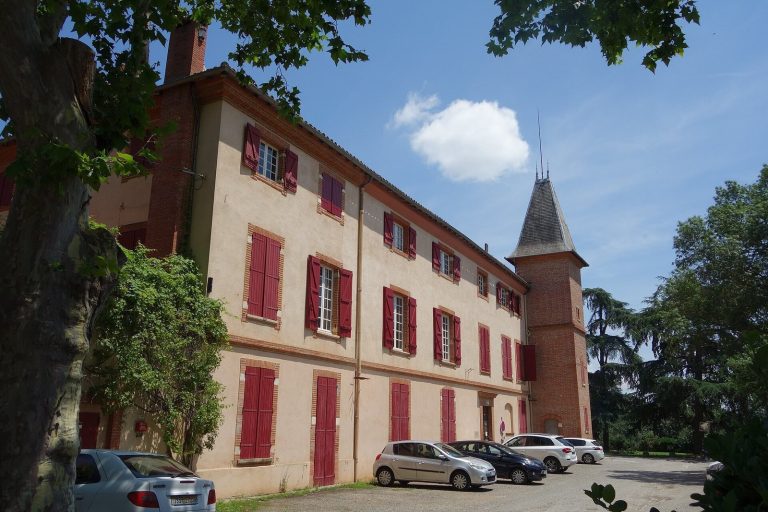
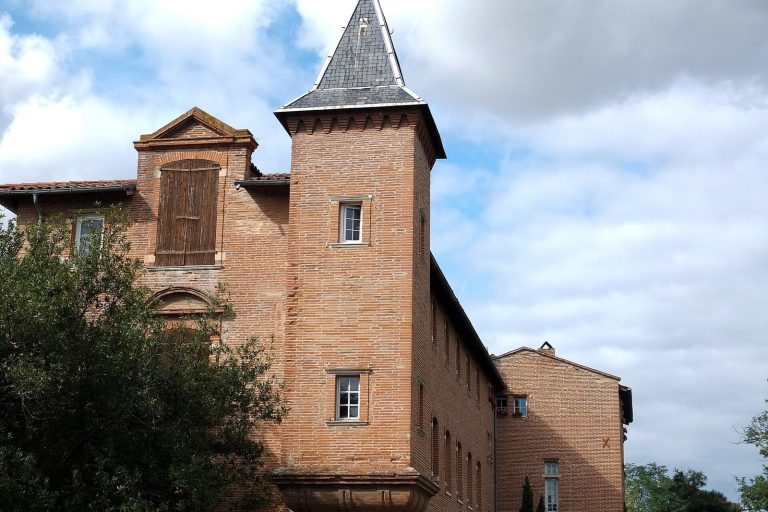
The château is a square brick residence in the Gothic style, with a central courtyard and features reflecting its former defensive purpose. Its grounds include a park of about 12 hectares and a body of water. Medieval-origin buildings, windmills, and other water features also form part of the estate.
The fortified residence
Walls, moats, and corner defenses
The castle’s early walls were plain, pierced by narrow openings used for defense. Moats bordered the building on its south and east sides and drew water from the nearby Roussimort stream. A square tower occupied the northeast corner, while smaller defensive turrets stood at the other corners; the southwest turret has been lost.
Windows, entrance, and courtyard
After the castle’s defensive role ended, stone windows divided by cross-shaped bars were added to the upper floor in the seventeenth century. Their carved divisions carry rosette decoration. The south entrance has a pointed Gothic doorway beneath a brick arch formed by two concentric bands. Hammering has damaged its stone keystone, which may once have displayed the Ysalguier arms.
Traces of Gothic windows survive on the south side of the central courtyard. The entrance leads into a square vestibule with a vaulted ceiling supported by intersecting ribs. These ribs rest on projecting supports carved as women’s heads.
The chapel and its sculpture
The castle chapel is dedicated to Notre-Dame-de-Pitié. A late-fourteenth-century carved relief on its façade depicts Christ in the tomb, with Mary on his left and Saint John the Evangelist on his right. The original was moved to the Musée des Augustins in 1978 and replaced by a copy. The church also formerly housed a Pietà, an image of Mary mourning or holding the dead Christ, dated to the late fifteenth or sixteenth century.
Agricultural grounds and wine production
The château contains wine-making installations. The estate’s vineyards grow Cabernet Sauvignon, Cabernet Franc, Négrette, Mauzac, and Syrah, producing red, white, and rosé wines under the Comté-Tolosan designation for wines from the Toulouse region. The agricultural domain also includes an orchard, a pigeon tower, and about twenty beehives at the tower’s foot.