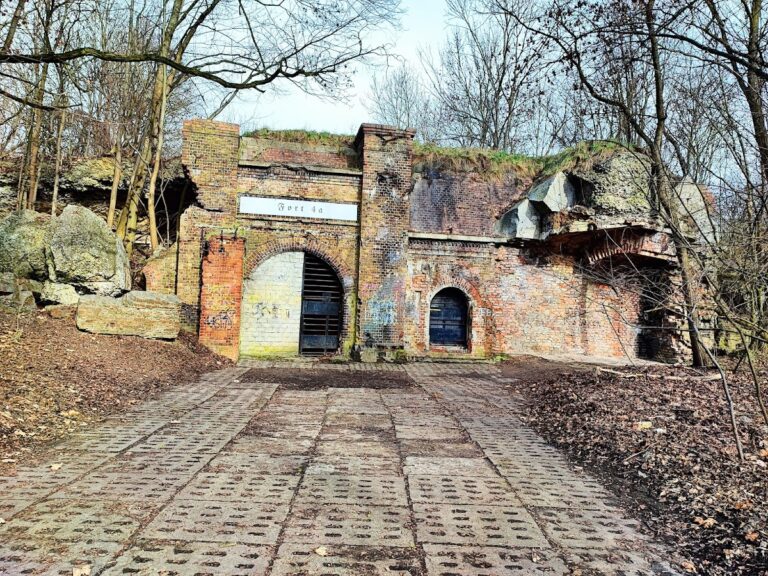
Fort VI w Poznaniu: A Fort of the Poznań Fortress


Site at a Glance
- Rating
- 4.9
- Popularity
- Very Low
- Country
- Poland
- Primary era
- Modern
- External website
- Open
- Eras represented
- Modern
- Civilizations
- German
- Site type
- Military
- Remains
- Fort
On this page6 sections
History
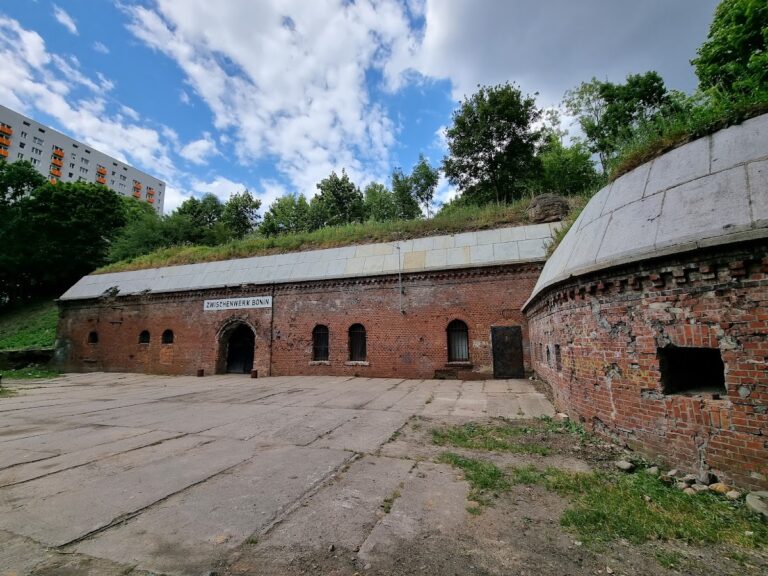
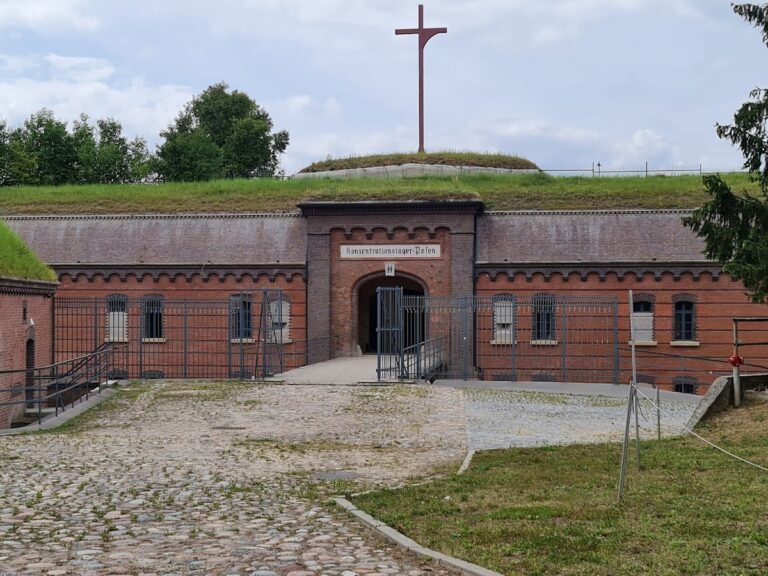
Fort VI w Poznaniu is a nineteenth-century fort in Poland, built between 1879 and 1883 as one of the 18 forts forming the Poznań Fortress, a system of defensive works constructed around Poznań. Its design was prepared by Hans von Biehler during the first stage of the fortress’s construction.
Names and dedication
The fort was originally called Tietzen, honoring Wilhelm von Tietzen, a Prussian military figure. The name had earlier belonged to Bastion V Tietzen. In 1931, the dedication was changed to a Polish figure, and the fort was renamed for Captain Kazimierz Mielęcki, who was associated with the January Uprising of 1863.
War and later preservation
During the Battle of Poznań, the fort was captured by assault on 6 February 1945. After the war, military use continued, helping preserve the fort in very good condition. In 2009, the Military Property Agency sold it for PLN 2.55 million to a private investor from Kraków. The property is now held by the Arche Group, a major private hotel network in Poland.
The fort grounds form part of the Natura 2000 protected area known as “Fortifications in Poznań” (PLH300005). This designation places the surviving fort within a broader protected landscape of nineteenth- and early-twentieth-century defensive works.
Remains
Main fortification
The fort has a main gate, while the two sections of its front meet at an angle of 130 degrees. Its powder magazine occupies a central position beneath the axial earthwork, beside the central postern, a protected passage through or beneath a fortification.
A major modernization took place in 1888 and 1889. The original front caponier, a fortified structure projecting into the ditch for defensive fire, was demolished and replaced by a reverse caponier, which served the same purpose from the rear or inner side. The walls and ceilings were strengthened, and an observation position designated P.B.St.87 was installed.
Artillery positions and shelters
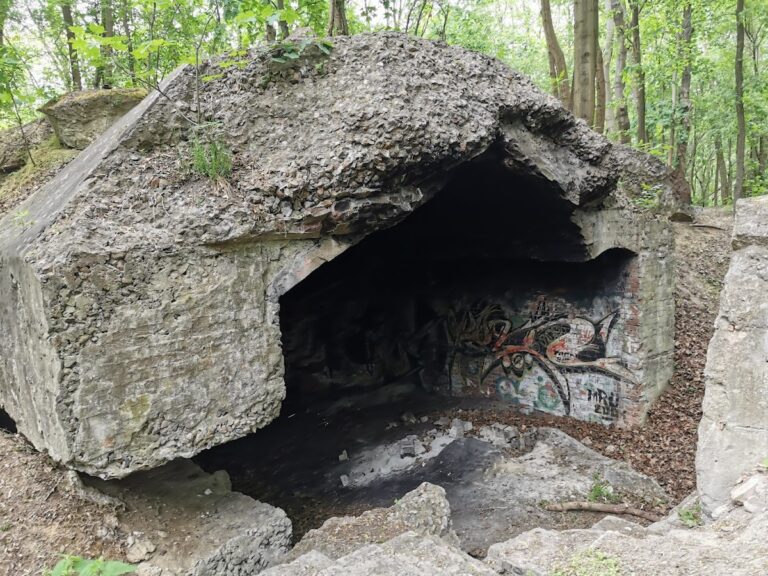
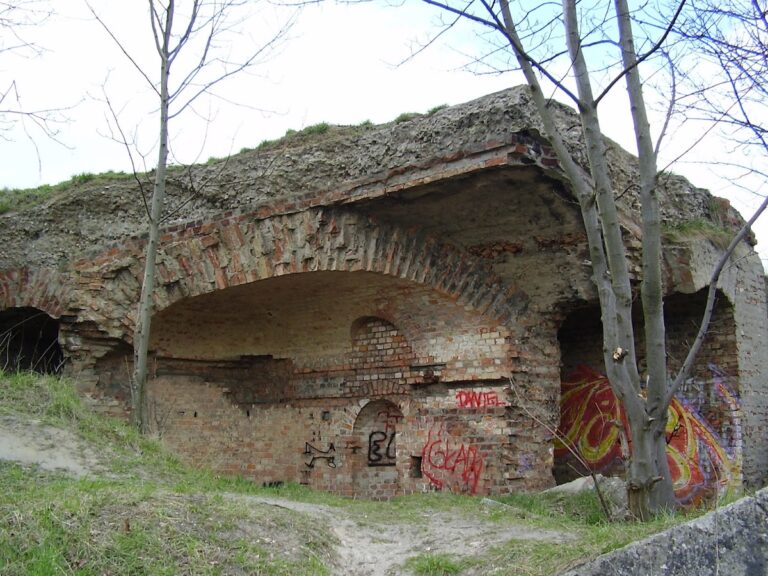
An earth battery on the right shoulder originally held six gun positions. It was later enlarged to accommodate ten. In 1913 and 1914, two shelters were built beside the batteries adjoining the fort. Two further observation shelters were added to the rampart in August 1939.
The ditches were not roofed during the war. As a result, the surviving fortification fabric remains in very good condition, preserving the relationship between the main fort, its defensive ditch, artillery positions, and associated shelters.
Nearby sites