Château de Saint-Denis-sur-Loire: A Loire Valley Historic Estate


Site at a Glance
- Rating
- 4
- Popularity
- Very Low
- Country
- France
- Primary era
- Medieval
- Eras represented
- Medieval, Early Modern, Modern
- Civilizations
- French
- Site type
- Domestic
- Remains
- Castle
On this page12 sections
History
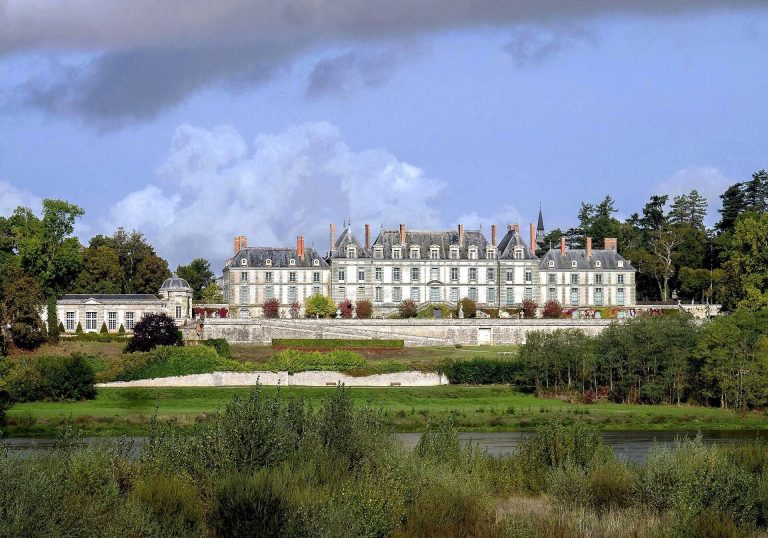
Château de Saint-Denis-sur-Loire is a historic château in France whose origins reach back to the early Middle Ages. Construction of the residence is attested before 1341, and the complex combines medieval, Renaissance, and classical phases. Its history is closely connected with the mineral springs of Saint-Denis-sur-Loire, which drew members of the French court and later supported a nineteenth-century hydromineral resort.
Medieval residence and the Hurault family
The settlement was called Voginant in 865, a Celtic name meaning “sacred fountain.” Later names included Saint Denys les Fontaines and Saint-Denys-lès-Blois, reflecting the importance of its springs. The medieval residence was bought by Philippe Hurault in 1341, during the reign of Philip VI of France. Ownership remained among the descendants of the Hurault family, represented in later generations by the Ayguesparsse family.
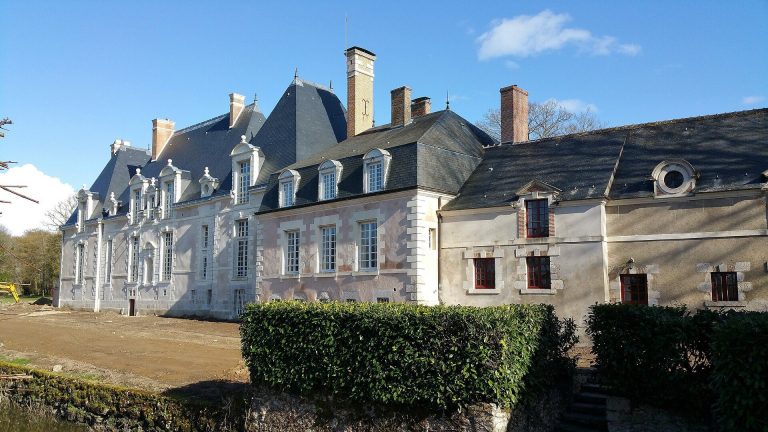
The château was enlarged in the thirteenth century and continued to develop over subsequent periods. Its medieval origins therefore remained part of a residence that was later reshaped through Renaissance and eighteenth-century work, moving toward a more classical architectural character.
Renaissance court connections and the springs
During the Renaissance, Denys II Hurault, lord of Saint-Denis, treasurer to the queen, and captain of the town and château of Blois, received royal visitors linked with the court of Blois. Catherine de Medici and Marie de Medici visited the estate because of the reputed curative properties of the local mineral springs. The Medici were an influential Italian family. Catherine became queen consort and later regent of France, while Marie became queen consort of Henry IV and regent for Louis XIII.
The springs became especially popular from the beginning of the Renaissance. The Hurault family invited the king, his court, and the Medici to take the waters. Catherine de Medici and later Marie de Medici restored the spring-capture basins, which had been built over the remains of a Gallic basin.
The nineteenth-century thermal resort
Thermal exploitation resumed in the nineteenth century. A rehabilitation plan was prepared in 1850, after which the waters were declared to be of public interest. Élisabeth de Beaucorps-Créquy, born Hurault de Saint-Denis, restored the waters and obtained the right to open the hydromineral resort to the public in 1851. Such a resort was a spa establishment organized around mineral or thermal springs.
The thermal establishment developed from 1853 and attracted heavy attendance between 1853 and 1865. Bottled water was distributed as far as Paris, but the resort’s expansion was severely undermined by a cholera outbreak that began in the late 1860s. The associated urban redevelopment relocated the church and rebuilt it on the plateau, while other buildings were constructed to receive and house people taking the waters. A large plan to revive the resort was proposed in 1928 but abandoned as too ambitious.
Protection and heritage status
The château and its former church were registered as historical monuments in 1948. The former church received classification in 1988, a higher level of protection within France’s heritage-conservation system. The château also lies within the Loire Valley cultural landscape, which was inscribed on the UNESCO World Heritage List on 30 November 2000.
Remains
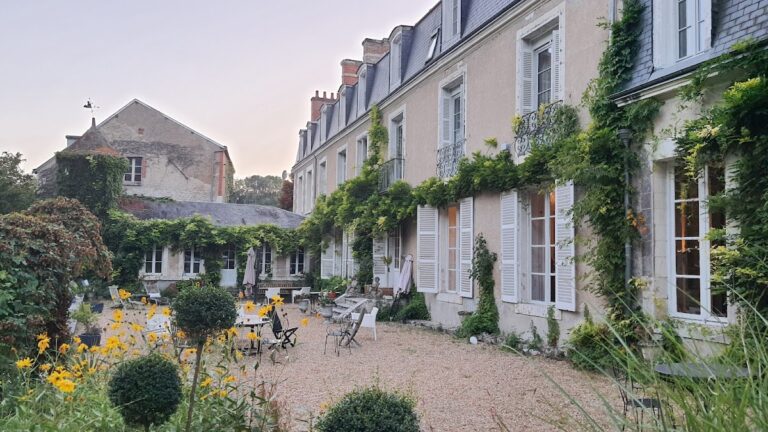
The surviving site brings together a château shaped by medieval, Renaissance, and eighteenth-century development, an associated former church, gardens, and remains connected with the mineral springs. The complex also includes an exhibition concerning the former thermal baths of Saint-Denis-sur-Loire.
Château and associated buildings
Château
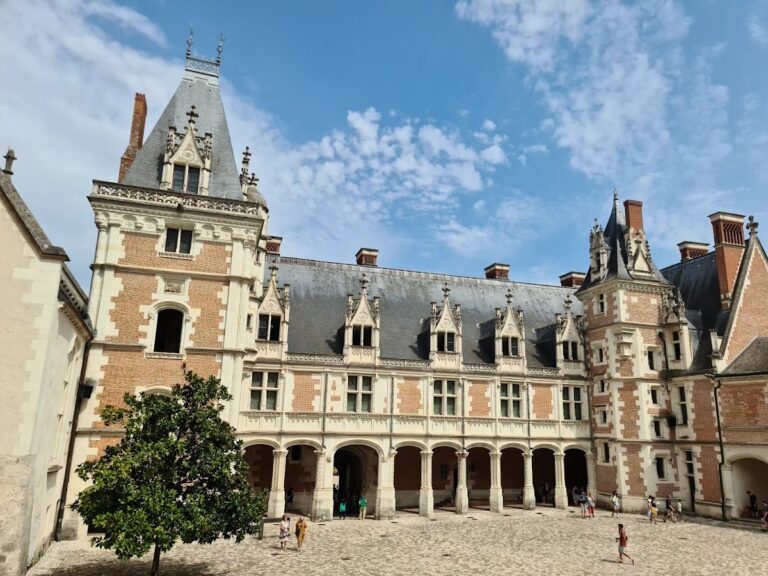
The château combines medieval, Renaissance, and classical elements. Its enlargement in the thirteenth century established a medieval phase, while later changes during the Renaissance and the eighteenth century gave the residence a more classical direction. The building forms the principal architectural element of an estate whose historical development was linked to the springs and to visitors from the court of Blois.
Former church
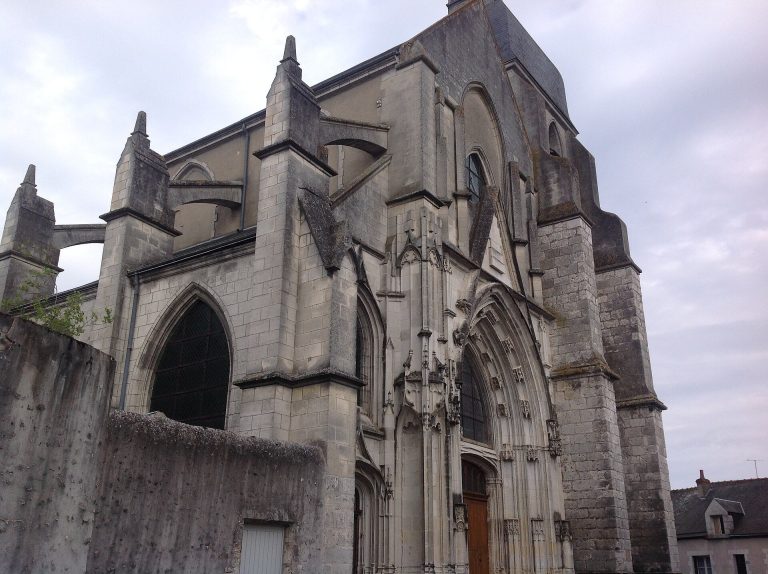
The former church is an associated historic component of the site. During the nineteenth-century redevelopment connected with the thermal resort, it was moved and rebuilt on the plateau. Its protected status reflects the importance of this later phase within the history of the settlement.
Gardens and thermal installations
Medici gardens
The château’s Medici gardens were undergoing rehabilitation. Their name preserves the connection between the estate and the Medici visitors who came to Saint-Denis-sur-Loire because of the reputed properties of its waters.
Spring-capture basins
The thermal installations included spring-capture basins built over the remains of a Gallic basin. The waters were described as siliceous, iodinated, tonic, and ferruginous. They were used in balneotherapy, a treatment involving bathing or other therapeutic use of mineral waters, for stomach and liver disorders, skin conditions, anemia, and convalescence.