Château de Saché: A Renaissance Manor and Balzac Museum in France


Site at a Glance
- Rating
- 4.5
- Popularity
- Low
- Country
- France
- Primary era
- Medieval
- External website
- Open
- Eras represented
- Medieval, Early Modern, Modern
- Civilizations
- French
- Site type
- Domestic
- Remains
- Castle
On this page17 sections
History
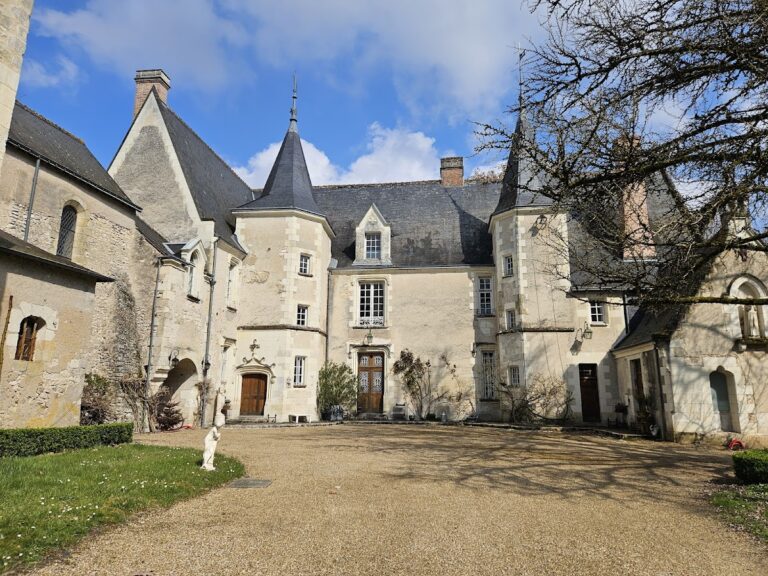
Château de Saché is a Renaissance French manor in Saché, France, whose principal building dates from the 15th century and incorporates traces of an earlier medieval complex. Traditionally counted among the châteaux of the Loire, it was formerly the centre of a châtellenie, a territorial jurisdiction organised around a château and its lordship, under the authority of L’Île-Bouchard.
Medieval origins and later enlargement
A predecessor building stood on the site by the 14th century. The main structure took shape in the 15th century, during the Renaissance, a period of renewed interest in classical forms that began in France in the 15th and 16th centuries. Medieval elements remained within the complex, while substantial enlargements followed in the 17th and 18th centuries. These successive phases gave the château its mixture of Renaissance features, older defensive remnants, and later domestic accommodation.
The Margonne residence
Jean de Margonne inherited the property from his grandmother in 1812. He remodelled the building according to 19th-century taste and used it as a country residence with his wife, Anne Savary. The château subsequently passed through the Estave, Bodin, and Lecoy families. Maurice Suzor purchased it in 1921 and sold it to Paul Métadier five years later.
Honoré de Balzac at Saché
Honoré de Balzac, the 19th-century French novelist best known for La Comédie humaine, became connected with Saché through his parents’ relationship with the Margonne family. Between 1825 and 1848, he stayed at the château about ten times, spending roughly a year there altogether. He sought refuge from Paris, financial pressure, and exhaustion, and sometimes worked for twelve to sixteen hours a day.
Balzac described Saché as a quiet “monastery.” From the 1830s, his doctor, Nacquart, regularly encouraged him to recover in his native air because of pulmonary and cardiac problems. His time at the estate included walks through the old woods, visits to neighbouring château owners, and games of whist, a traditional card game, and trictrac, a French board game, with Jean de Margonne.
The Indre valley around Saché provided the principal inspiration for Le Lys dans la vallée. Balzac also wrote about ten works belonging to La Comédie humaine at the château, including Le Père Goriot, Illusions perdues, and César Birotteau.
Creation of the museum
During the 1930s, Paul Métadier considered converting the château into a residence for writers. His son Bernard-Paul Métadier instead proposed a museum dedicated to Balzac, concentrating on the setting in which the novelist had lived and worked rather than assembling only manuscripts and personal memorabilia. The Balzac Museum opened on 29 April 1951 in a small part of the building, including the reception rooms and Balzac’s bedroom.
In 1958, the Métadier family gave the château and the museum’s initial collections to the département of Indre-et-Loire. Bernard-Paul Métadier continued as curator until 2001. Extensive work from 1964 to the beginning of the 1970s secured the building, improved public accessibility, and adapted it for museum use. The château was registered as a historic monument in 1932, a form of French legal heritage protection; by 1983, this protection included Balzac’s bedroom, the grand salon, and the dining room with its wallpaper. The site received the Maisons des Illustres label in 2011 and also holds the Musée de France designation, which concerns the preservation and public presentation of collections held in the public interest.
In 2015, the département of Indre-et-Loire and the Mobilier national renewed the furniture collections in the salon and dining room. The arrangement was intended to evoke the Château de Clochegourde imagined by Balzac in Le Lys dans la vallée.
Remains
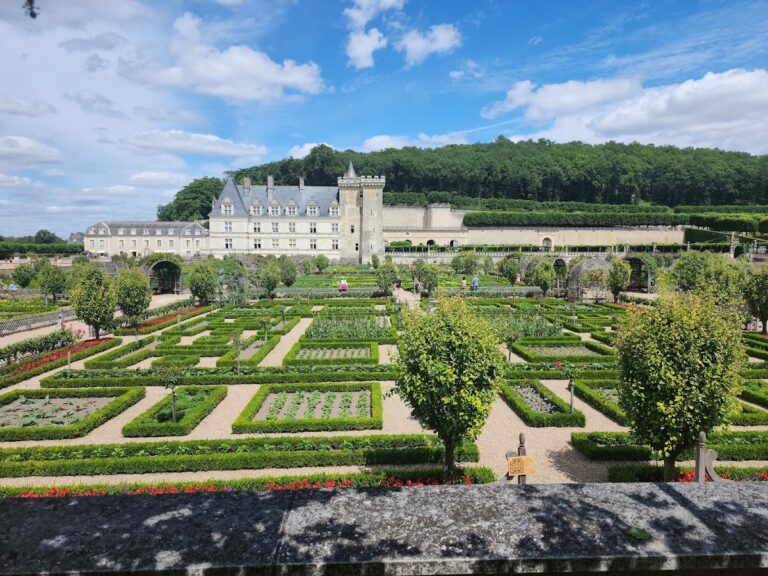
Château de Saché has an irregular plan, simply treated exterior elevations, plastered limestone walls, and a roof covered with slate. The present manor preserves fragments of the earlier enclosure, including a cylindrical tower and the base of another tower incorporated into the building. Part of the surrounding moat also survives. A two-hectare park extends around the château and overlooks the landscapes of the Indre valley, with old woodland and views that informed Balzac’s treatment of the setting in Le Lys dans la vallée.
Exterior and principal rooms
Margonne family rooms
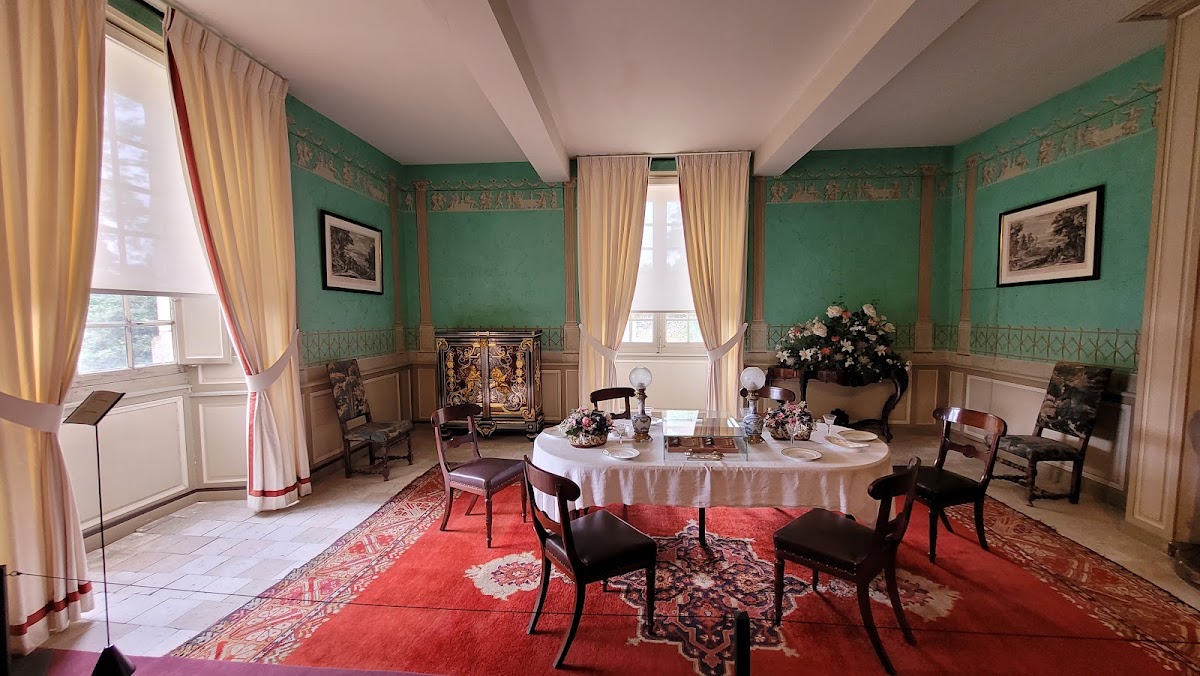
A straight staircase rises to the former Margonne family rooms on the first floor. The dining room and grand salon retain the character of 19th-century domestic interiors. The dining room is particularly defined by wallpaper with a curtain-like pattern, while the rooms form part of the domestic setting reshaped during Jean de Margonne’s ownership.
Balzac’s preserved living space
Balzac’s upper-floor room
Balzac’s modest room for living, writing, and sleeping occupies the upper floor. Restored in 1970, it contains an alcove with a small bed covered in crimson-patterned cretonne, a low broad armchair, and a large desk placed near the window. Writing implements on the desk include a paper cutter and a whale-oil lamp, presenting the room as a working space as well as a bedroom.
Reconstructed literary interiors
Clochegourde and the priest’s room
Other upper-floor rooms are arranged as museum displays. They include reconstructed dining and salon interiors for the fictional Château de Clochegourde, as well as the room of the priest of Tours.
Foedora’s boudoir and Derville’s office
Further literary reconstructions evoke Foedora’s boudoir from La Peau de chagrin and the office of the lawyer Derville from Le Colonel Chabert. These settings connect the physical rooms of Saché with the imagined interiors of Balzac’s fiction.
Furniture, artworks, and manuscripts
Domestic furnishings
The reconstructed salon and dining room contain a trictrac table, Madame de Morsauf’s loom, white percale curtains edged with simple braid, seat covers, a Boulle cabinet, carved wooden chairs in the Louis XIV style, white porcelain vases with gold edging, and family silverware. Boulle furniture is known for highly decorative marquetry associated with the cabinetmaker André-Charles Boulle.
Balzac collections
The museum holds about 2,300 objects, including sculptures, several original plaster works by Auguste Rodin, paintings, old editions, manuscripts, corrected proof sheets, prints, drawings, and photographs. Among the manuscripts are three groups of corrected proofs for Le Lys dans la vallée.
Images of Paris and changing travel
Prints displayed on the walls evoke the Paris represented in La Comédie humaine, including theatres, dark streets, early boulevards, the Baltard pavilions, and steamships on the Seine. The Baltard pavilions were 19th-century Parisian market structures designed by Victor Baltard. The displays also reflect changing travel between Paris and Tours: stagecoach journeys took two and a half days, while the railway reduced the trip to six hours in the 1840s.