Roquevaire Castle: A Seventeenth-Century Retreat above Sauve


Site at a Glance
- Rating
- 4.1
- Popularity
- Very Low
- Country
- France
- Primary era
- Early Modern
- Eras represented
- Early Modern
- Civilizations
- French
- Site type
- Domestic
- Remains
- Castle
On this page12 sections
History
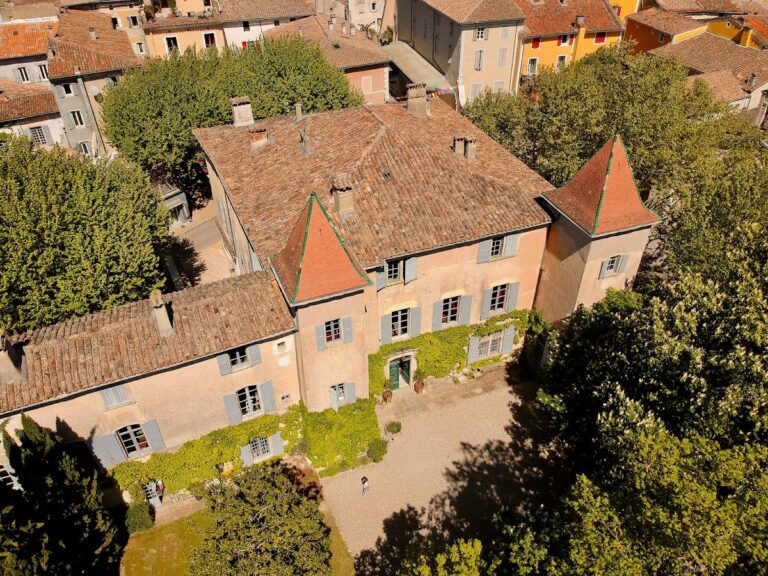
Roquevaire Castle is a seventeenth-century château in Sauve, France, built in the middle of the seventeenth century by Henry Delmas, commendatory abbot of Saint-Pierre Abbey of Sauve. A commendatory abbot held an abbey’s title and revenues while its administration was handled separately. Delmas owned the château personally and used its enclosed estate as a retreat from the abbey and his responsibilities in Sauve.
Earlier occupation and medieval associations
The site had been used long before the present building. Fragments of Roman roof tiles have been found there, while an agricultural farm is recorded in 1309. That year, Mabille de Roquevaire, the widow of Guillaume de Roquevaire, gave part of the farm’s revenues to Sauve’s main confraternity.
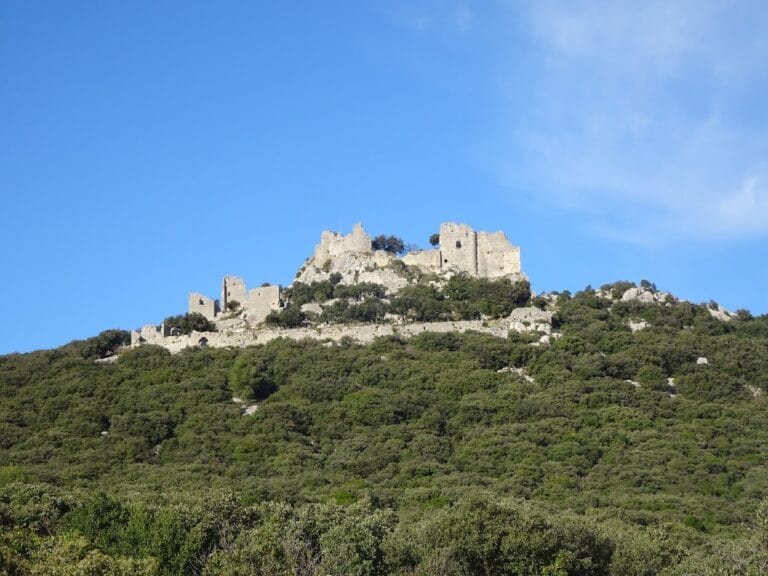
The Roquevaire family may have been related to the family that held Château de Saint-Pons de Roquevaire and its lands as a fief from the barony of Roquefeuil. Nearby ruins belong to the much older castrum salavense, a fortified medieval settlement or castle complex associated with the Bermond family of Sauve. The Bermonds descended from Gothic counts and formed part of the leading aristocracy of ancient Septimania, the historical name for the western Mediterranean region of the former Visigothic and later Frankish sphere in southern Gaul.
The château has also been described in recent writings as a residence of the bishops of Maguelone, but its present form cannot be securely identified with such a residence. The bishops did become co-lords of the bailiwick of Sauve in 1293, following an agreement between Béranger de Frédol, bishop of Maguelone, and Philip IV of France. The origin of the name Roquevaire remains uncertain. It may refer to a rock that can be seen, a rock from which one can see, or the grey-blue color of the stone.
Delmas and the eighteenth-century destruction
During Henry Delmas’s ownership, Roquevaire became a private retreat as well as a center of learning and collecting. He assembled a substantial library and valuable paintings there, and wrote La salade du mois de may, a collection of prose and verse. Above the entrance, he placed the motto in urbe omnb., in deserto mihi, meaning “In the city I belong to everyone; in the desert I belong to myself.”
During the Camisard revolt, a Protestant insurgency against the French monarchy and Catholic authorities in the Cévennes, troops commanded by the leader Rolland burned the château during the night of 31 January to 1 February 1703. The fire destroyed the movable furnishings and melted the lead roof. Delmas died at Agde in November 1712. The badly damaged property briefly passed to Louis Duranc de Vibrac, governor of Sauve, who sold its recoverable elements before selling the château itself in 1725.
Later ownership
A Protestant family from Sauve, first the Massips and later the Favantines, owned Roquevaire from 1725 to 1926. They used the château as a burial place for approximately two centuries. The property then belonged for eight years to Jean Germain, a writer from Sauve and author of Sauve antique et curieuse cité. The Lorot-Boyat family has owned it since 1934.
Remains
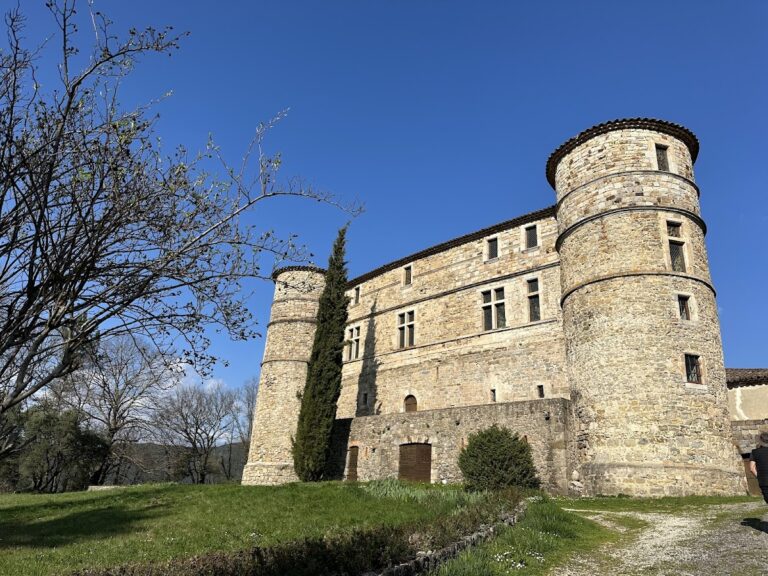
Roquevaire Castle stands on a rocky spur of the limestone plateau above Sauve in the Gard department. A complete surrounding wall encloses the complex, whose grounds include terraces, gardens, water-management installations, and cultivated features. The building and estate combine the character of a private retreat with architectural details that recall medieval defense.
Château and enclosed grounds
Defensive enclosure
The surrounding wall forms a complete enclosure around the château and its grounds. Drawbridges, arrow slits, and rusticated stonework give parts of the complex the appearance of medieval defensive architecture, although the present château was built in the seventeenth century.
Terraced gardens and burial ground
The gardens are arranged on terraces. Cypress trees stand on the terrace in front of the building, where they are associated with the château’s former use as a burial place. The grounds also included an orangery and rare or exotic plants, among them Clusius’s tulip, sternbergia, and pomegranate.
Water, collections, and cultivated features
Water installations
An elaborate system collected and managed water across the estate. It included large cisterns, a water feature, and a cool room, forming an important part of the château’s practical and ornamental arrangement.
Library and paintings
During Delmas’s ownership, the château housed a library containing numerous books and valuable paintings. These collections formed part of the interior furnishings that were lost when the building was burned in 1703.
Earlier fortified settlement
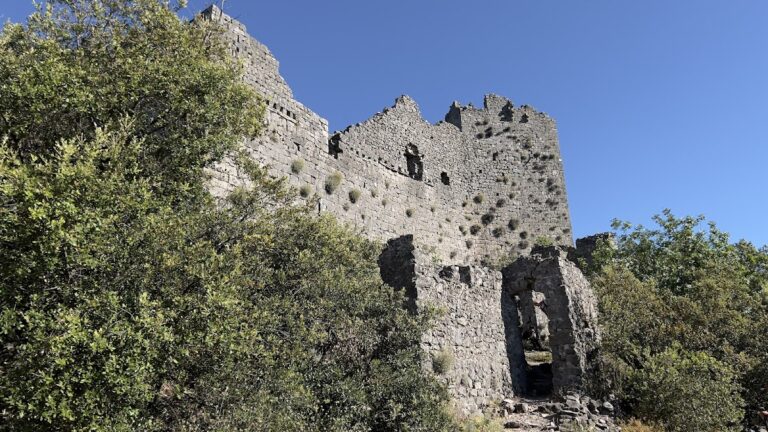
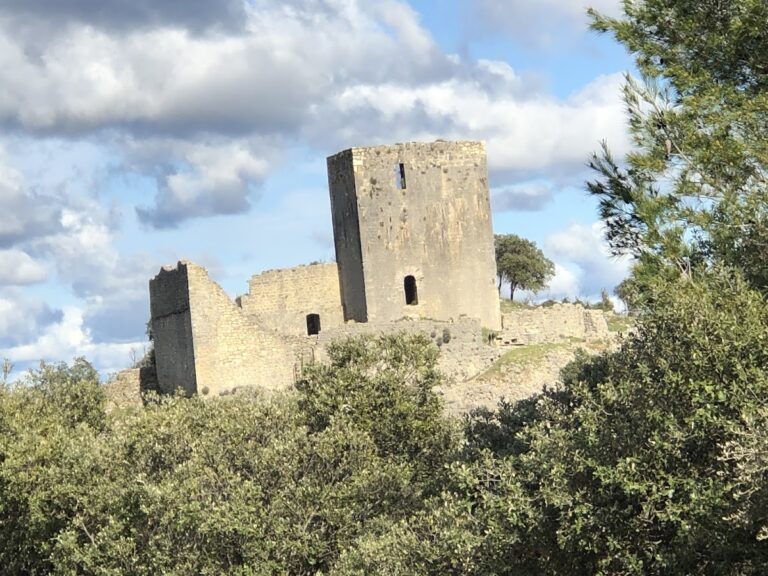
The ruins of the older castrum salavense survive near the château. This fortified medieval settlement was distinct from the seventeenth-century building and was linked to the Bermond family of Sauve. Its remains represent an earlier phase in the occupation and defense of the rocky site.
Nearby sites