Seldensate: Historic Estate and Castle Ruins in the Netherlands


Site at a Glance
- Rating
- 4.3
- Popularity
- Low
- Country
- Netherlands
- Primary era
- Medieval
- External website
- Open
- Eras represented
- Medieval
- Civilizations
- Duchy of Brabant, Holy Roman Empire
- Site type
- Domestic
- Remains
- Castle
On this page9 sections
History
Seldensate is an approximately 10-hectare historic estate in the Netherlands, southwest of Middelrode in the municipality of Sint-Michielsgestel, North Brabant. It probably originated in the fourteenth century from the Gewatse farm, established around 1300 beside the River Aa and the ford known as ’t Gewad. The estate later developed into a pleasure house, meaning a country residence intended for leisure, before becoming a small moated castle. Its name derives from the old expression seldene zathe, interpreted approximately as “special estate” or “special country house.”
From farm to country residence
The earliest known owner was Geerlinck van den Bossche, a knight who also occupied Nemerlaer Castle. In 1304 he was recorded as possessing a farm near the ford after receiving woodland close to Middelrode from the Duke of Brabant for services rendered. During the early fifteenth century, the farm developed into a pleasure house. The residence was enlarged around 1440, when the Rycouts family lived there.
The Rycouts family sold the property to Goosen Toelinc in 1444. Willem Toelinc inherited the house and a farm in 1468. In 1481, part of the estate passed to his brother-in-law Jan Jansz. Keykamp, who may have established the dovecote tower. Around 1596, Joachim and Clara van Lier occupied Seldensate. The property was later rented to Barthold de Fleru, bailiff of Heeswijk, and his wife Margaretha van Delft.
War and changing ownership
Seldensate became a place of refuge during military unrest. In 1601 and 1602, inhabitants of nearby villages sheltered there when troops commanded by Prince Maurice made the area unsafe. The estate served the same purpose again in 1629, when the forces of Frederick Henry arrived to besiege ’s-Hertogenbosch during the Eighty Years’ War, the Dutch revolt against Habsburg rule that lasted from 1568 to 1648.
The castle was offered for sale in 1607 and purchased the following year by several merchants, who then resold it to Count Adolf van den Bergh. In 1616, ownership passed to the Count of East Frisia, who also held Heeswijk Castle. Joost van Hedickhuysen became the property’s pledge-holder, a person holding property or a lordship as security for an obligation rather than necessarily as its full owner. He also served as bailiff in Cranendonck, Eindhoven, Heeswijk-Dinther, and Berlicum.
In 1631, Johan t’Serclaes van Tilly, then lord of Heeswijk-Dinther, sold the castle to Joost van Hedickhuysen. Hedickhuysen became its lord and bought the lordship of Eckart in 1633. The States removed him from his bailiff’s office in 1648, and he died in 1653. His daughter Geertruid van Hedickhuysen remained at Seldensate with her husband, Hendrik van Gestel, and continued there after his death in 1673. Before Geertruid died in 1689, the property had been confiscated and resold to Quirinus van Zonst.
Eighteenth- and nineteenth-century transformation
Quirinus van Zonst died in 1688. In 1696, Hendrik Musch, Lord of Milheeze and one of the few remaining Catholic nobles in the region, bought Seldensate. His son Mathias inherited the estate in 1717 and later left it to the Van Pincxteren children. They sold it shortly after 1765 to Daniel Mobachius Quaat and Galerus Hopman, who rented the castle to senior military officers.
Francis van de Westelaken of Den Dungen acquired the estate in 1807. An inheritance division in 1822 described Seldensate as an old noble house with a manor house and brewery. The property passed to the manufacturer Willem Bosch in 1827, and his son Johannes Cornelis Bosch moved there in 1833.
Valerius Bosch extensively altered the property in 1890. Contemporaries described the resulting building as a tastelessly plastered structure. After Bosch died in 1911, his daughter Constantia inherited the estate. She lived there with her husband, Jonkheer Christiaan Laman Trip, in 1912. Following their separation, Constantia retained ownership while Laman Trip held the usufruct, a legal right to use property and receive its benefits without owning it outright.
Decline, destruction, and conservation
The estate declined after much of the Catholic wealthy class left the Meierij, the historic territory around ’s-Hertogenbosch, in the aftermath of the Eighty Years’ War and its political and religious changes. By the 1920s, the country house was no longer inhabited and was deteriorating rapidly. The gatehouse became uninhabitable in 1931, while subsidence and rotting foundations caused by deferred maintenance were noted after 1935.
Canalization of the River Aa altered the local groundwater regime and contributed to the estate’s deterioration. During the Second World War, German military personnel first occupied the property, followed later by Allied forces, causing further damage. The manor house was demolished in 1961.
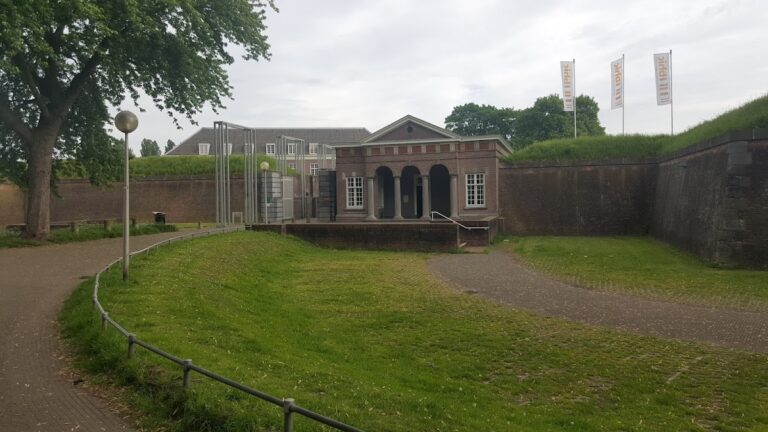
The municipality of Berlicum acquired the approximately 10-hectare estate in 1973. Restoration of the dovecote tower and gatehouse took place between 1976 and 1980. During the same works, the moat around the former pleasure house was re-excavated and the surrounding park was made accessible. The remaining castle foundations were restored in 2015. Since 2002, Seldensate has been a Dutch national monument, a legally protected heritage site recognized for its historical, architectural, or cultural importance. The gatehouse now provides work and meeting space for the St. Ambrosius Beekeepers’ Association.
Remains
Seldensate retains the layout of an estate that combined a farm, a pleasure house later developed into a moated castle, an outer court, service buildings, landscaped grounds, and an entrance route. The castle survives as a ruin and as restored foundations surrounded by a moat. The gatehouse, dovecote tower, part of the brewery, driveway, and entrance gate remain as physical elements of the former complex. The River Aa and the old ford at ’t Gewad continue to define the setting associated with the estate’s origins.
Castle foundations and moat
The original pleasure house grew into a small castle surrounded by water. Historical descriptions associate the complex with a drawbridge, an outer court, a new gate, farm and brewing buildings, a horse stable, a dovecote, plantations, and adjoining land. The later manor house was built on the old castle foundations and included a blunt-ended tower. Its facilities included an independent water supply, central heating, and electric lighting. A tennis court and an ice cellar beneath a high sand mound were also part of the later property.
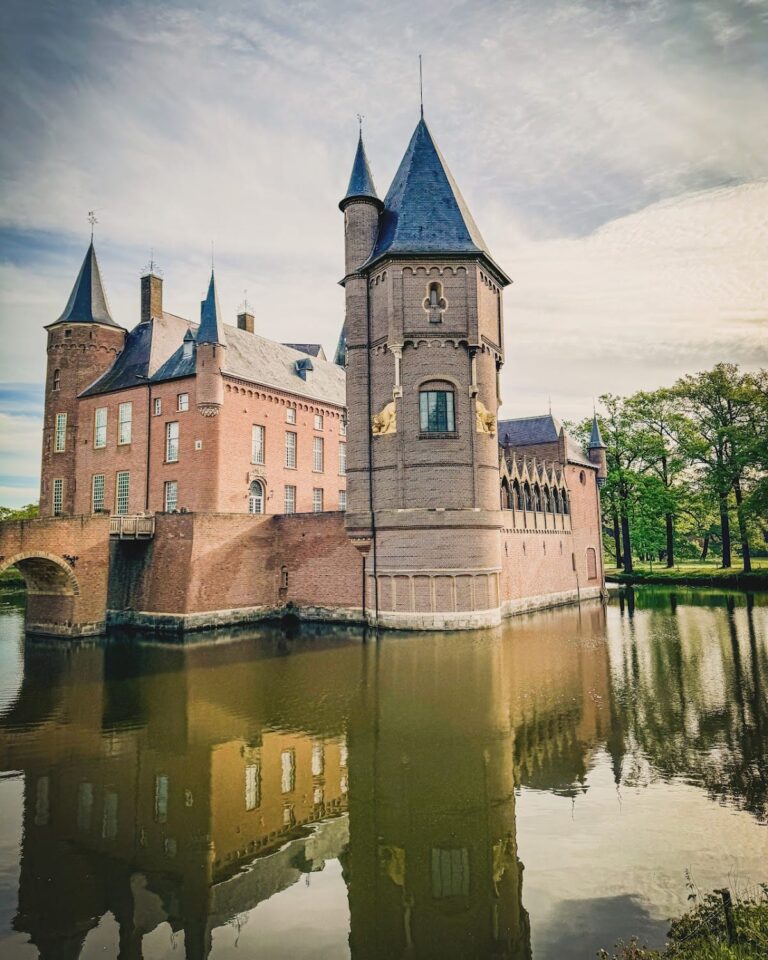
The castle was demolished in 1961, leaving foundations and a ruin encircled by the moat. The moat was re-excavated during the restoration campaign of 1976 to 1980, and the remaining foundations were restored in 2015. These works preserved the physical outline of the former castle and its relationship to the surrounding estate grounds.
Gatehouse and dovecote tower
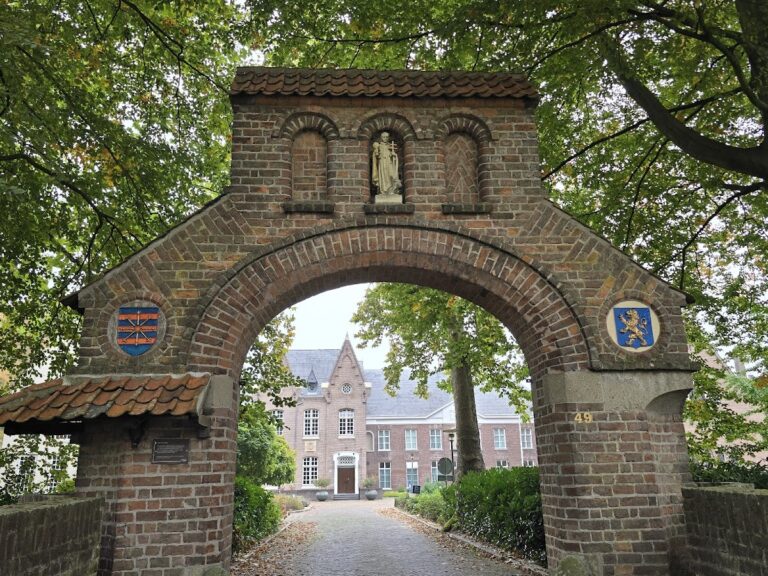
The surviving gatehouse is linked to the driveway and entrance gate that formed the approach to the estate. Its history belongs to the service and defensive edge of the former castle complex, which also included the dovecote tower. The tower may have been established by Jan Jansz. Keykamp after part of the property passed to him in 1481.
The gatehouse became uninhabitable in 1931 before the gatehouse and dovecote tower were restored between 1976 and 1980. The gatehouse remains in use as work and meeting space for the St. Ambrosius Beekeepers’ Association, while the tower forms part of the surviving historic fabric.
Brewery and landscaped grounds
The estate’s working buildings included a brewery with a brewing kettle and associated equipment, as well as a horse stable and farm buildings. Part of the brewery remains. The 1822 inheritance description also identifies a brewery as one of the components of the old noble property.
The surrounding park forms part of the estate and was included in the restoration undertaken after municipal acquisition in 1973. Its grounds, together with the restored moat and castle ruin, preserve the landscape framework of Seldensate. Canalization of the River Aa later changed groundwater conditions around the estate, contributing to the deterioration of its buildings and foundations.
Nearby sites