Château de Montlédier: A Fortified Castle in France
Site at a Glance
- Rating
- 5
- Popularity
- Very Low
- Country
- France
- Primary era
- Early Modern
- Eras represented
- Medieval, Early Modern
- Civilizations
- French
- Site type
- Military
- Remains
- Castle
On this page10 sections
History
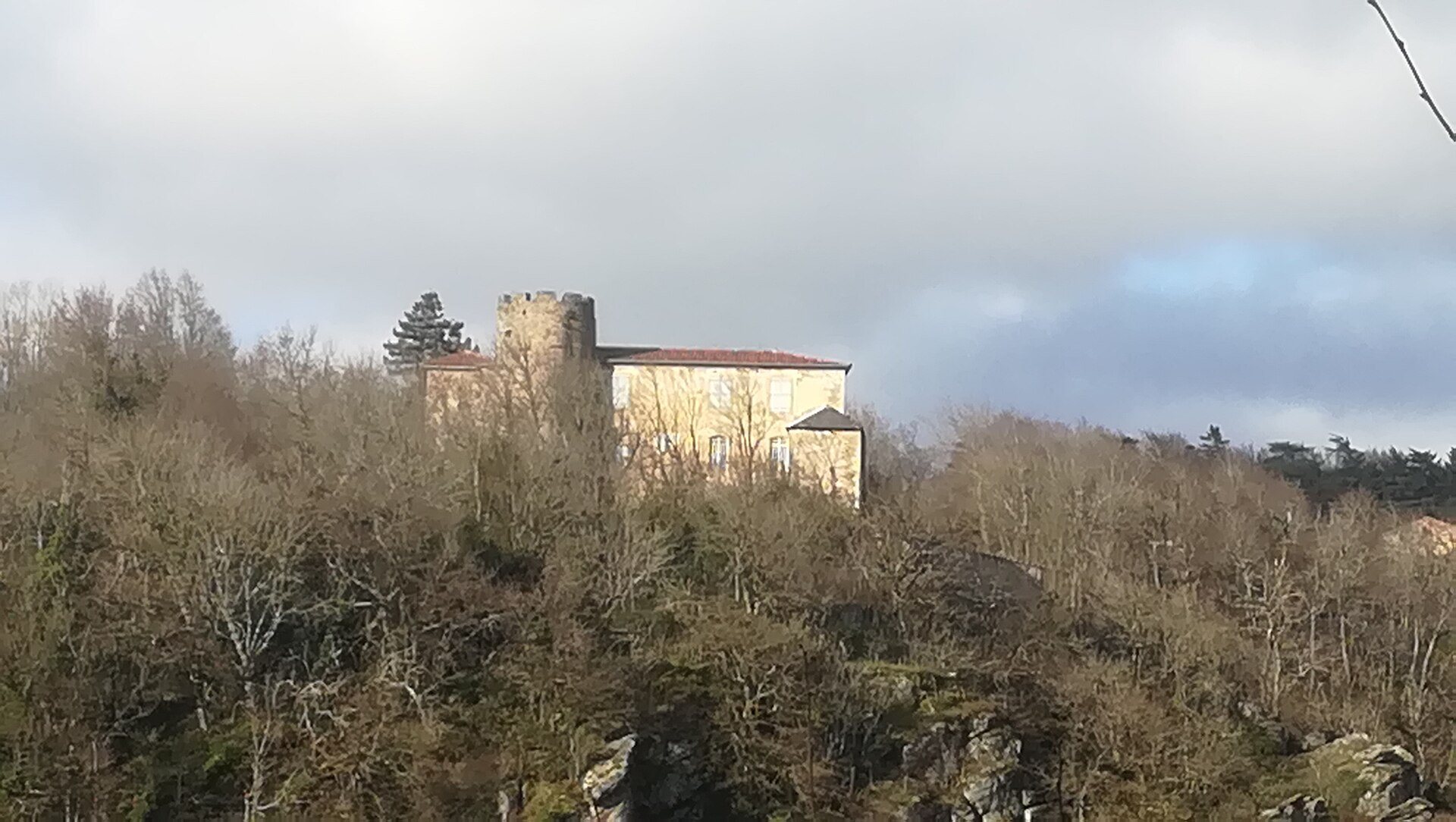
Château de Montlédier is a fortified castle in France, at Pont-de-Larn in the Tarn, overlooking the Arn gorges and guarding access to the Mazamet area. The Villette family probably built it during the tenth century, and its medieval defensive character developed further over the following centuries.
Medieval origins and fortification
The castle first appears in written records during the twelfth century, when it belonged to Simon de Laurac. In the thirteenth century, the fortress was strengthened by the addition of a massive square tower. Its position on elevated rocky ground beside the Arn, above a pronounced precipice, made the site well suited to controlling access through the surrounding landscape.
The Villette family and the Wars of Religion
By the sixteenth century, Montlédier had returned to the Villette family. Its owners converted to Protestantism and supported the Huguenot cause. The Huguenots were French Protestants, largely associated with the Reformed tradition, whose conflicts with Catholic forces shaped French politics and warfare during the sixteenth and seventeenth centuries. Claude d’Oraison, the Catholic bishop of Castres, was reportedly imprisoned at Montlédier in 1562, although this episode remains insufficiently documented.
François de Villette, lord of Montlédier, became a prominent Protestant military leader during the French Wars of Religion, a series of civil and military conflicts between Catholic and Huguenot factions that affected France from the 1560s until the late sixteenth century. He fought in the Agenais and helped the Reformers retake Castres. On 7 April 1568, he relieved his brother Pierre at Puylaurens with 300 arquebusiers, soldiers armed with an early firearm. He later commanded a cavalry company, received the government of Roquecourbe in 1572, served as a deputy to the Estates of Montpellier in 1575, and assisted an attempt against Carcassonne in 1588.
Reformed worship and the Dulac succession
Jacques de Villette represented the Reformed Church of Pont-de-l’Arn at the provincial synod of Castres in 1651. A provincial synod was a regional assembly that coordinated the affairs of Reformed churches. In 1652, his rights over Montlédier and Pont-de-l’Arn were recognized.
After the Revocation of the Edict of Nantes, Marguerite de Villette protected and housed itinerant Protestant pastors. Clandestine Protestant worship meetings known as Assemblies of the Desert were held on the Montlédier estate after officially recognized Reformed worship had been suppressed. Her son Jean emigrated to England, while Annibal de Villette, a lieutenant colonel of dragoons, became the last member of the Villette line of Montlédier. Dragoons were mounted soldiers trained to fight on horseback or on foot.
The transfer of the estate to the Catholic Dulac family is uncertain. It has been placed after the marriage of a Villette heiress to Melchior Dulac in 1692 or 1697, or after an intervening period associated with the Monglas family from 1722. Montlédier subsequently passed through Joseph and Melchior Dulac. Emmanuel Dulac, Melchior’s younger brother and a knight of the Order of Malta, reportedly died at the castle on 16 November 1821. The Order of Malta was a Catholic religious and military order whose members combined religious obligations with military service.
Eighteenth-century rebuilding and later ownership
Joseph Dulac, Marquis du Lac and lord of Montlédier, established a private chapel within the castle. It was consecrated with the bishop’s authorization on 15 July 1757. The castle itself was largely rebuilt during the eighteenth century, giving the medieval complex a later architectural phase while retaining its defensive towers and fortified setting.
During the nineteenth century, the Dulac family sold Montlédier to the Cormouls-Oulès family of Mazamet, whose wealth was connected with the town’s industrial development. The sale is dated either to 1873 or to 1885. In 1962, Francis Sidobre bought the castle and converted it into a hotel. Following another sale in 1987, the property fell into disuse before being purchased again at the end of 2020. It remains privately owned and currently serves as a hotel. A street named Rue Montlédier in Castres commemorates François de Villette more than the castle itself.
Remains
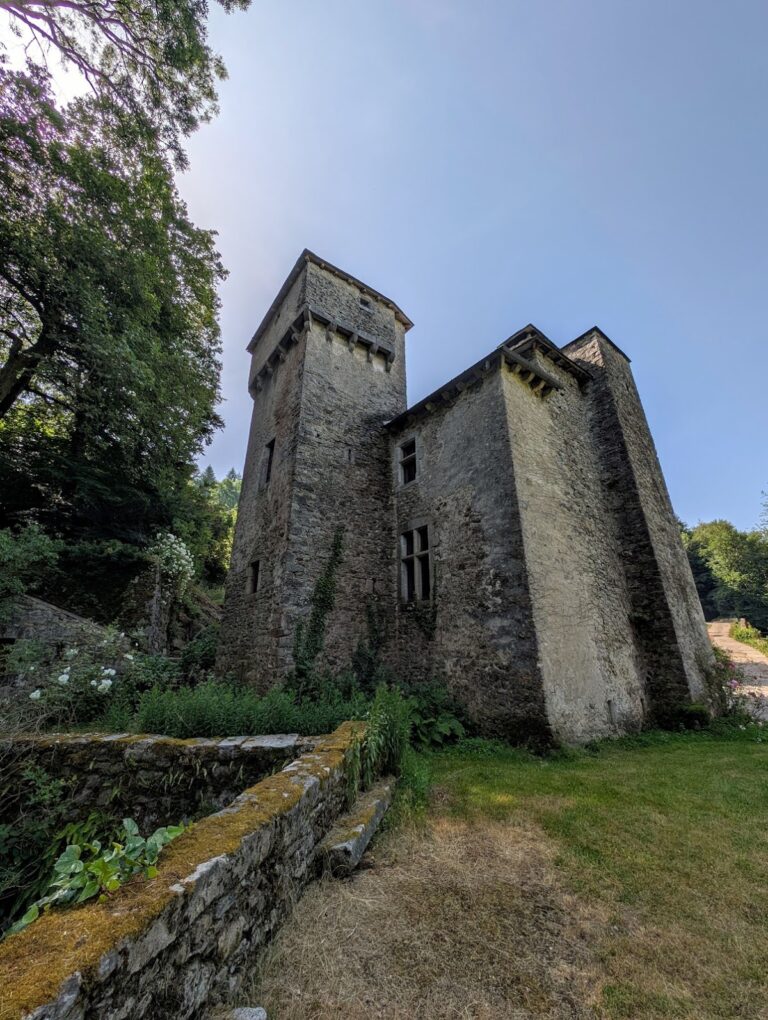
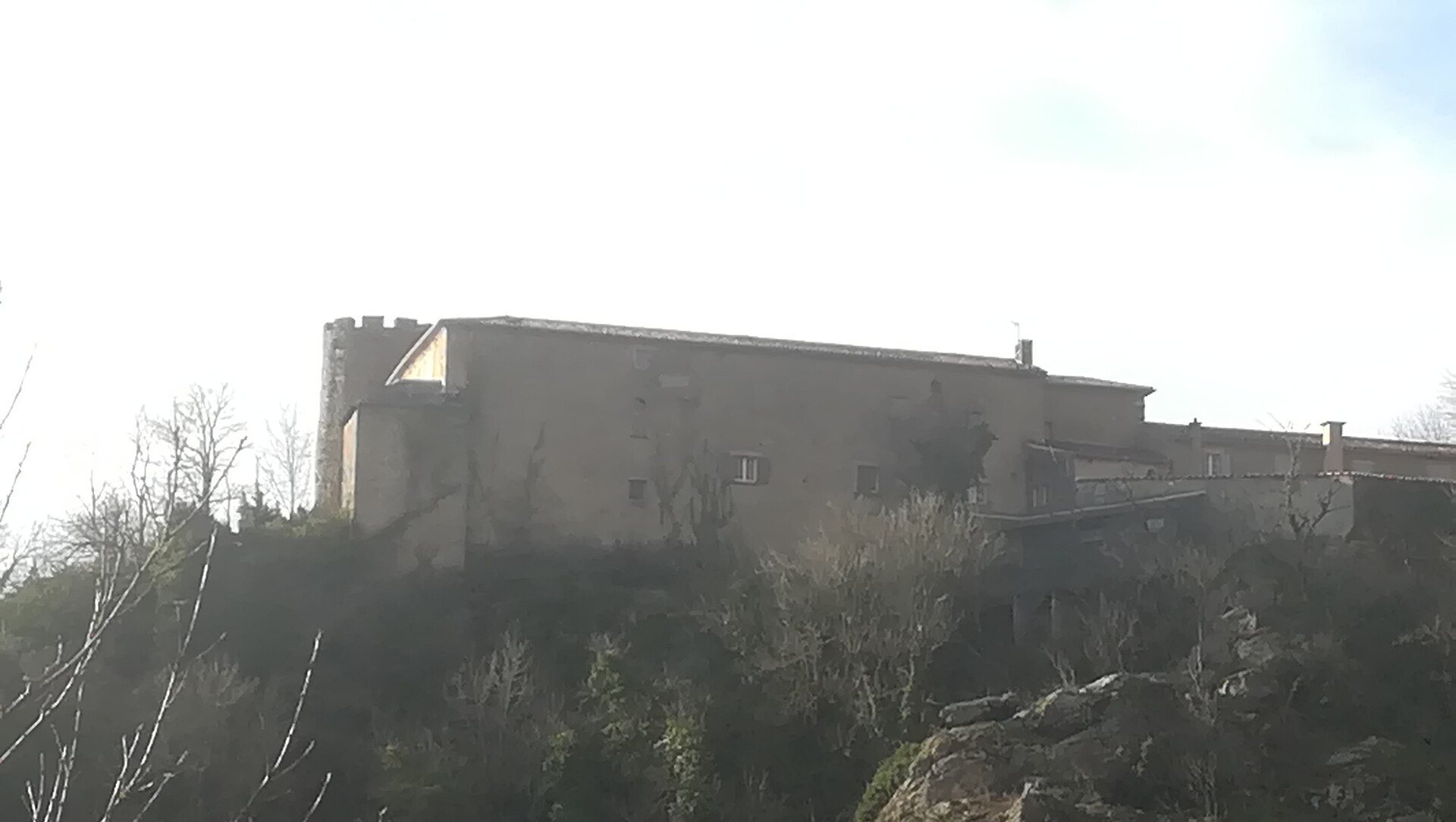
Château de Montlédier is a large fortified complex formed by two adjoining U-shaped residential buildings. It occupies elevated rocky ground beside the Arn and above a pronounced precipice. The southern building stands above the Arn gorges and contains two substantial thirteenth-century towers, one round and one square. Together, the buildings enclose two large courtyards and contain vaulted rooms.
Residential buildings and defenses
Southern building and towers
The southern residential building preserves the principal medieval defensive elements. Its round tower and massive square tower date from the thirteenth-century strengthening of the fortress. The square tower is completely blind, with no openings, while the complex generally presents few openings toward the exterior. Some crenellations are notably large, reinforcing the severe defensive character of the buildings.
Interior arrangement
The principal rooms were placed on the upper floors, an arrangement that improved the defensibility of the castle. A guards’ room occupied the ground floor. The two large courtyards and vaulted rooms remain part of the complex’s physical organization, linking its residential use with the requirements of a fortified household.
Private chapel
The private chapel created within the castle during the eighteenth century still survives. It is no longer used for worship, but remains part of the later residential and religious history of Montlédier.