Château de Mauhic: A Former Feudal Residence in France
Site at a Glance
- Rating
- 5
- Popularity
- Very Low
- Country
- France
- Primary era
- Medieval
- External website
- Open
- Eras represented
- Medieval, Early Modern
- Civilizations
- French
- Site type
- Domestic
- Remains
- Castle
On this page6 sections
History
Château de Mauhic is a former feudal residence in Loubédat, France, built in the fifteenth century by Auger de Lau, the son of Jeanne d’Avéron and Thibaut de Lau. The first known written reference to the château appears in Auger de Lau’s testament of 1512. Its later history follows the Lau de Mauhic family, whose lineage continued for several generations.
The Lau de Mauhic family
The family line ended with Claire Marguerite de Lau, who married Daniel de Montesquiou in 1695. Montesquiou was a knight, a lieutenant general in the king’s armies, and a commander of the Order of Saint Louis, a French royal military order awarded for distinguished service, particularly to Catholic officers.
Claire Marguerite and Daniel had no heir. After Daniel died in 1715, she left the family property to her brother-in-law, Clément de Montesquiou, the abbot of Berdoues. An abbot was the head or senior member of an abbey or monastic institution. After his appointment as Mauhic’s chaplain, a cleric serving a particular household or community, Clément lived at the château.
Eighteenth-century adaptation
Major works were probably undertaken during Clément de Montesquiou’s ownership. These changes adapted the former feudal château to eighteenth-century expectations of domestic comfort. Clément died at Mauhic in 1732 and left the property to his nephew Antoine de Médrano, the son of his sister and Pierre IV de Médrano. Antoine served as a major in the Roure Regiment, a named French army regiment; a major held a commissioned rank above captain and below lieutenant colonel.
Revolution and confiscation
The Médrano family retained Mauhic until the French Revolution. By that time, the estate extended across nearly 450 hectares of meadows, vineyards, and woodland. It also included several tenant farms and a tile works, making the château the center of a substantial agricultural holding.
During the Reign of Terror, the radical and repressive phase of the French Revolution associated with revolutionary tribunals and executions by guillotine, Jean-Marie de Médrano, the last lord of Mauhic, was executed at Auch on 17 April 1794. His summary trial stated that he had concealed part of his silverware and his noble titles inside a wall deliberately built for that purpose. His valuable possessions, decorated with gold, silver, and precious stones, were placed under sequestration at Nogaro and later sent to Paris.
Restitution and later ownership
Jean-Marie de Médrano and his wife, Anne d’Abbadie, had a daughter named Anne. She was seven when her father was executed. After her mother died in 1796, the nine-year-old girl was taken in by the estate’s former sharecroppers, agricultural tenants who cultivated land in return for an agreed share of its produce. Anne married their son, Jean-François Sansot, at Loubédat on 2 November 1808. He was eighteen years older than her, and they had five children.
The law of 9 June 1795 ordered the return of property confiscated from victims of the Revolution. Marie-Thérèse de Medrano, Jean-Marie’s sister and the wife of Dubernet, joined her unmarried brother Etienne de Medrano in petitioning for the restoration of the family patrimony. The procedure continued until 1808. The silverware had been sent to Paris and melted down, while the crockery and furniture had disappeared. Etienne alone ultimately received the family residence, since his sister had died eight years earlier.
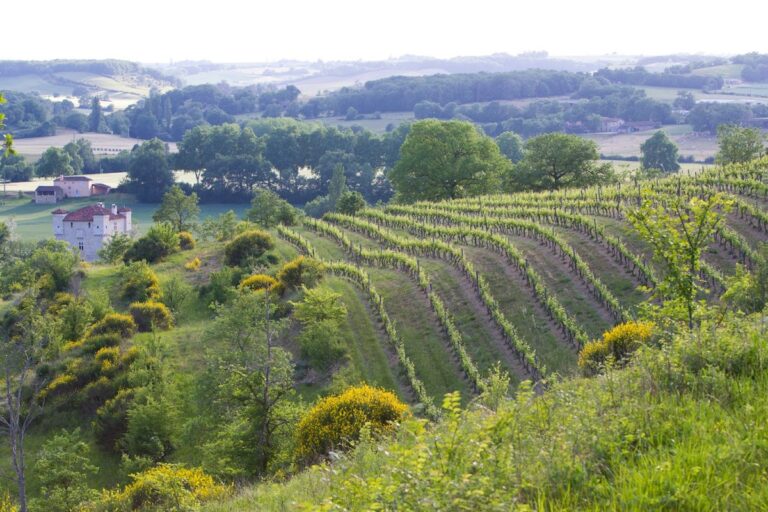
Château de Mauhic remains privately owned. The property now lies within an agricultural and wine-growing estate of approximately 100 hectares.
Remains
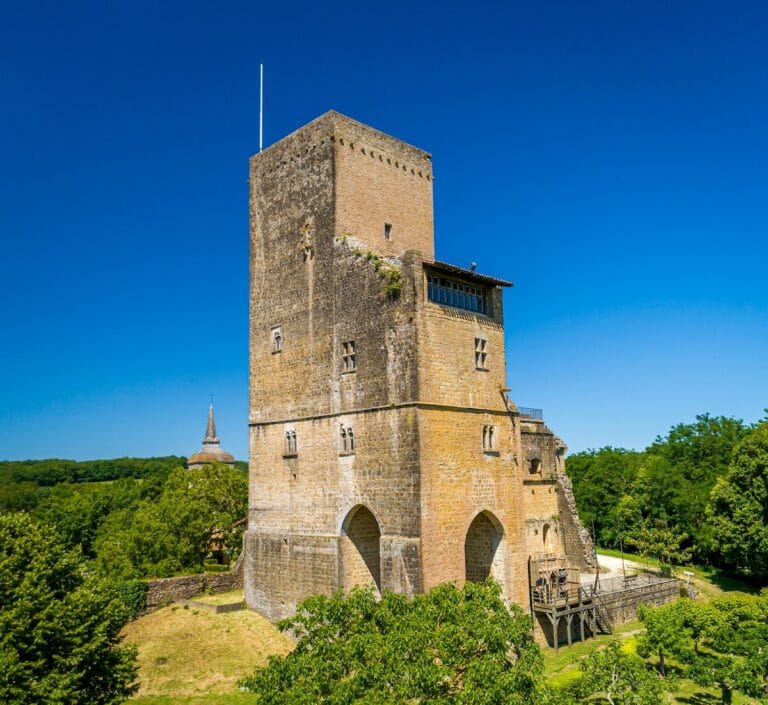
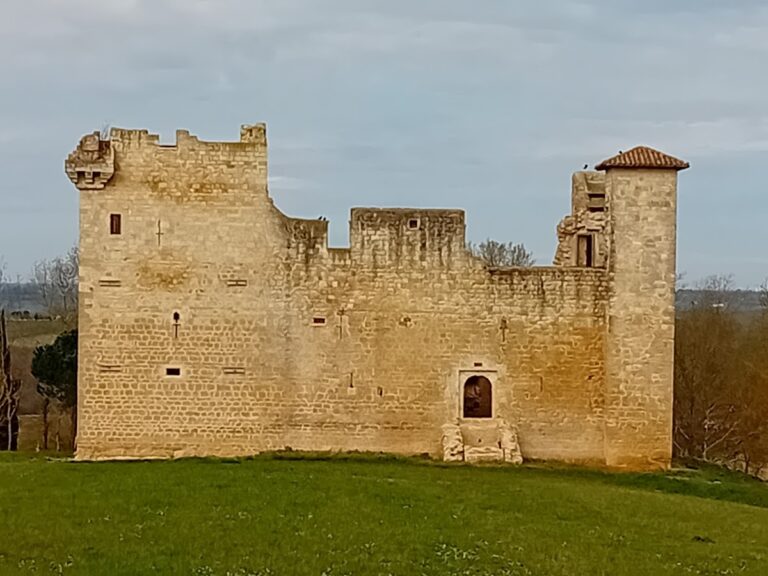
Château de Mauhic stands at the center of an agricultural and viticultural estate in Loubédat, in the Gers department of France. The building retains its origins as a feudal château, a castle-like residence associated with the medieval feudal order, while its form was substantially adapted, probably during the eighteenth century, for use as a more comfortable residence.
One of the château’s towers has been recently renovated and is used for seasonal rental accommodation. This restored tower forms part of the surviving historic building, whose present character combines the earlier fortified-residential structure with the later adaptations made for eighteenth-century domestic life.
Nearby sites