Château de Beaurevoir: A Nineteenth-Century Estate Château in Sassenage, France


Site at a Glance
- Rating
- 4.1
- Popularity
- Very Low
- Country
- France
- Primary era
- Modern
- Eras represented
- Medieval, Modern
- Civilizations
- French, Holy Roman Empire
- Site type
- Domestic
- Remains
- Elite Residence
On this page8 sections
History
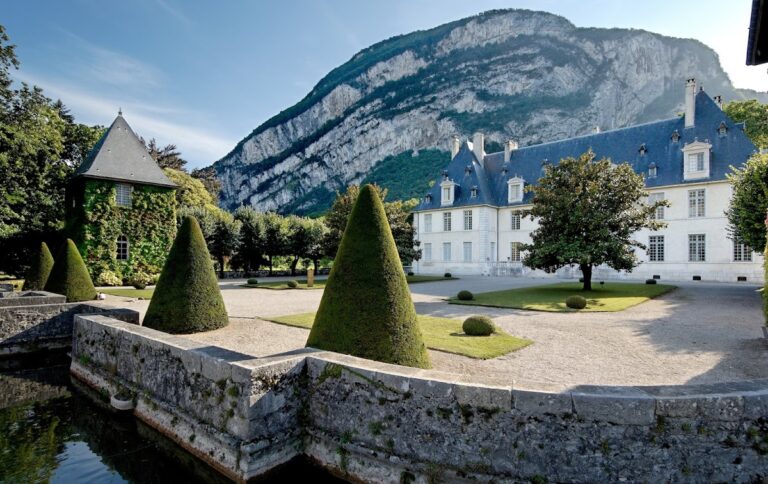
Château de Beaurevoir is a nineteenth-century château in Sassenage, France, built in 1880 for Alphonse Terray, a wealthy Grenoble industrialist and glove-maker. Designed by the Grenoble architects Chatrousse and Ricoud in the Baroque style, it incorporated stone recovered from a medieval castle that had occupied the estate.
The medieval castle and the Terray estate
The domain originally contained a feudal castle built in the twelfth century. It was known as Château des Côtes and, at different periods, as Château de Beauregard or Château de Beaurevoir. Only part of its ruins survives in the park. The later château therefore stands within a property whose history reaches back to the medieval period, while some of the earlier building’s stone was reused in its nineteenth-century successor.
A few years after completing Beaurevoir, Terray commissioned a second, smaller castle on a small promontory at the end of his property. Chatrousse and Ricoud built it in a feudal style. An explosion destroyed the building before 1914, leaving ruins on the estate.
Changing ownership and modern development
The main château remained Terray’s property until 1914. André Papet then owned it for three years, after which it passed to Paul Corbin, an explosives engineer. In 1948, SNCF, France’s national railway company, acquired the property and installed its social-services department and a school there.
From 2013, after an amendment to the local urban plan, the château and estate became the subject of a real-estate project known as Domaine de Beaurevoir. The development included 93 residential units built near the château. The property is privately owned and is not classified as a historic monument.
Remains
The château and the medieval ruins
The nineteenth-century château
The estate combines the present château with the remains of the earlier feudal castle. The main building is described as Baroque, an ornate European style that flourished chiefly from the seventeenth to the eighteenth century. It was largely constructed with materials taken from the medieval castle, giving the later building a direct physical connection with the site’s twelfth-century past.
Château de Beaurevoir is also associated with an early use of molded cement, a cast material shaped over a supporting framework to imitate other materials. Developed at Sassenage by the French engineer Louis Vicat, the technique was applied over metal and made to resemble carved stone and wood. Guardrails and footbridges at the belvedere overlooking the Furon are examples of this treatment. A belvedere is an elevated structure or viewpoint, and the estate’s 25-hectare park demonstrates the decorative possibilities of molded cement.
The medieval castle ruins
The surviving medieval remains belong to the feudal castle built in the twelfth century. Only some ruins remain in the park, alongside stones reused in the nineteenth-century château. These remnants form the medieval component of an estate whose later architecture was deliberately linked to the earlier building through both materials and historical style.
The smaller feudal-style castle
The second castle commissioned by Terray occupied a small promontory at the end of the property. Its feudal appearance included towers, turrets, keeps, machicolations, and crenellations. Machicolations are projecting openings used to drop objects or liquids onto attackers, while crenellations are the alternating raised sections and gaps along a defensive wall. Destroyed by an explosion before 1914, the building survives only in ruins.
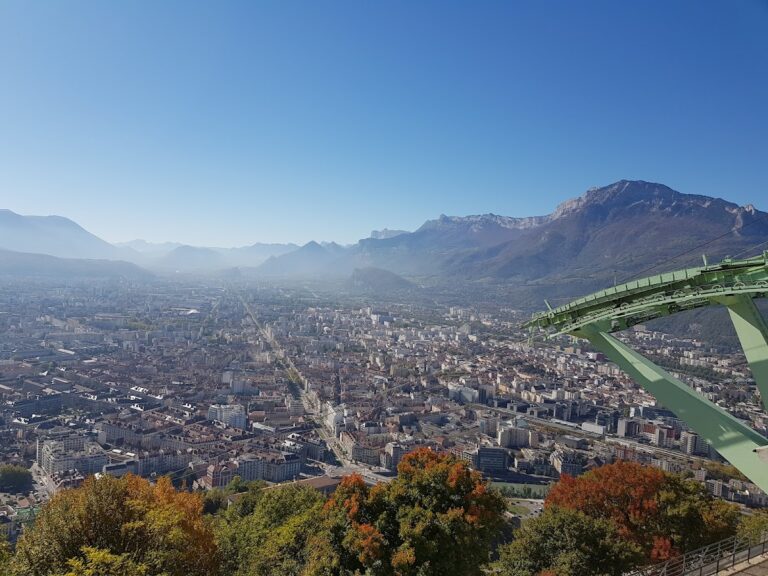
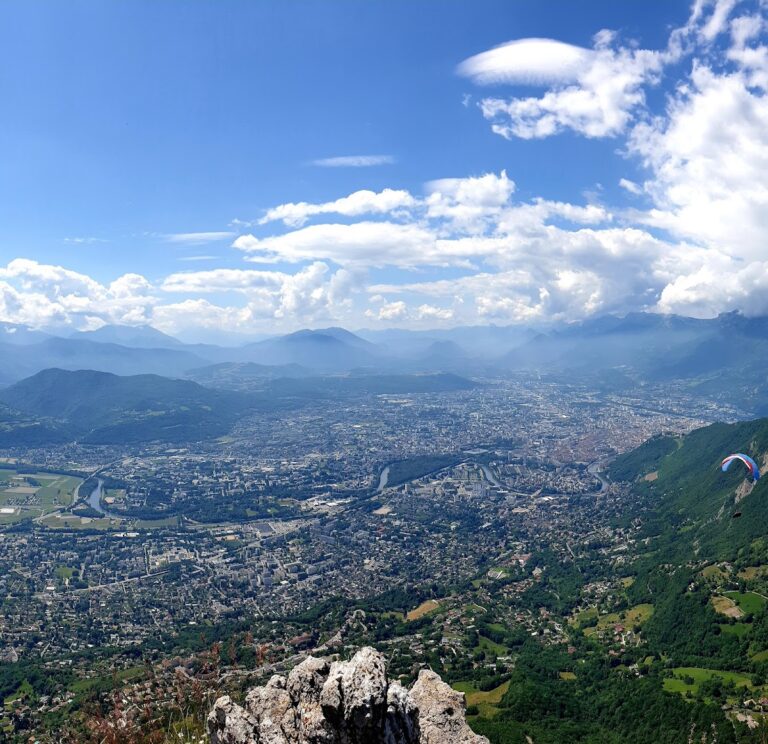
The château dominates the territory of Sassenage and lies between the town center, Château de Sassenage, and the Côtes de Sassenage district. Its estate thus brings together the remains of a medieval fortress, a nineteenth-century château, and the ruins of a later feudal-style construction within a 25-hectare park.