Château de Magrin: A Medieval Stronghold and Pastel Museum
Site at a Glance
- Popularity
- Medium
- Country
- France
- Primary era
- Early Modern
- Eras represented
- Medieval, Early Modern
- Civilizations
- Unclassified
- Site type
- Domestic
- Remains
- Castle
On this page13 sections
History
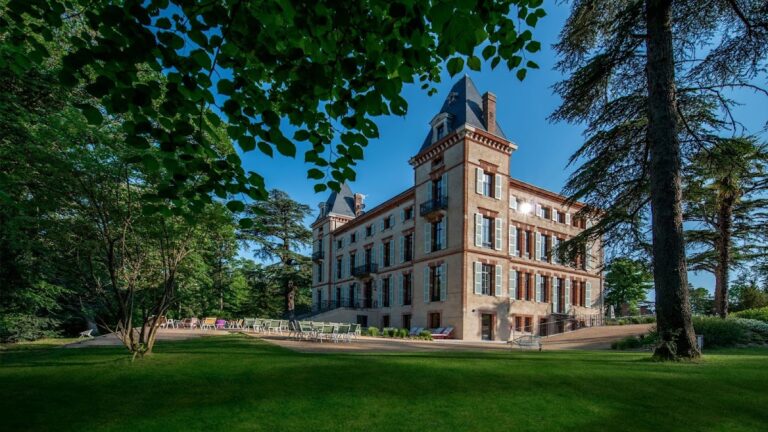
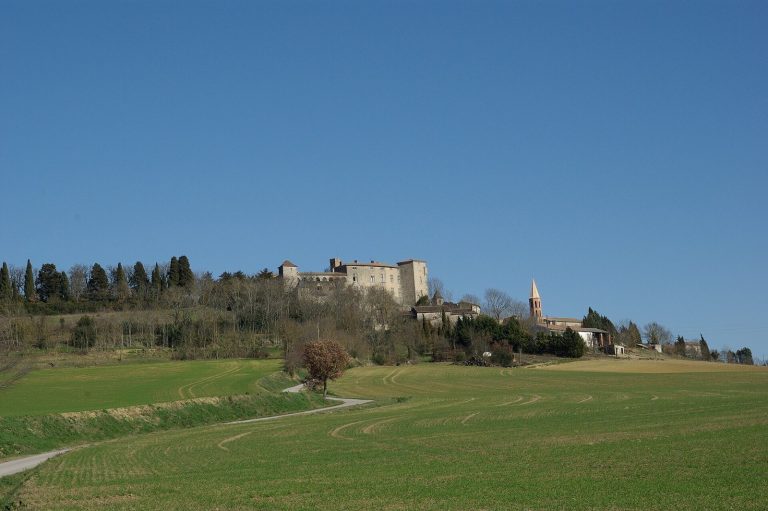
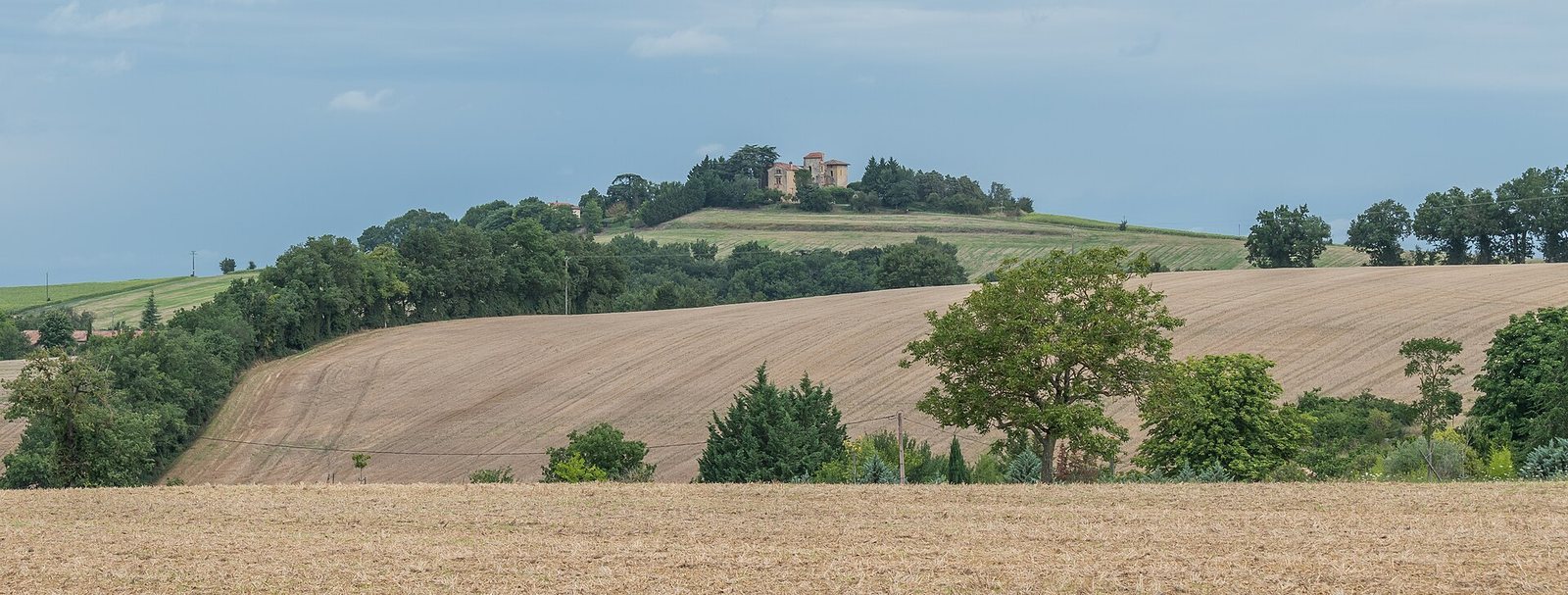
Château de Magrin is a historic stronghold in France, set on a height above the Agout valley and the hillsides of Lauragais. Its medieval foundations date to the tenth century, possibly over an earlier Roman stronghold. The château later became associated with regional pastel cultivation and with Henry of Navarre, who took refuge there in 1585.
Early stronghold
The site may first have held a Gallic oppidum, a fortified settlement, followed by adaptation as a Roman castrum, or fortified stronghold. The Visigoths, a Germanic people who established a kingdom in southwestern Europe, later altered the site. The medieval foundations may have been built on the Roman stronghold.
Medieval lordship and conflict
The earliest written record of Château de Magrin is dated 7 August 1224, during the Albigensian Crusade, a campaign against Catharism in southern France. At the time, the château belonged to the lands of the lordship of Puylaurens. Its castellan, the officer in charge of the castle, placed himself under the protection of Raymond VII, ruler of the County of Toulouse.
A notarial deed from 1279 names the Brenguier family of Puylaurens as owners. During the Hundred Years’ War, a prolonged series of conflicts between England and France, a company of mercenary raiders used the château as a base for raids in the surrounding area.
Pastel and Henry of Navarre
Later owners cultivated pastel, a plant used to produce blue dye, which became the focus of a flourishing regional trade. By 1502, the château belonged to the Corneilhan family. During the French Wars of Religion, conflicts between Catholics and Protestants in sixteenth-century France, the family converted to Protestantism.
In August 1585, Gaspard de Corneilhan, then lord of Magrin, sheltered Henry of Navarre, a Protestant prince who later became Henry IV of France. Henry had been ambushed near Castres by Catholic League forces from Lavaur. As king, he protected pastel producers by prohibiting indigo, a major competitor to the crop.
Revolution and restoration
The château was probably sold as national property during the French Revolution. It was partly damaged by fire and later consolidated. In 1971, Rufino bought the property, carried out a comprehensive restoration, and converted it into a museum devoted to pastel. Parts of the château were listed and classified as Historic Monuments in 1979.
Remains
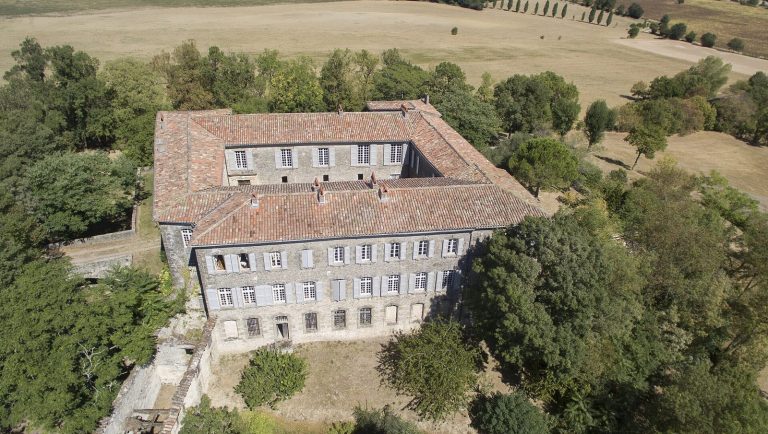
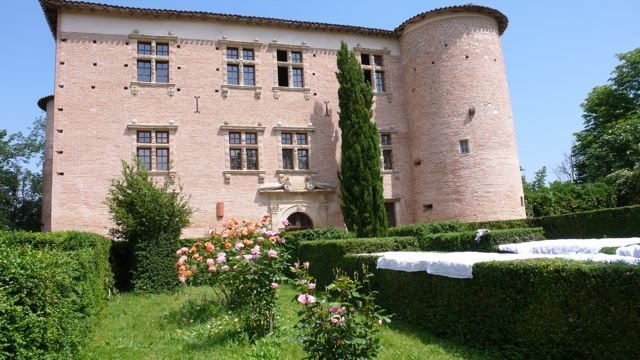
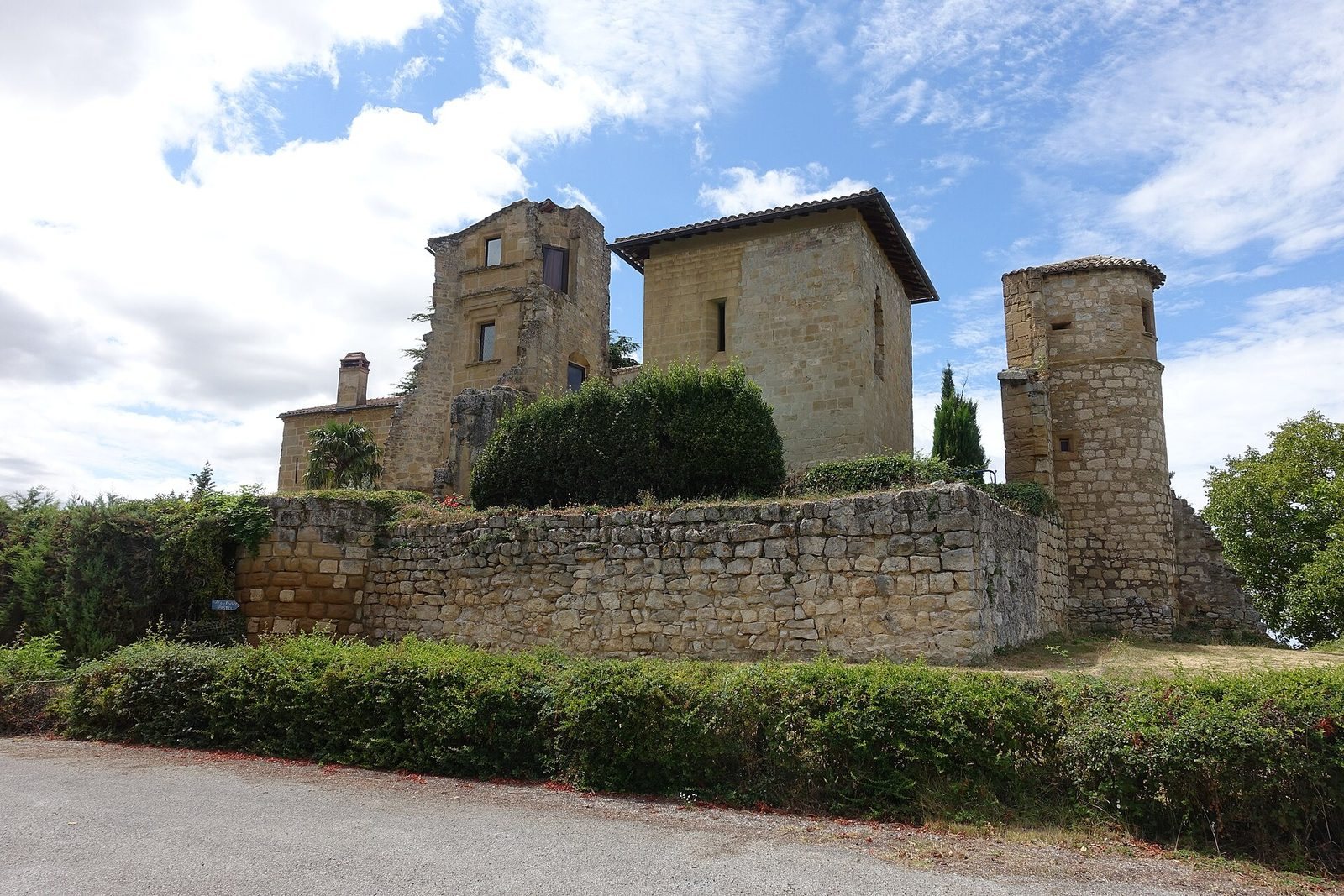
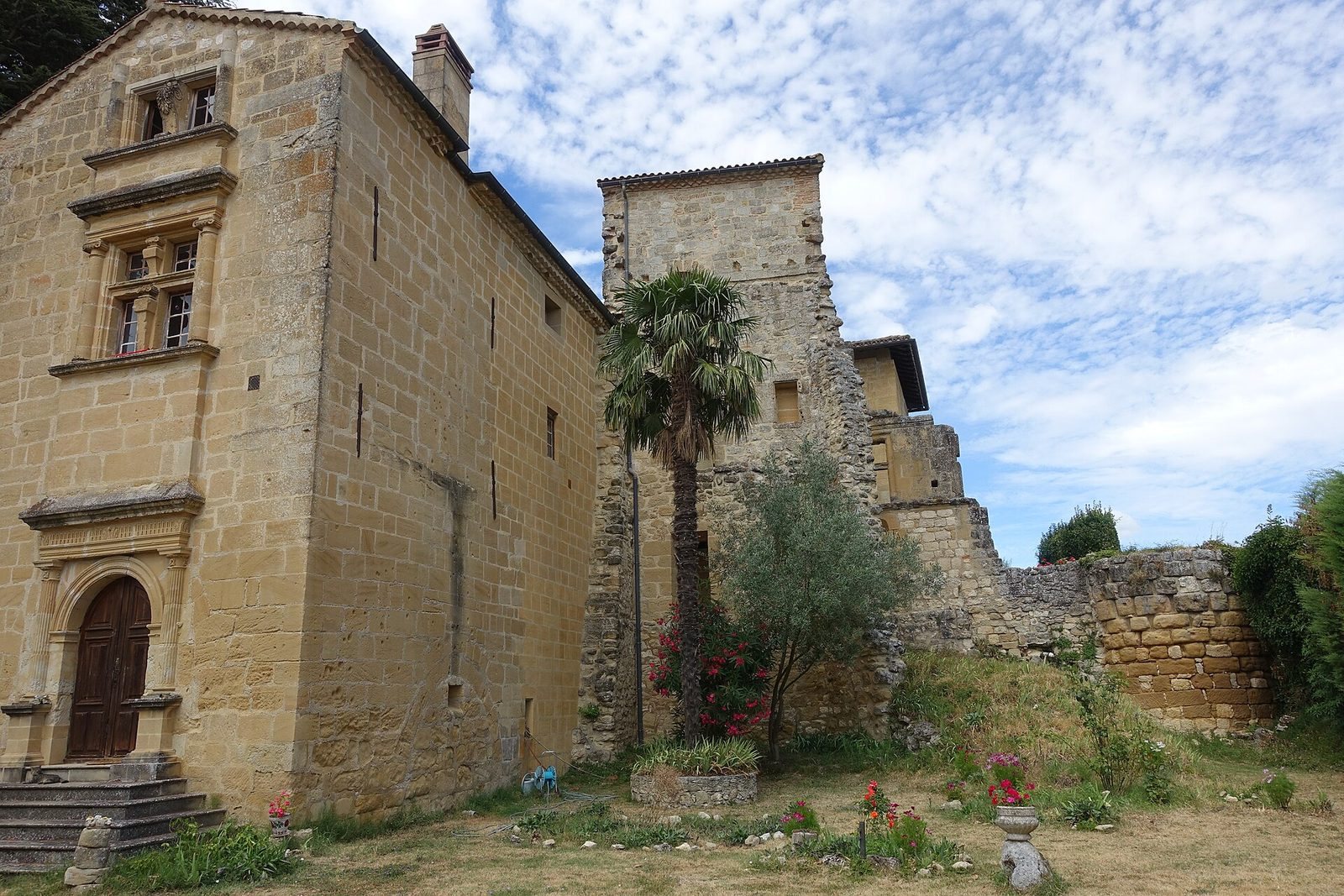
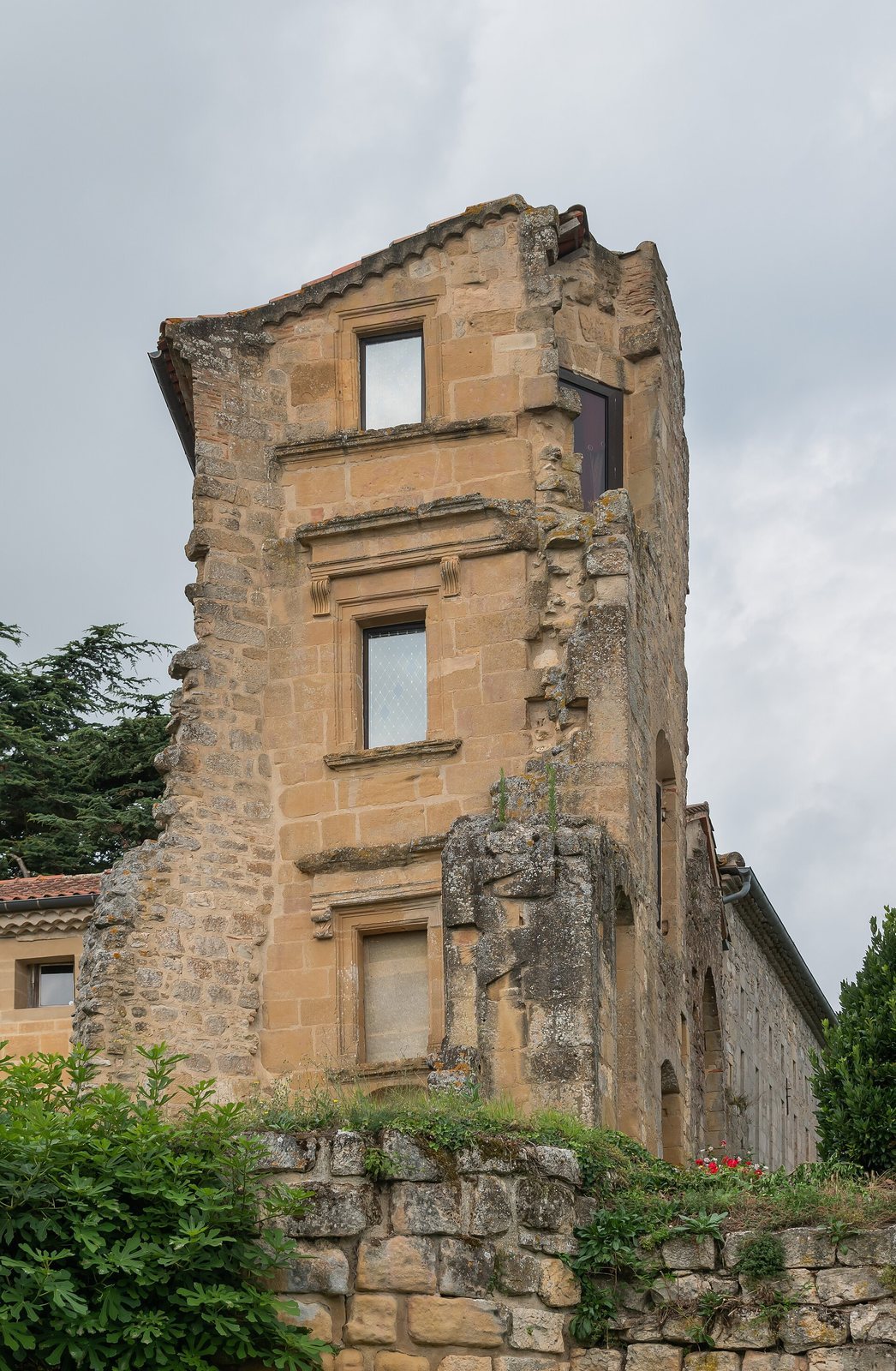
The surviving complex has two main groups: a partly ruined medieval section and a Renaissance building. The latter takes its name from the European cultural and artistic period and was formed by rehabilitating and altering earlier buildings. Additions made in the seventeenth century left its overall style unchanged.
Medieval enclosure
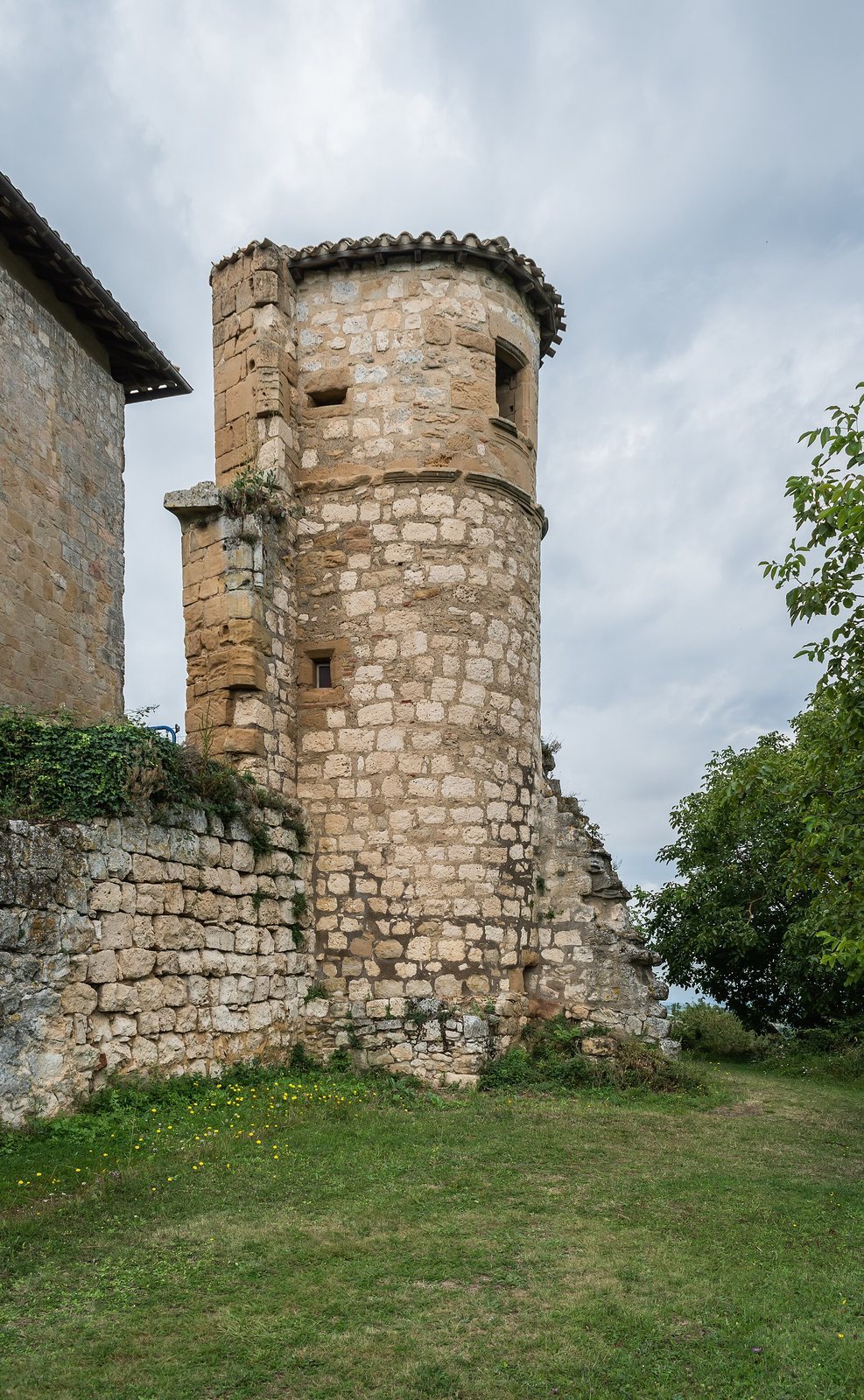
The medieval enclosure was rectangular, with ramparts that have been levelled and ditches that have been filled. An angle turret and a round tower defended the curtain wall, the defensive wall between towers. A square keep, the castle’s principal defensive tower, rose 10 metres above it. A semicircular tower in this section is identified as the Cathar Tower. Three underground passages are attributed to the château’s medieval period. Local tradition says that one holds a Cathar treasure.
Renaissance building
Entrance and facade
The entrance is reached by steps and has a double-leaf door beneath a semicircular arch. Half-columns support a carved entablature, the horizontal architectural feature above columns. Above the doorway, a first-floor window divided by vertical supports sits below a small double window on the second floor; both have half-columns. The decoration is comparable to that of wealthy pastel merchants’ houses in Toulouse, including the Hôtel d’Assézat and Hôtel de Bernuy. A separate surviving fragment is also identified as Renaissance in style.
Pastel mill
A pastel mill survives within the Renaissance section in notably good condition for its age. It was the last animal-powered mill of its kind in the region. Its elaborate gearing operated a granite wheel weighing two tonnes.
Pastel rooms
A first-floor room with a vaulted ceiling formerly displayed period documents, blue textiles dyed with pastel, and tools used to make the dye. On the second floor, a drying room could hold up to 100,000 balls of processed pastel, called cocagnes. Long openings in the walls circulated air through the room, and four of its eight drying grilles survive.
Upper and ground-floor spaces
The attic retains exposed roof framing and formerly contained a projection room where a film about the château and pastel cultivation was shown. A year-round exhibition on the ground floor used paintings to present the Visigoth kingdom in the sixth century, when Toulouse was its capital.
Garden
The garden contains pastel plants with rosette-shaped leaves and yellow flowers, as well as indigo plants.