Château de Scopont: A Historic Château in France


Site at a Glance
- Rating
- 3.6
- Popularity
- Very Low
- Country
- France
- Primary era
- Early Modern
- External website
- Open
- Eras represented
- Early Modern, Modern
- Civilizations
- French
- Site type
- Domestic
- Remains
- Castle
On this page7 sections
History
Château de Scopont is a historic château in France, associated with medieval religious conflict, the Wars of Religion, and successive phases of rebuilding and conservation. Its history reaches back to an earlier abbey destroyed during the Albigensian Crusade, a thirteenth-century campaign against Cathar communities and their supporters in southern France.
Medieval origins
During the passage of Simon IV de Montfort’s army, the abbey at Scopont was destroyed. Simon IV de Montfort was a leading military commander in the Albigensian Crusade. Stones from the earlier religious foundation were later reused at the site. A mass grave discovered at Scopont contained skeletons with copper rings associated with Cathar “perfects”, members of the Cathar religious elite.
The existence of a castle at Scopont is documented again in 1423, indicating that a fortified residence had been established by the fifteenth century.
The Wars of Religion
In 1575, during the Wars of Religion, Guillaume de Joyeuse captured the castle then called “Escopont”. These sixteenth-century conflicts opposed Catholic and Protestant forces in France. Joyeuse, a French nobleman and military commander serving as lieutenant general in Languedoc, had been charged with fighting Protestants, but kept his promise to spare the garrison.
Restoration and modern heritage
After several sales to owners who allowed the property to deteriorate, the château was repurchased almost in ruins and restored. Before Bernard d’Ingrando acquired it, the property had been among several châteaux overlooked as part of the Algerian state’s holdings. Château de Scopont has been listed as a French historic monument since 1992, while its park pavilion received classification as a historic monument in 1995.
In the early 2020s, plans for the A69 motorway placed the route less than 300 metres from the château. The owner described this as an affront to heritage. From 4 to 6 July 2025, the site hosted opponents of the project during the Turboteuf mobilization.
Remains
Château
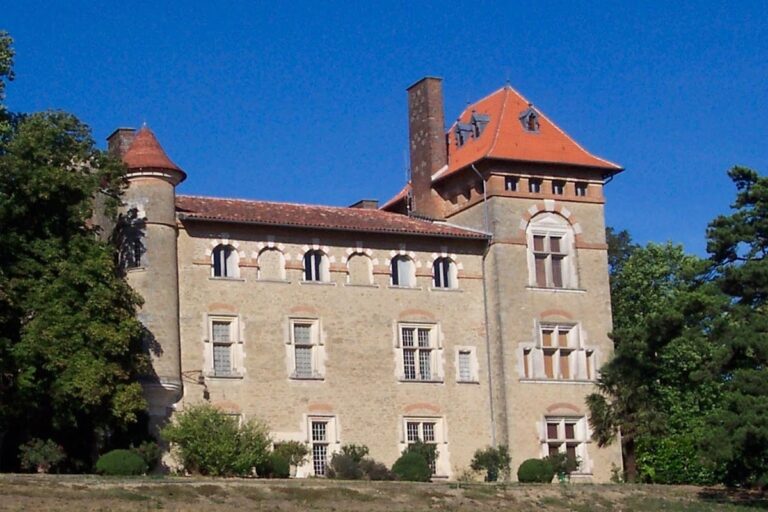
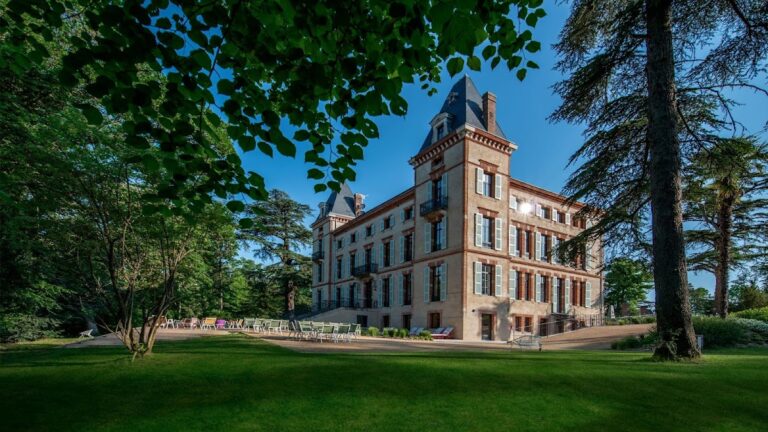
Château de Scopont has a rectangular plan. On its north side, a broad terrace incorporates the moats, while the south façade faces the valley and is framed by two small round towers topped with steep slate roofs. Several loopholes, narrow openings in fortified walls used by defenders for observation or weapons, recall the building’s military past.
The cellars date from the sixteenth century. Above them, a staircase, stucco decoration, and fireplaces reflect the domestic comfort introduced through successive renovations. Together, these elements show how the fortified residence was adapted for continued residential use.
Park pavilion
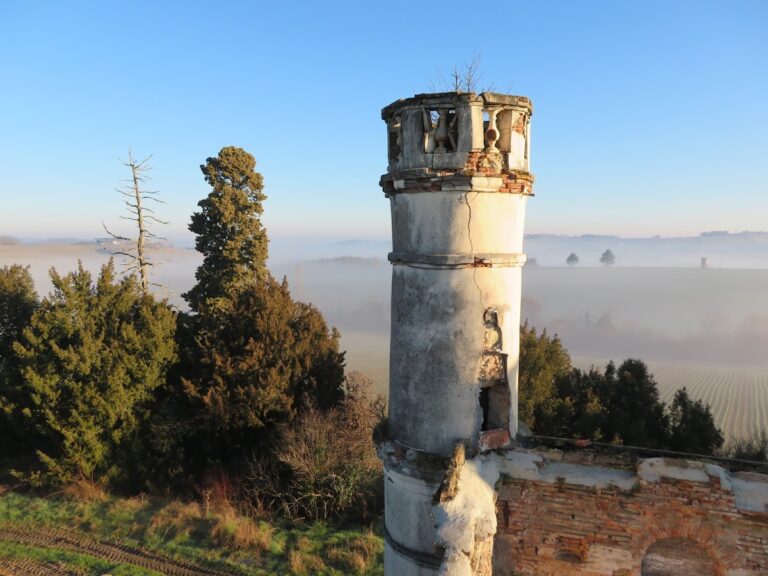
A neo-Gothic pavilion was built in the park during the nineteenth century. Neo-Gothic architecture revived forms associated with medieval Gothic buildings. The pavilion incorporates reused stones, including elements from the Carmelite and Jacobin convents of Toulouse and local tombstones. It has been classified as a historic monument since 1995.
The surrounding park contains centuries-old oak trees, together with maple and lime trees.
Nearby sites