Lordat Castle: An Eighteenth-Century Residence in Bram
Site at a Glance
- Popularity
- Medium
- Country
- France
- Primary era
- Early Modern
- Eras represented
- Early Modern, Modern
- Civilizations
- French
- Site type
- Domestic
- Remains
- Elite Residence
On this page11 sections
History
Earlier castle and the Lordat family
In 1582, Huguenots, French Protestants, stormed an earlier castle in Bram’s circular village while unsuccessfully trying to resist a siege by the Catholic League, a Catholic political and military alliance active during the French Wars of Religion.
The Lordat family came from Ariège and owned a separate castle of the same name in the County of Foix. In 1582, the future King Henry IV ordered that fortress dismantled. Paul-Jacques de Lordat, founder of the family’s Bram branch, acquired the barony of Bram by contract from Aldonce de Bernuy on 10 June 1598. It comprised the parishes of Bram, Buzarens, Villarzens and Villesiscle. Aldonce was the granddaughter of Jean de Bernuy, a Toulouse merchant who made his fortune trading in pastel, a plant used to produce blue dye.
In 1719, the title of barony of the Estates of Languedoc, the provincial representative assembly under the French monarchy, was transferred from land at Clermont-Lodève to the barony of Bram.
Construction of the present castle
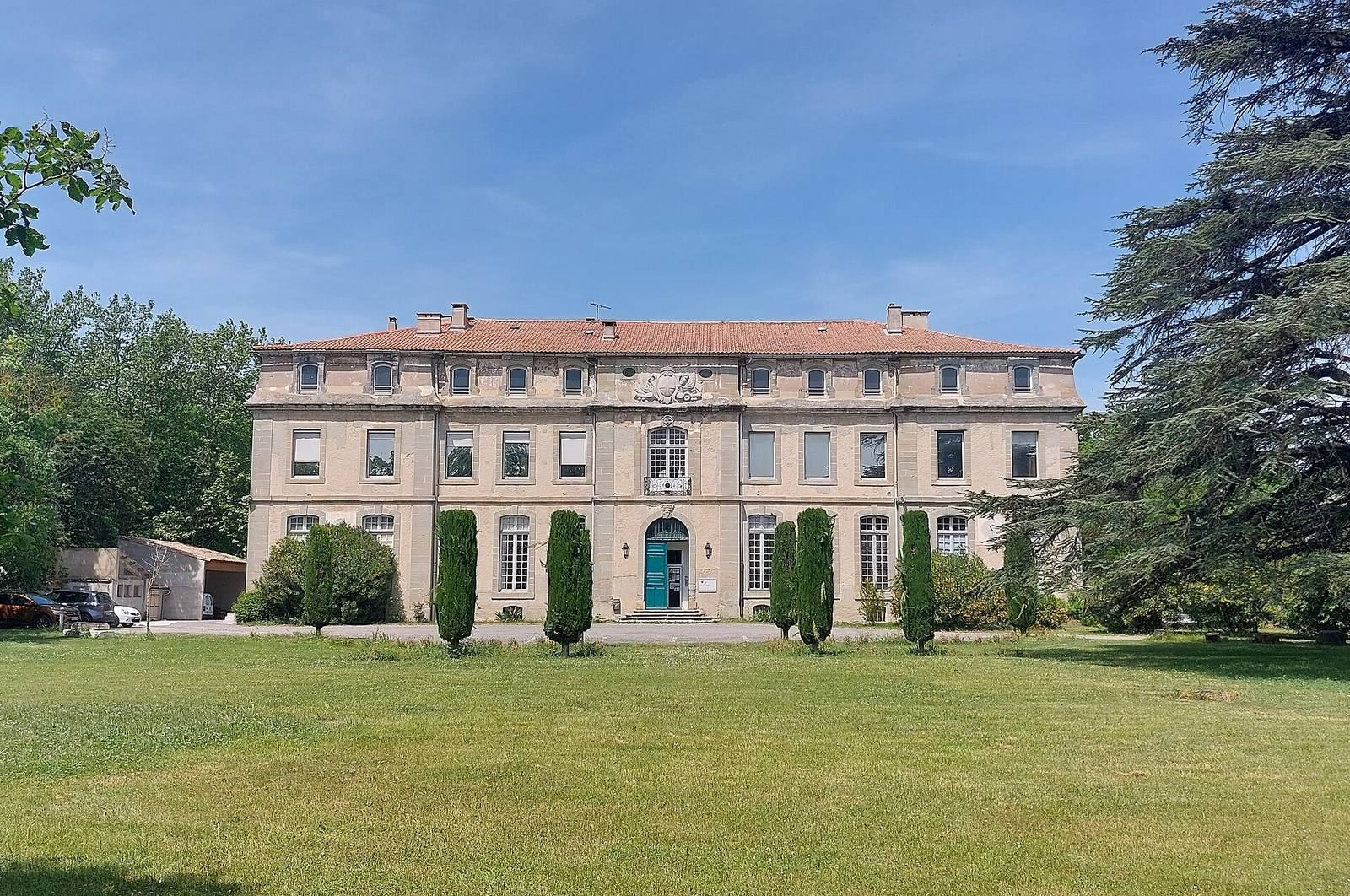
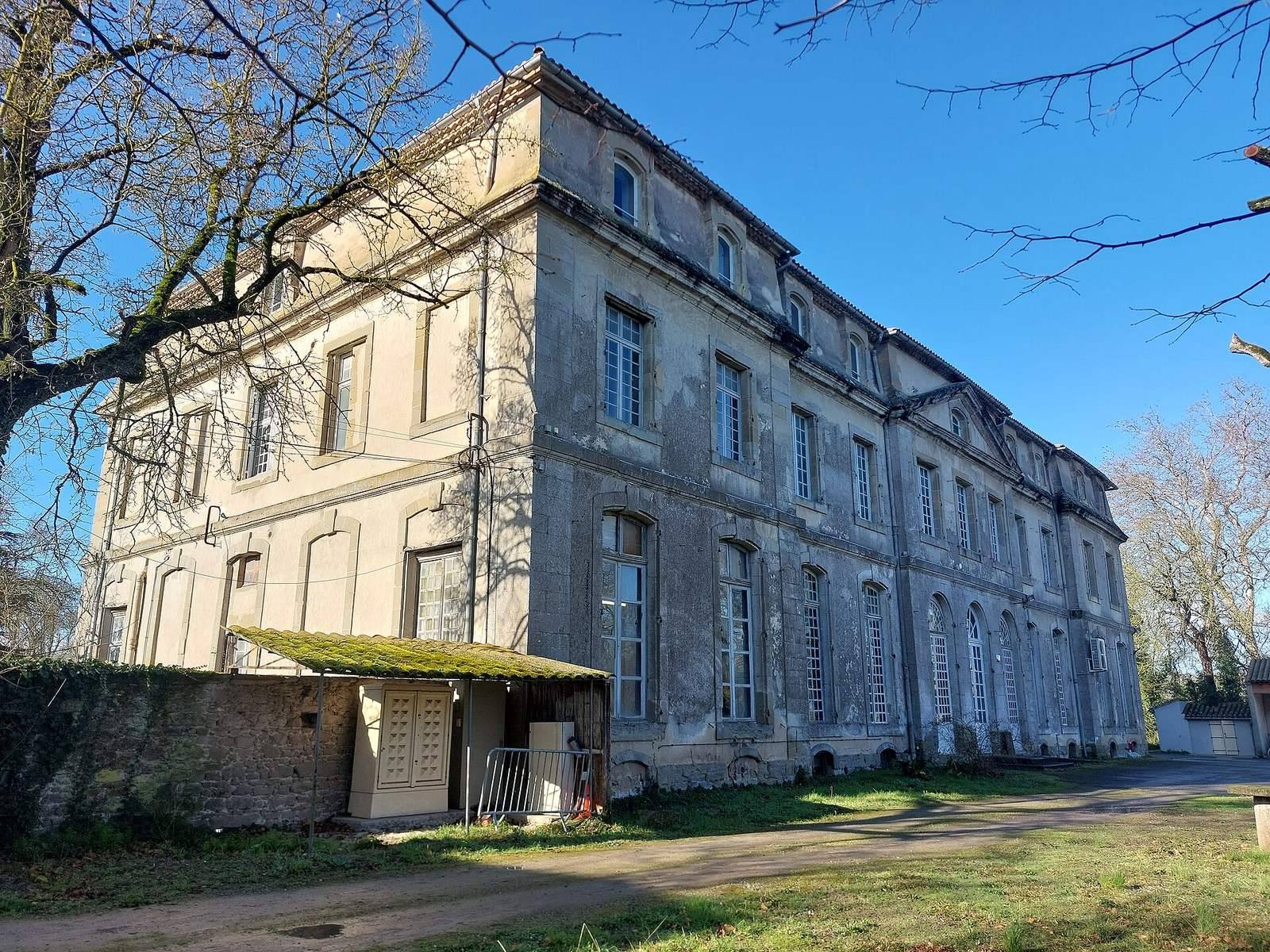
François-Anne-Louis de Lordat built the present castle in the mid-eighteenth century. Its construction reused stones from the village ramparts and gates, a decision that angered local residents.
Revolution and later changes
The Lordat family kept its privileges and powers attached to the lordship until the French Revolution. During a public ceremony outside the castle’s former entrance, feudal title deeds were burned in the presence of the National Guard and elected officials.
The family returned to live at the castle during the Napoleonic era, then moved to Sainte-Gemme elsewhere in the commune. In 1857, construction of the Bordeaux–Sète railway cut off part of the park and prompted a move of the entrance. The privately owned castle now houses an ESAT, a French supported-employment establishment and service for people with disabilities. Created by Albert Gau, it is organized around a cardboard-packaging workshop, a laundry and a restaurant.
Remains
Castle and grounds
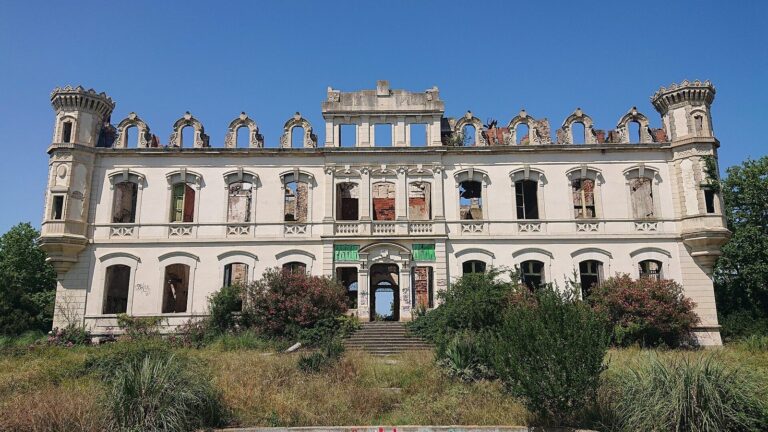
The surviving complex includes the classical-style castle, a curved enclosure wall with a central gate, and the former formal garden. A land-survey plan from 1760 depicts the castle and its park.
Principal façade and staircase
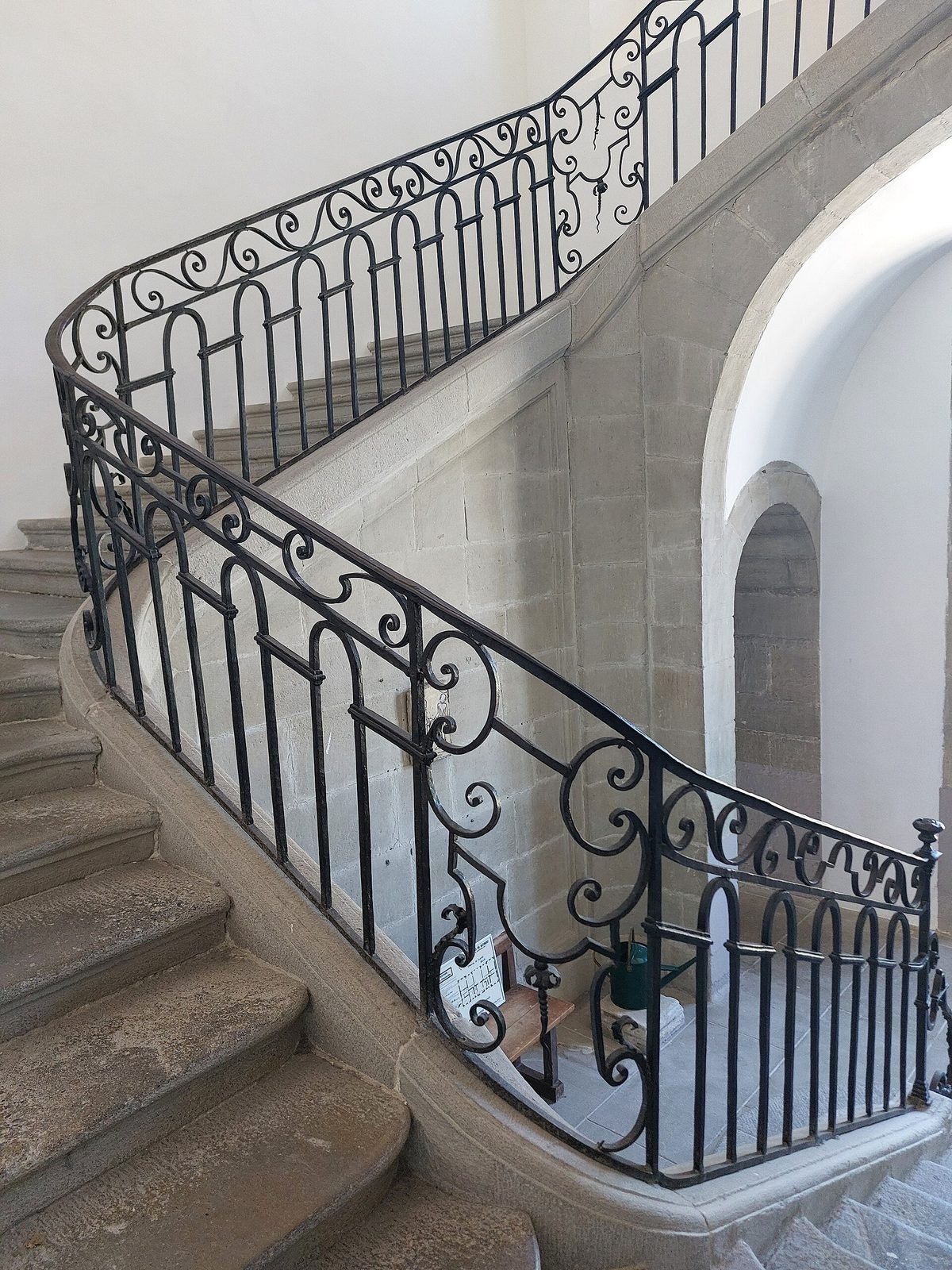
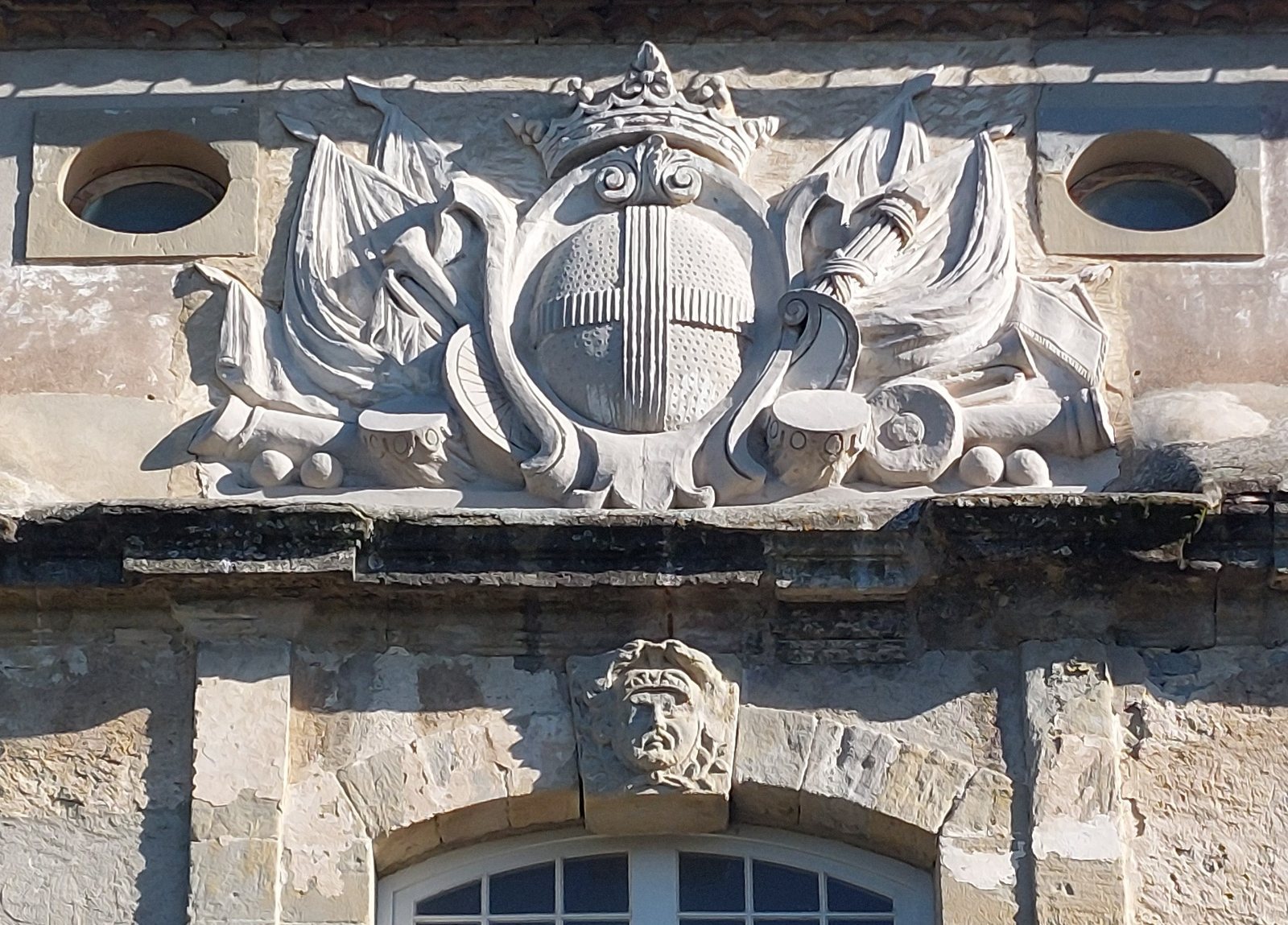
The principal façade has a central section that projects forward and bears the Lordat family arms, a gold field with a red cross. Two sundials flank this section. The castle also contains a ceremonial staircase.
Enclosure and gate
At the center of the curved enclosure wall, an elaborate wrought-iron gate stands between pilasters topped with ornamental urns bearing flame forms. The entrance opens toward the former formal garden and the castle.
Memorial features
Passion Cross
A Passion Cross, a Christian cross decorated with symbols of Jesus’ suffering and crucifixion, dates to 1805. It stands behind the town hall on the site of the castle’s former esplanade and entrance.
Lordat mausoleum
The façade of the Lordat mausoleum stands beside the castle along the Promenade Albert Gau.