Monastery of Prouille: Cradle of the Dominican Order in France
Site at a Glance
- Rating
- 4.4
- Popularity
- Low
- Country
- France
- Primary era
- Modern
- External website
- Open
- Eras represented
- Medieval, Modern
- Civilizations
- County of Toulouse, French
- Site type
- Religious
- Remains
- Monastery
On this page11 sections
History
The Monastery of Prouille is a medieval Dominican foundation in France, within Fanjeaux in the Aude department, established in late 1206 by Dominic Guzman and Diego de Acebo, Bishop of Osma. The first certain date in its history is 17 April 1207. Founded in a deteriorated village in the Cathar region, it became the first Dominican house and is regarded as the cradle of the Order of Preachers, the religious order founded by Dominic.
Foundation and early community
Bishop Foulques of Toulouse authorized the new community to use the local church. Guillaume and Raymonde Claret of Prouille gave themselves and their cottage to the foundation, which formed beside the Church of Sainte-Marie. The settlement itself consisted of a fortified enclosure, several surrounding buildings, and a crumbling church attached to the parish of Fanjeaux.
Prouille was intended partly as a refuge for women who had belonged to Cathar religious houses and had converted to Roman Catholicism. Catharism was a medieval Christian movement condemned as heretical by the Catholic Church. About twelve nuns were living at Prouille in 1207, and the community had grown to twenty by 1211. Because the buildings were scarcely habitable, some of the first members initially stayed at Fanjeaux. They followed the Rule of Saint Augustine, a set of monastic guidelines associated with Augustine of Hippo.
The foundation was a dual community of women and men governed by a prioress and a prior. The women were cloistered, meaning that they were expected to remain within the monastery and limit contact with the outside world, although Prouille did not become fully enclosed until 1294. From that time, its nuns were described as enclosed sisters. They could not preach, but received newly converted women into their community. Dominic initially served as prior or procurator, followed by Brother Noel and Guillaume Claret. After Diego returned to Spain and died in December 1207, Dominic assumed principal responsibility for the foundation.
A preaching base and Dominican center
Prouille was closely connected with the preaching network of the Narbonnaise, the historic ecclesiastical region associated with Narbonne. It was influenced by Cistercian women’s abbeys linked with Fabas, Fontfroide, and Boulbonne. Early records used several descriptions for the establishment, including Sacred Preaching, church, abbey, and the converted ladies living the religious life by the Church of Sainte-Marie of Prouille.
The monastery also served as a base and place of hospitality for Dominic and the itinerant preachers working to convert Cathars. They preached during the day and returned to Prouille to eat and rest. Dominic followed an apostolic practice of traveling barefoot and relying on hospitality and begging rather than carrying money or possessions.
A tradition associated with Prouille relates that Dominic experienced a vision of the Virgin Mary there in 1208. In this account, Mary appeared as Our Lady of the Rosary and gave him a rosary, a Catholic form of prayer involving repeated prayers and meditation on episodes from the life of Jesus and Mary. Prouille consequently became associated with the Dominican tradition concerning the promotion and origin of the Holy Rosary.
On 15 August 1217, Dominic gathered his first followers at Prouille and sent them out to preach. The foundation became an important center of Catholic resistance to Catharism and later developed into one of the major royal monasteries of the Ancien Régime, the system of monarchy and social organization that existed in France before the Revolution.
Endowments and institutional change
Ecclesiastical and lay gifts enabled the monastery to survive and expand. In 1207, the Bishop of Narbonne granted it the revenues of Saint-Martin at Limoux. The Bishop of Toulouse later granted revenues from Prouille, Saint-Julien at Bram, Fanjeaux, and other churches and chapels. These resources included tithes, which were payments of part of produce or income to support the Church, together with first fruits, offerings, and other ecclesiastical rights.
Lay benefactors included the lords of Fenouillet, Ysalguier, and Rayzes, who gave lands, pastures, woods, and associated dependants. Dame Cavaers donated the former seigneurial mound, mills, and property at Cailhau. Simon de Montfort and his northern French followers contributed property at Sauzens and elsewhere, while the House of Lévis and Alphonse of Poitiers also provided substantial holdings, including land in the Forest of Ramondens.
By the late Middle Ages, Prouille’s landed possessions extended across approximately 11,000 hectares in the dioceses of Carcassonne, Lavaur, Mirepoix, Narbonne, Saint-Papoul, and Toulouse. The Forest of Ramondens produced income through timber sales. The monastery’s farms were operated by tenants under sharecropping leases until the seventeenth century and thereafter under rent arrangements.
The first prioress was Guillaumine of Fanjeaux. Prouille’s autonomy ended in 1516 after the Concordat of Bologna between Pope Leo X and King Francis I, when the monastery became a royal priory, meaning a priory placed under royal patronage or control. Jeanne V d’Amboise became the first prioress appointed by the king in 1533. In 1540, Madeleine de Bourbon, a princess of the blood, became prioress and remained in office for twenty-five years.
Fire, reconstruction, and Revolution
A violent fire destroyed the medieval buildings during the night of 4 to 5 March 1715. Louis XV assigned Bishop Daniel Bertrand de Langle of Saint-Papoul to supervise reconstruction in 1734. Financial difficulties delayed the work, and in 1746 the royal council officially commissioned Jacques Hardouin-Mansart de Sagonne to rebuild the monastery. Funding was assigned from the exploitation of the Forest of Ramondens.
Mansart’s inspector, Jean-Charles Damesme de Furcy, was dismissed in 1751 after failing to advance the work, and Mansart himself was dismissed in 1753. By then, only the ground floor of one wing had been completed. Construction resumed in 1757 under Brother Raymond Vergès, a Dominican of the Occitan province, who completed the project in 1786. Jean-Arnaud Raymond then remodeled the Gothic monastery church on the basis of Mansart’s plan, with the work carried out from 1785 to 1787.
The monastery was confiscated and sold in 1793 for 165,000 livres to the revolutionary Hugues Destrem. The buildings were demolished so that their stone and other materials could be recovered. Materials were distributed to villages including Bram and Fanjeaux, and some ornaments were incorporated into houses there.
Rediscovery and revival
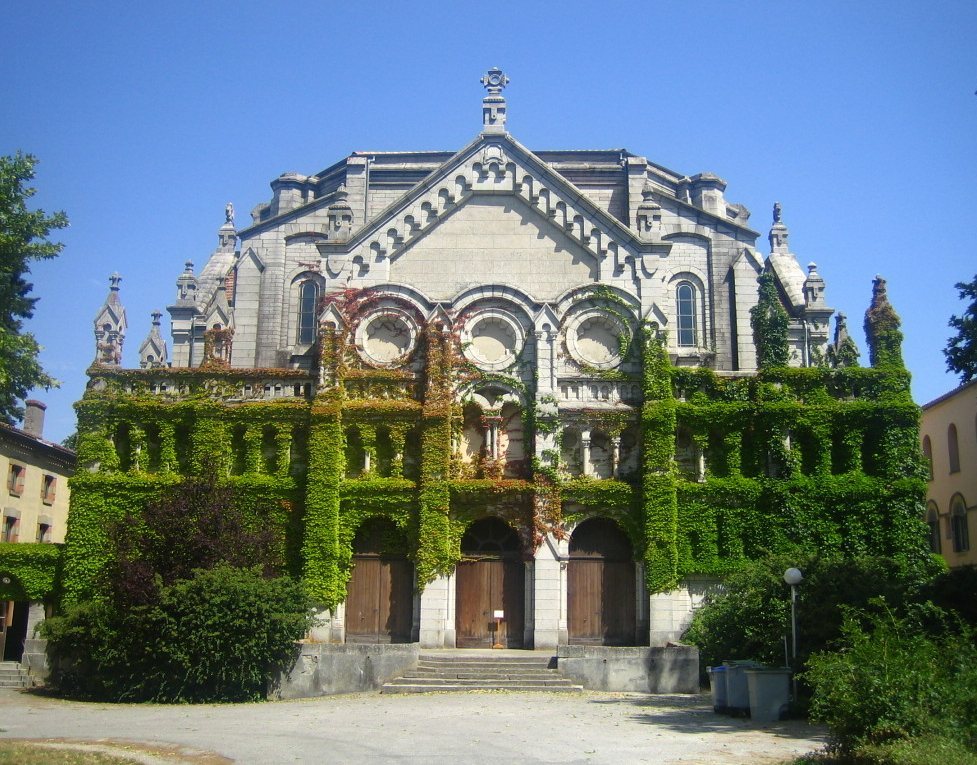
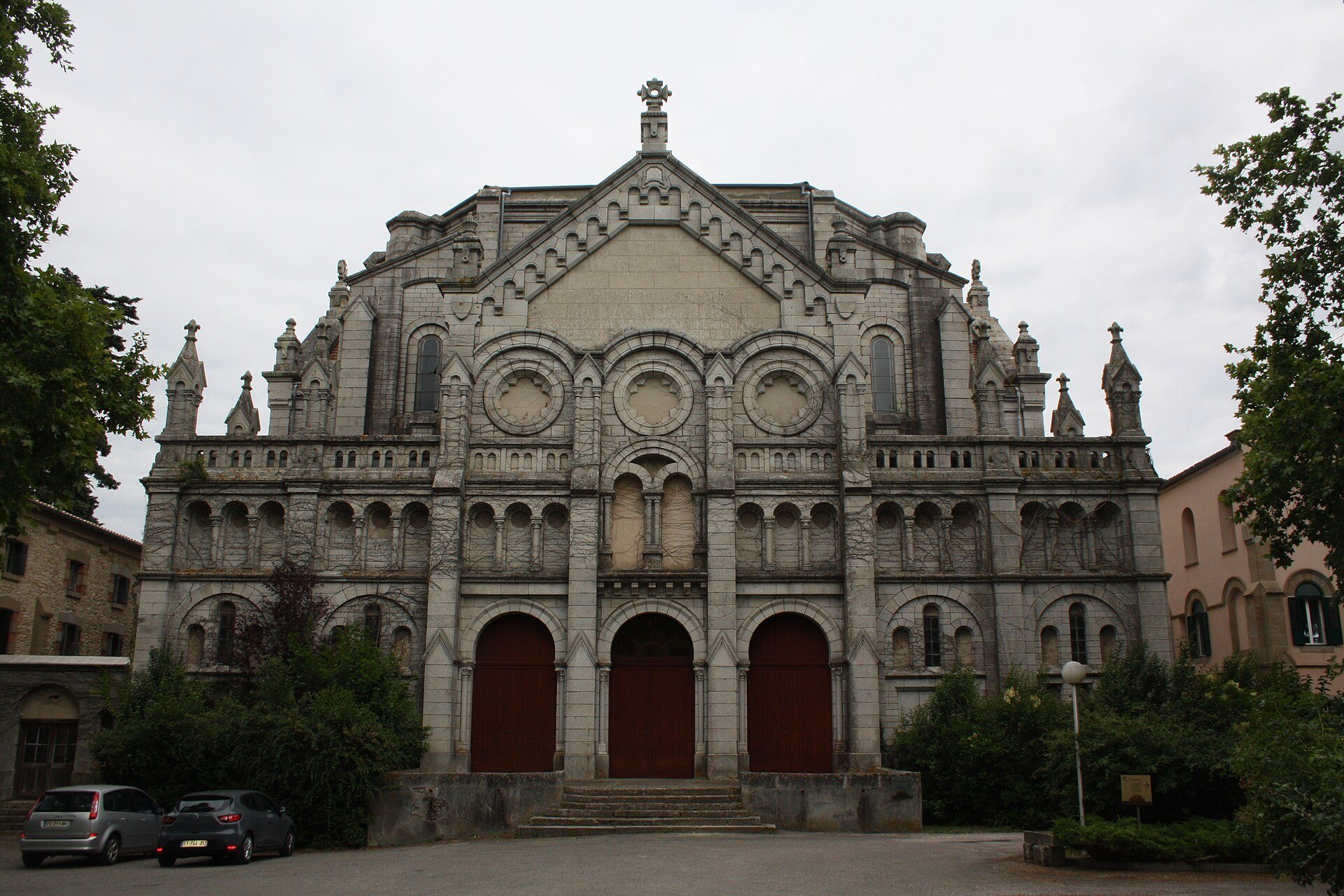
Henri-Dominique Lacordaire rediscovered Prouille in 1852 and began refounding the Dominican cradle in 1857. Reconstruction continued until his death in 1861. Only the church was realized, and it remained unfinished. Hyacinthe-Marie Cormier arranged for Dominican nuns from Nay to resettle at Prouille in 1880. The revived community, initially sustained by numerous vocations, continued at the site, which remains a Roman Catholic institution affiliated with the Dominican Order.
Remains
Setting and early complex
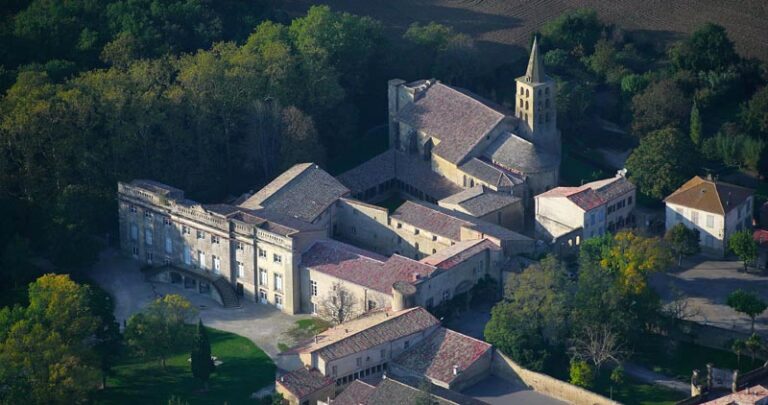
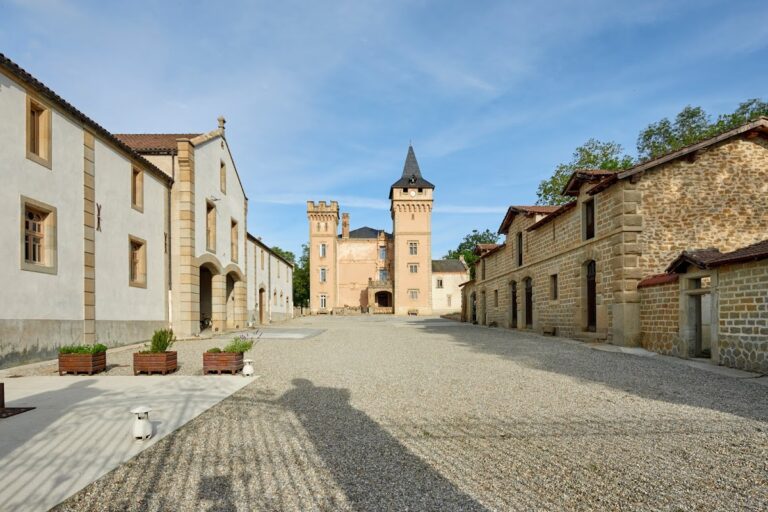
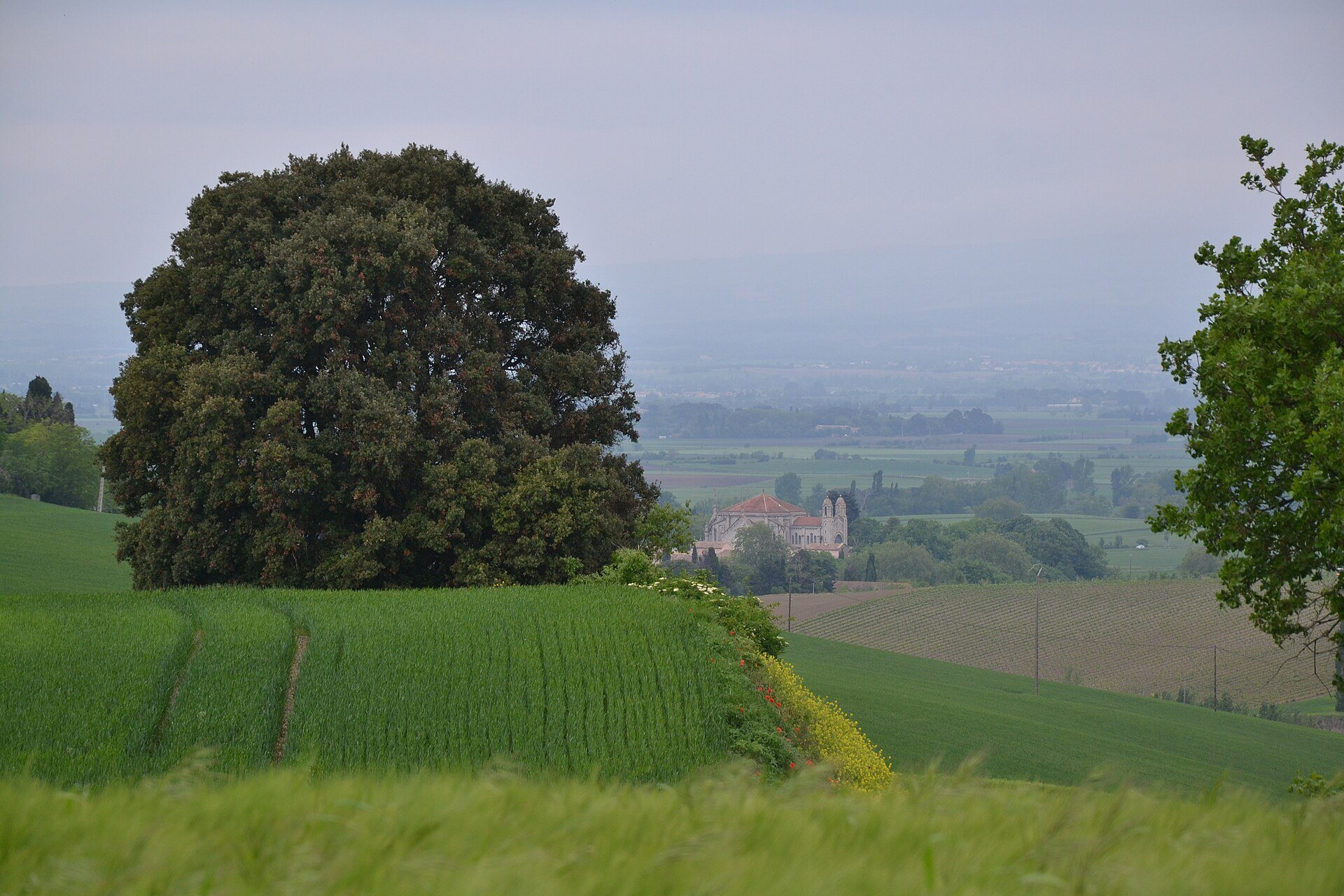
The monastery stands in the former Languedoc countryside between Fanjeaux and Bram, near the historic crossing of the roads from Castelnaudary to Limoux and from Bram to Mirepoix. The early foundation occupied a deteriorated village with a fortified enclosure, a few surrounding buildings, and the crumbling Church of Sainte-Marie attached to the parish of Fanjeaux. The church and the cottage given by Guillaume and Raymonde Claret formed the first physical facilities associated with the community.
Rebuilt and surviving fabric
The monastery church
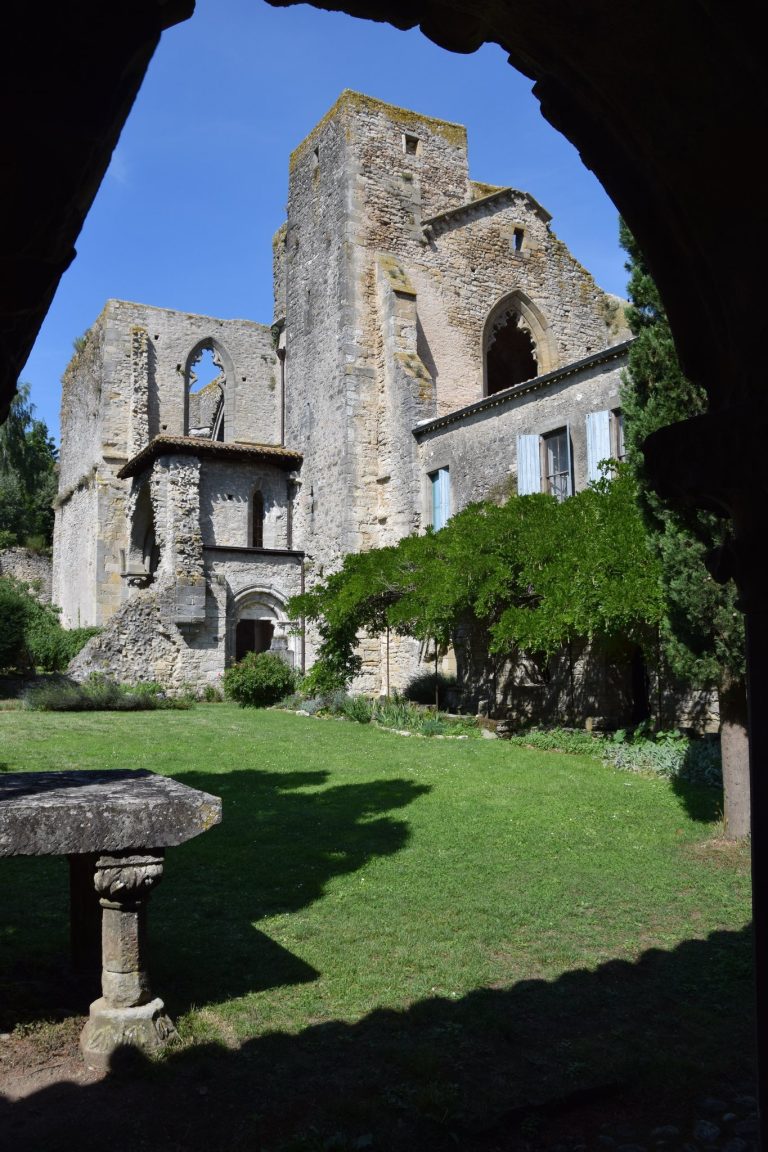
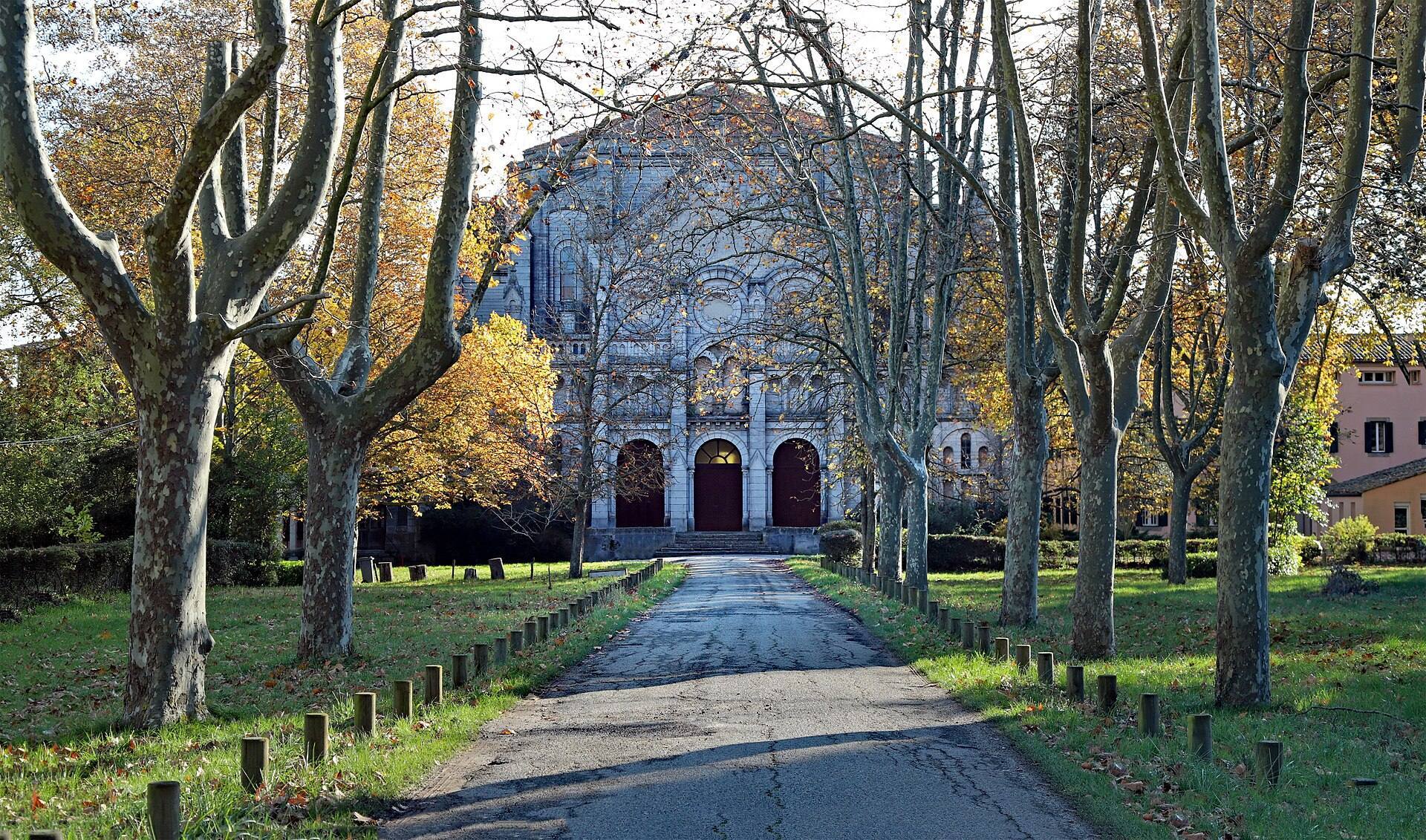
The medieval complex and its church were destroyed or severely affected by the fire of 1715 and were rebuilt during the eighteenth century. The Gothic monastery church was remodeled between 1785 and 1787 according to a plan associated with Jacques Hardouin-Mansart de Sagonne. After the Revolution, Lacordaire’s nineteenth-century reconstruction adopted the Romanesque-Byzantine style then current, combining forms derived from Romanesque architecture with Byzantine-inspired arches, domes, and decoration. The reconstructed church was left unfinished.
Remnants and reused materials
The monastery buildings and church were almost entirely demolished after the 1793 sale. One arch keystone is described as the sole surviving remnant of the pre-Revolutionary monastery. Stone and ornaments from the demolished complex were reused in houses in Bram and Fanjeaux, linking parts of the former monastery’s material fabric with nearby settlements.