Château de Longueville: A Medieval Fortified Castle in France


Site at a Glance
- Rating
- 4.2
- Popularity
- Very Low
- Country
- France
- Primary era
- Medieval
- External website
- Open
- Eras represented
- Medieval
- Civilizations
- French, Kingdom of Navarre, Norman
- Site type
- Military
- Remains
- Castle
On this page4 sections
History
Foundation and Fourteenth-Century Modification
Château de Longueville is a medieval fortified castle in Longueville-sur-Scie, France. Dated to the eleventh century, it was constructed by Giffard de Longueville in the twelfth century. The fortress was modified in the fourteenth century by Charles the Bad, the commonly used name of Charles II of Navarre, a ruler involved in the political affairs of France and Normandy.
Later Medieval Lords
After Normandy was reconquered in 1372, the lordship of Longueville was granted to Bertrand du Guesclin, a leading French commander in the conflicts between France and England. During the fifteenth century, the castle passed to Dunois, known as the Bastard of Orléans, after his victories over the English in 1449 and 1450. Dunois was a French military leader and companion of Joan of Arc during the later stages of the Hundred Years’ War.
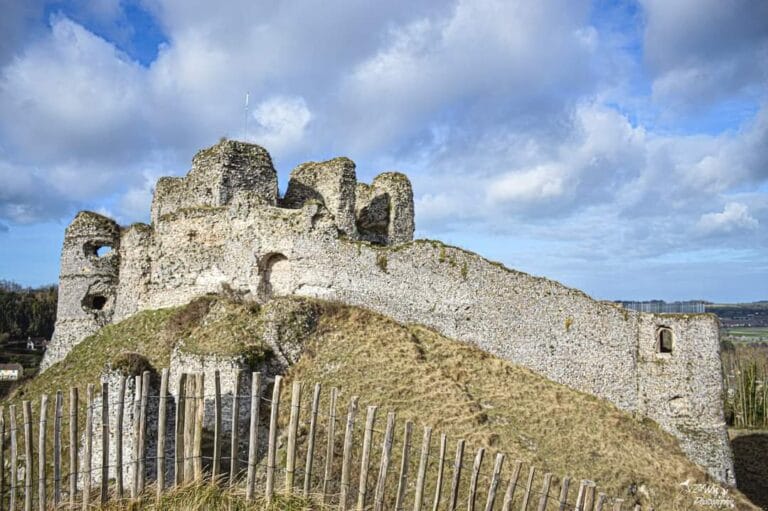
The castle is now ruined. Its ruins and surrounding grounds were classified as historic monuments by an order dated 29 October 1969, preserving the site as a protected part of Normandy’s medieval heritage.
Remains
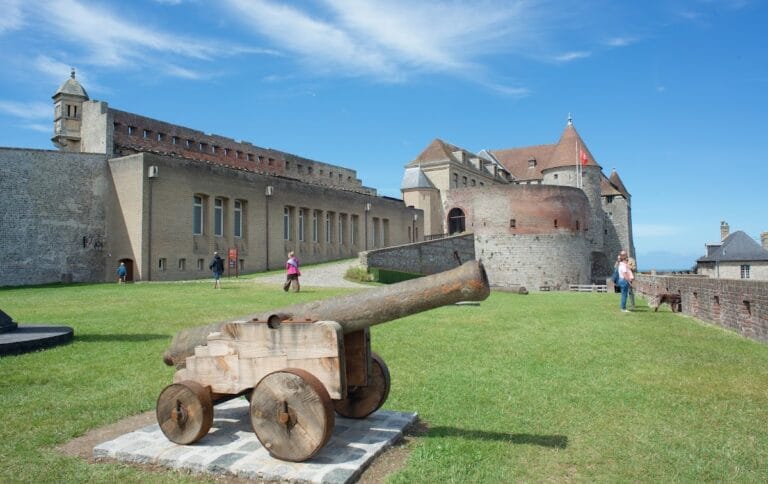
The ruins occupy a dominant position above the Scie valley, approximately 200 metres east of Saint Peter’s Church in Longueville-sur-Scie, in Seine-Maritime, Normandy. The surviving castle is organized around a large quadrangular enceinte, an enclosed defensive perimeter, flanked by six towers. This broad fortified layout defines the principal form of the remains and reflects the castle’s medieval defensive purpose.