Château de Laversine: A Rothschild Estate and Educational Institution in France


Site at a Glance
- Rating
- 4.2
- Popularity
- Very Low
- Country
- France
- Primary era
- Modern
- External website
- Open
- Eras represented
- Modern
- Civilizations
- French
- Site type
- Domestic
- Remains
- Elite Residence
On this page8 sections
History
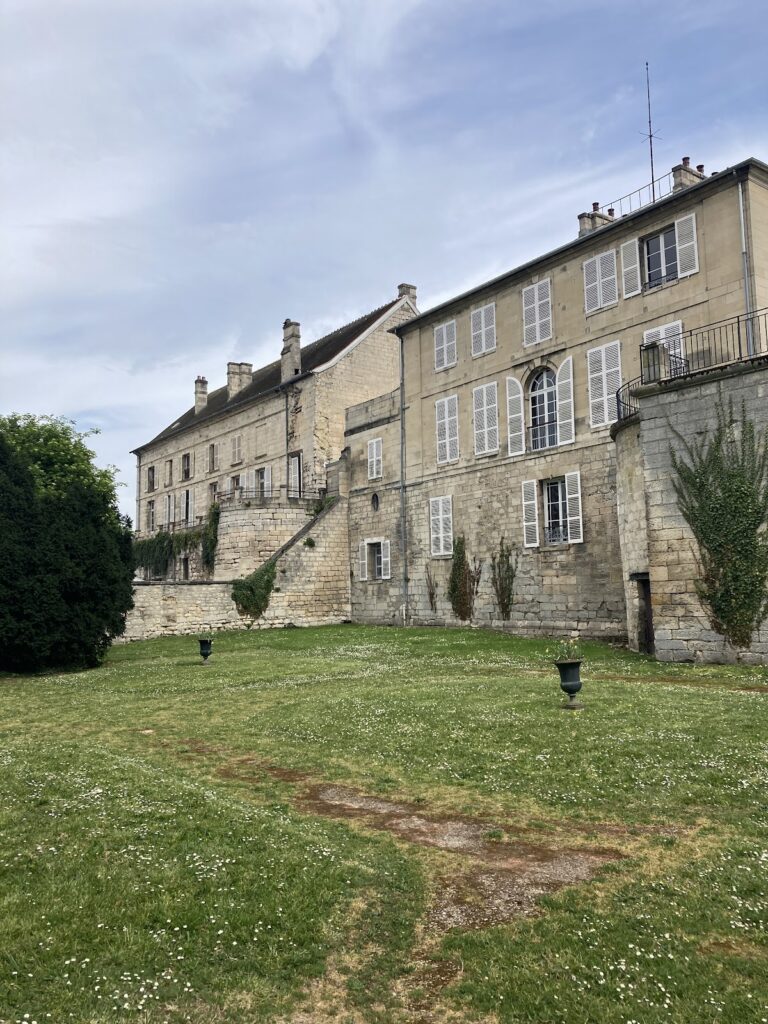
Château de Laversine is a nineteenth-century château in Saint-Maximin, France, built for the banker Baron Gustave de Rothschild in an architecture freely inspired by François Mansart and the formal French Baroque style. Construction began in 1874 on grounds where an earlier castle had been demolished in 1782.
Construction and Rothschild ownership
Gustave de Rothschild acquired the grounds in 1874 and commissioned Alfred-Philibert Aldrophe, an architect of the City of Paris, to design and build the present château. The estate passed to Gustave’s son Robert de Rothschild in 1912. During the First World War, Robert used it to accommodate wounded soldiers recovering from their injuries.
Between the two world wars, the property was chiefly associated with hunting with hounds and also operated as a private polo club. In 1913, the Red Devils team took part in the Laversine Open Polo Cup on the château grounds.
Wartime headquarters and postwar change
From 1940 to 1944, during the Second World War, Château de Laversine served as the headquarters of the German command overseeing units that constructed facilities for V-1s, pilotless flying bombs used against Allied targets, in the neighboring quarries. American units occupied the château from 1944 to 1945.
The building was looted during the Liberation and subsequently neglected. After the war, it was returned to the Rothschild family. Following Robert de Rothschild’s death in 1949, the estate was transferred to a foundation on the condition that it house and train orphaned children who had survived the Holocaust. Robert and his wife, Nelly de Rothschild, also donated the property for a professional lycée intended for 400 boarders.
Children’s home and vocational education
The institution developed from a vocational education college into a vocational lycée. From 1951 to 1993, Shatta Simon and Bouli Simon directed the children’s home at the château, where vocational training was provided. The left wing became the Maison d’enfants de Laversine Shatta-et-Bouli-Simon, a nonprofit organization for at-risk young people. Since January 2014, it has been affiliated with the Œuvre de secours aux enfants, commonly known as OSE, a Jewish relief organization assisting children and families.
Since France’s decentralization laws, the property has belonged to the Picardy Regional Council and has housed a professional lycée variously identified as the Donation-de Rothschild or Robert-et-Nelly-de Rothschild lycée. In 2006, because the château had not been refurbished, all residents temporarily had to leave the building.
Remains
Layout and architectural features
Château and setting
Château de Laversine stands in an outlying part of Saint-Maximin, north of the village and near RD 162, close to Chantilly in the Oise department. It occupies the edge of a plateau before a rocky escarpment, facing the broad landscape of the Oise valley. The building is constructed from stone extracted in the quarries of Saint-Maximin, which also belonged to Gustave de Rothschild. Its design draws freely on the work of François Mansart, the seventeenth-century French architect associated with formal French Baroque architecture and the mansard roof.
Marble animals
Two groups of marble animals sculpted by Georges Gardet stand in front of the entrance. Gardet was a French sculptor especially known for animal sculpture, and these works form the principal sculptural feature described at the château’s approach.
Nearby sites