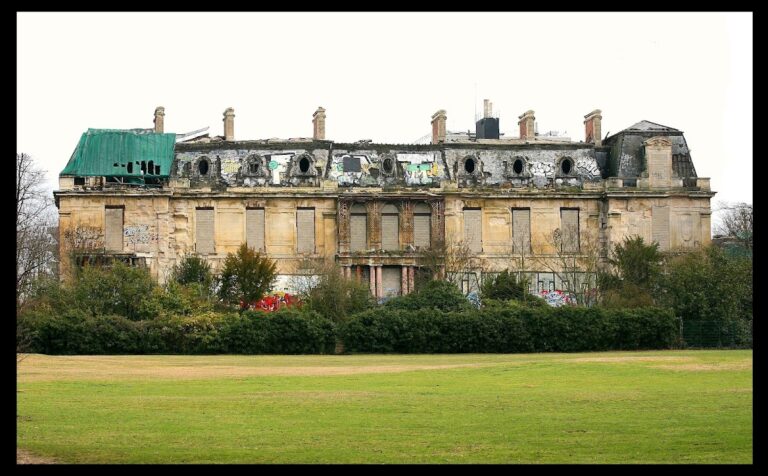
Château de la Muette: A Royal Estate and OECD Headquarters in Paris


Site at a Glance
- Rating
- 4.6
- Popularity
- Very Low
- Country
- France
- Primary era
- Modern
- Eras represented
- Modern
- Civilizations
- French
- Site type
- Domestic
- Remains
- Castle
On this page15 sections
History
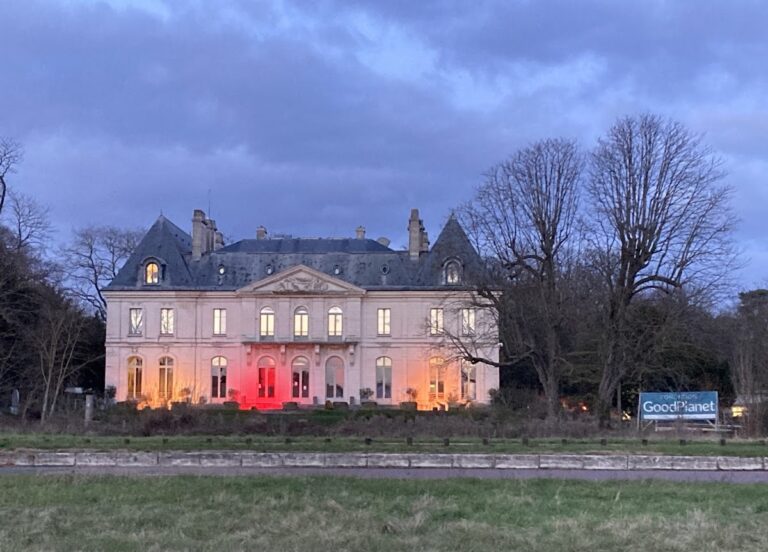
Château de la Muette is a historic estate in Paris, France, whose present building was designed by Lucien Hesse and constructed in 1921–1922 in an eighteenth-century style. It is the fourth château to occupy this site near the Porte de la Muette and the edge of the Bois de Boulogne. Since the late 1940s, the building has served as the Paris headquarters of the Organisation for European Economic Co-operation and, since 1961, its successor, the Organisation for Economic Co-operation and Development (OECD).
From Hunting Lodge to Royal Residence
French kings used the site as a hunting lodge from the Middle Ages. Near the end of the sixteenth century, Charles IX transformed it into a small château for Marguerite de Valois, who later became the first wife of Henry IV. In 1606, Marguerite gave the property to the Dauphin, the heir apparent to the French throne, who would become Louis XIII.
La Muette remained part of the royal estates from 1606 until the French Revolution. Under Louis XIV, the residence was altered and became the base of the captaincy responsible for royal hunts in the Bois de Boulogne. This office was entrusted to Joseph Fleuriau d’Armenonville, linking the property closely to the management of the king’s hunting grounds.
The Duchess of Berry and the Regent
In 1717, Philippe II, Duke of Orléans and Regent of France, acquired La Muette for his daughter, Marie-Louise-Élisabeth, Duchess of Berry. The exchange involved the Château de Madrid, another royal residence. The Regent enlarged and refurbished the hunting château, and the Duchess held elaborate entertainments there, including a reception for Tsar Peter the Great.
The Duchess of Berry died at La Muette in 1719 after a clandestine pregnancy and childbirth. Following her death, the Regent arranged for the Crown to buy the estate back. Louis XV stayed there frequently during his minority, raising animals, learning to ride, and later hunting in the neighbouring woods.
The Louis XV Reconstruction
Louis XV completely rebuilt the château between 1737 and 1745, commissioning Jacques V Gabriel and Ange-Jacques Gabriel. The new residence became a regular royal retreat, especially during hunting excursions. Its royal apartments included overdoor paintings by Charles-Léopold Grevenbroeck and Nicolas Lancret, while Jacques Dumont the Roman decorated the salon in 1749 with two canvases titled Generosity and Peace.
The site also became associated with scientific activity. In 1750, the Crown’s cabinet of curiosities was installed in the gardens. Such a collection brought together natural, scientific, and unusual objects, and at La Muette it also supported experiments. Under Abbé Nollet and, from 1759, Dom Nicolas Noël, the installation was intended to encourage experimentation and cooperation among European scientists. After Louis XV’s death in 1774, Jean-Baptiste Le Roy and Alexis-Marie de Rochon reorganised it to reduce the cost to the Crown.
Louis XV also reshaped the approach to the estate. In 1753, he ordered a long avenue through the Bois de Boulogne toward the Seine near Saint-Cloud, partly to create a view from La Muette toward the Château de Bellevue. He considered rebuilding La Muette on the avenue’s axis, but abandoned the project after the outbreak of the Seven Years’ War, the European conflict that lasted from 1756 to 1763.
Louis XVI, Marie-Antoinette, and the Balloon Flight
The Dauphin, the future Louis XVI, took possession of La Muette in 1764. Marie-Antoinette stayed there when she arrived in France in May 1770, while awaiting her wedding ceremony, and returned several times as Dauphine. In May 1774, after becoming king, Louis XVI signed an edict at La Muette renouncing the royal right of joyful accession, a traditional claim associated with the monarch’s accession to the throne.
On 21 November 1783, Pilâtre de Rozier and François Laurent d’Arlandes took off from the gardens in a Montgolfier hot-air balloon. Their journey, which passed over the Île aux Cygnes, the École Militaire, and the Luxembourg Garden before landing at the Butte-aux-Cailles, completed the first manned flight. A commemorative monument outside the present La Muette domain marks the event.
Revolutionary Dispersal and Nineteenth-Century Reuse
The château and the Château de Madrid were offered for sale in February 1788, with permission for purchasers to demolish them, but no buyer appeared. La Muette was abandoned and maintenance stopped. During the Revolution, the estate was divided and sold in lots. Louis-Guillaume Le Veillard, who was elected mayor of Passy in 1790, took his oath in the château’s courtyard.
The cabinet of curiosities was dismantled in 1790, and its instruments were transferred to the Paris Observatory. The central building was demolished in 1793. Its interior decoration was salvaged and sold, while the two wings became guinguettes, recreational establishments offering food, drink, and entertainment. A cotton-spinning mill was installed in the service buildings. The former royal property passed through several transactions, briefly including ownership by Talleyrand, a prominent French diplomat and statesman.
The property returned to the Crown in 1816, but the château was removed from the civil list, the budget supporting the monarch and royal household, because of the extensive repairs it required. One wing, known as the Petite Muette, was granted in 1818 for the use of Finance Minister Louis-Emmanuel Corvetto.
Sébastien Érard purchased the other wing and almost all the gardens in 1820. His heir, Pierre Érard, inherited the property in 1831. After a temporary lease to Doctor Guérin, who converted the pavilion into an orthopaedic hospital, Pierre Érard returned to La Muette after 1838 and began reconstituting the estate. Concerts were held there regularly during the nineteenth century, with performers and composers including Gounod, Rossini, Meyerbeer, Berlioz, Léo Delibes, Liszt, and Rubinstein.
War, Restoration, and Subdivision
During the Siege of Paris in 1870–1871, La Muette served as the headquarters of Vice-Admiral Fleuriot de Langle. During the Paris Commune, a revolutionary government that controlled Paris in 1871, it was used by Generals Clinchant, Douay, and Ladmirault. Although work was being carried out on the buildings, the château was not seriously damaged.
After the death of Pierre Érard’s widow, the property passed to her niece and adopted daughter, Marie Schaeffer, who married the Count of Franqueville. From 1889, the Countess of Franqueville restored the château according to its original plans. She rebuilt the central building and removed the two additional floors that Sébastien Érard had added.
The Franqueville family subdivided much of the estate between 1912 and 1919. Residential streets were opened across the southern part of the former park in 1923, while two large northern parcels were sold to Henri de Rothschild. The earlier château, demolished after the death of the Count of Franqueville in 1919, had disappeared completely by 1926.
The Rothschild Residence and the OECD
Henri de Rothschild commissioned Lucien Hesse to build the present Château de la Muette between 1921 and 1922 as his Paris residence. The new building was placed about 250 metres north-west of the former château, while preserving the alignment of trees in the former park. The Rothschild family moved into the residence in 1922.
In the late 1940s, Henri de Rothschild’s heirs sold the estate to the Organisation for European Economic Co-operation, the European institution created to help administer postwar recovery under the Marshall Plan. The OECD succeeded that organisation in 1961 and continues to occupy the château, with working offices also extending into contemporary buildings around it.
The street opening onto the château’s ceremonial forecourt is called Rue André-Pascal, using one of Henri de Rothschild’s literary pseudonyms. Château de la Muette is also represented in the arms of Paris’s sixteenth arrondissement. The meaning of “Muette” remains uncertain. Proposed explanations associate it with an old spelling for a pack of deerhounds, with antlers shed by stags, or with the moulting period of hunting hawks, all related to the site’s original connection with royal hunting.
Remains
The present Château de la Muette is arranged around a formal cour d’honneur, or ceremonial forecourt framed by the building and its wings. Designed by Lucien Hesse in an eighteenth-century style, it faces Rue André-Pascal and opens toward the garden. Contemporary OECD office buildings occupy the surrounding grounds, while the current residence preserves the site’s role as an institutional complex.
The Former Royal Château and Scientific Grounds
Louis XV’s Château
The larger eighteenth-century château had a brick-and-stone façade facing the courtyard and a corresponding garden-side façade. A formal staircase led through the residence to a royal apartment on the upper floor. Numerous service buildings flanked the main structure. The former château stood between present-day Rue du Conseiller-Collignon and Boulevard Émile-Augier. Its central body was demolished in 1793, reconstructed from 1889, and finally demolished after 1919; the last remains disappeared in 1926.
The Cabinet of Curiosities
The cabinet of curiosities occupied part of the gardens from 1750, approximately where Rue de Passy meets Rue de la Pompe today. Jacques-Germain Soufflot arranged its layout under the direction of the Marquis de Marigny. Its scientific equipment included moving terrestrial and celestial globes made by engineer Claude-Siméon Passemant and a steam engine. Dom Nicolas Noël also produced a microscope and supervised the installation in 1771 of a monumental telescope transferred from the Abbey of Saint-Germain-des-Prés. The telescope measured about 24 feet, or approximately 7.8 metres, in length.
The Royal Park and Its Later Fragmentation
Boundaries and Early Division
The royal estate once extended well beyond the present grounds. Its approximate boundaries ran from Rue de la Pompe in the east to Avenue Bugeaud, Porte Dauphine, and Rue de la Faisanderie in the north. It included the Faisanderie, or Petit Parc, a strip about 200 metres wide extending westward toward Porte Maillot. A surrounding wall had an opening at the end of Rue de Passy, providing access from Passy to the Bois de Boulogne.
After the failed sale of 1788, the park was sold in separate lots in 1793. The former Faisanderie was sold separately as national property, meaning state property available for disposal during the Revolution. Rue du Petit-Parc was laid out along its western boundary in 1825, and the remaining land was divided into lots during the following two decades.
The Érard Estate
When Sébastien Érard acquired the property, the park covered approximately 12 hectares. He later raised the surviving wing by two storeys and built a long gallery for his collection of paintings. The château also contained an organ made by John Abbey. The park expanded in 1852 through the purchase of a house and garden at 22 Chaussée de la Muette and other small parcels, but it was progressively reduced. By 1894, it covered about eight hectares, and the remaining land was sold between 1912 and 1919.
The Auteuil railway line cut through part of the park from 1852, separating the château from land east of the line. In 1939, the railway cutting beside the château was covered to provide access to new buildings on Boulevard Émile-Augier. The commemorative monument and plaque for the 1783 balloon flight stand at Place de Colombie, outside the present La Muette domain.
Nearby sites