Ryegaard: A Historic Estate in Denmark
Site at a Glance
- Popularity
- Low
- Country
- Denmark
- Primary era
- Modern
- Eras represented
- Early Modern, Modern
- Civilizations
- Danish
- Site type
- Domestic
- Remains
- Manor House
On this page11 sections
History
Ryegaard is a historic estate near Kirke Såby, Denmark, first recorded in 1350. Its later development included a Gothic Revival main building, a style drawing on medieval Gothic forms. In 1350, Folmer Jakobsen Lunge acquired the estate from the Crown in exchange for his holdings in Hammer and Bårse.
Fourteenth and fifteenth centuries
After Jakob Olufsen Lunge died in 1387, Ryegaard was divided among his children, including Oluf, Anders, Regitze and Folmer. Folmer Jacobsen Lunge later consolidated the family’s interests. When he died in 1412, his daughter Sophie inherited the estate.
Sophie married Claus Serlin in 1421. After Claus’s death, Ryegaard passed to Otte Alretsen Selin and then to Otte’s daughter, Sophie Clausdatter Serlin. She married David Arildsen in 1452. The couple had no children and left the estate to Niels Clausen, Bishop of Aarhus. Ryegaard later passed to Erik Eriksen Banner and his son Frantz Banner, who inherited it in 1554.
Sixteenth-century rebuilding and jurisdiction
A fire destroyed Ryegaard’s old main building in 1569. Frantz Banner began a replacement and increased the estate’s landholdings. In 1573, he transferred Ryegaard to the Crown in exchange for property in Jutland. The Crown sold it to Johanne Oxe later that year.
Ryegaard had held the status of a birk, a privileged local jurisdiction with authority to administer justice. Frantz had retained this authority unlawfully, and the estate lost its birk status in 1586.
Seventeenth-century owners
Ownership after Johanne Oxe’s death in 1586 is uncertain. Ryegaard may have passed to Johan Barnekow or his widow, Anne Pedersdatter Bille. Their daughter Sophie later owned it. Her husband, Eiler Gyldenstierne, sold the estate to Axel Urne in 1622, and Urne’s widow sold it in 1640.
Niels Trolle acquired Ryegaard in 1640, enlarged its landholdings and restored its local jurisdiction. After his death in 1667, the estate passed to his son Holger. Later owners included Holger’s son Christian, Christian’s widow Hilleborg, and Knud Trolle, who sold Ryegaard in 1735.
Rosenkrantz and Skeel family ownership
Iver Rosenkrantz bought Ryegaard in 1735. After his death in 1745, his widow, Charlotte Amalie Skeel, retained the estate. Their son Frederik Christian Rosenkrantz inherited it in 1763 and later served as prime minister. Ryegaard and neighbouring Trudsholm have been held by the Rosenkrantz and Skeel families since 1735.
In 1783, Frederik Christian received permission to establish a water-powered tannery on the estate. It continued operating until the middle of the nineteenth century. He also arranged for his estates to pass to Niels Rosenkrantz, who was required to create an entailed family estate, property whose inheritance is restricted to a designated family line. The entail comprised Ryegaard, Barritskov and Trudsholm; Egholm and Krabbesholm were sold to Frederik Christian’s brother, Marcus Gøye Rosenkrantz.
Niels died without children in 1824, and the entailed estate passed to his relative Henrik Jørgen Scheel. Ryegaard passed to Frederik Christian Rosenkrantz Scheel in 1862. His rebuilding campaign transformed the estate over nearly the following twenty years.
The entail passed to Frederik Christian Rosenkrantz Scheel’s son Henrik Jørgen Scheel in 1912, then to Frederik Christian Scheel after Henrik’s death in 1917. A 1919 law on the dissolution of entailed estates led to the entail’s end in 1923. In connection with the law, Ryegaard transferred 158.1 hectares to the government in 1921 and another 29.9 hectares in 1926. Ryegaard and Trudsholm are now owned by Johan Christian Rosenkrantz Scheel and together cover 1,228 hectares.
Remains
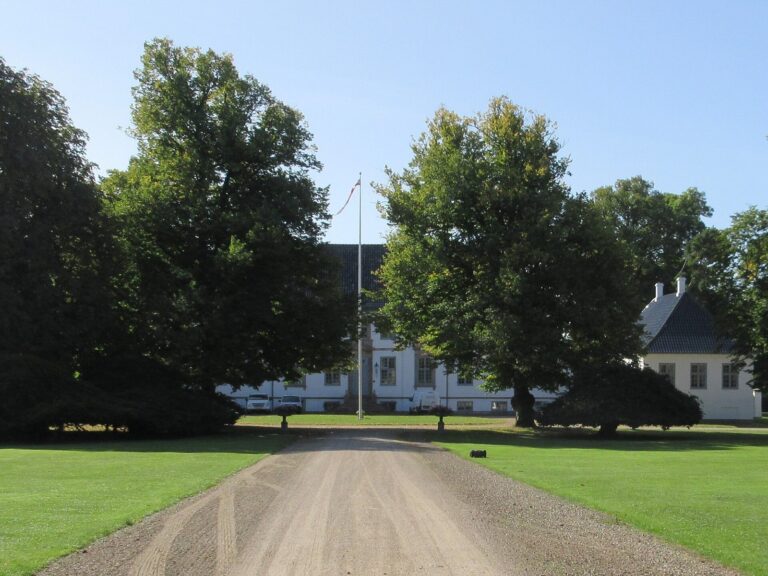
Ryegaard’s physical history includes an earlier estate site at Rue and buildings from the later rebuilding. The surviving features span different periods, from a barn dating to 1656 to the nineteenth-century main and dower houses.
Earlier estate site
The earliest Ryegaard estate stood in Rue, also known as Ryeby, a village west of Rye Church that has since disappeared.
Estate buildings
Main building
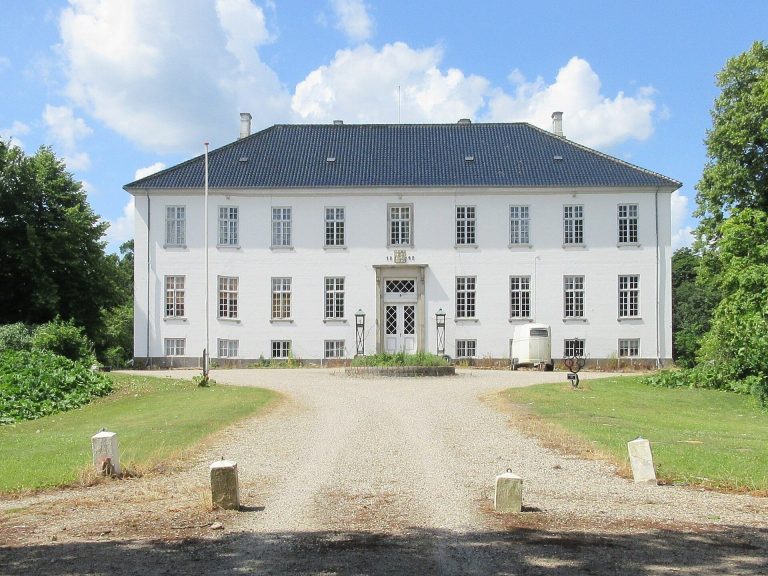
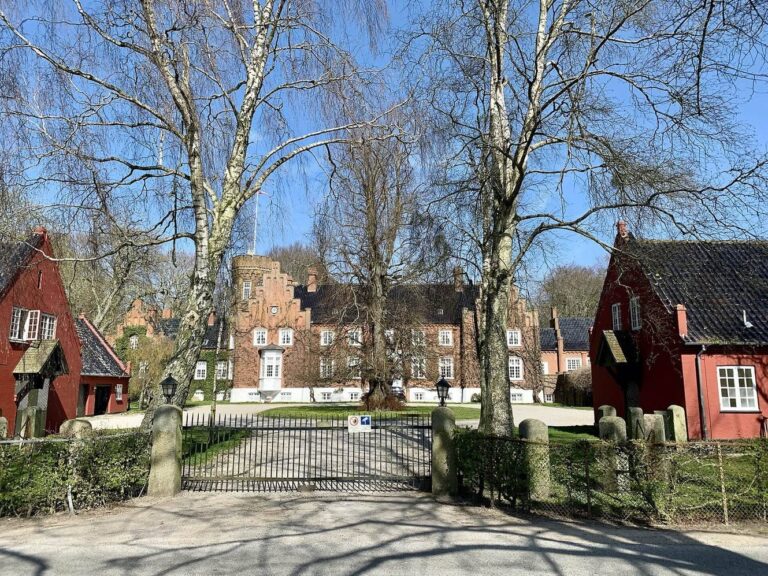
Completed in 1880, the main building is in the Gothic Revival style. Its crow-stepped gables have stepped rather than straight sloping edges.
Dower house
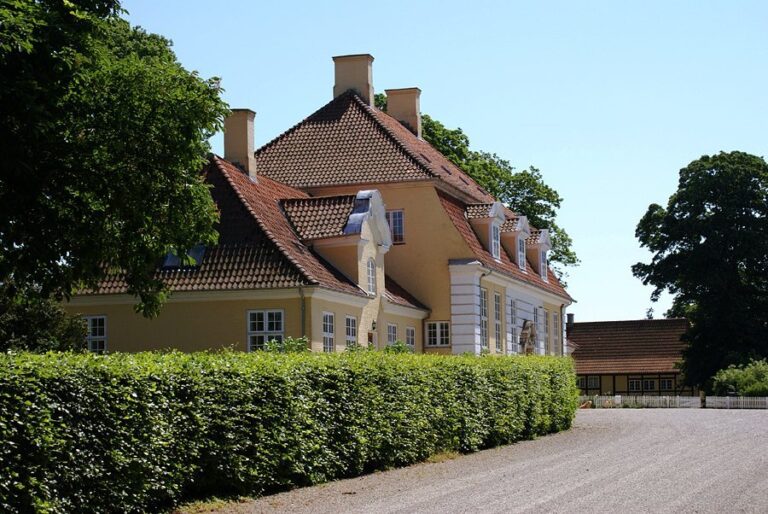
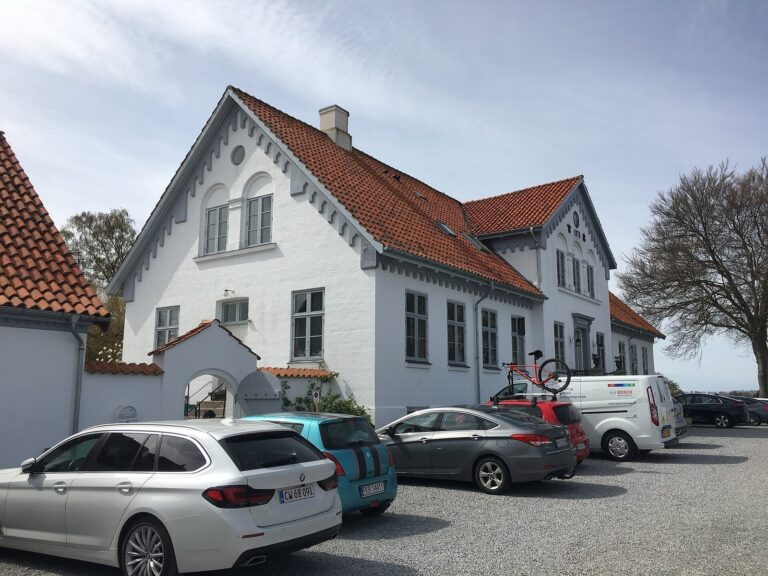
A dower house for Frederik Christian Rosenkrantz Scheel’s mother was completed in 1862.
Barn
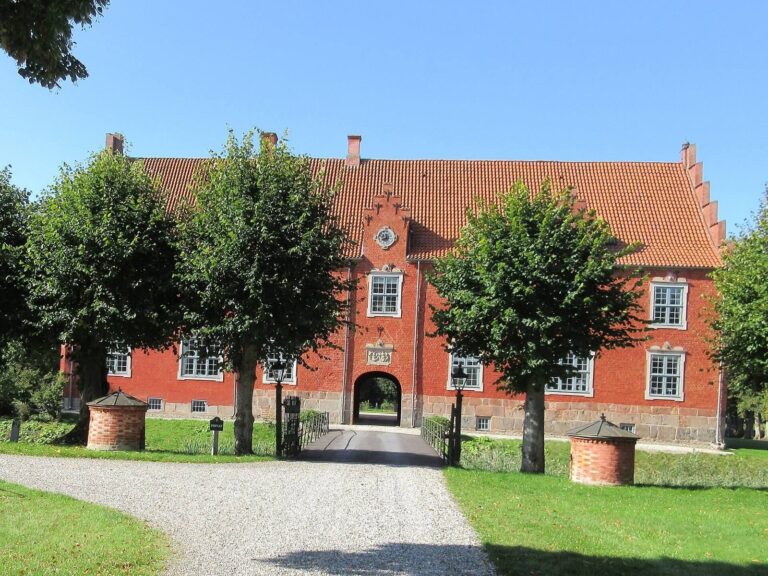
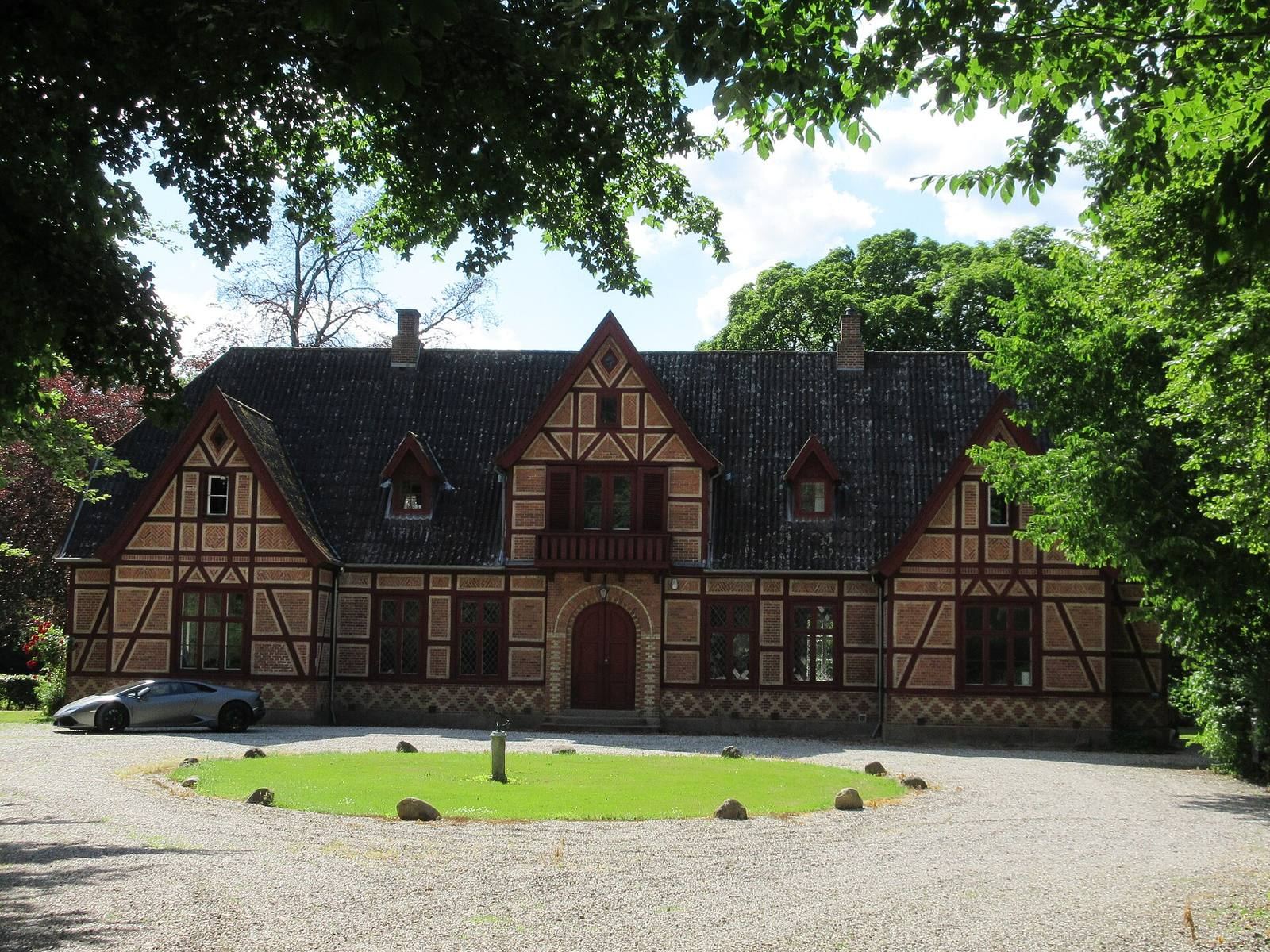
The barn dates to 1656. It was spared when the estate’s other existing buildings were demolished during the rebuilding that began in 1862.